Guest Post · martial arts · movies · stereotypes

Are “kick-ass” martial arts movie heroines empowering – or not . . . ? (Guest post)


Training in the martial arts can be incredibly empowering for women, as Sam and Michelle have testified. So surely watching movies about female martial arts experts who kick ass must be a truly inspiring and liberating experience?

Well, not necessarily . . .

Balmain Colette
Dr Colette Balmain

I was lucky enough to see Dr Colette Balmain from Kingston University speak on this topic recently. Her lecture was called:

Chick Kicks: Bad-ass heroines of Hong Kong Cinema

Colette’s presentation focused on the question:

Are the “kick-ass” women in martial arts movies liberational – or ultimately constrained by patriarchy?

Colette explained that although she was focusing on Hong Kong movies (to fit in with the theme of the conference this was part of), this is a wider question relevant to all martial arts movies.

Colette has analysed a huge number of female characters in martial arts movies. Her conclusion is that:

Female characters in martial arts movies can certainly be transgressive – but it’s always within limits.

Here are the limits she’s identified:

  • The women in these films tend to be defined by their sexuality – which is typically either very over-stated, or very repressed – there’s rarely anything in-between. For example, in Crouching Tiger Hidden Dragon, Michelle Yeoh’s character (Yu Shu Lien) has been tragically denied her love. Colette argued also that when Jen leaps into the abyss in the final scene, this represents the fact that there is literally no space for her, or her desires.
  • There are often undertones of male castration anxiety within scenes of women fighting men. This might sound extreme, but Colette played us a stunning movie clip from Kung Fu Girl (1973). And because she’d said that, I guess it had primed my mind, and it now seemed startlingly obvious (to me anyway!)

[youtube https://www.youtube.com/watch?v=zArLIutJr9I?rel=0%5D

  • Images of Asian women tend to fall into just two simplistic categories: the Lotus Blossom Baby or the Dragon Lady. Even many supposedly transgressive martial arts heroines ending up falling into one group or other. The typology comes from Renee E Tajima who explains that the Lotus Blossom Baby can also be presented as China Doll, Geisha Girl, or Shy Polynesian Beauty. The Dragon Lady can appear as Fu Manta’s various female relations, prostitutes, devious madams. But there is little in between.
  • The female characters are often portrayed as being stymied by their out-of-control emotions. Either the woman’s crazy emotions prevent her from reaching Zen-like enlightenment; or the emotions fester inside her, and render her a “poison woman”. A typical example of a “poison woman” is Jade Fox in Crouching Tiger, Hidden Dragon. (Jade Fox is actually played by the same actress as in the clip above –Cheng Pei-pei)

[youtube https://www.youtube.com/watch?v=4jWN5Ue-G7A?rel=0%5D

  • “Bad-ass” heroines are very often either “rehabilitated” by the end of the movie through marriage – or “punished” through exile or death.
  • The movies often fetishise women’s bodies in a stylised way – Colette explained that The Lady Assassin is a typical example of this.
  • Carol J Clover’s notion of the Final Girl in horror movies can also be useful for analysing some martial arts films: A common plot line in many horror films is one in which a series of victims is killed one-by-one by a killer amid increasing terror, culminating in a climax in which the last surviving member of the group, usually female, either vanquishes the killer or escapes.

Colette explained that the Final Girl figure has to be asexual and female. This allows the male viewer to vicariously enjoy the feelings of terror, without losing his own sense of masculinity. So the Last Girl is generally not an empowering figure – she is just a symbolic plot device, there for the male spectator. And in any case, she is often helped out at the end, and does not win the battle in her own right.

During the questions afterwards, one audience member asked Colette if it might be productive and healing to just stop talking in terms of gender, and think only in terms of human beings or martial artists, and their respective skills.

Colette and Dr susan pui san lok (another presenter at the conference) advised that this was indeed the ideal they’d like to reach ultimately. But that all the time unhealthy tropes keep repeatedly appearing in these movies, discussions on gender will need to remain out in the open.

ColettKungFuryBCUe said that she has only just started to skim the surface of this fascinating topic, and intends to go into it more deeply for her next project. I for one will be looking forward to her conclusions very much . . . !
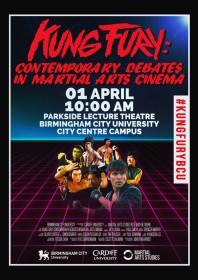
Colette was speaking at the conference: Kung Fury: Contemporary Debates in Martial Arts Cinema organised by the Martial Arts Studies Research Network.

You can read more about Colette’s work at: https://kingston.academia.edu/BalmainColette


Kai Morgan is a martial arts blogger, with a special focus on women’s experience of and participation in the martial arts. You can read her blog at www.budo-inochi.com. She also writes stories and other articles for the Good Men Project:http://goodmenproject.com/author/kai-morgan/ 

cycling · Sat with Nat

I cycled with clipless pedals and didn’t die

Ya ya. I know. I wasn’t ACTUALLY going to die but last spring clipless pedals just seemed a bridge too far. 

  
That little white thingie looks pretty far away. Sam and Mallory had shown me some drills last year but the new bike was a lot to learn. The posture, handling, brakes, shifting and height were enough to deal with. 

The weather has taken a turn for the warm and I decided Thursday to go for a quick spin about my neighbourhood clipping in and out. 

It went great! I went slow clipping in and out, stopping and starting. I’m not very good at one legged peddling but I did find, regardless of successfully clipping in I could keep moving forward and pedaling. 

I’m still worried about stopping unexpectedly or slowly, embarrassingly toppling sideways when I find a hill I can’t summit. 

All in all, it was a good trial. I’m going out today for an easy 20 km then Sunday for a 40 km ride. I’m committed to sticking with these pedals as I train up for the PWA Friends for Life Bike Rally. I know the 600 km trip will go much better if I have these clipless on. 

  
I’m halfway to my fundraising goal of $2,500.00 If you’d like to sponsor me a kilometer it’s $4.16! Just think, lots of folks like you have got me to the 300 km point, can you help me get a little further?

Sponsor Natalie!

fitness

Body shaming cyclists and worries about unsightly sausages

New Zealand isn’t a country I associate with body shame and modesty. In my experience (sabbatical at the University of Otago in Dunedin a few years ago)-it was the land of men wearing short shorts. Think rugby. Also shirtless men and shoeless everyone. My Canadian academic wardrobe made me feel overdressed.

And certainly, like Australia, the cyclists weren’t a very modest bunch.

Yet here is a cafe in New Zealand banning bike shorts. (You have to wear trousers instead. Just taking them off isn’t an option.) That’s especially odd given how much cyclists love coffee and breakfast after long rides. Whatever. I’m sure there are other coffee shops in town. This discomfort with men’s bodies is puzzling.

Why men’s bodies, in particular? The sausage references are a clue. The owner of the Plough Hotel Mike Saunders complains about unsightly bumps and bulges.

“We get a nice group of customers out here, some elderly folk . . . when you’re trying to concentrate on your breakfast you just want to see the sausages on your plate.”

Read more about it here.

What is it with men’s bodies that makes people so uncomfortable, positively squeamish unless those bodies are perfect? See Stop saying you don’t need to see that for some of my thoughts about this.

And I worry that enough people are already uncomfortable enough in bike clothing. This won’t help. See No way I ask wearing that for my thoughts on body conscious clothing as a barrier to fitness.

Me, I’m very happy in lycra. I often think I look better in bike clothes than just about anything else. I’m not sure if it’s just that they do suit me or if they just make very happy. Bike clothes mean bike rides!

What are your limits for wearing bike clothes in public?

Sarah and I went for a ride yesterday before my book group. It was a beautiful day, beautiful ride east of Toronto on the waterfront trail. But she got calf cramps on our way back to the car and we were delayed. And then city traffic.

“You will arrive at your destination at 6:53 pm. You’re on the fastest route despite usual traffic.”

Book group is at 6:30 for a 7 pm start. And we still needed to pick up food.

Pizza! Yay! But that meant going into book group and the pizza shop dressed in bike clothes. Tights, jersey, arm warmers, vest. I’d ditched the shoes, gloves, and helmet.

I told people that since I was spending more time in Toronto they should get used to seeing me dressed this way. Nice to have a range, said our generous host.

I don’t usually teach in cycling attire, though I confess I have once or twice in my career taught graduate students dressed in cycling kit. Tight teaching, training schedule. Sorry. But I figure by then they’re instructor resilient. Almost nothing gets in the way of their learning.

But always black. There’s a reason cycling shorts are black.

.

competition · fitness · racing · skiing

Just Go (Guest Post)

(Part 1 of my conversation with Pamela Meyer about ski racing at the age of 55 was published on Wednesday).

When I started talking to my friend Pamela about skiing, she was wearing a sweatshirt from her NASTAR championship week, and she showed me her medals. “I’m just sitting here geeking out about the whole thing,” she laughed. I started to understand how racing isn’t a thing that she does, but part of who she is, and who she’s becoming.

The two of us talk a lot about the things that can go haywire in our bodies as we get older. P has had a couple of cancer scares, and has had to have rehab on her knee to keep skiing. It would have been really easy for her to ease into her 50s on a base of yoga and vigorous walking — the “invitation to chill” that our culture gives us, as she put it. But because of racing, she’s more present to the strength of her body than she ever has been.

“I feel more in collaboration with my body,” she reflected. “I have truly struggled through mid-life, through peri-menopause and post-menopause — the extra 10 pounds that may be moving around but it’s not going away. I’ve gotten caught up in the whole western civ body image frustration. Racing and doing well has given me the perspective of what am I complaining about, this is a great body, I’m healthy, I am getting to do the things I love well.

“I realized I have a uniquely good body for skiing – if I were thinner I might not have the same centre of gravity. At first I was really self-conscious about pouring myself into the speedsuit. But after racing — I realize, I don’t look so bad. There are some areas I wouldn’t mind photoshopping, but this community — it’s people of all shapes and sizes. We’re all out here being willing to shimmy into our suits. It’s given me a love of our foibles and humanity, made me cut myself some slack, appreciate myself more than criticize myself.

“That’s our socialization – we’ve been totally hoodwinked into battling our bodies. It’s not helpful! In my work with organizations I take such a strength-based approach, but with myself, all I want to do is focus on deficits. Racing has helped me revel in my strength.”

IMG_9174

We talked about how being in your body and its strength is about making choices and being intentional — and it’s also closely intertwined with decisions about who we want to be as we age.

“To be an athlete at mid-life requires being more mindful,” said P. “I take a very phenomenological approach to exercising and racing. I have to be in my body, I have to pay way more attention to my form. I take boot camp classes and I’ll sometimes go slower than the rest of the 20 – 30 somethings, really pay attention, make sure I’m not landing funny on my knee. The things I could get away with in my 20s, 30s, 40s – I can’t get away with now.  You can’t be an athlete or an active person without being in your body all the time – even standing. I have to work on my postures, remember to engage specific muscles.

Racing keeps P motivated to stay fit all year around. “I was back at the gym two days after winning the gold medal.  I pay tons of attention to what I eat.  It’s about making conscious choices overall.  It’s not super-strict but I have a lane that I try to stay in.  The alternative is incremental decline – it’s the lobster in the pot thing – if you’re mindless, then you keep rationalizing poor choices, as opposed to making conscious choices.”

P had a concussion at the end of last season, as well as some issues with her knee. I asked why that didn’t make her rethink racing.

“The concussion seemed like a bit of a fluke.  Because it was at the end of the season, it wasn’t a disruption from skiing.  I focused on the recovery.  I learned  everything I could about from concussions. I know people who’ve had all kinds of injuries who come back, and I know some who haven’t.  I’ve chosen to pay attention to the people who come back.

“If you ride the chairlift enough on your own you hear all the stories from the over 50 crowd — like the racer who says ‘I just had this hip replaced.’ It’s just expected that stuff will start to break down and you’ll do whatever you need to do to get back in action and you’ll just be joining everyone else.  I was at a racing camp where the oldest person was 77, this guy Jimmy, who said, ‘you stop skiing, you’re dead.’

“Once you decide you shouldn’t be skiing anymore, then you think of all the other things you shouldn’t be doing.  And there is always risk.  I had another conversation with a woman who said ‘I stopped skiing because I decided it was too dangerous, I stayed home and slipped on some black ice in the driveway.’ Someone else I know slipped loading her dishwasher and blew out her ACL.  Shit happens if you’re flying down the mountain or loading the dishwasher. I’d rather get hurt having an interesting life than loading the dishwasher!”

Starting to think of herself as an athlete in her 50s has also shifted how she negotiates the world. “Now I seem to interact with the people who construct me as a serious competitive person — who don’t treat me as a dabbling middle aged lady .  Whether it’s people in the ski shop, health providers, physiotherapists — people who take me seriously as a racer. I think that’s crucial. First, I have to take myself seriously. I  have to seek out and co-create that identity in many communities .  I’ve moved past treating this part of myself in a little bit of a joking way — now it’s just what I do — I love it – I’m not apologizing or making it a goof thing – it’s another part of my life and who I am.”

The most powerful impression I was left with after our conversation was about how racing for Pamela is about living as fully as possible, flying in the face of fear.

“There’s this moment at the top of the course, in the starting gate. You’re trying to strategize, and there are so many variables, and there can be a lot of fear. And then it’s your turn, and you slip into the start gate, and the course director is at the top on the headset, and says ‘Course is clear, Racer ready, 3, 2, 1 GO.’

“I just LOVE that – that moment of Racer Ready, when in all of your being you have to be ready.  it’s negotiating your preparation, your fear, your physicality.  When they say “go” – you’re expected to be ready to go.   I don’t care what noise has been in your head, you have to GO.

“We have so many metaphorical starting gates in our lives — moments where you have to GO whether or not you’re ready.  It all crystalizes.  I realize that if I can do this, I can speak in front of hundreds of people, I can negotiate all of the other burblings of fear in my life.  I take this attitude of just go, there’s a point where you just can think about this anymore – go on the date, sign up for the class – just go.

“It’s like I remember a friend describing driving in India — realizing that you couldn’t wait your turn because there will never be a turn. You have to just go.  Don’t wait for the perfect time where you don’t have a stomach ache, where you have no fear.  I love that – it’s the best socialization ever. Take that attitude into anything and you’ll survive.”

Pamela Meyer is an author, educator and organizational consultant living joyfully in Chicago and skiing wherever she can. Fieldpoppy is Cate Creede, who works as a consultant and teacher in the space of strategic system change in academic healthcare in Toronto, focusing on creating sustainable, socially accountable healthcare communities. She also co-leads a learning and development project for orphaned and vulnerable youth in Uganda, and takes every chance she can to explore the world. She also blogs at fieldpoppy.wordpress.com.

fitness

Barbie: Is She Redeemed?

Yes, we’re a bit behind the curve–the curvy Barbie curve, that is. More than a month ago, Mattel came out with a new, more diverse line of Barbie dolls that included different skin tones and different body types (petite, tall, curvy).

I grew up with the Malibu Barbie doll, with her camper and her Ken and her younger friends Skipper and Francie. As we all know, Barbie, Skipper, and Francie were all skinny, long-legged white women (or girls — I think Skipper was a girl). Not much diversity there, but I loved them all anyway even if I didn’t look anything like them and never would.

The new more diverse line is meant to have broader appeal. Mattel uses the language of “choice” when explaining the rationale:

 “Barbie has always given girls choices – from her 180 careers, to inspirational roles, to her countless fashions and accessories. We are excited to literally be changing the face of the brand – these new dolls represent a line that is more reflective of the world girls see around them – the variety in body type, skin tones and style allows girls to find a doll that speaks to them.”

But as Tracy de Boer says in her article, “What to Make of Barbie’s New Bod”:

toys are more divided by gender now than they were prior to the 1990’s. For instance, blue toolboxes, trucks, and building sets for boys, pink kitchen sets, dolls, and everything princess for girls. What’s more, some toy makers, like Lego, now release building sets catered specifically to girls (in more “feminine colours”) that are meant to create things like grocery stores or dollhouses—which seem to reinforce gender stereotypes. (Lego pirate ships for boys, Lego grocery stores for girls.)

This raises the question of whether we should be updated Barbie or phasing her out altogether.  Is diversity a good thing if it helps to reinforce the gendered division of toys?  Or do we go the harm reduction route here and accept that Barbie isn’t going anywhere, so let’s make her more diverse?

Besides that, there are also those cynical folks who point out that it’s nothing but a marketing ploy designed to garner attention and sell more dolls. Well, yes. Barbie sals have dropped. And making money is what toy companies are in the business of doing. If they do it in a way that helps to change attitudes, then perhaps that’s a good thing.

Tracy de Boer says she’s waiting for the “Dad Bod” Ken to come out. And that’s not likely to happen any time soon. But what about old Barbie? If we’re going for diversity, why do we stop at age and body type?  I find those pictures out on the internet of aging Barbie are kind of gripping, if at the same time sad because obviously no kid is going to want to play with a middle-aged Barbie doll.

But why not?  Older women, who are arguably more interesting in lots of ways because of their life experiences, are simply not considered appealing and marketable? The new Barbie may show that kids might be open to diversity, to choosing a doll that “speaks to” them, as the spokesperson said. But the cult of youth still dominates.

There’s also been some backlash, people arguing that the new body diversity in Barbie’s foists “adult hang-ups” on kids.

These critics are suggesting that the kids who play with Barbies are too young to care about body image. But are they? I think a lot of kids are already exposed to adult conceptions of what the ideal body is. If a more diverse line of Barbies can help counteract some of that, even in some small way, maybe that’s a good thing. And there are some studies that do show that kids who play with Barbies care more about being thin when they get older:

Mattel has also long claimed that Barbie has no influence on girls’ body image, pointing to whisper-thin models and even moms as the source of the dissatisfaction that too many young girls feel about their bodies. A handful of studies, however, suggest that Barbie does have at least some influence on what girls see as the ideal body. The most compelling, a 2006 study published in the journal Developmental Psychology, found that girls exposed to Barbie at a young age expressed greater concern with being thin, compared with those exposed to other dolls.

So is Barbie redeemed? Well, I think the point about harm reduction stands here. Maybe the very idea of the Barbie doll reinforces gendered divisions in play and plants the seed of a thin body ideal into the minds of the children who play with her.

But at least having some skin tone diversity and body diversity can help to promote a more realistic picture of social reality. That’s if they choose them. Arguably no kid has ever had a Barbie body (nor has any adult, right? The proportions are all wonky), so it’s not completely clear whether today’s kids will feel drawn to Barbies with bodies more like theirs.

On the skin tone issue, that may be a different story. When I was a kid, I longed to see brownness represented in the books I read, the dolls I played with, and yes, the Barbies I knitted little sweaters for.

What do you think of the new Barbie?

athletes · blogging · Guest Post · racing

Black Diamond (Guest Post)

Slalom 3

When my friend Pamela heard her name announced for a gold medal in a national US slalom race last month, she was overcome with joy. She’s 55. She decided to start skiing again when she was with a group of women celebrating her 50th birthday, and raced for the first time since she was a teenager 2 years ago. Now she’s on the podium for the NASTAR championships.

Pamela is one of those people who can put her head down and accomplish anything she sets out to do, creating three books and a successful consulting and teaching life since she finished her PhD 10 years ago. She’s always been fit, but what she describes as a “leisurely exerciser,” with lots of walking, spin classes, weight training and riding her bike on Sundays with her wife along a lakeshore bike path. She certainly wasn’t racing — and then suddenly, in her 50s, was hurling herself down sheer ice on a black diamond run in Colorado, through giant slalom gates — and winning.

One of our recurring friend conversations is our relationships with our bodies as we’ve gotten older, and I’ve watched with awe and curiosity as P shifted from leisurely biking to  “I like knowing I can keep up with the 30 year olds in boot camp class” to “I just spent a lot of money on a speed suit.”  I asked her a few questions about this transformation — why racing, not just skiing, when you haven’t been a competitive athlete since you were a teenager?  How do you handle the fear?

“Why racing, why not just skiing at 55?”  she said.  “I love skiing, I love everything about it —  I love the equipment, I’m a total gear geek, I love packing, I love the research on the resort and studying the trail maps. It’s not just about the skiing, it’s about who you meet on the chairlift, talking about where you plan to go for dinner, hanging out in the hot tub . . . so many times I just stop in the middle of the run, and take in the vastness of the mountains, the cold, the sun.  

“I get so invigorated from a week of skiing – it clears up any muck in my life, being out there in the mountains – even up at the little ski area where I race on the weekends outside of Chicago – it’s just a trash heap they put artificial show on – even that is invigorating.  That’s skiing.

“Now racing…  if skiing is the wide angle lens, then racing is absolute narrow focus. The level of preparation and precision is so much sharper to compete.  You have to be able to turn where the gate is – it’s all strategy, tactics, skills.  A lot of people can look pretty going down a wide open run — but can you ski on a course?  I love going fast and it gives me an excuse to do it.  When you ski fast recreationally, not only do you leave your friends behind but you can get your lift ticket revoked.

“Competing keeps me in an aspirational mindset. It pushes me to work out more. I watch a lot of pro world cup racing videos – I’m always thinking about ways I can improve, work on my technique, form. Women seem to be more coy about being competitive – like, we’re secretly paying attention to how we did.  It’s not as socially acceptable to really care if you win.”

Now, I’m pretty adventurous with my physicality, but the idea of a vertical ice rink scares the crap out of me. Skiing, for me, is one of those things I don’t do because I’m afraid I’ll hurt myself and not be able to do the things I love, like cycling. I’ve been trying to understand how P handles that fear, especially after she had a concussion from a fall at the end of the season last year.

“For the championship, I really had to negotiate a whole new level of fear — it was a steeper course than I’d ever raced on. It’s water injected, and one that the US development teams use, so it’s meant to be icy so the course holds up and it’s very fast. It’s basically an ice rink.

“I’d never raced a black diamond in Colorado.  The night before, I couldn’t sleep. I was thinking, I have no business doing this, I could be seriously hurt, have I deluded myself into a really stupid idea – if I really hurt myself, people would be kind but they wouldn’t have a lot of sympathy. It’s not like I’d be hurting myself feeding the poor in Afghanistan – I’d be hurting myself doing something of my own volition that was stupid for a middle aged lady to do – there’d be some sorrow but not really sympathy.”  She laughed.

“The first morning of the championship, I had to put all of that out of my mind – I had to trust how much preparation I had done, had to think, I can totally do this. I strategized how to approach the trickier turns. I put the fear out of my mind.  One of the things I talk about in my work about organizational agility is the idea of “anxious confidence” — you have to embrace this in the starting gate. You’re confident because you have the skills, experience, knowledge. But you’re also anxious because you have to deal with the unknown — a set plan is not going to work for you.

“You have strategy and tactics – it’s having a plan but holding that plan lightly. My first run, I took the advice of all of the race coaches to just go – don’t leave anything on the table.  I got up some good speed, then hit a gate that was sheer ice, and I had a rather spectacular crash.

“It was my first run, total crash. I started to think, maybe I am in over my head. I wasn’t hurt but I was shaken. And you have to get up, ski down to the lift, get back up and get back in line, and race again so you qualify to continue the next day.

“Here’s what shifted the fear for me. After I wiped out we gathered just outside the finish area. Some of the women in my group who’d gone before me had wiped out in the same place. We started talking about ‘it’s steep, it’s icy, I went too fast.’ That little ad hoc group of women made a huge difference. Together we commiserated, regrouped, strategized and encouraged each other. We focused on ‘we just have to get through the next one.’

“On the second time down, we had already formed a few connections. We would cheer each other on as we slipped into the start gate, “okay Jane, go for it, ski fast – a little bit more, you go, you got this.” We started creating a holding space for each other. When you’re in a team that happens all season. For this race, without a team, we created it on the spot. 

“The championships were a stretch experience, I knew I was up to the stretch, and the challenge became how do I manage my fear and uncertainty?”

IMG_9150

Pamela ended up with a bronze in the giant slalom.  And then two days later, raced in the slalom competition that she had no expectations for — and ended up with the gold.

“That gold was just giddiness and pure joy.  There’s such camaraderie, the two women I shared the podium with, the crowd clapping – that moment was complete embodied joy and fun and realizing that it really was a result of an incredibly intentional year. Physical work, coaching, training, practicing.   It’s so fun to be in a community of equally crazy people – to race at my age,  you really have to work to find people in that tribe. And you see the people in their 70s and 80s who are still out there, who have every invitation from our culture and their peer group to chill out.  It’s incredibly joyful.”

(This is Part 1 of my conversation with Pamela — on Friday Pamela will talk about how her relationship with her body has changed since she started racing).

Pamela Meyer is an author, educator and organizational consultant living joyfully in Chicago and skiing wherever she can. Fieldpoppy is Cate Creede, who works as a consultant and teacher in the space of strategic system change in academic healthcare in Toronto, focusing on creating sustainable, socially accountable healthcare communities. She also co-leads a learning and development project for orphaned and vulnerable youth in Uganda, and takes every chance she can to explore the world. She also blogs at fieldpoppy.wordpress.com.

fitness

Why Does the US Women’s Soccer Team Earn Less than the Men’s?

A couple of weeks ago, members of the US Women’s Soccer team launched a federal discrimination complaint against the United States Soccer Association. According to The Boston Globe:

The disparities, according to documents given to the commission, are found throughout their compensation, from base pay to bonus to per-diem travel. Female players on the national team earn $72,000 for playing 20 regular season games, plus bonuses for winning. Men, however, make a minimum of $100,000 for playing 20 games, get a victory bonus — and a smaller supplement for losing. If both teams won all their games, women would earn $99,000, while men could take home $263,320.

The pay chasm widens when players participate in the World Cup. Female players who try out and make the team earn a total of $30,000 each. Men, however, get $68,750 each. With each advancing round, players get paid more, but the structure favors the men. In 2014, the men’s team earned a total of $9 million for losing in the Round of 16, while the women’s team last year got only $2 million for winning their entire tournament.

Most egregious of all is that the women’s team actually brings in more revenue at home. It’s projected that in the year to come, they’ll bring in $17.6 million to the men’s $9 million in the US.  The popularity of men’s soccer abroad makes the men’s team more lucrative on the international stage. But that didn’t stop Carli Lloyd, Alex Morgan, Megan Rapinoe, Becky Sauerbrunn, and Hope Solo from filing their complaint. As their lawyer, Jeffrey Kessler says, “They do the same work, for the same employer, for 20 games a year.”

Whatever people might want to claim about living in a “post-feminist world,” the pay gap is alive and well in Hollywood, in professional sports, and in workplaces everywhere. Women still earn 79 cents for every dollar men earn.

This inequity in wages, especially for the same work, shows us the cold hard facts about the extent to which women are undervalued for their work. Their labor is worth exactly 21 cents less per dollar than men’s. So it’s no wonder lower wages follow the jobs where the majority of workers are women.

If you’re cynical like me it came as no surprise that the women’s soccer players earn so much less than the men, and that their earning potential is less than half of what the men’s is.

But it’s also exciting to see a high profile case in which women are challenging the status quo on pay inequity.  We talk about it a lot but it never seems to change.

I’ll be keeping my eye on this case, not just for what it might do to increase the value of women in sport, but for what it might to do show that pay inequity is a form of social injustice and that’s not okay.

cycling

Au revoir podium people!

Podium girls are a cycling tradition, a very bad tradition.

What’s a podium girl?

Wikpedia says this: “Podium girls, formally known as “Tour hostesses” (French: hôtesses du Tour), are women who are best known for presenting prizes and kisses to the winners of the Tour de France and other major cycle races, including the Giro d’Italia and Vuelta a España. In the Tour de France, a team of four podium girls is employed by the race’s main sponsor, the French bank LCL S.A..[1] They are responsible for entertaining clients of the sponsors before the morning departure of the race and in parties after the end of the race, but their most visible and prestigious role is in the award ceremony at the close of each day’s racing. The job requires working long hours in all weather conditions but is well-paid and sought-after, with candidates selected on the basis of their looks, endurance, personalities and linguistic abilities. Although they are forbidden to interact with the riders, other than kissing them in the award ceremonies, several podium girls have ended up marrying cyclists. The employment of podium girls has prompted a certain amount of criticism about sexism in professional cycling, though current and former podium girls have defended their role as part of the sport’s traditions.”

I’ve written about them before, arguing that it’s time we said goodbye to podium girls.

What about women racers? Well, it turns to address that problem race organizers have added podium boys to the mix.

Not everyone is happy with this solution. In Podium boys are no better than podium girls Anne-Marije Rook argues that this isn’t the best way to go.

Yet we seem to forget all that when two handsome fellas walk on stage. The objectification is the same, even when the genders aren’t. We are still using human beings as pretty objects. To me, having male podium hosts at women’s events is not a gesture of inclusivity. If anything, women are being appeased and what’s worse, it’s furthering heteronormativity.

I think I agree. Though I’m not sure objectification is the real issue. Sometimes what’s sauce for the goose isn’t sauce for the gander. It’s a weird kind of symbolism even if you take away the sexism, and the heteronormativity. Suppose as the winner you got to choose your pretty person for an on stage kiss? It’s still odd. “Here, you’re fast and you’re the winner, have a pretty person and a kiss.”

What do you think? Is it enough to add podium boys or should cycling do away with the tradition of podium people? 


fitness · hiking

Photography, philosophy and friends while hiking solo

This week I was in Tucson, AZ for a conference on information ethics  (see here for program).  Tucson is great.  It’s surrounded by mountainous desert beauty, and in town are lots of cafes and good Mexican food everywhere.  I got to meet some cool people, hear about current work, present some thoughts of my own, and hang out with friends.
We were all pretty well occupied through Friday night, but I reserved Saturday morning for a solo hike in Sabino canyon.  Now I’m not a mountaineering type by any means; for me, it’s sufficient to walk around in nature, looking at naturey things.
Today I was by myself, stopping on my way to the airport.  I love the freedom that solo hikes bring– I can choose to go fast, slow, take pictures, listen to music, dawdle at the visitors center, whatever I want.  And I don’t even have to choose– I can meander and let the adventure unfold of its own accord.
So I did.  And the nature was stunning; the ocotillos were in bloom, along with cactus and other bushes whose names I don’t know.  Photography felt like fun, so I took pictures as I made my way up the main trail.
Here’s a desert scene from the canyon.
IMG_6775
Here’s some flowering ocotillo.
IMG_6788
As I noticed it was time to turn back, I saw four women setting up for some group shots.  I offered to take pictures of the group, and they immediately commenced questioning– who was I? What did I do? Why was I in Tucson?
For many people this would be most unwelcome, an intrusion into one’s tranquil hiking experience.  I’m not one of those people.
As soon as they heard I was a philosopher, one of them said, “oh good.  We were just talking about Kant’s Categorical imperative yesterday.”  Hmmm.  That doesn’t usually happen in these sorts of trail side chats with strangers.  But I went with it, and we had a fun philosophical conversation on the way back to the visitors center.  They’re not philosophers, but one of them reads theology, and moral philosophy was on their minds.  Well okay then.
I veered off to take another trail, saying farewell to my new friends.  I saw a sign up the path, explaining that baby saguaro cacti are often surrounded by “nurse” trees (often palo verde or mesquite) that help protect the cactus until it can stand on its own, in solitary splendor.
Here’s a nursery of baby saguaros with their protector trees.
IMG_6794
Here’s a full grown saguaro cactus, standing on its own.
IMG_6774
And here are my nurse hikers, accompanying and amusing me until I was ready to go back off on my solo way again.
IMG_6791
What a great time that was.  Thanks nature!  Thanks, phone camera!  Thanks, new hiking friends!
Sat with Nat

Facebook memories and blood pressure stories. 

This past week I was scrolling through my Facebook memories and two dates went by April 2 & 5. Turns out it is exactly 2 years on April 2 since I started blood pressure medication. Funnier yet is the angry April 5, 2011 post about visiting the doctor for an inhaler and being told I had high blood pressure. 

In 2011 I was training 6 days a week for my first Give It A Tri. I was swimming & running consistently and spinning once a week. I was so mad about the conversation with my doctor I didn’t go back for 3 years. 

What caused me to go back was an incident at work when I thoughtI was having a heart attack. The feeling passed after a couple hours and I’m pretty sure it was a nasty case of heartburn but I felt terrible. 

Did I tell my doctor that? Nope. Too scared. Booked a routine follow-up and then took a couple weeks before I shared what had happened here

It was a pretty terrible time. I’m doing much better health & fitness wise these days. I’ve written a bit about balancing my choices and my genetics here

I’m getting new blood work done and hope to see some better numbers there like I’ve seen with my blood pressure. 

  
I keep running into friends & family who’ve recently been told they have high blood pressure. The great news is knowing about it is key to understanding what to do to mitigate against the risk of heart disease and stroke. 

So if you are feeling off, get a check-up. You can change things in your life and we don’t have to live out the consequences of our genetics the way our grandparents did. Yay modern medicine!