yoga

Zoom. Stretch. Zoom

University classes here don’t begin until mid-September but south of the border friends are already teaching their first classes, most of them online, or in “remote alternative delivery mode” as we like to say during the pandemic. That’s to distinguish them from courses that have been designed as online courses.

We’re all just getting used to it. Everything is new. For professors and students alike. It’s not what we want. We mostly want to be teaching face to face in a world without a pandemic. But this is what we have and we’re all doing our best.

A friend taught her first class and spotted a student doing sit ups during the class. Oops! A clear breach of Zoom etiquette not to turn off the camera first.

Really, the student was just following the advice of the New York Times, Sneak in Some Exercise: “When you can’t slip outside for a walking meeting, turn off the video and sneak in a short desk workout or stretch session.” Well, except she forgot the ‘turn off your camera” bit.

If I were to turn off my camera (shhh!) I’d do Adriene’s Yoga at Your Desk. Mostly I can’t because mostly I’m chairing meetings. But it’s my favourite workplace at-your-desk set of yoga moves.

Enjoy!

Book Club · fitness

FIFI book club: Real Happiness by Sharon Salzberg, intro and Chapter 1

 Hi readers, and welcome to the first installment of FIFI book club’s reading of Sharon Salzberg’s book Real Happiness: a 28-Day Program to Realize the Power of Meditation. Each week we’ll offer some reflections as we move through the chapters, and maybe do some of the exercises, too. You are invited to join us, and we’d love to read and respond to any comments you’d like to share.

This week we’re starting with the introduction to the book and Chapter 1. The book clubbers also share a bit about their experiences with meditation.

For next week, we’ll be reading Chapter 2: Why Meditate? Feel free to join us.

Now, on to the reflections. Let’s start with Tracy.

Tracy: I’ve been meditating off and on, when in my last few months of grad school I was maximally stressed out and needed to find a way to manage my anxiety. I taught myself using a book called The Joy Within: A Beginner’s Guide to Meditation (Joan Goldstein and Manuela Soares, 1992). Like Sharon Salzberg’s Real Happiness: The Power of Meditation: A 28-day Program, the book I used in 1992 offered a four week introduction to meditation. They have a slightly different approach than Salzberg, who recommends starting with 20 minutes, three times a week and then increasing the number of times of week until it’s a daily practice. Goldstein and Soares recommend starting with a daily practice, but aiming only for five minutes the first week, ten the second, 15 the third, and then finally hitting 20 in week four. That worked for me then because even two minutes of sitting quietly seemed like an eternity when I was just starting out.

I don’t need to be “sold” on the benefits of meditation. I cannot imagine life without it anymore because it is the only way I really get the mental break I need. It also gives me perspective and equanimity that spills over into the rest of my life. That said, I get in and out of routine with it, and right now I am fully out. I was supposed to spend four weeks at the Ontario Vipassana Centre this summer, meditating anywhere from 5-10 hours a day, but because of COVID that didn’t happen. This four week program might be just what I need to get back in touch with what I call “my inner silence,” which is the “place” I go when I meditate. Over the years, I have learned to get myself there whether I have a few seconds, a few minutes, or an hour.

I am going to try my best to approach the four-week program with “beginner’s mind,” and have already decided I’ll build to my daily practice her way, starting with three 20-minute sessions this week, four next week, etc. As my 14-month sabbatical comes to an end, it will be more important than ever for me to start my day from that inner silence.

Now, on to Emm’s reflections:

Emm: When I was in middle school, I used to sneak books off of my Dad’s shelves to read privately, alone in my bedroom. I delved deeply into his immense History of Western Art, giggled at Haig’s Humans, and conspired with The Devil’s Dictionary. When I nabbed Richard Hittleman’s Guide to Yoga Meditation, I assumed it would be yet another glimpse into the magical, foreign world of “adult thought.” Instead, it proved to be a practical guide to a basic meditation practice, and based on what I read there (certainly not the entire book), I began a regular meditation practice which followed me pretty consistently through high school and into college. In meditation, I’d found a quiet place in my mind, separate from the chaos of the rest of my life.

Years later, my meditation practice is mostly nonexistent. It fell out of favor over the years; I’m not exactly sure why. I think that a part of me is self-conscious meditating. I suspect I’d reach for it more if I were alone without fear of being “found out” or interrupted. Maybe part of me still feels like that kid stealing books off of Dad’s shelves? Maybe as an atheist, I’m embarrassed at the implied spirituality of the practice?

Regardless of these discomforts, I know I have benefited from it in the past, and I’m hopeful that I could benefit from it again. I would love to find again that place of nonjudgemental awareness that I know meditation can bring. I would welcome feeling less distracted and more able to focus my attention on a given task. It sounds like Salzberg believes in these benefits as well, and maybe she can help me reconnect with them.

Now, Christine will share some of her reflections.

Christine: Before I even began to read the book I gave a little thought to meditation – which I have practiced on and off for years. I enjoy it and I find it helpful but I have never practiced it long enough (both in the sense of individual sessions and over time) to really see the benefits in other areas of my life. I guess I mean that I find it a good thing in the moment – to ground myself, to find calm…using it almost as a reaction to feeling stressed. However, I haven’t been dedicated enough to the practice over time to find many proactive/preventative benefits so I am interested in seeing if this collaborative (yet individual!) effort helps support me to develop that.

And, I know that I face the same issue with meditation as I do with exercise or lots of other things – task initiation. It’s always a challenge for me to begin a task, no matter how enjoyable, helpful, or necessary that task is. So, while I am reading I will also be looking for ways to make it easier to start any given session.

I really like Salzberg’s ‘matter of fact’ approach and I love this particular quote from the introduction to the book – “By knowing yourself better, being kinder to yourself and others, and having a better facility of connecting in the moment, you’ll find that a deeper kind of happiness is available to you than just what is forthcoming at a tasty meal. It’s a lasting tranquility, a sense of peace, a feeling of satisfaction.“

This is the same kind of language I use when speaking to my coaching clients about issues they are facing and it feels good to see it applied to this particular practice.

Given that I am someone who struggles with how to manage and apply my attention, I am intrigued by this particular quote in Chapter 1, “At its most basic level, attention, what we allow ourselves to notice. literally determines how we experience and navigate the world.”

This set me off to wondering about how my ADHD affects how I am experiencing the world and how that experience is different from what other people experience. I am very interested in exploring this further as I read the book and as I practice meditation. I wonder if the practice will help me to increase my ability to notice what I am noticing and to have a little more control over where my attention goes? I understand that that is really the key to this whole thing, but does the fact that I already struggle with this more than the average person mean that I am going to struggle more with a consistent meditation practice? Or does it mean that the rewards might be even greater for me?

I’m interested to find out.

Speaking of ADHD challenges, I found myself very resistant and irritated by her suggestion that the reader should choose a specific time each day to meditate. I completely understand *why* she suggests that – things that are time-specific tend to get done – but given the alarming fluidity of my schedule lately, the idea of picking a consistent time to meditate feels stressful. So, instead of trying to pick a time that I will do it from now on, I will choose a time day-by-day. That means that rather than saying ‘I will meditate at 5pm daily.’ I will say ‘Today, I am meditating at 5pm.’ Tomorrow, I may choose a different time. I think that achieves the same purpose without making me stress about whether my chosen time will still work in a week. (Yes, I do overthink everything time-based, it’s an ADHD feature.)

I’m looking forward to working through the practices in this book and seeing where they lead me.

And now, my reflections.

Catherine: I’ve meditated off and on my whole adult life, since graduate school. I’ve taken two MBSR courses (Mindfulness-Based Stress Reduction) that use meditation techniques for both stress reduction and pain management. I’ve done weekend-long yoga and meditation retreats at the Kripalu center in western Massachusetts, and used those immersion experiences to kick-start a new plan for regular meditation. Each time I’ve restarted meditation, however, my practice has petered out. I never created a stable place for it in my day or in my life.

However, one place I’ve consistently done meditation in recent years is at yoga classes. Several of the classes have either a short meditation at the beginning or end of class, or use yoga nidra (a deep relaxation exercise). It’s reintroduced me to meditation as a part of body awareness and body appreciation (the latter of which I’m always in need of).

Sharon Salzberg’s book is one I had bought a few months ago, but didn’t pick up until July. Focus and attention and concentration have been in very short supply since March, for obvious reasons.

This July, my yoga studio Artemis offered a 4-day Zoom meditation class. It started at 7:30am, which for me is a significant effort. But it felt like such a relief! I had the beginning of techniques to turn to anytime– starting with my own breath.

Meditation doesn’t fix whatever ails you, but I think it will help me develop greater capacity for non-judgmental awareness. I’m currently meditating every day when I first get up, just after coffee (nothing happens before coffee). I’m looking forward to being with the other bloggers and you, dear readers, as we go through the weeks of reading and experimenting with sitting in quiet.

competition · cycling · racing

What Sam loves about team time trialing. You might like it too!

There are many different kinds of bike races and one of my favourites is the Team Time Trial.

What’s a team time trial, or TTT?

A team time trial (TTT) is a road-based bicycle race in which teams of cyclists race against the clock. In both team and individual time trials, the cyclists start the race at different times so that each start is fair and equal.

ZWIFT LIVE - WTRL TEAM TIME TRIAL - TRI CENTRAL - YouTube

I’ve raced TTTs in real life and loved them. Now I am racing them on Zwift and loving it there too. I am competing in the World Tactical Racing League.

Here’s their introduction: “Welcome to the most addictive, fun yet brutal form of racing on Zwift! Not only do you get to race with your teammates for the fastest possible time, but you have to work and suffer together to achieve this. There are many stategies and tactics to a team time trial, all of which can be seen on all 3 UCI Grand Tours (Tour de France, Giro d’Italia and the Vuelta a Espana) and other events throughout the year.

Can you win the weekly race? Can you beat the course records for the Coffee Class?

WTRL Team Time Trials take place on Zwift at 9 different race times every Thursday and we usually see 3000+ riders competing in 600+ teams. Each event from the same day feeds one overall league with our unique Coffee Classification: EspressoFrappeLatteMocha and a dedicated ladies-teams-only league Vienna . The objective is to get the fastest 4 (for teams of 5 to 8 racers) or the fastest 3 (for teams of 3 or 4 racers) across the line. There are many strategies for doing this, and some are covered in the Strategy and Tactics videos and links on this page.”

I’m racing with Team TFC in the Mocha Class. Usually we’re racing in Zone 8, 930 pm EST but we’re going to move to Zone 7, 730 pm. Team members are from the United States and Canada.

Here’s me in the lead position of Team Phantom, with three riders behind me. You can only see one in the image but the other two are listed on the running list of names on the right. We’re racing in Watopia. You can see red spikes for a hard effort? That’s when I’m at the front, working hard, not drafting behind.

Why not Vienna?

It’s complicated but basically the women’s only group includes riders of all abilities. Most of them are younger and faster than me. More than that though they’re lighter and my power/weight profile is much the same as the men I’m riding with. That means we have an easier time sticking together up and downhills and working together on the flats.

So far it’s been the same core crew every week with some new additions and people who come and go. The flexibility about numbers means we can add up to 8 riders. It’s the time of the 4th rider across the line that counts so we sometimes split up for the last bit of the race. Someone can choose to do a sacrificial hard turn on the front and then drop off the back. The larger group makes for a better draft.

So what do I like about it so much?

  1. Well, I like riding close to other people (both IRL and in Zwift) but I prefer to do it cooperatively rather than competitively. That’s what a team time trial is all about, working together.

2. I like that there are skills to learn. As in racing in the real world, there’s an art to moving around the peleton. You can read a bit about that here. We take turns riding at the front and drafting and taking the lead and coming off the front are both things you need to practice.

3. We communicate with one another on discord during the race. For example, we rotate on the front in a certain order and count down to lead changes. People are super encouraging and good at communicating. We struggle a bit with headsets and mics and bluetooth connections and fan noises but that’s true of workday life in these strange times too.

4. Riding as a team and working together, we get better over time. That’s always encouraging and motivational. It’s also been, in these strange physical distancing times, a very nice social connection. I have new friends all over the world!

5. I know a lot of people say they don’t like competition. But the competition in team sports has always felt different to me. In team time trials there’s nothing you can do to make the other team do worse. Your only focus is on improving your performance as a team. It’s more cooperative than competitive.

6. I’m much more likely to give something my all and try harder when a team is relying on me. Insofar as I use racing as a way of getting myself to work out hard, it works best in the context of teams.

cycling

Woohoo! Sam is now level 20, or on gamification and riding bikes

Whee! I’ve leveled up in Zwift.

The virtual cycling platform keeps me motivated in lots of different ways: competition and community are the main two. So much so that sometimes I forget the game-y features of it all.

But tonight I raced and came away with no great victories but I did get four new game notifications. I leveled up to level 20. I unlocked the snazzy pink kit for my avatar. I rode a new route and got the badge for Royal Pump Room 8, in Yorkshire. And I won a sprint and got a jersey.

Mostly I confess I don’t pay much attention to route badges etc but it was all a nice perk and cheered me up on this not very remarkable night of racing.

Here’s how it all works. See point 5.

“Zwift uses levels to encourage you to keep cycling and unlock certain features — from access to locked routes or climbs, to choosing new bikes and equipment for your avatar.You collect experience points (XP) as you cycle around Watopia, and the further you cycle, the more points you collect. They can also be earned by doing events, workouts and other challenges.Starting at level one, there are 50 different levels in total. Going up levels unlocks new bikes, equipment and clothing for the virtual you. It also unlocks some routes: for example, you need to be level 10+ to ride the Mega Pretzel and level 12+ to ride the Climb Alpe Du Zwift, a virtual recreation of the famous Alpe d’Huez climb in the French Alps.”

And here’s my avatar sporting the new level 20 kit.

Yes, she’s thinner than real life me. It’s not vanity on my part. It’s Zwift’s problem, not mine.

advertising · clothing · cycling · fitness · hiking · inclusiveness

Getting gear that fits plus sized cyclists and hikers!

I’ve written about Machines For Freedom before in a blog post about safe cycling in the time of the pandemic where I noted that the model looked like me!

Because despite the stereotypes, you don’t need to be stick thin to be a cyclist yet it can be challenging finding clothes that fit. I keep saying to people who say they’ll ride bikes (or go hiking and camping) AFTER they’ve lost weight, that there is no need to wait. Do it now! Yet, the message you get shopping for clothes and gear is that as a larger person this activity isn’t for you.

I’ll have more to say about this in the future. It’s a theme of mine! But for now I want to just take a moment and applaud two recent success stories:

Finally, Body Positive Cycling Kits For Women

“Diverse populations of women are featured on the brand’s Lookbooks and bibs and jerseys come in a variety of sizes to fit a wide-range of body types. Representation and inclusivity matter to Machines for Freedom and it’s abundantly clear that it’s important to the company ethos.

“I really wanted to change what this sport looked like and to create space for difference and individuality in a sport that values uniformity,” says Kriske. “When we launched, I was very deep into training, often riding 20-plus hours a week and treating it like a part-time job. Yet, I felt like I didn’t fit in, all because I was a curvy woman who valued life and relationships rather than just talking about gear ratios or what new bike I was lusting after. I saw the industry as very flat and superficial, and tailored to folks who ascribed to a very specific, and elite, lifestyle. I wanted to change that, to draw more people in.”

Kriske believes that the sport of cycling has much more to offer riders than tech specs and racing. “There is so much joy, adventure, and confidence that comes from adventuring on a bike. When it comes to storytelling, that is our NorthStar and it’s what has been driving us to broaden our community year after year.”

The hiking and travel world is finally getting its first plus-size backpack, as the industry catches up with the diversity of people who love the outdoors

“Over the last few decades, the outdoor gear industry made innovation after innovation in product designs. Jackets are now waterproof yet surprisingly breathable, tents are so impressively lightweight one might mistake the aluminum poles for bird bones. But you still can’t buy a plus-size hiking backpack.

“When I think about it too much, I get really angry about it,”  Jenny Bruso, the self-described queer, fat, femme writer and hiker behind the popular Instagram account Unlikely Hikers told Business Insider.

That’s why backpack maker Gregory’s announcement that they’re releasing the industry’s first line of plus-size backpacks in Spring 2021 is such big news. Finally, hikers and travelers will have size-inclusive backpacks that reflect the diversity of their bodies. And Bruso, whose frustrations with the industry is a driving force behind her activism within it, is partnering with Gregory to develop the line. The release will include more than 20 different plus-size packs across the day hiking, multi-day backpacking, hydration and lifestyle categories.”

cycling · fitness

Will Sam ride a century this summer?

100

In the before times, my first century ride, 100 km, came early in the cycling season. I have very fond memories of riding to Port Stanley and back in late spring, early summer. See, for example, A feminist fitness bloggers’ century ride to Port Stanley.

I’m afraid Tracy’s memories of her first century ride are less fond. Sorry, Tracy.

When I was riding with a cycling club in London we usually hit the century mark in April or May. Often I’d peak mid summer with an imperial century. Most summer weekends involved at least one 100 km + ride.

Later when I was going on more distance charity rides, such as the MS Bike Tour and the Friends for Life Bike Rally, there were training plans and check off lists that included riding 100 km.

Last year we were in Newfoundland, riding some pretty big distances everyday. Then there were the local tours like the Three Ports Tour and the Gran Fondos. I loved the County Fondo last year.

This year? Things are different these days. There’s a global pandemic happening and it’s changed my cycling habits. All of my charity rides are solo, or virtual, efforts. It’s mid-August and my longest ride of the year is 50 km or so. I find when I’m riding outside I just don’t feel like going that far from home even now that there are places to stop and eat.

I’ll ride 56 km for my 56th birthday. And who knows, maybe this fall a century ride will beckon. But I’m not feeling pressured. It’s okay that this year is different. These are remarkable times.

Oddly, I’m on track to ride more than 5000 km this year which is more than usual. That’s due to the weekday Zwifting which usually adds up to more than 100 km a week. That’s way above normal for me in the off season.

I do see people riding 100 km and even 100 miles on Zwift but I don’t think that’s for me. I need beautiful scenery and real life companions, I think. Also, my butt gets sore on the trainer. There’s not enough moving around.

Here’s some past posts on century rides:

Sam has advice on your first century ride

Cate rides a windy century in PEI

A feminist fitness bloggers’ century ride to Port Stanley!

Letting the racers race and the riders ride at the MEC century

Catherine rides a century in installments

PWA Bike Rally one-day ride: reports from the road (and the side of the road)

covid19 · fitness

Prepping for social life outside in colder temps (too soon? sorry…)

It’s mid-August. There are still blueberries waiting to be picked in New England, the peaches are ripe, and the weather has been hot and sunny. I have done much sweating under my mask while walking or biking around town. Yes, there are syllabi to finish, but this weekend, I’m reveling in tomatoes and corn in their late-summer glory. Ahhhh…

I’m making an omelette out of fresh corn, tomato, basil and feta Sunday morning. Yum.

As day moves into night, so summer dissolves into autumn, and then… winter. Winter brings its own bounty, which is also a gustatory pleasure.

Winter roasted vegetables with cranberries and a little molasses. Yum again.
Winter roasted vegetables with cranberries and molasses. Yum again.

But food is not what I’m thinking about when considering this year’s change of season. Yes, I’m talking about the coronavirus. This summer has been, for many of us, much more pleasant and manageable because we could go outside and visit with family, friends, neighbors, colleagues, etc. I’ve been to backyard book club meetings, takeout and BYOD (dinner) meals on decks, gone swimming and hung out on the beach (socially distanced from others), held small ice cream socials on my back porch, and even attended church in the garden behind the sanctuary (no singing, but our organist recorded video for our listening and contemplative pleasure).

For those of us who live in climates with four full-service seasons and a hefty amount of cold and inclement weather, the thought of a drop-off in real-life contact with nature, friends and community is disheartening.

But maybe there are ways to extend and expand our outdoors spaces and activities further into the fall than usual (I’m ignoring winter for now, because 1) ACK!; and 2) one season at a time, please…)

Among my friends there’s a lot of discussion about using fire pits, patio heaters, etc. to make use of outdoor home space for lower-risk gatherings with friends and family.

Don't do this! They are way too close together. No one has updated the stock photos of fire pits lately...
Don’t do this! They are way too close together. No one has updated the stock photos of fire pits lately…

There are all kinds of products out there:

  • free-standing wood fire pits
  • stone or brick fire enclosures
  • tables with alcohol-based smokeless fire
  • patio heaters of all sizes and strengths

I’m looking at tabletop patio heaters for my back porch. I’ve been in restaurants outside in winter (in warmer climates) that used commercial versions of these, but there are smaller ones for home use. IMPORTANT NOTE: all of these come with extensive safety warnings and guidelines for use. There are also regulations for where and how they can be used in various locations in your area. I’m looking into what is legal and safe and effective for my place.

Of course, there are other ways to keep people warm while visiting outside: blankets. Or, you can go all in and buy a sleeping bag onesie. Here’s a website for comparison shopping, and an illustration of their use in the wild.

White people in wearable sleeping bags, eating either toast or cold pizza, outside in the woods.

As someone who wants to be a good COVID hostess in all seasons, I wonder: would I need to stock a variety of these in assorted sizes and colors? Maybe keeping a bunch of comfy blankets is a better way to go.

This is what I’m talking about NOT to do. It’s undeniably cozy, but DO NOT nestle lighted candles in blankets. Bad idea.

I’ve been looking around the internet for more info on 1) ways to prepare my outdoor space that don’t cost a fortune; and 2) what levels of risk are incurred by different sorts of interactions with friends in different home locations. We are learning a bit about 2), although our knowledge is increasing every week. Re 1), the New York Times just published an article about cheap ways to upgrade small outdoor spaces, mainly aimed at urban dwellers. Their list included:

  • floor covering, like outdoor rug or mat, for comfort and aesthetic appeal;
  • outdoor lights (I bought two kinds of solar ones for my 7-foot by 12-foot back porch);
  • bluetooth speaker (check);
  • lightweight durable chairs that work for the size space;
  • folding tables for whatever people need.

For me, being able to see my friends in person, even from a safe distance, is essential to my well-being. I live far away from family, and will have to deal with travel decisions and risks, too. Again, one topic at a time. Figuring out ways to maintain low-risk social spaces as the season changes is important. As I start tricking out my spaces and learn more, I’ll report back.

Readers– do you have ideas or plans for converting your outdoor space to adapt to changes in temperature, light and overall weather? I’d love to hear what you’ve found or what you have in mind.

220 in 2020 · fitness · rest

In favour of active rest

Lily and Rosie (my new kittens) have a good balance of hard play, active rest, and total rest. Image description: Rosie on cat scratcher/lounger getting ready to swat Lily, sitting on the floor beside her, with her paw.

Years ago, when I was new to triathlon, I used to train with groups for my swimming and running. Once, two days after some of my swim group had done the Around the Bay 30K (way before I ever thought I would do it myself, which I ultimately did), someone talked about how they had gone for a “light run” the next day. And here they were, back in the pool already. It seemed unbelievable to me that anyone would forgo a total rest day after running 30K. The reason they did it was to get the blood flowing to their tired legs. This approach to recovery is known as “active rest” or “active recovery.”

I used to feel guilty about that sort of thing and blogged about it way back in 2014. Recognizing the importance of rest days and my own struggles to feel okay about actual rest (for myself — I am not trying to be judgmental here about full-on rest), I blogged about taking active rest instead of total rest. But at the time, it wasn’t really incorporated into my workout life as rest or recovery, it was just that I didn’t like taking days off.

Six and a half (!!) years later, I still don’t often take a total rest day. But I vary the intensity of my workouts and take a more conscious approach to switching it up. I do this both with respect to the same activity — harder and easier runs, gentler and more strenuous yoga sessions, for example. And I also do this across my various activities–incorporating a mix of running, Superhero workouts, yoga (with and without Adriene), and walking. Especially since COVID but mostly since joining the 220 in 2020 group, it’s become important for me to do some sort of movement almost every day. That fits perfectly with the idea of active rest or active recovery. After a particularly demanding workout with Alex, I might make sure that if running in on my agenda the next day I take it easy on my run. That’s fine. My objective is to get out the door. Or if I don’t want to go anywhere (COVID has brought out the recluse in me some days), then I’ll do some yoga. A little bit of movement goes a long way to lifting my energy.

The most important thing about active recovery is that it is supposed to be a dialing-down. My personal trainer used to consider all yoga rest, but that’s because he’d never done a power yoga class. Even a demanding flow class wouldn’t really count as an active recovery workout because it’s too much exertion. So if you are going to be honest about incorporating active rest into your program, the experts recommend against using it to sneak in another intense workout under the guise of “active rest.”

This article, “11 of the best activities to do on active recovery days,” explains: “an active recovery day features easy workouts equivalent to no more than 60 to 70 percent of your maximum effort (low to moderate intensity). For example, if you’re training for a marathon, you can use an active recovery day as an opportunity to walk a few easy miles or take a gentle yoga class to work on flexibility.”

I’m also a big fan of listening to my body, and have become a lot more intuitive about my workouts over the years. Though I have a general routine (running 3x a week, Superhero workout 3x a week, yoga several times a week), I know when to back off completely and perhaps do restorative or bedtime yoga and have a nap instead of anything else.

The upshot here is that all high intensity all the time is not a good strategy for anyone. It will result in burnout. But a little bit of movement even on the rest days is fine, and may be exactly what you need. This is not to say that total rest is something to avoid. It’s all a matter of striking the right balance.

If you’re interested in giving active recovery or active rest a try, here’s an article that explains how you can make a whole day of it.

Six and a half years ago I asked, “How do you do rest and active recovery?” At the time, I wanted to hear from people who did it “better than I” did. Today I am comfortable with how I do it and I’m always interested in hearing others’ experiences. Have a great weekend!

fitness · inclusiveness · stereotypes · strength training

It’s 2020 York Dumbbells. Get with it!

It’s here!

They finally arrived!

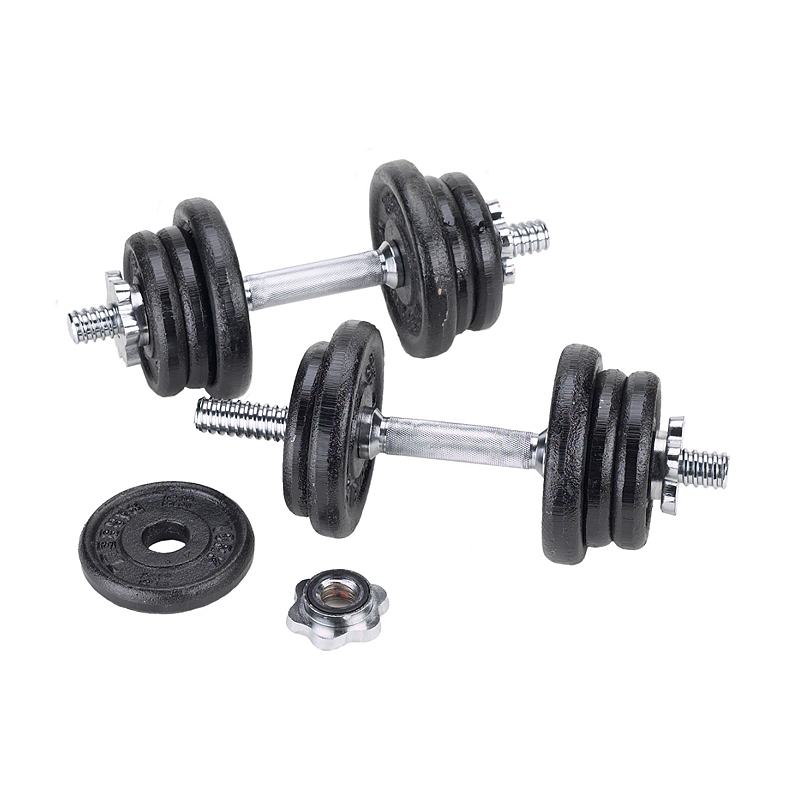
My York 50 lb. Adjustable / Spinlock Dumbbell Set is in the house, “The versatility of the York 50 lb. Adjustable / Spinlock Dumbbell Set works for all your arm and shoulder exercises. The specially-designed threaded collars allow quick and simple changes of weight up to 22.6 kg, so you can squeeze the most reps out of a limited time.”

There are two bars and 8 x 2.5lb., 4 x 5lb. cast iron plates. Lots of flexibility.

York 50 lb. Adjustable / Spinlock Dumbbell Set | Sport Chek
Weights

I recently decided not to return to my discount gym. It’s reopening but I am not going. They were very understanding about allowing me to pause my memberships. I have warm fuzzy feeling about the nice letter they sent me and I’m definitely going back there when I am ready to go back.

Read When will you feel okay about going back to the gym? and COVID-19 and the Gym: Building Engineers Weigh In about some of the views here on the blog about working out at home or in the gym.

But that’s not what I am here to write about. Decisions about returning to the gym are hard and complicated and the gym plays different roles in our overall mental health. I get that reasonable people will make different decisions. I miss deadlifting!

You know what’s not complicated? Understanding that not only men lift weights!

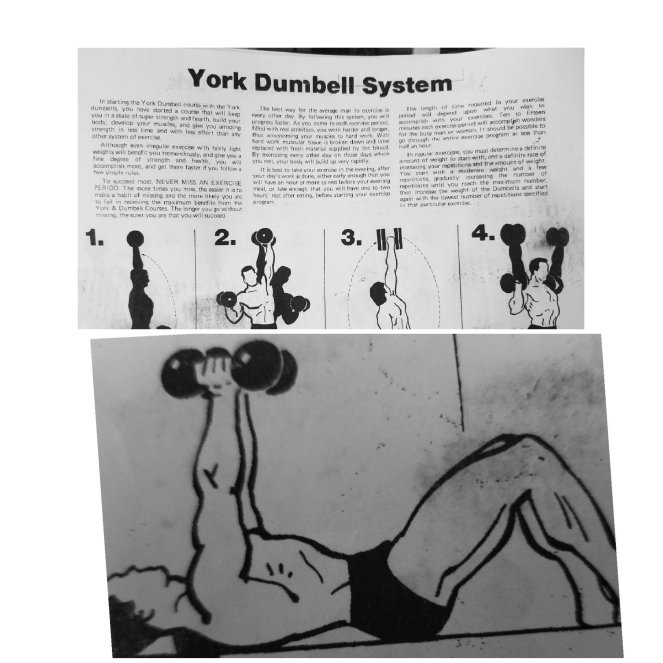
Here’s the instructions that came with my dumbbell system.


Nevermind the muscle-y stereotypical shirtless guy thing . I would have been okay a muscle-y woman beside him. I wasn’t hoping for body diversity or racial diversity or even gender diversity. Yes, there could have been a person using a wheelchair also lifting but that was too much to hope for.

Scream with me now. NOT ONLY MEN LIFT WEIGHTS!

And you know when companies do get it right, I’m so happy it’s ridiculous.

Dear York, Please do better. It’s 2020! Thanks, Sam and the other bloggers at Fit is a Feminist Issue.

fitness

Hawks, dragonflies and Faerie Doors

This seems like a bad idea.

When you’re hiking alone and you begin scolding yourself out loud, it’s usually a good idea to stop and rethink what you’re doing.

What I was doing was scrambling up a pretty steep rockface, with a sheer cliff drop to my right.

Hm, I thought. Surely this isn’t the actual trail in this sweet little hike.

It wasn’t, of course. I’d stopped for lunch at a beautiful overlook, ate a cheese sandwich while watching hawks soaring above and dragonflies hunting just in front of me, then followed what seemed like the trail to the summit. I’d had a bit of a chat with another pair of hikers who’d obviously also done the same thing, saying that they couldn’t find the summit, that the path had just ended.

Turned out, both of us missed the correct path — along with the couple who came along after me, as I was making my way back to the lookout. The actual trail was, of course, much less treacherous, and led to an amazing view, complete with a sweet doggie memorial. Which two doggies came along and enjoyed as I sat and ate an apple.

I’m privileged to be in BC, on one of the magical Southern Gulf Islands. The west coast has always been the most grounding place for me — give me a run around the Stanley Park Seawall and I’m instantly at my best — and I made the somewhat complex decision to get a second covid test (negative), get on an airplane (face shield and mask, extra money for more room), and spend just over two weeks near the sea. I rented a cunning little tiny house and I’m spending my days writing, reading, hiking, riding my folding bike and sleeping. Storing up reserves for whatever the winter holds.

It feels hard-won, sitting here on my little wooden porch, as pine trees drip sticky sap onto the table I’m writing on. Finding pathways that aren’t as simple as they should be, like my hike yesterday. The directions I found online to the trail didn’t mention that there are two trailheads, just how to get to the “easiest” one — which meant riding my folding bike with the tiny wheels up up up up a looooong hill. And the directions to follow the road “to the top” didn’t say what to do when I reached a T-junction, and I went the wrong way, peering at rough paths into the woods to try to figure out if any could be deemed a trailhead, if I squinted. (Of course, if I’d just looked down the road 200 m the other way, I would have seen the cluster of parked cars that is a pretty sure signifier of a trailhead).

When I found it, I locked my bike loosely to a tree (preventing mischief, not theft — it’s not that kind of place), and set off, covering at least 300m before I realized I was still wearing my helmet.

Hiking like this — even with wrong turns — in an unfamiliar place? This is where I can breathe again. This is where I can breathe through, let slide, the anxiety and worry of so many people around me, the fevered politics, the sense that the world hasn’t stopped tipping upside down. Where I can promise to Susan, by text, with a laugh, that we’ll go to Paris “when the war is over.”

The trail up the wee mount (more than a hill, much less than a mountain) was, actually, simple to navigate — once I paused and thought about it, actually looked at the map that clearly didn’t tell me to inch along the end of the cliff face. And it was peppered with little hidden “faerie doors,” with notes and offerings from kids.

As I ate my apple at the top, I noticed it was astonishingly tart and sweet, and looked at the little sticker. Ambrosia, a breed we don’t get at home. Apparently a cultivar developed in BC in the 1990s. Perfection. Like the open, wide, fresh space around me.

I’ve hiked and ridden alone in many countries, and I often end up fussing between my loose interpretation of the map and what’s right in front of me. That’s a fancy way of saying I’m often a little lost. Yesterday, I was reminded that when I breathe, when I just pull back and think, I’m not lost. We are not lost. We are strong and we have what it takes to navigate whatever the fall and winter hold.

Fieldpoppy is Cate Creede, who is so grateful to be on the west coast for a couple of weeks.