aging · athletes

Fun facts about life after 50, gender fluidity and femme footwear choices, and balancing all the injuries

The amount of bodily maintenance that comes with age is striking.

Sometimes I laugh, sometimes I cry.  See Bad knee news for the back story.

And it gets worse for the over 50s because the real complications come when it’s not just one injury but two or three. Knees, back, and feet anyone?

My plantar fasciitis is back. (Did you know it’s also called “policeman’s heel”? That was news to me too. Thanks Google.)

I’ve got a good doctor on the case, Colin Dombroski. See his book on plantar fasciitis here. He’s the foot guy at my university’s sports medicine clinic. I like that clinic a lot since their goal is to keep people active and moving and doing the things that we love.  See Aging and the myth of wearing out your joints.

One thing that hadn’t occurred to me though was that my injuries might be in competition. The orthotics that help with knee pain might not be so good for my plantar fasciitis. So I now have one set for everyday use and another set in my running shoes. The everyday orthotics are in these fancy new Blundstones, and my lovey favourite Fluevogs are on the back burner or for limited party use only for while.

My Fluevog Odettes (“an homage to every misrepresented Witch of the West there ever was”) look like this:

Odette

Now my life, my personal style, my gender roles have room for both the Blundstone and the Fluevogs. They might just represent the range from “sporty femme” (as my friend Ingrid once dubbed me) to “party femme.” But for this winter, I’ll mostly be the Blundstone person. That is, when I’m not wearing bike shoes, ski boots, skates, or running shoes.

(I’m way off topic here but if this stuff interests you, you might want to read my papers Fashion and Sexual Identity, or Why Recognition Matters in Fashion – Philosophy for Everyone: Thinking with Style edited by  Jessica Wolfendale and Jeanette Kennett  and “Those Shoes Are Definitely Bicurious”: More Thoughts on the Politics of Fashion (in Dennis Cooley and Kelby Harrison (ed.), Passing/Out: Sexual Identity Veiled and Revealed (2012).)

Thanks Alice, for this!

Okay, seriously now, back to sports injuries. I’m stepping back from fashion, and gender, and shoes.

So there’s this tension between the knee injury and the recent flare up of heel pain. It’s not a knee injury because it’s more the way my knees are for the rest of my life. They won’t get better. The exercises don’t make them better. They allow me to keep moving. Thank you sports doctors and physiotherapists.

But that’s not all of it. There’s also a tension between heel pain and my much loved standing desk. See Celebrating my standing desks. If I stand too much it makes the heel pain worse, but if I sit too much I hurt my back. So I’m back and forthing more than I usually do between sitting and standing.  Let’s just say there’s a lot of moving and stretching and changing of footwear in my life right now.

I’m hoping this is me come spring!

cycling · fitness

Catherine gets a new bike!

Full disclosure:  before this week, I owned 5 bikes: 1) road; 2) mountain; 3) cyclocross; 4) commuter/beater bike; and 5) extra cross bike at my mother’s house in South Carolina.  One might think this was enough.

But no.

It is a well-known fact among cyclists that the correct number of bikes to own is n+1, where n is the current number of bikes one owns.  It’s true.  It’s in fact rule #12 of The Rules, from the Velominati page:

screen-shot-2016-12-18-at-8-30-13-am

For cyclists, bikes are kind of like shoes:  there are different ones for every purpose and every occasion, and one wishes to update one’s collection when new features come up.

For me, I have been wanting this bike for a long time.  Let me introduce you to it.  It’s a Brompton folding bike.  Brompton is a British company that has a cult following among road cyclists, bike commuters, touring cyclists, and (most important for me) cyclists who want to travel with their bikes.  What makes the Brompton special is how easily, quickly and compactly it folds.  In order to make that possible, Brompton did some very spiffy engineering and design on the bike.  I could rhapsodize at length about this, but instead I’ll show you.

Here’s the bike folded up (in my dining room):

The Brompton folded compactly

Note that it is stable in this mode, and even has little wheels for towing if you pull up the handle bars (I told you this bike was soooo cooool!).

To unfold it, first pull out the left pedal (it also folds very ingeniously; did I mention the superior design of this thing?) and pull up the seat post.

The Brompton with seat post pulled up

Then you give the handlebars a gentle push to extend them into place.

The Brompton with handlebars in place

Note that nothing is wobbling.  Remember the little wheels I mentioned?  You can, from this position, tow the bike behind you, and it will roll happily along on its little wheels.  If you prefer bigger wheels, Brompton will sell you some.  They have (for the right price), many modifications for their bikes.

One thing I failed to mention:  all the parts secure with little clamps that are easy to tighten and loosen.  At the bottom of the orange (isn’t the color glorious?) handlebar stem is a black thingy for tightening the stem into place where it fits perfectly.

Then you move the front wheel into place.

The Brompton almost ready-- front wheel in place

Notice that it’s still stable– no tipping over in this position.  And, the stem is a little cockeyed-looking, off to the right a bit.  That’s a feature, not a mistake.  It’s just part of the Brompton’s quirky charm.  Now we are ready for the last step:  pulling the bike up, where in one move, the rear wheel locks into place:

A brompton folding bike, in sea green and orange.

The reason I bought this bike is that I travel a fair amount for work– I go to conferences and give talks– and whenever I get where I’m going, I really really wish I had a bike with me.  I’ve rented bikes often (easier in cities with bike share programs– every city should do this), and occasionally brought a bike with me.  But it’s expensive and kind of a hassle to break down a bike, box it up, haul it (paying often $100–180 each way to fly with it), set it up, and THEN finally get to ride it.  If I’m going to a conference for 3–4 days, I’m never going to do this.  But Bromptons pack into either a soft or a hard case that can be checked as luggage without incurring those awful fees.  Yay– Brompton for the win!

But now I don’t have to.  I’ve got my new Brompton!  Also, I got a 6-speed model with flat handlebars to make it the closest thing to having a road bike that I can get with an easy-to-use travel bike.  So Samantha and Natalie– expect to see me at your doorsteps sometime this spring or summer, with my beautiful two-tone Brompton, ready to ride!

Getting the Brompton is actually encouraging me to do some far-away conference travel, too, so I am going to the Netherlands for a conference, and will fit in some easy touring with it.

I can also ride the Brompton around town, and even take it on buses or subway.  It has what I call a modesty cover that you can pull over it, and unzip a bit to carry it (mine weighs around 25 lbs– not bad for a little carrying).

The Brompton with a black fabric cover, with the saddle poking out

Oh, you might wonder:  how does it ride with those little wheels?  The answer is:  very smoothly.  The steering takes a little time (maybe a few minutes) to get used to, but then it moves very well.  Since I got it (4 days ago), the weather has been incredibly cold, then snowy, and now rainy.  ARGH!  But hopefully tomorrow I can take it out and see what it can do.  Will report back on progress.

There’s nothing like a new bike.  Readers, are any of you getting any new gear that you are in raptures over?  Please share your joy or wishes here.

fitness

Running in a binder

by Alex

Something that this blog has dealt with before is how fitness equipment and clothing works for female-bodied folks (see, for example, posts on bike saddles and sports bras). I’m female-bodied and somewhat gender non-conforming, and as part of my gender expression, I sometimes wear a chest binder. If you don’t know what that is, think of a rather tight, non-stretchy sports bra designed to flatten your chest as much as possible by redistributing breast tissue, and you’ve got the basic idea.

There are a few different reasons that people wear them: they are used by folks who want to pass for male, to fit into men’s clothing better, to alleviate body dysphoria, or to attain a more masculine silhouette. I won’t get too much into my reasons for wearing one, because that’s not the point of this post, but I’ll say that my preferences are mostly aesthetic (with a good dose of “I just feel better when I wear it”). But I don’t feel the need to wear it every day, and I don’t feel the need to wear it while exercising. I would estimate that I wear mine about half the time, and wear sports bras the rest of the time.

Binders come in quite a few styles, but there are basically two types: full-length and tri-top. The full-length binders cover the entire torso, and look somewhat like skin-tight tank tops. These binders have two sections: a non-elastic compression panel that covers the upper part of the chest, like a sports bra would, and below that, stretchy fabric down to the hips. The tri-top binders are essentially the same, but end below the chest, a little lower than the very bottom of the sternum, and don’t have the elastic section down to the hips. At the recommendation of a very helpful customer service agent at GC2b, I opted for the full-length one, and have been very happy with it for day-to-day binding.

The binder I wear: GC2B’s Nude No. 5 Tank

http://gc2b.myshopify.com/collections/gc2b-all-nude/products/copy-of-olive-green-tank-binder

Binding is generally not recommended during exercise, but we all take calculated risks, and I thought that going for a run in a populated area was probably okay, so I decided to do a—wait for it—test run (sorry) in my binder. In the interest of full disclosure, I should mention that I don’t have a very large chest, so don’t have the same issues and problems with bouncing, and haven’t had much difficulty finding sports bras that get the job done. So, all of this is just my experience, and of course will be different from one person to the next. But in my experience, wearing my chest binder while running was actually pretty good. There was no chafing or flapping or anything like that – those would definitely be deal-breakers!

There are three main differences that I noticed. The first is that the underbust seam, where the compression panel meets the elastic panel, became quite a bit more noticeable. It wasn’t uncomfortable, but I think that because I was breathing harder, my ribs were expanding more, and so I was more aware of that seam. It was okay for short periods of time, but it doesn’t take much for something to go from noticeable to uncomfortable to painful (and you don’t want breathing to be painful!). I would be cautious about wearing it for longer runs.

The second difference was that my binder has quite thick shoulder straps (probably about 2 inches wide), and quite a high collar, and I discovered that I really liked that. It felt like the binder was more secure, and helped to keep everything in place in a way that even I, with a not-very-large chest, haven’t encountered before. It felt as though the whole binder was more firmly anchored. It caused less stress on my shoulders and back.

The third difference was the most noticeable: where I live, summer is just getting underway, so the weather is fairly warm. I have always gotten quite hot while performing even moderate exercise (maybe this is why I like swimming so much). Not surprisingly, wearing a second layer that covered my whole torso really made a difference! I felt quite hot very quickly, even though I was dressed on the cool side. When I got home, I was quite glad to take it off and jump into the cool shower.

Overall, I think I would choose a sports bra over a binder, mostly because of the overheating issue. But it was nowhere near as uncomfortable as I had been led to believe by internet wisdom. And it acted as more evidence that my binder is the right one for me! I realize that I’m privileged in not needing to bind all the time – if I did, I would spend more time finding a binder (or other solution) that worked better for me while exercising. For now, though, I’ll probably stick to my sports bras for exercise and reserve my binder for other times.

Alex is a twenty-something grad student who has never met a dog they didn’t like. They are currently playing around a lot with gender expression and vegan cooking. If they could choose a superpower, it would be breathing underwater.

fitness · motivation · sleep

It sees you when you’re sleeping …

By MarthaFitat55

Last winter, I acquired a FitBit. I’m not the world’s best tracker of anything, but I was intrigued after I bought one for my husband and saw how easy it was to monitor different things.

I had originally seen the FitBit as a supersize pedometer, but in the almost eleven months that I have had, I have learned a lot.

The first thing I found out was how little I actually moved during my work day. I work from home, so I am always going up and downstairs. I assumed this was making me less of a sedentary person, but I was wrong.

It’s been a real process to reach my 10,000 steps a day as recommended. When I first started tracking, I averaged between 2500 and 3000 steps a day. When I went on my trail walks though, hitting 10K was no problem at all.

I’ve been making a conscious effort to move more, by taking more frequent breaks. The Pomodoro technique helps, and I use a nifty online program called mytomatoes.com to help me.

On a recent holiday to London, England, I averaged 15K a day, and I earned a couple of cool awards when I reached 20K and 25K in steps. Sadly I am not one of those people who can walk and work (unless it is a walking meeting). A treadmill or stand up desk is not for me, but the good news is that the Fitbit made me aware of how little I was moving, so now I do more (especially when on holiday!).

Now I lay me down to sleep

The second thing that intrigued me was the sleep tracker. Now I have always been a reasonably good sleeper. In fact, when my son was small, he said my superpower was that I could sleep anywhere, anytime.

And it is true. Need a catnap to reenergize? I can curl up with the best kitties and get 40 winks. On a long haul flight with either a hideously early start or a horrible arrival? I plug in my earbuds and off I go to noddyland.

So you can imagine what a horrible shock it was to learn from FitBit that I was a restless sleeper. The Fitbit registers when you turn over, and I do that a lot. I flip almost every 20 minutes, but I rarely wake up as a result. The panic set in when I accidentally set the sleep mode to sensitive. It was a sea of red lines.

img_5271

After I realized that flipping was a normal part of my sleep habit, I turned my attention to how much I actually slept. Over the last few months, I have reset my bed time so I am hitting the pillow an hour earlier than usual.

I notice the quality of sleep has shifted too. When I recently had a hard week ,which resulted in extremely late bedtimes, I noticed the difference within 48 hours. My productivity was low, my attention span was shorter, my mood was crankier, and my desire for long, long naps overwhelmed me in the afternoons.

I could also clearly see the change in quality as monitored by my FitBit. Not only was I not sleeping as much, but the kind of sleep I was getting mimicked my earlier stint on the sensitive mode. Except this time I was in average monitoring mode.

Measure what matters


The fact is the FitBit allows me to measure better. While I support intuitive knowledge, if you really want to make lasting changes, you need evidence, and the FitBit offers it in spades.

Some people feel it is a little creepy, but since I only send the information to myself and don’t participate in challenges with anyone else, I am not too inclined to worry.

I like the reminders I can set, especially on drinking water. I haven’t ventured too far into the food tracker because I am pretty hopeless on that front. (What has been working has been taking pictures of my meals. After a week of that activity, I could see where I needed to change (eat more greens!) and where I needed to cut back (eat less white food!).

Incidentally I have the Flex, which is about as basic as you can get. Right now it is enough for me. I think if you are just starting into tracking lifestyle habits with a view to a change, this might be the way to go.

— Martha is a writer living in St. John’s documenting a continuing journey of making fitness and work-life balance part of her everyday lifestyle.


fitness

Checklists: a nice alternative to tracking

I laughed when I read Sam’s post about her FitBit yesterday because of how funny she thought it was that I felt relieved for her when she lost it. Yes, I hate tracking. Yes, it reminds me of the panopticon. And the panopticon is a prison design. And I had a not so great experience with the GCC — a step counting challenge last summer that lasted 100 days  (!!) and ended about four days early for me when I flushed my step counter down the toilet at the doctor’s office (totally by mistake, I assure you).

The most intriguing part of Sam’s post and the comments that followed was how many women think of FitBit tracking as part of their self-care. Others fessed up that they use their trackers diligently but they feed into their obsessions.  I got a sense of that rush of more more more when I used the step counter in the summer. I’m very much an addict and this type of thing feeds my addictive tendencies.

And so that makes it really hard for me to wrap my head around tracking anything as a form of self-care. I have tracked many things in detail in my life — calories, points, portions, weight, measurements, body fat, run pace, sets/reps/weights (on a chart for quick and easy reference), word counts, hours worked, sleep (hours and “quality of”), spending (briefly).

But these days I’m tracking almost nothing. My Garmin Forerunner froze up the other day because I hadn’t downloaded its data in ages. Why hadn’t I? Because I really don’t care. I like using it while I’m running, mostly because it tells me when to take walk breaks. But the other day, after a couple of hours on our Sunday long run, when Anita and I were saying how good we felt, it occurred to us that we hadn’t actually looked at the Garmin to check our pace at all during those past two hours. And that contributed to the enjoyment of it.

Here’s the thing. All these tracking devices we use to tell us “how we’re doing” are not much different to me from using the scale to tell me how I’m doing. It’s all so external. Instead of turning inward for a check-in, these devices give us a count that is supposed to be either reassuring or alarming, depending whether it exceeds or falls short of the goal we’ve set ourselves. I don’t know a single person who engages in that sort of self-monitoring without any kind of affect or self-judgment when they fall short, or surge of “yay for me!” when they do well. If that’s you, please step forward.

Maybe I sound grumpy. Why would anyone object to something (if it’s objecting — I’m not actually objecting, just saying) that people can use for a boost? I mean, if the fitbit is what gets you out the door (it sure did get me out to door in my 100 day challenge, when I was doing the 10K round trip walk to work most days), who am I to have an opinion on that? And if you feel good when you see those numbers at the end of the day, great. But as I said, it feels very close to letting the number on the scale tell you whether you’re okay or not. Only now it’s the step count, or the sleep hours, or what have you.

I have a different, much less all-consuming, approach these days. Instead of tracking in painstaking, panopticon-esque detail, I have a checklist. That checklist is in my “simple habits” app that I talked about the other day. If I did a thing, I give myself a check mark. If I didn’t, I don’t give myself a check mark and then my “current streak” resets to zero.

Now, it’s true that not earning my check mark can make me feel sort of down for a moment, and also that the prospect of earning my check mark can motivate me out the door. In that respect it’s got some of the same features (for good or ill) as a fitness tracker. But in general I prefer it precisely because it’s not about constant monitoring and externalizing data to tell me “how I’m doing.” But it nevertheless helps to instill healthy habits. [I use the Simple Habits app]

When I did my GCC reflection after the 100-day challenge, one thing I talked about were the hidden gems that I found in the “balance” part of the challenge. This feature of it was not about steps or physical activity at all. It was about meditation and gratitude. I’m not sure how or if the fitbit can measure these more “spiritual” dimensions of health, but I have added meditation and gratitude to my checklist of things that I like to pay attention to daily, along with something physical each day and some other stuff that matters to me.

I understand that there are different sensibilities. After many years of looking outside of myself for external signs that reassure me that I’m doing okay, I’ve re-oriented myself to focus more on internal signs and signals, awareness, and a more direct sense of how I’m feeling (energized, sluggish, light of spirit, burdened by life, rested, tired, strong, weak, supported, alone, relaxed, stressed out, available to the people in my life, closed off from my relationships, grounded, unhinged…).

I don’t think there is any gadget that can give me this information. More than that, from where I sit, the more reliance I have on gadgets and numbers and externalized signs that it’s all good, the less actual awareness I experience. This too is why I gravitate towards intuitive eating and away from dieting or any approach to eating that requires tracking, counting, or monitoring. I would like a more direct relationship with the food I eat.

This is not to say that I can’t get as distracted as the next person and forget about “self-care” (I have a whole other rant about the rhetoric of “self-care” and all that it stands for, but I’ll save it for another day). But the idea of having a fitness tracker beep every hour to tell me to get moving — no thanks. Whatever happened to the good old-fashioned approach of putting a thing in the schedule, doing it as scheduled, and then checking it off your daily list?

So if you’re not into detailed tracking and being monitored by your device but still like the idea of keeping track of what’s going on and find it motivating, I recommend the much less invasive “check list” approach.

What about you? Are you a tracker, check lister, or do you just do it without keeping any kind of record?

Save

fitness

One person’s self-survelliance is another person’s self care: FitBits, for and against

frodo

I lost my FitBit briefly this week and it brought to light a funny, longstanding disagreement between Tracy and me. I posted to Facebook about losing it. Friends chimed in sympathetically with hints and tips about finding things.

Cate said, “Tech is apparently for losing.” She’s blogged about her love/hate relationship with fitness technology here.

This blog’s Martha told a story of a friend who lost her FitBit and got it replaced by the company.

But Tracy’s comment when the thing was inevitably located, as lost things often are (thanks Sarah!),  made me laugh out loud. Tracy wrote, “Back to monitoring your every move. I honestly don’t get the fit bit thing. I was relieved for you when you lost it.” I had known that Tracy wasn’t happy with the Global Corporate Challenge team fitness tracking. She compared it to the panopticon.

I wasn’t without the FitBit for long but I missed the reminder to go to bed and get some rest. I could see that I’d miss tracking sleep. I also liked knowing my resting heart rate. When I was training seriously on the bike we used resting heart rate for measuring recovery after recovery weeks.  (I didn’t really need it for tracking steps it turns out.)

A feminist philosopher friend lost hers a few weeks ago. (Hi S!) And when she posted about missing it she said it was one of the few things she did for self care. Like me, actually more than me, she cares for a lot of people in her family.

The contrast between the FitBit as self-care and the FitBit as surveillance tool strikes me as interesting, as capturing two different things that go on in women’s lives.

First, there’s the role many of us play in our families caring for children and for the elderly. It can be hard when that’s your life to pause and pay attention to your own needs. When I blogged about tracking food, see Another perspective on tracking, that’s what I said appealed to me about it.

I wrote, “Mostly it feels liberating. Sometimes it feels like a chore.  But in a hectic busy family with lots of meals, snacks, and groceries on the go my food log often serves as a way to remind me that what I eat matters. For me, it’s much more about making sure I take care of myself.”

Second, there’s the pressure on women to discipline our bodies, to take care of ourselves from the point of view of attaining or maintaining an attractive, thin appearance. From that point of view the FitBit and other forms of tracking look like body surveillance tools.

In her post, Tracking and the Panopticon, Tracy wrote, “The reason I despise tracking is that I see it as a kind of monitoring and self-regulation that functions very like the panopticon.  In case you don’t remember (or never knew), Jeremy Bentham (18th C philosopher) came up with this design for prisons such that the inmates wouldn’t be able to tell whether they were being watched at any given time. Michel Foucault built on this idea, driving home the point that the power over the prisoners arose from their ignorance about whether they were being observed.  The discipline came through their self-monitoring more than through external force.  Feminist philosopher, Sandra Bartky, gave this scenario a uniquely feminist interpretation, arguing that women exert this kind of self-discipline over their bodies. The monitoring is internalized and self-imposed. It’s that self-imposed monitoring and need to exert control that concerns me about tracking.”

I’ve enjoyed teaching a course on fashion and feminism this year and one of the lessons students have learned is that things can have multiple meanings. While most were opposed to cosmetic surgery, for example, on feminist grounds, there’s this perspective too. We had a really fun class on Dolly Parton and the meaning of Dolly’s fashion choices. And so it is, I think, with tracking and the FitBit. It depends on your context and how and where you live. One person’s important act of self care could very well be another person’s self surveillance tool.

That conversation between people who share feminist commitments and a desire to get strong and find joy in movement, but who disagree about lots of the details (like bicycles and tracking!) is one of the things I love about our blog.

fitbit

Where do you stand? Do you find the FitBit (and its ilk) a soul crushing tool of body surveillance or a liberating opportunity for much needed self-care? And as I tell my students, there are no right answers here. 

fitness

Streak Check-In

A bunch of us are doing this 39-day run-a-mile-a-day streak. It all started on American Thanksgiving (or was it Black Friday?). The idea is that we will run a mile a day (or some version of our own thing, and there are many versions) every day between American Thanksgiving and January 1st.

I call it “American Thanksgiving” because we don’t celebrate that same holiday on the last Thursday of November here in Canada. Our Thanksgiving is way back in October. And we used to not have Black Friday here either, it being a very American thing, with its placement as the day after American Thanksgiving and all.

While I’m at it, I should also point out that we don’t work in miles here in Canada.  And that part has messed me up because I decided I would do 2K a day. But then winter set in, and I opted to do my very short daily runs on one of the treadmills downstairs in my condo’s exercise room (it’s not a bad little gym, actually). And those darn treadmills are all in miles, which mean nothing to me. I know that one mile = 1.6 kilometres. But I don’t know how to figure 2K on the treadmill. Is it 1.4 miles? I don’t know.  Probably not exactly. I’m sure there is a calculator on line that would tell me but groping in the dark seems to be what I’ve decided on for the moment.

Here’s how I’ve defined my streak: do something (almost) every day. On a day where there is nothing else, run at least 2K (on the treadmill if need be). Twice a week I have one hour of personal training. At first, way back in the week after the US Thanksgiving, I only skipped the short run on leg day. But now I’ve taken to thinking that 1 hour of any kind of resistance training is good enough to count as successfully carrying on the streak.

I have not yet made that same decision about yoga. On a yoga day, the 2K run is supposed to happen. And so far it has.

Then there is the bigger picture. I am training for the Key West Half Marathon in January. That means my weekend long runs are pretty long these days. On Saturday Anita and I were out there, in the cold (because it’s winter here now), for 18K.

Sunday my legs were screaming, and my first year philosophy class had a three-hour exam in the morning, and after the exam I visited friends out of town for lunch, and I drove home in a harrowing snow storm and got back just in time for a half hour turnaround before I needed to be out the door for another commitment. That’s when “the bigger picture” kicked in. Sometimes, sticking to the streak makes less sense than taking a day off.

And that’s where I’m at with the streak. I’ve run either at least 2K or done something else every day since US Thanksgiving except Sunday, when it made no sense. This means that sometimes, like Friday when I had a 7:30 a.m. train to Toronto, I have hit the treadmill very early in the morning to pound out that 2K. And I’ve done it.

I’m tracking it with a handy app called “Simple Habits” that lets me check off my thing each day and tells me my current streak and my longest streak of that thing. With Sunday’s day of rest, my longest streak was 16 days. My current streak is one day. I think I can spin this thing through to the beginning of January.

I’m doing my best to stay neutral about it all — though I have on occasion resorted to referring to it as the GDRS, Susan’s terminology, short for “god damn running streak). I’ve whined about it on FB in order to get people to tell me to do it (not as much as Susan has, but that’s because it’s part of her strategy). And I’ve dutifully recorded it in my “Simple Habits” app every day.

We’ll be writing a group report on how it all went some time near the beginning of January (bet you can’t wait for that exciting recap of everyone’s experience with the 39-day streak!).

Meanwhile, if you’ve joined us, let us know how it’s going at this point. Feel free to whine. And we will chime in with encouragement!

fitness

Teen girls and the equal play gap

Health and fitness headlines this week focused on teen girls as sloths putting their heath at risk. See Lack of vigourous exercise leaves teen girls at risk,  for example.

Here’s a quote from the article above:

A study published in Pediatrics this fall analyzed the moderate-to-vigorous physical activity of teenagers and found that girls were far less likely to meet the recommended amount of exercise than their male counterparts. This started early in high school (10th grade) and remained consistent throughout the teenage years. This trend can persist further into life too, as women exercise less than men, according to a 2012 study published in Preventive Medicine.

One way to report on looks at it through the lens of stereotypes about teenagers, especially teenage girls. They care too much about their hair and they don’t like to sweat. And they don’t care enough about their health. Yeah, yeah.

But another lens we could use to view this news is that of equality.

In the book that Tracy and I have written that’s being published next fall–just in time for Christmas 2017!–I talk about the “play gap” between men and women.

Very few Canadian children move as much as they should but what’s interesting from a feminist perspective is the gap between boys and girls when it comes to physical activity. The “play gap” starts in early childhood and gets worse as people mature. I argue that the play gap matters as the benefits of  physical activity aren’t just related to health. Making time and allocating resources for women’s sports isn’t a trivial matter. There are also important implications for women’s agency and autonomy.

We tend to focus on childhood inactivity and not notice that it’s gendered.

This is from a Toronto Sun report on Canada’s children and fitness: “Canada’s children just got a D- in physical fitness for the third year in a row. Just 9% of Canada’s children between the ages of 9 and 15 meet the recommended guideline of one hour of activity per day. Experts are blaming the dismal showing on the so-called “protection paradox.” Parents try to keep children safe by not allowing them to move freely between home and school, or engage in active, outdoor play, but as a result our children are leading increasingly sedentary lives.”

The play gap exists even among very young children and gets worse in the teen girls. I’m not saying we have no reason to worry about teenage girls. We do.

Teenage girls are a pretty inactive group. In the United States physical activity among girls drops dramatically during the teen years, and many don’t do any by the time they reach 18 or 19, according to a study published in the New England Journal of Medicine. More than half of black girls and a third of white girls do no regular leisure physical activity at 16 and 17.

One study estimates that young women sit or lie down for 19 hours a day including long bouts of inactivity during school time.

See Teen Girls Choose Inactivity.

Probably we should look at the exercise options available to teenage girls. Probably we should also think about how best to support them through a life stage where there is a certain amount of discomfort about their changing bodies. We should think about safety when it comes to walking or riding bikes to school. We should think about the attitudes they face from teenage boys when it comes to working out and being active.

What do you think would help?

Was there an age at which you started being less active? Were you a teen sloth? 


body image · fitness

A brief note from the BMI war front

For those of you who read science news, you’re probably already alert to the fact that news headlines and reports of scientific studies are sometimes distorted, emphasizing one minor or small result over the main findings.  For my part I’m glad that news outlets are interested in reporting on science, and the alert to some study (even if the headline is misleading) is enough to send me to the article.  There I can get the real scoop.

I had one of those experiences this week, this time about a new study out in the British Medical Journal.  I found out about this study from a newsletter (I get way too many newsletters!) from the Harvard School of Public Health.  First, the comparison of headline vs. study results.  Here’s the headline and graphic for the article.

The title reads "leanness combined with healthy lifestyle factors found to be most protective against early death", and the graphic shows a lean female runner's silhouette.

Now, let’s go to the original BMJ article and see what the results say.  They are here:

A screenshot of the results of the BMJ study; the link is included in the article.

What does the above section mean?  Here’s the upshot:

People who engage in “healthy eating”, physical activity, who don’t smoke, and don’t drink will have a lowered mortality risk (regardless of BMI) than those who don’t.  Duh.

People with low BMIs who don’t engage in the above-mentioned “lifestyle” habits have a higher mortality risk than the other groups.  Duh.

So why am I writing about this?  Because the headline in the Harvard School of Public Health newsletter is saying that leanness (combined with healthy lifestyle factors) is most protective.  As if leanness is something we can achieve just by working at it.  As if leanness can be selected as an option.  As if just by trying very very hard, we can be like this:

silhouette of a lean female runner against a sunny amber background

We all know from reading this blog and other sources that bodies vary in lot in shape and size and lots of other features.  We also know that medicine has not yet proposed any effective procedures or medications to reshape those various bodies into ones that look like the one pictured above.  The BMJ article is actually pretty complicated (as population epidemiological articles are wont to be).  There are a host of results, some of which go against the majority view in medicine (and even in public health, I’m sad to say) that leaner is better, full stop.  Those are discussed in the article, and I’ll be dissecting them for a paper I’m working on with my friend Dan (who also reads this blog– hi Dan!). 

But for now, I’ll leave you with this:  beneath the headlines, there’s a host of complex messages.  It’s worth reading multiple sources and digging into the original articles (and reading more wonky and extended analyses on this blog). 

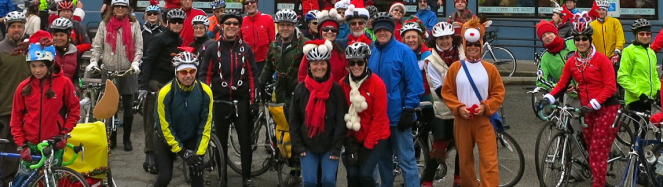
That’s all folks– I’m now off to do the Jingle Ride.  More pics on the FB page later…

A group of cyclists in holiday gear ready for the JIngle ride.


fitness

Fainting, Failing, and a “Creative Approach” to Fitness (Guest Post)

This week I fainted during my first-ever personal training session. I’m okay now, and everyone at the Toronto West-End YMCA who helped me were real champs about it! (Special thanks to my boyfriend who came and retrieved me afterwards as well.)

I was doing squats with the barbell, which weighs around 50 pounds. That might not seem like a lot, but it was more than I have worked with before. I wasn’t sure how it happened, but based on what the trainer said, as I was bracing myself for the exercise, I may have been holding my breath. (Rookie mistake!)

Anyway, by the time I put the bar back on the rack, I stopped to catch my breath and suddenly everything went blurry and dark. The next thing I knew, there were 3 YMCA employees around me, including the trainer, and I had an oxygen mask in front of my face. I was also slightly damp because I had apparently spilled my water bottle as I blacked out.

I wanted to write about this because I felt like it should/could have been a really embarrassing or discouraging moment. I could have thought all manner of things about myself: I’m weak, I’m out of shape, I’m not cut out for this, I should give up, I suck! I’m sure for some people who try new things incidents like this could turn you off from such activities altogether.

While some people might see this episode as a failure, I found it to be a valuable learning experience. And hell, I’ve had my fair share of fitness “fails,” including altitude sickness on a hike, nearly vomiting at hot yoga, sprained ankles, getting a nosebleed during horseback riding and tearing my riding pants fully open on my stirrups to reveal my floral underpants (unrelated incidents). Anyway, these things used to absolutely mortify me. I would definitely beat myself up about them and consider them proof that I was never meant to be a very active person.


But this time I feel surprisingly fine about it. In fact, I’m even a little excited to get back to the gym. Who would have thought! (Couch-potato Tracy can’t believe what she’s hearing!) So what’s changed?

For one thing, I know I had taken all the proper precautions beforehand: I was well hydrated, I had eaten balanced meals, and I wasn’t ill. I also followed up with the trainer after the fact and he noted that my form was good, I was strong enough to complete the exercise and up until the fainting, I seemed to be doing very well. I’m even going to a clinic in the next couple of days just to be sure the fainting wasn’t related to anything more serious.

The other thing that’s changed is probably my approach to new things and I credit this to the value creativity has in my life.

I’ve always been more artistically inclined than athletically inclined. I grew up with my mother and sister—both of whom are visual artists—in a household where we were allowed (encouraged!) to draw on the walls, repurpose things, make messes, break things and turn them into new things, and more! Creative and artistic endeavours were always non-negotiable.

Even as a busy grad student, I’ve always made sure that I’m pursuing or developing a creative skill. Some of these include basket weaving, photography, paper arts, crochet, wheel throwing/pottery, and more recently I was learning to sew in order to alter and draft my own clothes.

With my recent fitness commitments, I decided to put my creative hobby money toward personal training sessions, specifically to learn how to weight lift. Now, as an artsy type who was brought up in an all-female household, weight training might seem like an out-of-character choice. And to be honest, I’d never really been inclined to work with a trainer before—something about working one-on-one with someone in that context always weirded me out.

For better or worse, in the past I would have imagined training or an athletic approach as scary and intense (in a bad way). That’s probably why I avoided personal training for as long as I did. Training, to me, conjured images of a huge muscly person shouting in my face telling me to give them “5 more!” while snot, sweat, and tears dribbled down my face. (And sure, some people are into that! And that’s cool too.)


But for me, categorizing fitness as my new creative pursuit made me approach it differently. This time, instead of working with clay or fabric, I’d be working with my own body. And in a way, this idea made me more curious than fearful.

For example, when working with materials, painting or wheel throwing or what have you, you make a huge mess. With pottery, there’s clay e-v-e-r-y-w-h-e-r-e. And I’d never make it through a session without having something I was super proud of completely collapse. In fact, this was a technique I learned the first few times I threw on a wheel: we weren’t allowed to keep anything we made. The purpose was just to play around, figure things out, be curious, and enjoy ourselves.

I have always loved this mentality when it comes to creative endeavors: most of the time, it’s messy and can often be more about the process than the result. It’s also unpredictable; with pottery, I can’t count the number of times I planned to make mugs and ended up with bowls. Or vases, or tumblers, or bowls. (Bowls are probably the thing all pottery “wants” to be if you leave it to its own devices.)

I think I unconsciously applied this approach to my renewed interest in fitness and the reality of failures: it can be messy and it’s a process. It’s unpredictable at times, and when you’re starting out you’re not necessarily going to churn out beautiful mugs every time. Or lift weights like a pro.

And while I know that the stakes are definitely higher with fitness, (i.e., you’re not going to injure yourself if your clay collapses), I’m speaking more to my desire to keep going and not to succumb to discouragement or embarrassment. I would never give up on my usual creative pursuits just because I made a few ugly things. Likewise, why should I give up on fitness from a few failed attempts?

I can only learn from my mistakes and keep going.

What sort of “fitness fails” have you experienced and what did you learn from them?