food

Goodbye kale! Goodbye quinoa!

quinoaIf you don’t like it, don’t eat it.

If you don’t like it, don’t do it.

Those are sentiments we voice a lot around here. But we don’t always live what we preach.

Tracy might be better at this than me. She even penned a break up letter to chocolate. See Dear Chocolate, I Don’t Love You Anymore. And you know her views about road cycling.  (Not me. Not ever. Chocolate and I are besties, right after coffee. And I love riding my bike.) We’ve also worried about foods that are running out. See Saying goodbye to some of my favorite foods.

Today’s post though is about me giving up on trying to like quinoa and kale. As a friend joked, they’ll throw me out of the vegan club now for sure. (Tracy’s membership is pretty secure. First, she’s a good vegan, Me, I’m just aspiring in that direction and minimizing dairy. Tracy also loves kale. See her post about loving kale, Falling in Love with Kale, One Recipe at a Time.)

I sometimes persevere with foods, trying to like them, because I ought to. And sometimes it’s even worked. Olives and avocado, for instance, are foods I didn’t like growing up but that I love now.

But kale still tastes and feels to me like something that ought not to be eaten. Lately it’s been showing up everywhere. A perfectly innocent salad I ordered recently came with added kale. Blech. Quinoa, I kept wondering if I was cooking it right.

Now I get that some people love these foods. I don’t want to rain on your kale and quinoa parade. You do you! Enjoy!

But for me these foods have become ubiquitous. Especially as a travelling vegetarian. At the conferences I attended recently there were often special meals for the vegetarians. And it’s as if they all phoned one another, or did the same Google search. “I know. Let’s serve quinoa. It’s a complete protein. And add a side of kale. It’s trendy. Vegans love that.”

I was happy to find out that I’m not alone in my dislike of quinoa. (See Confessions of a Quinoa Hater and I hate Quinoa.) A friend is made sick by it and so lists it as a food allergy. She’s not sure that disliking something so much it makes you sick counts as an allergy but for hosting purposes, she won’t eat it so the answer is “yes.” That was another odd thing about my European conference travels, people kept asking if I was allergic to meat. Not really, I’d say, but I won’t eat it.

Oh, and I apologize if I ate kale or quinoa under your watch and claimed to enjoy it. I didn’t really. But I was trying to and engaging in the “fake it till you make it” strategy. No more.

Do you have any foods you think you ought to like, either because they’re extra healthy, extra trendy, and everyone else seems to love them? What’s your story?


kale

cycling

Heat, hills, and happy birthday Susan!

image


Or why we decided to ride 80 km in a heat advisory!

Yesterday was Susan’s birthday and we celebrated on Sunday with a bike ride. Not just any bike ride. Nope. We celebrated with a plan for a 90 km bike ride up and down the escarpment on heat alert day. Why? We have our reasons.

Me, I’m just back from almost two weeks without my bike attending academic conferences in Sweden and Scotland. Great for walking, not so good for cycling. (Or running. But that’s another matter.) So I was anxious to get back on my bike and ride. I also like riding with these wonderful people: David, Natalie, Susan, Sarah, and Cate. And it’s a birthday bike ride. My favourite. So hot or not, hills or not, I was in.

How was it? Well, hard. Really hard. Our Sunday ride actually reminded me of the bike rally last year which didn’t have those hills but did have the heat alert days. (Read about that here.) But we did the worst of the hills in the morning, then we had a lovely lunch break (with french fries and a strawberry milkshake!) and noodled around on the flats for awhile. By the end, we were all pretty beat. We ran out of water a few times and it began to feel like it didn’t matter how much you drank, you were still hot and thirsty. I had dried salt on my face–despite a shower and washing my face–into the evening. Ending at Susan’s house we were treated like royalty by Susan’s partner Tim. There was an optional hose down with cold water, pitchers of gatorade, cold beer, and lots of snacks. Also, a hot tub with the temperature turned down and an ice cream cake.

Happy Birthday Susan! That was a very hard thing with an amazing group of people.

Sarah’s story:

I rode first and foremost to celebrate the birthday of the awesome Susan. Also, after following Sam around Europe for two weeks of conferences, I definitely needed a long ride to get back in the groove before losing the next couple of weekends of Pride festivities.

But even more importantly, Susan’s birthday slog, I mean ride, I ended up learning some things!

First, I put a big fear to rest : I don’t do well in the hot weather. Heat alerts for me usually involve getting heat stroke while sitting in the shade. But riding in the heat is surprisingly okay. As long as you don’t stop (what red lights?) you make your own breeze. Reassuring for me as I was worried about surviving the six days of the rally at the end of July!

This was also a first ride for me to try wearing both sleeves and leggings for sun protection and cooling. I’m thrilled to report that they feel cooler than bare skin with sunscreen. Definitely a wise addition to my cycling wardrobe and best of all – no funny tan lines!

Because I have often ridden with Susan, Sunday’s ride was on familiar, tough terrain, so it was a pretty good yardstick for my progress on the bike. Even in the heat, I was able to just ride (in “granny gear” mind you, but still!) up hills that last year left me with burning thighs and gasping for breath. I was really happy to be able to ride with Nat and share every strategy I had learned to make those hellish hills less horrible (Answer? There is nothing you can do to make the second trip up the escarpment suck less.).

And because I’d completed the back-to-back 90km ride requirement at the end of May (fighting wind instead of heat!), I was perfectly happy to take a shortcut back to the garden hose, Gatorade, and beer waiting for us back on Susan and Tim’s lawn. Heavenly! Happy birthday, Susan!

Here’s some words from the birthday girl herself:

Last August, Sam introduced me to the idea of the birthday bike ride. I don’t know what is so much fun about doing REALLY HARD THINGS with good friends but I love it and I decided to copy her. . .again. My birthday bike ride was supposed to be a fun casual ride but given our training requirements and the heat, it was not very casual. It was a hard core experience with a bunch of invested people. From this vantage point, I romanticize it but when I wanted to throw up at Tremaine and Main Street, it was not romantic in the least. Hell is 6 lanes of fresh pavement, suburbia on one side and a corn field on the other, no trees at 33C. Luckily there was a man with a hose waiting for me at home. Think what you will of that. . .it was a great birthday.

Here’s Cate’s reasons for riding in a heat wave:

I was riding for a lot of reasons on Sunday. The “required” Bike Rally back-to-back 90km training rides, which Susan and I had planned weeks ago — I’m stubborn about that kind of goal. Celebrating Susan’s birthday. Celebrating life. And because the simplest way I know how to see the world is from the saddle of my bike. There was a terrible death in my family on Friday, and there was nothing I could do to be helpful until Monday. So I joined my gang and rode, feeling the hills in my every cell. The otherworldly light-headedness of riding in that kind of heat matched what was happening in my soul. I rode strong and hard. The heat cauterized some of the grief, the sadness that I wasn’t ready to let in. And being with alive, struggling, joyful people reminded me to be right where I was, be in my life.
Next, Nat chimes in:
I was going into Sunday mindful I was the slowest rider and least experienced. The day before I had done 120 km (my longest ride ever) with David & my partner Michel. I needed to get my back to back rides. I would get to ride with awesome humans. I needed some hills training. Sarah designated herself my sweeps pal and coached me along, preparing me for a coming hill or sharing gearing strategies. It was a very challenging ride for me. Being round I heat up quickly and because I’m not as skilled a rider it takes a lot for me to sustain even a modest 20 km/HR pace. I hit my first wall just before we stopped for lunch. My tired right calf started cramping as we passed Milton towards Campbellville. I started crying from the heat and fatigue. Sarah dosed me with some awesome maple syrup gel that calmed the cramps down. We ate lunch and I wondered if I had over committed. The wind was so hot it burned inside my nostrils. I took odd comfort when everyone admitted they were surprised how hard the ride was. After lunch we flew down the escarpment for what seemed days. It was glorious.
I hit the second wall around 70 km. I was feeling like I was crawling along and my glutes were on fire. The tears started again and I couldn’t stop. Everything hurt and I was just sick of the heat. I said I might need to end the ride and get picked up. After some chatting Sarah offered to take me a shorter route back to Susan’s and Sam came with us. We tootled back hitting about 80 km in total.
Afterwards we debriefed in the hot tub. I was pretty embarrassed about my snot bubble sobbing. I also knew that these were exactly the kind of humans I trusted not to mock or shame me. I felt safe to push past my limits and I’m glad I did. I got help all along the way. David updated me on my pace regularly, stressing how great I was doing for a back to back ride. Susan made sure the group waited for me to catch up at regular intervals. Cate has this amazing lightness about her when she’s on her bike as she calmly asserted it was ok for me to stop riding if I needed to. Sarah topped up my water, nodded emphatically when I muttered my self-soothing stuff out loud and affirmed that yes, these were cuss worthy hills. I’m so thankful to Sam for introducing me to this lovely group of people who are really into their physicality. It was an uphill ride through hellfire and it was awesome. I can’t wait to do it again.
Our lunch break!

image

image

We survived! After the ride, we relax

David said (on Facebook) “I realized in the middle of the night that we should have taken a photo of all of our bikes scattered across Susan‘s front lawn like we were 14 and hanging out.”

No bikes on the lawn photos but these capture the feeling

image


ride


Also, if you want to encourage us you can of course sponsor our team in the bike rally.

And buy our t-shirt and mug, all proceeds to the rally!

img_4963-2

advertising · food · gender policing

Now men can have sad treats too

BLOG_SCOW_ForHim_PackagingShot

https://www.youtube.com/watch?v=o3pjEu7EaL8


http://blog.360i.com/web-design/skinny-cow-for-him

Thanks Kimberly V!

See also:

fitness

What if you’re good but you won’t “own the podium”?

Some of you may have heard that Canadian marathoner, Lannie Marchant, may not be part of Canada’s Olympic team in Brazil later this summer.

This isn’t the first time the athlete has had trouble meeting Athletics Canada’s bar. According to this article:

Four years ago, the runner from London, Ont., had met the Olympic standard with a strong run in Rotterdam. Her time of two hours 31 minutes 51 seconds, however, fell short of the much tougher criteria set by Athletics Canada (2:29.55). She appealed but lost and didn’t go to the London Games.

And according to this opinion piece, Marchant has excelled since then, not only meeting Athletics Canada’s tougher criteria, but also becoming a role model for other runners:

Marchant’s career has come a long way since then. In 2013, she broke Ruegger’s 29-year-old Canadian record, running 2:28.00. The next morning, Marchant was on the cover of every newspaper in the country. Since then, she’s represented Canada at the world championships, won a Pan Am Games medal and qualified for Rio in both the marathon and the 10,000 metres.

Marchant has also become a transcendent figure in running in this country. She’s talked candidly about body image and is a role model for runners of all ages. At the national cross-country championships last November, high school kids lined up to take selfies with her. And so did their parents.

Marchant is smart and accessible, both as a relatable figure that stands alongside recreational runners at local road races and as an athlete with social media savvy, promoting running beyond the diehard track fans.

The trouble is, despite being a strong contender in a more limited sphere, Marchant isn’t likely to reach the podium at the Olympics.

Canada’s “Own the Podium” organization focuses on getting Canadian athletes to the podium. For the summer 2016 games, Own the Podium aims to get Canada into the top 12 medal count. For the summer paralympic games, OTP’s goal is for Canada to place in the top 12 in the gold medal count.

Marchant is already going to be in Rio to run the 10,000 metre event. It’s not as if she would be taking a spot away from another Canadian woman who could run the marathon instead. Each country is permitted three marathon spots, and only two Canadian women have qualified. Her argument is, “I’m going to be there anyway.”

But what if she performs poorly? Athletics Canada is, as this article argues, “fearful of … blemishes.” Author Michael Doyle argues further:

What’s sad about all of this is that Athletics Canada and Own the Podium are probably leading this country down the wrong path when it comes to the most lasting impact that sport has in this country. A recent study reveals that participation in sports is at an all-time low, and that children become less interested as the emphasis becomes overly performance based. Denying one of Canada’s strongest role models a chance to run in a marquee event at the Olympics sends the wrong message.

I’ve blogged before about completing versus competing and about finishing without placing. But does the sentiment that we can go out to have fun, going for a personal best even if we have no chance of actually winning carry over to the Olympics, where the stakes are higher?

Is Athletics Canada and Own the Podium so overly focused on results that they’re denying some of the positive social influence Olympians can have–encouraging kids to participate in sports, being good role models on important issues like body image, and that sort of thing? Do Canadians only care about the athletes who win medals? Should our national body only support athletes who have a chance to contribute to the haul?

There’s a bit more to the story than I’ve outlined here. The Canadian marathon team won’t be announced until July and apparently Marchant hasn’t been given a definitve “nix.” But many other nations, including Kenya, Ethiopia, the US, and the UK have already confirmed their teams.

Marchant has taken steps to prove her fitness to compete in both events. And she is Canada’s top-ranked woman in the marathon.  She’s also 32 years old, so it’s not realistic to think she’ll have another opportunity for the Olympic marathon.

What do you think? If she’s going to be there anyway, should Canada’s top-ranked woman in the marathon be allowed to compete in that event even if she has no chance of “owning the podium”?

Update: On July 11th, 2016, the Canadian Olympic team announced that Lanni Marchant will represent Canada at the 2016 Olympics in Rio in both the 10000m and the marathon.

fitness

What about speed? What about altitude?: Two problems with step counting

I blogged recently about counting steps while at conferences in Europe. Short story? Good, because Europe. Bad, because conferences.

But still I got over 10, 000 steps in everyday and while in Scotland hit some new highs.

screenshot_2016-06-15-16-17-14.png

That’s a lot of walking.

But there’s at least two ways that this number doesn’t tell the whole story.

The first is altitude. I reached 25,000 steps the day Sarah and I walked up to Arthur’s Seat in Holyrood Park.  What’s Arthur’s Seat?

Holyrood Park is a short walk from Edinburgh’s Royal Mile in the heart of the city. It is a 640 acre Royal Park adjacent to Holyrood Palace.

family · fitness

Family vacationing: exercise in/as compromise

Every year I go on some sort of vacation with my sister and her family, which includes her, her husband, and three children ages 16, 13 3/4, and 11.  Sometimes we go to the beach in South Carolina, and sometimes they come to Boston to visit me.  I look forward to spending time with them and relish hanging out with and being active with the kids.  I bought them their first bikes and try to give them active wear and gear that will be useful and promote/encourage love of sports and active living.
Okay, yeah, I’m a tiny bit pushy about it, but I do come across with cool sporty merch for them (as a good sporty auntie should).
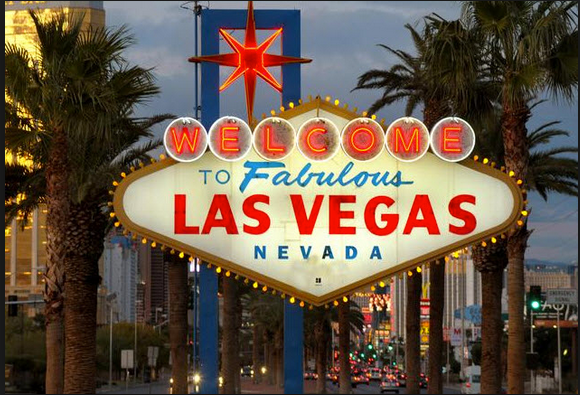
This year we are embarking on an ambitious trip:  we are going to spend a week in Arizona and Nevada, exploring the Grand Canyon, Sedona and Red Rock canyon, touring the Hoover Dam and then:  Vegas, baby!
Screen Shot 2016-06-19 at 8.31.31 AM
Now I should say that I’m not a serious hiker by any means.  I love moving around in the outdoors on foot, bike, kayak, etc.  But backpacking rim to rim is not my idea of a good time.  That said, my sister and her family are much less sporty and outdoorsy than I am, and not as all-embracing of the wondrous variety of conditions that nature offers us.  To wit:  my niece just said to me on the phone today, ” please tell me we don’t have to hike when it’s hot.”  Hmmm.  Arizona in late June.  Uh, honey, let me explain something…
In addition, my sister is one of those people who, when walking around within 50 yards of trees and grass , intermittently stops, points, and says, ” do you think that was a snake?”  My brother in law, during a recent trip on foot from a beach condo to the pool, told me that he was looking at the wet marsh area at the complex, preparing himself in case an alligator should make his presence known.
This is what I’ve got to work with here.
Enter the delicate art of exercise compromise.
This blog has talked a lot about the virtues of exercise in groups of mixed abilities and mixed goals.  Cycling with faster riders can make us both faster and better bike handlers.  Practicing with newbies in martial arts and yoga helps us reconnect with the beginner mind and deepen our appreciation of the fundamentals.  Tracy and her Niagara women’s half marathon posse just blogged about finding pleasure and joy in running together while completing a variety of course goals.
But what if those persons of mixed abilities and levels of enthusiasm happen to be members of one’s own family?  It’s not clear that I can single-handedly motivate a week’s worth of esprit de corps tramping around in the hot Arizona desert with my sister and three grumpy sweating kids.
Short of doing a tour of northern Arizona malls, this trip WILL involve some outside-in-the-hot-sun time.  And I want them to have fun– enough fun that they’ll be interested in pursuing their own outdoor adventures in the future.  So I’ve made some compromise plans.
We are staying in motels with good pools, and will cool off and frolic in them at the end of each day of hot weather activity.
Screen Shot 2016-06-19 at 8.35.41 AM
We are doing a bike tour along the south rim of the Grand Canyon, which should be fun, allow us to cover some  ground and see spectacular vistas, but not be too strenuous ( I hope).
We are going to Slide Rock state park in Sedona, where we can all get wet in rock pools and their natural water slide.
Screen Shot 2016-06-19 at 8.38.27 AM
Okay, I’m insisting on a few short family hikes, but will try to do them as early as we can pry the teenagers out of bed ( wish us luck).
I’m not going off on my own, as much as I’d like to kayak and hike on the Colorado river in Black canyon.  It’s not something that the rest of the family would enjoy, and I’m there for family togetherness fun.
Luckily, once we get to Vegas, we can spend hours hanging out by a pool that looks something like this:
Screen Shot 2016-06-19 at 8.43.47 AM
So, readers, what have you done on outdoorsy family trips with reluctant hikers or walkers?  Any tips or strategies?  What has worked for you?  What has failed spectacularly?  I’d love to know.
injury · Sat with Nat

When it doesn’t come easy

I’m sitting and writing while icing my right calf. I pulled it on Thursday night’s soccer game after maybe ten minutes of play. I’m loving soccer but even warming up and being careful doesn’t mean I won’t get injured. I’ve been thinking a lot about my tendency to share when my fitness goals are not going easy. It’s a deliberate choice but it’s a tricky balance. I try to be genuine without holding a pity party. I am choosing to do challenging things because I think they are interesting.

A few weeks ago I got to go to WisCon, a feminist sci-fi and fantasy convention. I blogged a bit about it here. One of the panels I attended was “There Can Be More Than One: What Makes Strong Female Characters”. It was an excellent discussion about the kinds of strong women can be. One thing that came up was that strong female characters were not necessarily physically strong or never needing help. They were the characters who rose up from adversity again and again, changing tactics, engaging allies and persevering. In my understanding we were exploring what it means to be resilient and how writers and fans can look for nuanced understandings of strength in the stories we share and read.

I find strength in sharing my thoughts and feelings with friends. I think we are creating spaces to acknowledge when it doesn’t come easy. It’s a small rejection of the the well-lit, effortless image of fitness  found on Pinterest, fitspo and magazine ads. It’s about building each other up, especially when we are down. Down is a place I know well with many years of grappling with depression and anxiety but I also get the intense joyful moments too, sometimes in the same day.


So me and my cranky calf are attempting a 100 km ride today. Last weekend I chose to do 50 km on Saturday as it was very hot and windy saving the 100 km for Sunday. Unfortunately my tumbles damaged my derailleur and it snapped off just after half way so only 60 km that day. 

a mechanical problem

My bike is back from the shop and my wallet is a little lighter but I think I’ll have a good ride.

cycling · fitness · Guest Post

JoyRide (Guest Post)

I found this pond the other day at the 40km mark on a bike ride.

Lake me

I’ve lived in Toronto since 1988 and I’ve never found the Rouge Valley Conservation area before.  It was a perfect oasis to stop, drink, gel. And I found myself feeling deep, quiet joy, the kind that only comes from strength and fully being in my body.

Sunday was a tough day.  The Orlando shootings were hard in my heart, triggering loss and fear and confusion. What happened there was the nightmare I’d once feared in every queer space, one I’d finally learned to let go of. This came back, deep.  On top of that, I’d had a super-busy week and was heading into a weeklong business trip, with a looming need to do back to back 90 km rides next weekend to fulfill training requirements for the Bike Rally and the Triadventure.  (Those are donation links if you feel generous — still need to meet my targets for these amazing causes).  I had worked all day Saturday and did a pile of work on Sunday morning, then was having someone for dinner.  As I pulled on my bike clothes, I had the internal debate:  do I really need to do this ride?  can I get away without it?

I set out planning to ride about 60 km, which felt like all I could fit in before I had to buy food, shower and cook. I ended up riding just under 75km, including a personal record, according to strava, on the evil hill up Brimley from Bluffers Park.

As I rode, I wasn’t stuck in my head, and I wasn’t anxious, and I wasn’t sad.  I wasn’t anything.  I was just me.  Me and my bike. Heading east and exploring.  Unexpected strength and pure joy.  My bike is a time machine that way — I get to be 9, set free to find the world.

I learned how to ride a bike by learning how to yank myself out of a free fall onto gravel. I was 7 and we had just moved to a small town near the military base in Germany my dad was going to teach on for two years. My parents bought me a blue folding bicycle and we went camping with the Stolzes. Sandra was my age, and Blair was a year younger.

Our dads positioned us on our bikes at the top of a hill, on a small gravel road, steadied us, then sent us down. My memory puts Rothmans in their mouths and bottles of beer in their hands, lanky young men free and heady in Europe in 1972.

By the end of the weekend, knees embedded with bruises and gravel, grunting through tears and pedaling furiously when I started to fall over, I could ride a bike.

(I learned how to swim in Germany too, in a military pool where a man with a big belly and a speedo yelled and poked me with a stick if I reached for the edge of the pool. There’s a theme here).

The 70s were the days of free range parenting, and my bike and I quickly fell in love. I would hang a little plastic bottle of apple juice around my neck and roll away from the grey white apartment building with the strange metal blinds and five other Canadian families, down a little trail along the tiny river a block away. I’d ride to the next town, look at sheep and perfect, cosy community gardens, beg samples from the carpet store for my dolls, learned how to buy gummi bears in German. Then the next town, finding the world on my wheels. Later, when my parents’ marriage started unraveling, listening to the wind and the steadiness of my pedalling.

For two years, we threaded across every country in Europe in our orange VW camper van with the pop up top, Fjords and farmers and small icy streams I fell in. My father pretending to see the Loch Ness monster before throwing a beer can out the window in the green hills, accidentally camping on a wasp’s nest the summer my uncle traveled with us in Denmark, sending him screaming out of the tent in his yellow pyjama suit.

We camped in Rotterdam beside the water one summer, and a guy pulled in on his bicycle, and swiftly unpacked khaki panniers, made a tent, took a tomato out of his bag and cut off a slice with a red Swiss Army knife. I watched in awe — just him, his bike, a tent, a tomato. Self-contained, completely free, independent, alone.

germany“I want to do that,” I said to my mother.

“You don’t even like tomatoes,” she said.

Two years ago, I did a five day bike trip in Germany with two friends, where I finally got to live into that tomato-eating, riverside-camping aspiration.

And I found that joy and openness on Sunday, on my bike. Pedaling hard up the incline of Kingston road, down and up the hard hills.  The explorer among the beach-goers, the people getting on with their Sundays.  Fully me, fully my age and fully myself at 9.  Finding gratitude in my life on a day that was filled with heaviness.

IMG_3256

Fieldpoppy is Cate Creede, who works as a consultant and educator in the space of strategic system change in academic healthcare in Toronto, focusing on creating sustainable, socially accountable healthcare communities. She also co-leads an all-volunteer learning and development project for orphaned and vulnerable youth in Uganda, for which she would love any support:  https://www.canadahelps.org/en/pages/nikibasika-development-program-66/ . She also blogs at fieldpoppy.wordpress.com.

fitness

Loving the little things but why don’t we celebrate them more?

image

Here on the blog we often talk about the virtue of small steps. Tracy talks write a bit about doing less. Me, I’m more a shoot for the moon kind of person but I’m that way because it leads to me doing more even if I don’t achieve the big goal. The thing is, for me, I don’t feel bad for aiming high and settling with a lesser achievement.

I think we ought to celebrate our small achievements. And as Tracy wrote recently it’s not all about getting better all the time.

We’re in a society that seems only to care about BIG CHANGES. But the incremental gains after the first chuck of achievement are often small. Most of the good comes from the initial small thing. And the small thing may be more sustainable.

So maybe we ought to celebrate the small stuff.

Here’s two examples:

Running: We’ve written before in praise of small distances. I loved my one mile a day running streak. And the New York Times touts the health benefits of running 10 minutes a day.

Weight loss: Again, we’ve written in praise of moderate weight loss. Everyone talks about the health benefits of weight loss but we tend to think of weight loss in terms of big big transformations. You know, biggest loser caliber weight loss. But almost all the health benefits of weight loss come with small losses, say of five per cent of your body weight.

Here at the Feminist Approaches to Bioethics Congress Kate Hunt opened with a plenary address on gender and health care. As a success story she looked at a fitness and health group for men associated with local football clubs. She counted this program as a success because many of the men, who weighed on average 250 lbs, lost and kept off about five to ten lbs. The researchers who designed the program count that as success in terms of health impact even if it’s not biggest loser style success.

Losing and keeping off 5-10 lbs isn’t anywhere near as hard as losing 50 lbs and yet you get many of the health benefits. Ditto running a mile versus running a marathon.

Why then don’t we care about small achievements? How might we change our thinking about this? 


fitness

Still having fun (kind of) with the GCC

I got recruited onto a team for the Global Corporate Challenge that started a couple of weeks ago. It’s called an “Employee Health and Performance Program” and it takes place world wide. You can read more about it here.

Shortly after I started it, I heard about some worries I’d never thought about, like “who owns the data?” and “what do they use it for?” Like, do they use it to pressure employees? Is there a Big Brother-esque thing going on here, with our employer keeping tabs on our health and activity level?

I don’t know. But I do know that as a “leader” in my organization on a team with mostly people who have less power than I do (except for one other member), I’ve had to calm my instinctual desire to do the “go team!” thing for fear it gets mistaken for putting pressure on others.

So the whole workplace thing has suddenly added a couple of dimensions to the challenge that have an edge to them that I hadn’t planned for or had the foresight to see.

Also, on a more personal level, I started off with a modest target of 10,000 steps a day as my “stage one” target because, frankly, I had no clue how many steps a day I usually got. Well, it turns out that my daily average is somewhere in the neighbourhood of 16,000 (or just a bit more). But that’s factoring in a half marathon and quite a bit of other activity.

Cycling and swimming convert pretty nicely into steps. On swim days, I easily get in 10,000 steps before 8 a.m. because each 1000 m in the pool = 4750 steps.

So when it came time to set my stage two target, the app recommended I go for 16,627.  I said “no” to that, and took a gamble on 13,000. Why is it a gamble? For one thing, I’ve got no plans to do another half marathon in the next little while. For another, I’m going on vacation on the boat for two weeks starting next Wednesday. I’m worried about even reaching 10,000 a day on that trip.

I’ve also discovered a few other things on this challenge. I had never walked to work before and now I’ve started. I like walking to work. Not only does it give me an easy 6500 steps before I sit down at my desk and after a day at the computer, but it’s a good head-clearing opportunity, more relaxing even than riding my bike. I like my riding my bike, but I feel compelled to walk, especially on days I don’t swim or run, because I am more likely to hit my steps target. So the challenge is changing my habits, but was there really something inferior about riding my bike over walking? I doubt it.

The most alarming discovery has been just how unbelievably inactive I am when I decide to work at home. It’s just not that far from my desk to the kitchen and back again. I can get from breakfast to lunch time without even taking 1000 steps. Sam and I had a looming deadline for the book, so I had a few days like that over the past couple of weeks. I had to add something to the day. And truth be told, the GCC got me out the door for a run a couple of times I would otherwise not have gone.

And it’s not only when I work at home. Yesterday I missed my Sunday long run because we had to go out of town, which meant taking a drive. We had work to do on the old boat and we met some friends for dinner. But all of it was really close together and by the end of the day I was exhausted yet had only managed about 7,000 steps.

I’ve started to walk to personal training. The other day, when Renald and I went to a movie, we got there early. We used to like to sit in the theatre when we got there early so we could chat before the show. Not this time. “Let’s go for a walk — we have almost half an hour,” I said. He looked puzzled, but obliged. We did walk and talk. So there’s that. Another example of how the challenge has changed my habits.

I’m a little concerned about the fact that there are four stages. If I’m already at 13,000 (a compromise that puts some pressure on me but not as much as Big Brother wanted to put), then what will I do when I reach stages 3 and 4? So far I’ve taken 241,847 steps or 155 kilometres, swum 9,400 metres (the equivalent of 44,650 steps) and biked 29.15 kilometres (=8746 steps) since May 25th. I’m not sure what to do with that info. But it suggests to me that I’m active enough.

David Sedaris, one of my favourite humour writers, wrote a hilarious article for the New Yorker called “Stepping Out: Living the fitbit Life.” He captures well the obsession with getting more and more steps in a day with his new fitness tracker, starting small and then adding and adding and adding:

I look back on the days I averaged only thirty thousand steps, and think, Honestly, how lazy can you get? When I hit thirty-five thousand steps a day, Fitbit sent me an e-badge, and then one for forty thousand, and forty-five thousand. Now I’m up to sixty thousand, which is twenty-five and a half miles. Walking that distance at the age of fifty-seven, with completely flat feet while lugging a heavy bag of garbage, takes close to nine hours—a big block of time, but hardly wasted. I listen to audiobooks, and podcasts. I talk to people. I learn things: the fact, for example, that, in the days of yore, peppercorns were sold individually and, because they were so valuable, to guard against theft the people who packed them had to have their pockets sewed shut.

At the end of my first sixty-thousand-step day, I staggered home with my flashlight knowing that I’d advance to sixty-five thousand, and that there will be no end to it until my feet snap off at the ankles.

The point is, you’ve got to stop somewhere or getting more steps becomes an obsession of its own. I mean, I haven’t forgotten it for the whole day yet, but one morning I forgot to put the thing in before I left for the Y to go swimming. I can’t wear it in the pool but hey, I usually get a few hundred between home and the locker room and back!

I can’t imagine my disappointment if I forget it for the whole day! As I  said on Sam’s FB page the other day, “what’s the point of activity if your gadget doesn’t track it!?” Really, not really. But you can see it going that way sometimes.

I guess the long and short of it is, I like the effect of walking places where I might otherwise not walk — like to personal training, or even just going out for a walk, which isn’t something I do much these days. And I appreciate the info about how very inactive I can be when I settle into a project at my desk and don’t come up for air.

I can live without the added pressure of having the app dictate what it thinks my target should be. And I’m not sure how keen I am about the competitive aspect of the challenge. It feels a little pushy or something.

At the moment I’m not thinking about moving to a fitbit or some other more advanced tracking thing once the challenge is over. But I’ll have to see by the end of 100 days just how wedded I am to the idea of knowing how many steps I took in a day.