fitness

We all gotta die of something, but probably not what we most fear

Maybe you saw this infographic yesterday. I got it from a Business Insider (Australia) article that showed up in my newsfeed: “The things most likely to kill you in one infographic.” With all of our fear and anxiety about terrorism and plane crashes, it turns out that what’s way more likely to kill us is the health-related stuff.

I drive my car without giving it much thought, but I obsess about the possibility of being killed or seriously injured riding my bike on the road. Maybe in this infographic they both count as “transport related accidents,” but in terms of sheer numbers, the death toll in car accidents is enormous.

For me, I think a relevant factor in the fear is that in the event of an accident, cyclists are more vulnerable to serious injury than people in cars. I had the same worry on my motorcycle, namely, that the consequences of an accident were just likely to be that much worse. But I don’t even know if that’s right. (as an aside, the reason most of us are unlikely to die in a war is that most of us are unlikely to be in a war zone. I’m sure that statistic goes up enormously if we limit the demographic to people living in war zones).

What the info-graphic shows is that there are lots of things to worry about before “transport-related accidents.” Suicide is more probable than that. But there are a whole slew of health things, and this infographic is meant to give us perspective.

The good thing about health stuff is that lots of it is preventable. There is documented evidence to support the claim that adopting a healthy lifestyle, with some sort of movement, a balanced approach to eating, adequate sleep, and attention to mental health, can increase a person’s expected lifespan.

And while we can’t plan not to be in the wrong place at the wrong time, we can make decisions about how to live day to day in way that makes some of the things at the top end of “things most likely to kill you” less likely.

Back in the day, people used to die of something called “old age.” If you look at this infographic, “old age” isn’t even a thing on it. This makes sense because it’s not an ailment in itself — of course it’s not. But it would be helpful to have some age stats on some of these health-related causes of death. My guess is that many of them become more likely as we get older.

And that too bodes well for people who are in a position to make healthy choices.

Is this kind of thing enough to make me relax about riding my bike?  Well, I’m not so sure.  I mean, I get that the probability of dying of something not health-related is relatively low. But everyone dies of something. And one thing we do not have the gift (or curse) of is knowing what, in our own case, that something will be.

Meanwhile, I agree that there’s no point in being overly preoccupied with our inevitable death.  The how and when of it is not within our control. But if, as this infographic suggests, chances are good that most of us will die from “natural causes,” that makes at least a good statistical case for keeping things in perspective.

What about you? Does this infographic give you helpful perspective?

fitness · running

I might try streaking

image

Some of my serious running friends on Facebook have incredible running streaks. There’s a professor at Cambridge who ran everyday from 1980 to 2002, twenty two years straight, five miles a day. He’s had other streaks since but none that long. Really though with some short breaks he’s run every day since 1980, since before I finished high school.

The longest running streak has been going since the year I was born. Ron Hill, the 1970 Boston Marathon champ has averaged more than 7 miles a day since December 1964.

Wow. Just wow.

Less impressively, but still beyond my imagination, I’ve got a friend with a running streak almost a year long. He’s been running for 355 days averaging 11.
6 km/day.

I can’t do that but I have wondered about the holiday version. It’s American, of course, which is a good thing because it’s a shorter streak. Canadian thanksgiving through to the new year would be too long, for me.

How’s it go?

“The run streak is designed to keep you running through the holiday season, and to bridge the gap between fall races and training for the spring. It can be difficult this time of the year to keep your running on track—but it’s much easier if you have a goal and a plan.

The goal is simple: Run at least one mile per day, every day, starting on Thanksgiving Day (Thursday, November 26) and ending on New Year’s Day (Friday, January 1). That’s 37 consecutive days of running.”

Read more details here.

So that’s 1.6 km a day for 37 days. If I run with Cheddar, my dog, once a day, we could do it.

fitness

On Going for Perfection (Temporarily)

Way back in the early days of the blog, in fact it was almost exactly three years ago, I wrote a post called “Why I Like Challenges.” There I said that one of the things I like most about a challenge is:

A challenge is short-term. I can commit to 12 (or even 30) days of hot yoga, but I wouldn’t realistically commit to daily yoga for the whole year, or forever.  It focuses me for a period of time and the very fact that it is time-limited helps me to stick with it. I can return to my regular routine with a sense of accomplishment. And then the regular routine feels totally manageable.

I’m doing a bit of a riff on challenges this week, and here it is: my challenge is to do my workout schedule to perfection this week. Planning for one week of perfection means that I don’t expect to or need to be perfect all the time.

When Sam blogged the other day about her current workout schedule, she noted that it didn’t include a rest day:

This is a rough outline. I haven’t scheduled a day off because life happens and I’ll inevitably end up taking one. Tracy is a fan of planning and doing less. My realism takes the form of planning lots of workouts and not feeling bad missing some.

I may be a fan of planning and doing less, but the fact is, I have a lot of trouble scheduling in a rest day. But rather than thinking, “that’s okay because I’m going to miss something along the way anyway,” I usually actually go into each week thinking I’m going to make it. But then I don’t. And I do feel kind of bad even though, realistically, it’s inevitable.

You might think then, that my challenge this week ought to be about not feeling bad about missing stuff. But instead, I’m going to make it about trying to get it all in, just this week.  I’m aiming for perfection, but only temporarily.

Here’s the schedule from now until I leave in December to visit Renald:

Monday: running or spinning (I ran)

Tuesday: swimming in the morning; indoor group cycling class on the trainer after work

Wednesday: personal training

Thursday: running or rest

Friday: swimming in the morning; personal training after work

Saturday: running or rest (depending what happened on Thursday)

Sunday: long run

When I get back from the holidays, I’m adding a second indoor bike class (Saturday mornings), running on Thursdays, and Mondays as a scheduled day off.

Getting it all in will be a challenge. But like I said three years ago, I can do that for a short time. In actuality, like Sam, my “regular routine” involves the implicit assumption that most weeks I will not make it to every workout. My biggest bugaboo this fall has been the allure of staying in bed instead of going to the Y for my 6 a.m. swims.  If I’m going to make it, I absolutely have to get to bed early enough.

I’m not advocating that we aim for perfection. But I do think it’s fun to try for it temporarily. A week, going into it with a “challenge” mentality, seems about right to me.

What about you? Is your ideal routine a challenge or realistic? If it’s a challenge, do you roll with it, like Sam, going into the week expecting that a day off will just naturally emerge? Or do you feel as if you should be living up to perfection every week? If it’s not reasonable to think you’ll do it every week, how about just for one week?

fitness

Smashing Fitness Industry Stereotypes

I was contacted last week by a fellow who is in a local networking group with me for a meeting that our group calls a BBI or Business Building Interview. These interviews are supposed to educate other members of the group about our businesses so we can figure out how to give each other more referrals and generate more business for everyone. Sounds great. What does that have to do with this blog?

Well, this particular fellow is the founder of a fitness oriented company in Milton, Ontario called Arm Training Systems. He wanted to meet with me to talk about how to integrate offering my services (Psychotherapy) into his client programs for people who are having difficulty reaching their goals.

I have to admit that at first, even though I’ve known him for a while and have even trained with him, I was a bit afeared of what he was going to ask me to do. Why? I’ll tell you my friends; if the goals that the people weren’t reaching were weight loss goals, I was prepared to, as my friend Ariel likes to say, “FEMINIST HULK SMASH” that idea right into the bed rock where it belongs.

animated-she-hulk

We sat down to lunch where I was very pleasantly surprised by his opening statement. It went something like, “I’ve been in this industry a long time and I’ve seen what happens when we narrowly focus on exercise, nutrition and weight loss. The results don’t stick and people don’t change. I’m not interested in people losing weight or reaching any particular metric. I’m interested in transformation. I’m hoping you can help me with that.” Talk about blown away… who talks like that? Well, Adam does. He’s a dreamer, and, frankly, a bit of a madman. But the other thing he is, that lots of other fitness industry types aren’t, is flexible and resilient in his approach to life and his business. As our discussion went on, I realized he seemed not to be attached or bound to the orthodoxies of the industry, where selling a program by preying on our fears and insecurities is a guaranteed quick buck. That approach actually makes him a little sick.

He is interested in service, which includes facilitating referrals to other wellness professionals like Osteopathy, Naturopathy, and Psychotherapy. We spent quite a while talking about how to get clients to actually call me. We talked about how many times his clients experience old traumas reemerging as a result of hard training. We talked about how issues of self worth interfere with his clients’ ability to believe they deserve to be stronger or more well. I continued to test him around the weight thing and he continued to give me answers that didn’t turn me all angry and green.

He also talked about the structure of his group sessions. After each round, his team picks a stand out member or two to become a “mentor” to the next group. Mentorship accrues the people reduced rates and other benefits but it requires them to also recruit friends and help facilitate the class. While there is certainly a business element to this, he really lit up when he talked about the community that started to emerge as people invested in not only the program, but the social/emotional benefits of leadership and facilitation. They left behind their insecurities and self-judgment and started to invest in the success of others.

This started me thinking about my fitness journey and what got it going in a consistent way. It wasn’t really about my goal setting or my standards for myself. It was about my friends and their support. I enjoy the strength and the endurance and the aesthetic for sure. I have a lot of fun. But I also have all these people and they lift me up. It was when the critical mass of community hit me, that all my other “metrics” accelerated. Without community, the metrics are a little empty.

So I’m now super excited to support his clients in their goals because I know, at least in principle, that the work won’t be undermined by a training program that relies on clients’ self loathing to get them to hand over the credit card. I so very much want him to be super successful so he can prove that fitness training and support can be done this way. I want the awesome women I know who have demanded respect for their accomplishments in ways that do not highlight the concurrent diminishment of their physical frame, to have more safe places to do the things they want to do. Health, flexibility, strength, stability, endurance and inner peace. . .it’s not actually too much to ask. A scale won’t give us that. Hopefully, this may be a step towards it in the fitness industry in my little corner of the world.

family · fitness

It’s the little things: Dumbells and our one bathroom family

wpid-dumbbells.jpgThis story begins with our decision to not to add a second full bathroom to our house. With three teenagers, it’s what everyone else seemed to assume we’d do. And while at times I’ve thought it would be a good thing, the truth is it seems excessive. We’re not frugal about everything. For example, we’ve got more than our fair share of bikes in this house. But when it comes to home furnishings and renovations, I find myself looking around at the world at how people live and feeling uncomfortable with how much space and stuff your typical North American family enjoys.

Whenever I see real estate ads for houses with more bathrooms than bedrooms, I’m perplexed. I’m reminded of my elderly neighbour’s comment when her daughter bought such a house, “Guess you’ll never get caught short there.”

We have one full bathroom (a second toilet and vanity downstairs)  and often we wait in the morning for a turn in the shower or bath.

What to do with that time?

I’ve been keeping dumbbells outside the bathroom door. And lately when teenagers yell over the music, “I’ll be out in a minute,” I’ve been lifting. Turns out you can lots of reps in in a teenager’s minute. At the end of that minute, I’m a bit less frazzled for waiting and I’ve had a few minutes of lifting.

I also keep a kettle bell on the back deck for when I’m waiting for the dog. Similar idea.

A friend does planks or burpees while waiting for her coffee to heat in the microwave.

When I hurt my shoulder a couple of years ago, I kept a physio band outside my office door and didn’t go in without doing some of the prescribed exercises.

Sneaking in minutes of movement in the spirit of making my day harder. I’m adding micro-changes in the direction of more movement. Thanks Dr. Mike Evans for this way of thinking about everyday movement.


fitness · Weekends with Womack

In praise of feet as travel accessory

imageTraveling, for me, is energizing, refreshing and a real pleasure. It’s a chance to leave my regular life for a bit and try on different modes of existence. Eating new foods, embracing a new cadence for the day, looking at other landscapes and diving into another environment are all ways to clear out old habits and experiment with new ones.

When I lived in Italy 16 years ago I tried dressing up more in response to the well put together Italians I encountered every day going about their business. Sadly, that habit didn’t really stick. But I did develop a love for Italian coffee that has persisted.

Another thing that travel does for me is remind me of the virtues of public transportation. In Boston I drive and ride my commuter bike around town but don’t usually take subway or buses much. In other places– especially cities with good public transportation infrastructure– it’s easy to get around on trams, trains, buses and even ferries. It may seem like it’s more time consuming (and does require some planning), but it’s a great way to see what a place is like. You can get a look at the locals in their daily lives and also see the working areas– not just the tourist sites.

Engaging down the path to discovery is sometimes taxing, though. Managing the logistics, luggage and lag (of the jet variety) sometimes leaves me a bit low energy. But I’ve noticed something else on my travels for the past two months: no matter how tired, lost, confused or homesick I’ve been, walking around always makes it better. Here are some examples where walking is a handy option;

I’m in an airport with a long wait, too tired to read. I walk around.’m newly arrived somewhere and majorly jet lagged– headachy and queasy and out of sorts. I walk around (preferably with nice friends like Samantha and Diego, who I saw Tuesday in Toronto).

I’m not feeling up for navigating yet on my bike in a new place. I walk around.

I want to get a feel for a neighborhood, but have no particular destination in mind. I walk around.

I spy a forest path or beach that looks enticing. I walk around.

My normal sports outlets are not available because I’m far away or can’t find or afford to do them. I walk around.

I’m traveling back to Sydney for 3 more weeks of work and exploration and social fun. I’m planning on swimming, kayaking, snorkeling, hiking, and of course riding my bike. But no matter what, my feet are available as a handy travel tool to combat lots of travel woes.

So thank you feet!

Sat with Nat · Uncategorized

The flu

  Hey friends,

Sorry for the dreary post but I’m down hard with the flu. Ah yes, you seasonal bit of dirt in my eye. 

I did get the flu shot, about 2 weeks ago but the tricky thing is you need 2 weeks to get the immunity. Dagnabbit!

So I look scary and feel worse. It’s been fever and chill, coughing and sneezing, the whole nine yards. 

So no run Thursday and likely not today. I’m lightheaded and woozie. I’m at mild risk of complications from the flu due to asthma. I’m one of those asthmatics who makes tenacious mucus. Oh ya. That is way  gross but important to know because it means having a hard time clearing my lungs. That can lead to pneumonia. Bad stuff that. 

So I’m trying to reconcile my strong drive to be productive with the fact I’ve been sitting at home making tenacious mucus since Thursday at lunch. 

I know taking a break when I’m this sick is important. It just sucks. I started a new health coaching program this week and have been tracking my activity. (More on that program next week!)

Now my activity numbers are low for Thursday, Friday and Saturday. I’m feeling defensive for no reason. My abs hurt from the coughing. Wha!

It’s not serious. I know. It’s just the flu and by next week I’ll be right as rain. 

When you are sick do you push through with workouts or take a break? I’d love to hear what you do a mind why. 

Stay fit & fiesty friends. 

fitness

Feeling proudly Canadian and curious: Do you know your beer mile time?

I’m a proud Canadian and proud Western professor today. Lewis Kent, a Canadian and a Western student to boot, has taken the men’s beer mile record. The official beer mile record book is here.

What’s the beer mile?

Simply really. One mile, 4 laps, 4 beers.

His time? 4:51.90

The best women’s time is 6:17.8

But Tracy and I won’t be challenging it.

First, neither of us drinks alcohol. So there’s that. (Though we were amused to read that people do their beer mile training with non-alcoholic beer, which makes perfect sense.)

Second, we also couldn’t imagine drinking four beer in that time, never mind the running.

Here’s the story about Kent’s beer mile victory on the CBC’s website.

The 21-year-old from Mississauga, Ont., broke the world record Tuesday night in the beer mile — a race that combines running and drinking beer. Runners chug a beer then run a lap, for each of the four laps of a mile.

Kent, who just completed his senior cross-country season with the University of Western Ontario Mustangs, ran four minutes 51.9 seconds, lowering the previous mark of 4:54.38 set by Winnipeg’s Corey Gallagher in October. He then announced he’d gone pro, signing a shoe deal with Brooks.

Kent ran the race — Amsterdam Beer was his beer of choice — at a London, Ont., high school.

Kent and Gallagher have been swapping the world record for the past few months. Kent lowered it in August before his Winnipeg rival etched his name on it in October.

It’s fitting, said Kent, that Canadians have dominated the race, on both the men’s and women’s side, since it was invented in the late 1970s by a group of runners at Queens University.

“I feel a great sense of pride that Canadians invented the beer mile,” Kent said. “Only we could come up with something so different, yet so amazing.”

Here’s the follow up story about Kent’s rival’s plans to take back the beer mile record:

Winnipeg beer mile runner hopes to guzzle way back to world record: Canada, famed for its athletic guzzling and running, has been called the Kenya of beer miling

“It’s probably harder than any other race,” said Winnipeg mail carrier Corey Gallagher, who held the world record time of four minutes 54.38 seconds until earlier this week. “Not only are you trying to run as fast as you can, but now, you’re trying to consume something. It’s just an awkward mix.”

……..

The beer mile is starting to get recognition within the running establishment.

“In the last couple of years it’s become huge,” said Michael Doyle, editor in chief of Canadian Running. “Canada is kind of weirdly dominant at it. We’ve jokingly said that we’re the Kenya of beer miling.”

Of course, there are non-alcoholic variants such as the chocolate milk mile (that’s out for Tracy as she’s vegan) and the soda pop mile. My favourite?

  • The Rubik’s Cube Mile (solve a cube, quarter, cube, quarter, cube, quarter, cube, quarter)
    Best known effort: 19:56.0


Do you know your beer mile time? We’re curious!


fitness

I’m sweaty, exhausted, winded, my butt hurts, and I feel great!: Mood and the motivation to exercise

Last night was my first indoor cycling class on the trainer.
After a few weeks of not riding much except for commuting, it was 90 minutes of pretty hard work. Spin ups, high cadence efforts, big gear low cadence efforts, ending with sprints. Hard work and then back to Zone 2. By the end it was getting hard to reclaim Zone 2. And by the end I was tired and sweaty and winded. Also, a bit woozy and hungry and light headed. Once again I’d forgotten to eat!

On the way in I carry my bike, my trainer, my gym bag, and my briefcase all in one trip. It’s almost never one trip on the way out.

But on the way out, I caught I glimpse of my face in the mirror. Big goofy grin! I felt great.

I was reminded of something a friend said last week after her boxing class. “I should remember how good this makes me feel.” Agreed. That feeling is often what gets me out the door.

I’m teaching sports ethics this semester and yesterday we were chatting about the benefits of working out. Are they all instrumental, that is good because of what it gets you, or does exercise have its own rewards? Is it intrinsically good?

One way to test your intuitions about this is to see whether you’d be excited by a pill that gave you all the health benefits of exercise but without actually leaving the bed. My students, many of them serious athletes, were divided. Some days, yes, of course. Some workouts, yes, of course. But all of the exercise, all of the time? No. (Fit and Feminist blogged about that last year, when the news was full of the possibility of such a pill. See If you could have good health from a pill…  and my response is here.)

It turns out that those who think of exercise in terms of immediate benefits, how it makes us feel, do much better in terms of motivation that works, than those who think of exercise in terms of health and fitness goals. My students all agreed that exercise feels great. They thought if there was a recreational drug that gave you that feeling with no ill health effects they’d be tempted to take it.  Thinking about the feeling is a very effective motivator.

See Rethinking Exercise as a Source of Immediate Rewards in the New York Times.

“Dr. Segar, a psychologist who specializes in helping people adopt and maintain regular exercise habits, is the author of “No Sweat: How the Simple Science of Motivation Can Bring You a Lifetime of Fitness.” Her research has shown that even people who say they hate to exercise or have repeatedly fallen off the exercise wagon can learn to enjoy it and stick with it.

Though it seems counterintuitive, studies have shownthat people whose goals are weight loss and better health tend to spend the least amount of time exercising. That is true even for older adults, a study of 335 men and women ages 60 to 95 showed.

Rather, immediate rewards that enhance daily life — more energy, a better mood, less stress and more opportunity to connect with friends and family — offer far more motivation, Dr. Segar and others have found.”

So get out there because it makes you happy, because you’ll feel less stressed after, and you’ll get off the bike grinning and set your health and fitness goals on the back burner. You’ll do better meeting those goals by going at them indirectly.

I often talk about this to my students in Introduction to Ethics when we discussion the paradox of hedonism, according to which aiming at happiness isn’t a good strategy for obtaining happiness. “The impulse towards pleasure can be self-defeating. We fail to attain pleasures if we deliberately seek them. This is what Sidgwick (The Methods of Ethics) called the paradox of hedonism.” See more here.

It’s not an unfamiliar idea. If you care most about getting A’s, the worst way to do that is to focus all the time on getting A’s You’ll do better by throwing yourself into a subject and coming to love it, even if it really is your overarching goal to get A’s.

When it comes to exercise, it’s the way it makes you feel that works best to get you out the door.


aging · fitness · Guest Post

The Lithe Old Lady Inside Me (Guest Post)

cc1

“You have the pituitary gland of a 25 year old.”

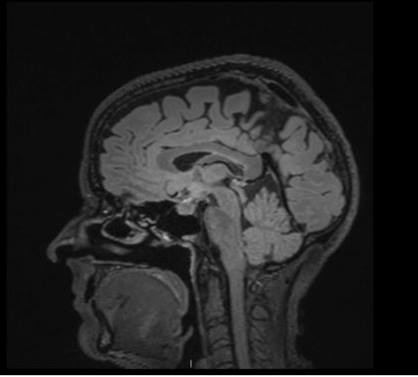
I recently had the chance to stuff myself into an MRI as part of a control group in a research project for a full set of brain scans. The radiologist showed me 240 beautiful images of my brain and spine, pointing out a complete absence of degeneration and a remarkably youthful pituitary gland.

My first instinct was to show off — hey baby, did you notice my vivacious hormone regulator? My second was actually a kind of fear. Dammit, this body is going to have to last me a long time.

I’ve been lucky in the genetics lottery. I’m surrounded by people my age dealing with cancer, chrohn’s, digestive things that mimic heart attacks, gout (isn’t that a victorian, brandy-slurping old man disease??), auto-immune diseases, breakdowns and degenerations of bones and discs and connective tissue. My own father died at the age of 50 of unexplained kidney failure.

In comparison, I’m super-robustly healthy, partly because of genes and partly because of more than two decades of movement, not smoking, drinking moderately and eating reasonably well. A steady diet of running, cycling, gym antics, but also taking the stairs whenever I could, using my bike and my feet to get places. My ex once told me that one of the things that was a relief after we broke up was she didn’t have to walk everywhere anymore.

But even given all of that, my body is aging. Two weeks after I turned 50, I was diagnosed with a minor skin cancer on my nose that needed surgery. I have to have a double root canal and get two new crowns this weekend. My hip aches when I’m driving and sometimes when I should be asleep. One hour of crossfit with a 25 year old left me with shoulder pain that caused me to yelp every time I turned over in my sleep for 2 weeks. I weep randomly, surge hot and lie awake from peri-menopausal hormones. Things ache and crumble and whine that didn’t used to ache and crumble and whine.

Many of my peers are just a little bit broken, aged around the edges and through their bones and cells. Frequently, I have to check my impulse to run up the stairs when I realize the person I’m with can’t do that. And for me, the running that used to be effortless is now a constant negotiation to find the will to push into that forcefield of gravity that feels like I’m dragging a little sledge filled with rocks behind me. I ease it with iron supplements, B vitamins, melatonin to sleep better, more intense time on a treadmill. But I will never ever see the times I saw in my 30s on a race course, never find that ease in moving fast.

Sometimes, at night, as I tango with my insomnia, the times for those personal bests float back to me — 3:26, 1:35, 20:52 — like the names of lovers I once danced with in a foreign land. For years, my steady, workaday running pace was 5 minute kilometers. I ran a whole marathon at a faster pace than that. Now, I churn out kilometers that look more like 5:19, 5:25 and every step is work.

Some of my friends have seized their fitness in middle age like a viking battle. Someone I used to train with is now a world master’s duathlon champion. My friend P took up ski racing again at 53, and is back on the hill this very week, despite a concussion last year. Some people find new propulsion at 50. It’s just not there for me, not in my body. And that’s hard for me to accept.

Being fit at 50 for me is about making peace with the fact that I’m never going to dance with those personal bests again. When I hold out times as the measure of my fitness, when I look at the scale or notice that my muscle just doesn’t sculpt the way it did, I end up wallowing in hollow disappointment, not grateful to be able to complete a half marathon, to ride far, but resentful, fearful about what feels like loss.

Barring the unexpected, it looks like my brain and hormone factory are going to carry me to the ripe old lady stage that so many of my french canadian female ancestors reached. I want to reach that stage still able to walk up mountains, ride my bike, trot 5 km comfortably. I want to be able to bend over without making an “oof” sound. I want to be a lithe old lady still able to zip past slow moving walkers on the street. I want to feel the joy of riding a bike in a bathing suit eating twizzlers on a Caribbean island for a long time.

cc2

Like so many other adjustments of middle age, I fight this one hard. I still find myself saying things like “sure, running a 90 km ultra marathon in South Africa sounds fun!” This is a hard fought, every-time-I-move peacemaking practice. Take those stairs because you still want to be able to climb them in 30 years. Enjoy that slower run and remember how lucky you are that your knees work. It’s being okay with not being the first woman done the 15km run on the Triadventure course, and being grateful for finishing it when I didn’t think I could, appreciating the companion I had along the way.

It’s getting out the door even when I don’t want to, not because I have that race to train for but because I have that future old lady to protect.

It’s realizing that meditation practice is as important a part of fitness as sweating. It’s learning to appreciate every step as gratitude for the fitness I have now, every step for what it is in the present moment, and every step for what it promises for a mobile, active life, as long as that ends up being.


This is “part 2” of Cate’s reflections on the evolution of her fitness; part one was What are you going to do with that strength?. Cate works as a consultant and teacher in the space of strategic, sustainable system change in academic healthcare in Toronto,  and co-leads a learning and development project for orphaned and vulnerable youth in Uganda. She also blogs at fieldpoppy.wordpress.com.