fitness

In Praise of Jessica Fletcher

I have been re-watching Murder, She Wrote for pandemic relaxation. I admired Angela Lansbury in the role of Jessica Fletcher, author and sleuth, back when it first came out, and watched the show regularly. Now that I am approximately the same age Jessica was when it was filmed, I love her character even more.

Lansbury was 58 when the show debuted, and from the opening credits of the very first episode, Jessica is casually active in so many ways. She walks, cycles, skis, jogs, rides horses, and dances. She travels widely and fearlessly. She is both clever and wise. I remember admiring those things about her when I was younger. She was a bit of a role model even then.

Jessica Fletcher, wearing a beige jacket, smiling and on her bicycle, in the village of Cabot Cove

Now that I am older, I have been noticing and learning new things about the show. Especially in the early seasons, Jessica treats a diverse cast with dignity and respect. Long before the age of Black Lives Matter, a much larger immigrant community, Indigenous issues and disability rights, Murder, She Wrote tackled some of these issues and represented all those communities on screen – sometimes because it was relevant to the plot, and sometimes simply because they were people.

Jessica is widowed, but never remarries or has a romantic entanglement despite many male characters being interested in dating her (and one offering marriage). Apparently, this was something that Lansbury herself insisted on, in order to keep the focus on her character as a mystery solver. She also has a panoply of strong, interesting older women as guests on the show. Half the fun has been checking the bios to discover (or rediscover) stars from the 30s through the 60s.

Almost 40 years after she first appeared, Jessica Fletcher is still a role model for me. And apparently for others too. Aside from articles about the Jessica Fletcher effect (cycling inspiration for women as they hit their 40s), there are websites about “what would Jessica do”, as well as Twitter and Instagram fan sites. Dame Lansbury is still active at 95. Now I have new life goals, still inspired by her.

Dame Lansbury with her famous bicycle in 2013. She is wearing a white top and long black skirt.

Diane Harper lives in Ottawa, where she is currently working from home and riding her bicycle, walking, dancing, and riding a horse as often as possible. She does not solve murder mysteries.

covid19 · cycling · fitness

Finally Getting Out and About on My Bike

May be an image of 3 people, including Samantha Brennan, bicycle and outdoors
Sunday on bikes

Last May, in the early days of the pandemic, I wasn’t riding outside much at all. Hospitals were at max capacity and I really didn’t want to be part of the burden. Riding seemed risky and since I had a safe option, riding the trainer at home on Zwift, I took it.

This May, a year later, we’re starting to ease restrictions here in Ontario and I’m finally getting out and about on my bike. Mostly though I’m not riding my road bike. Mostly I’m riding my jack-of-all-trades bike, my bike that I’d choose if I could only have one bike. We’re riding on trails for fun and I’m running errands with it too.

Friday was Bike to Work Day and since I’m working from home still, there was no actual riding to work. Instead I took the afternoon and ran work-related errands by bike. I stopped by campus for a photo op with the Gryphon!

Sunday, see photos above, we biked out to Guelph Lake on the gorgeous multi-use pathway in Guelph that runs alongside the river.

Photo
Bike to Work Day, hello Gryphon!

June is Bike Month and I’m hoping to get out lots more.

Home

It’s also the month of our bike packing trip and the Tour de Guelph. So I am sure that we will.

We’ll take our bikes to Prince Edward County later in June and ride a bunch more there too.

It feels great to be outside again!

Where are you riding in June?

aging · blog · fitness

The little seed that started it all…

Seeds sprouting in a pot. Unsplash.

Nine years ago, on May 23, 2012, Facebook memories tells me, I posted the following note:

“As I approach the two year countdown to 50 (I turn 48 at the end of this summer) I’d like to set an ambitious fitness goal. Roughly, I’d like to be the most fit I’ve ever been at 50. Fifty seems like a good time to peak and it’s doable given that I’m an adult onset athlete (no childhood sports trophies collecting dust in the cabinets for me!) There is a bit of a challenge given that I had a similar goal at 40 and I was 10 years younger then. But then I was starting from close to zero and my goal was to get in shape. Now I’ve got a pretty good basis on which to build. The big problem is how to measure. Not weight. That’s silly. I was my thinnest when I smoked and drank a lot of coffee and didn’t eat much actual food. Looked  great but was winded walking up stairs. Those days are gone. I’m strong, fit, robust, resilient but ‘thin’ I’ll never be.

Body composition? Not weight but per cent body fat….maybe. Hard to care about that though and not focus on numbers on a scale, even if they are different numbers.

Running? Maybe. I know my PBs for 5 and 10 km. But I’m also anxious not to invoke another stress fracture. Certainly more than 10km just isn’t doable.

Strength? I do know what I’ve been lifting through the years so maybe. Might work. I’m loving the intensity of crossfit and they are good at measuring progress….

Cycling? Hmmm. Flying laps or centuries? Time trial times are a pretty good measure of fitness.

Aikido: I could aim for a brown belt by 50 but that might be too ambitious.

Yoga: No goals there. I just like to melt and stretch in the heat.

Soccer: My only goal is to have fun….

Suggestions, fitness friends?”

After that little Facebook note, Tracy expressed her desire to join the challenge, and at her prompting we started this blog. Here’s my first post in August 2012.

We also finished the ‘fittest by fifty’ challenge and wrote a book all about it, Fit at Mid-Life: A Feminist Fitness Journey.

May be an image of text that says 'A Feminist Fitness Journey FIT AT MID-LIFE SAMANTHA BRENNAN TRACY ISAACS "A gateway to radical body confidence." LOUISE GREEN, author of Big Fit Girl'
Fit at Midlife: A Feminist Fitness Journey

Things have changed around here since then. We’ve grown into a community of bloggers, a team of more than a dozen regular contributors and more than a hundred guests. There’s a Facebook page, a Twitter feed, and we’re on Instagram too. The focus on ‘fittest by fifty’ is long over and while we’re still fitness-focused, we’re now taking part in a much broader conversation about movement, aging, feminism, justice, and the good life.

We’ve also been at it for awhile. I’ve published more than 2200 blog posts, either ones I’ve written or ones I’ve posted for guests. The blog as a whole has published 4800 posts. Maybe we need a 5000th post celebration? Definitely we’re going to have a big bang up blog party for our 10th year in August 2023.

And now Tracy and I have been wondering, what next? Not for the blog. That’s a group conversation and we’re starting that next month. I’m wondering about our next writing project. I called the note I shared to Facebook, “Fifty is for Fitness.” An earlier blog of mine–lost forever when Friendster went away–talked about “forties being for fun.” But 60? What about 60?

At the end of this summer I’m turning 57. Tracy and I have talked about another book, marking the next big decade in our lives. But we haven’t landed on what that book will be about. We’re still very much at the conversation stage. We’ve got 60 in our sights and we’re wondering. Fitness and aging themed maybe, with a broader definition of fitness?

What do you think the start of the sixties should be about? What themes resonate for you?

cycling · fitness

Science says we can get a workout on e-bikes. Duh…

The New York Times, paper of record, reported this week on a new study comparing levels of exertion (perceived and measured on participants using road bikes vs. e-bikes.

tl:dr conclusion from NYT:

The study, which involved riders new to e-cycling, found that most could complete their commutes faster and with less effort on e-bikes than standard bicycles, while elevating their breathing and heart rates enough to get a meaningful workout.

tl:dr conclusion from the study abstract:

The faster times and the lower perceived exertion associated with the e-bike may incentivize active transportation. Further, while the cardiometabolic responses (e.g., HR [heart rate]and V̇O2[roughly, how hard your lungs are working for your body]) were lower for the e-bike, they were indicative of being at or near “moderate intensity,” suggesting that e-bike use may still benefit health-related fitness.

Well, that’s nice. However, digging a little deeper revealed some more interesting points. Here are some takeaways from them and me:

Them:

Essentially, e-bikes are designed to make riding less taxing, which means commuters should arrive at their destinations more swiftly and with less sweat. They can also provide a psychological boost, helping riders feel capable of tackling hills they might otherwise avoid. 

Me:

Duh. Since we know (from the article and elsewhere) that in in the US, fewer than .5% of commuters ride bikes to work, increasing those numbers by any means necessary is a good thing. E-bikes definitely lower some barriers to bike commuting, which, by the way, needn’t be an all-or-nothing activity. Becoming a fair-weather e-bike/bike commuter or errand-doer is an excellent goal. It all counts.

Them:

In the study, participants rode a flat 3-mile course outside three times: once on a road bike, once on a e-bike with low-assist, and once on an e-bike with higher assist.

…the scientists found that the motorized bikes were zippy. On e-bikes, at either assistance level, riders covered the three miles several minutes faster than on the standard bike — about 11 or 12 minutes on an e-bike, on average, compared to about 14 minutes on a regular bike. They also reported that riding the e-bike felt easier. Even so, their heart rates and respiration generally rose enough for those commutes to qualify as moderate exercise, based on standard physiological benchmarks, the scientists decided, and should, over time, contribute to health and fitness.

Me:

Duh. Of course it’s easier to ride an e-bike. And yay, glad to hear they got in a bit of a workout!

Them:

But the cyclists’ results were not all uniform or constructive. A few riders’ efforts, especially when they used the higher assistance setting on the e-bikes, were too physiologically mild to count as moderate exercise. Almost everyone also burned about 30 percent fewer calories while e-biking than road riding — 344 to 422 calories per hour, on average, on an e-bike, versus 505 calories per hour on a regular bike.

Me:

Who cares? The calorie expenditure difference is minimal, and (in my view) irrelevant. The study was testing comparative exertion, not comparative energy expenditure (aka calories burned). The study concluded that some people found riding the e-bikes really easy on the higher setting. So how about adjust it to the lower setting if you want more of a workout? See? done…

Them:

This study, though, was obviously small-scale and short-term, involving only three brief pseudo-commutes. Still, the findings suggest that “riding an e-bike, like other forms of active transport, can be as good for the person doing it as for the environment”.

Me:

Duh. And yes, the study’s results make me optimistic that those riding -bikes for longer rides (doing errands or for recreation and exercise and fun) will also find barriers to those activities lowered, so they’ll ride more often and for longer distances. Yay! Did I mention that it all counts? Yes? Well, it’s still true.

One last Them/Me takeaway:

Them:

for the sake of safety, practice riding a new e-bike — or any standard bike — on a lightly trafficked route until you feel poised and secure with bike handling. Wear bright, visible clothing, too, and “choose your commuting route wisely,” Dr. Alessio says. “Look for bike paths and bike lanes whenever possible, even if you need to go a little bit out of your way.”

Me:

Duh. Obvs. Don’t throw a leg over your new e-bike and rev it up, careening down a heavily-trafficked road. Start off carefully and slowly. But then again, you knew that. Duh.

Readers– are any of you riding e-bikes? How do you like them? What do you use them for? We’d love to hear from you.

accessibility · cycling · feminism · fitness

A low car city is a feminist city….

Image
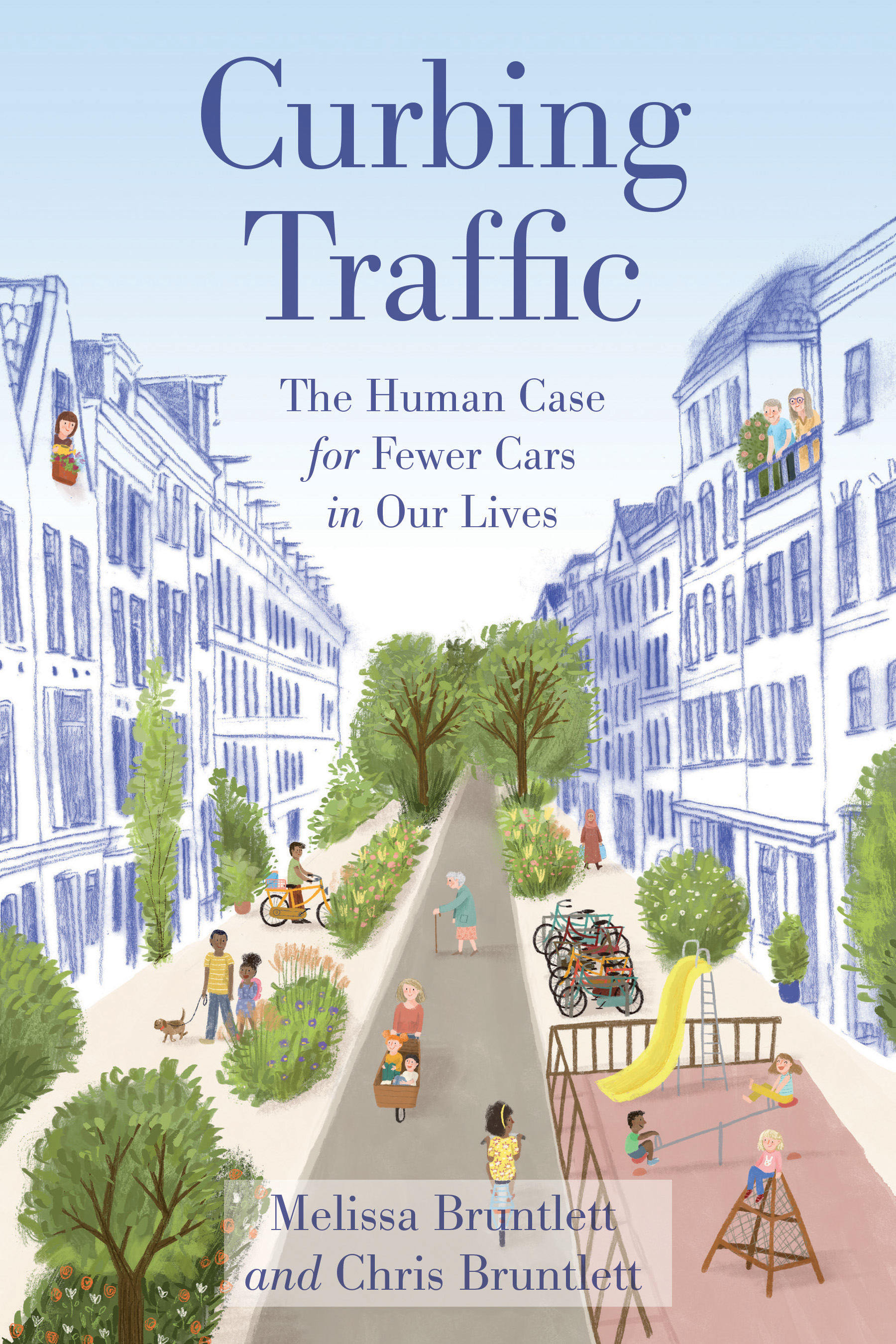
On my to read list! Curbing Traffic: The Human Case for Fewer Cars in our Lives

Melissa Bruntlett and Chris Bruntlett’s new book Curbing Traffic: The Human Case for Fewer Cars in our Lives is coming out this summer. Curbing Traffic argues for an end to auto-dependency and supremacy, through the lenses of equity, well-being, resilience, and social cohesion.

Find out more about the book here.

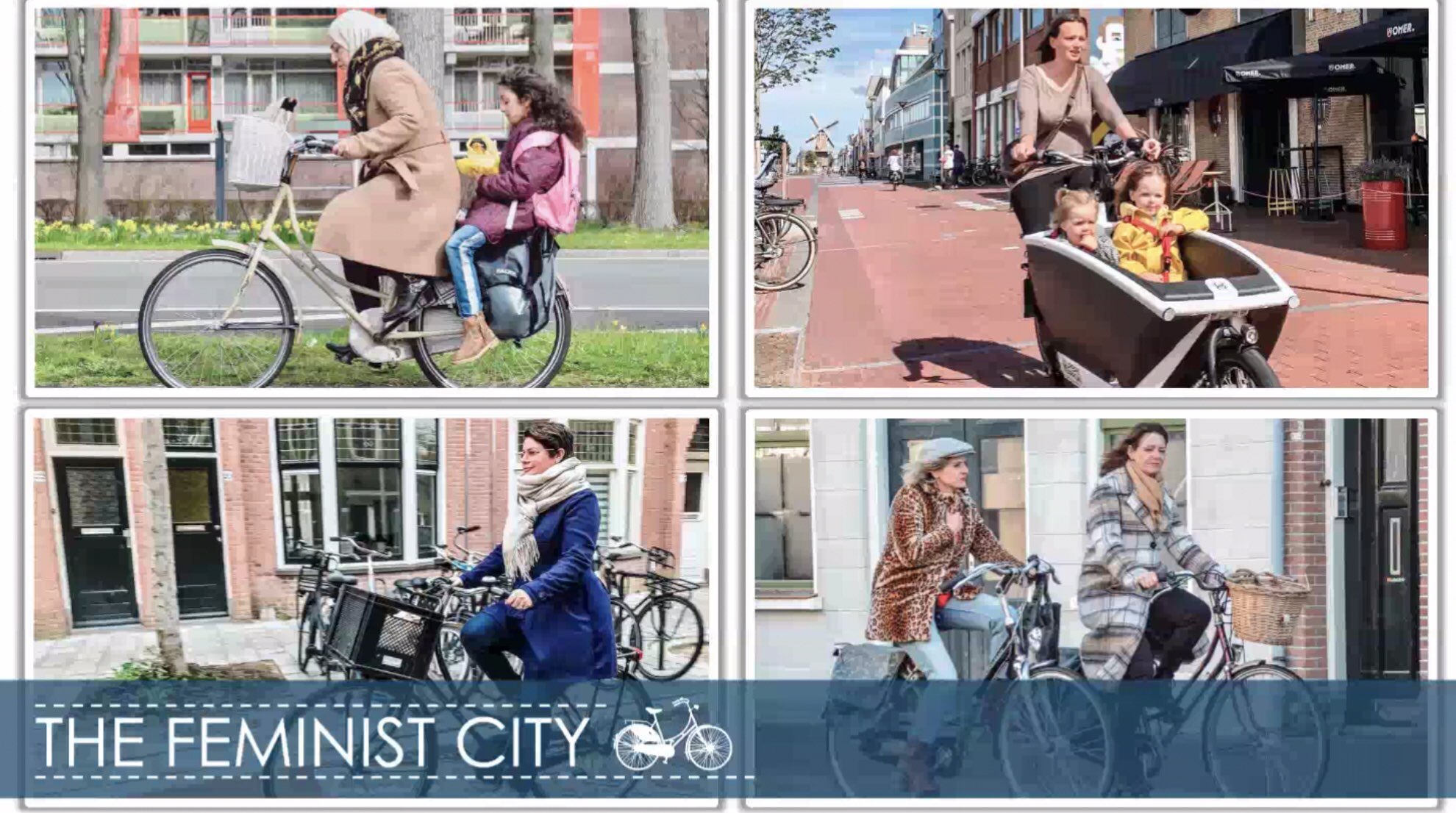
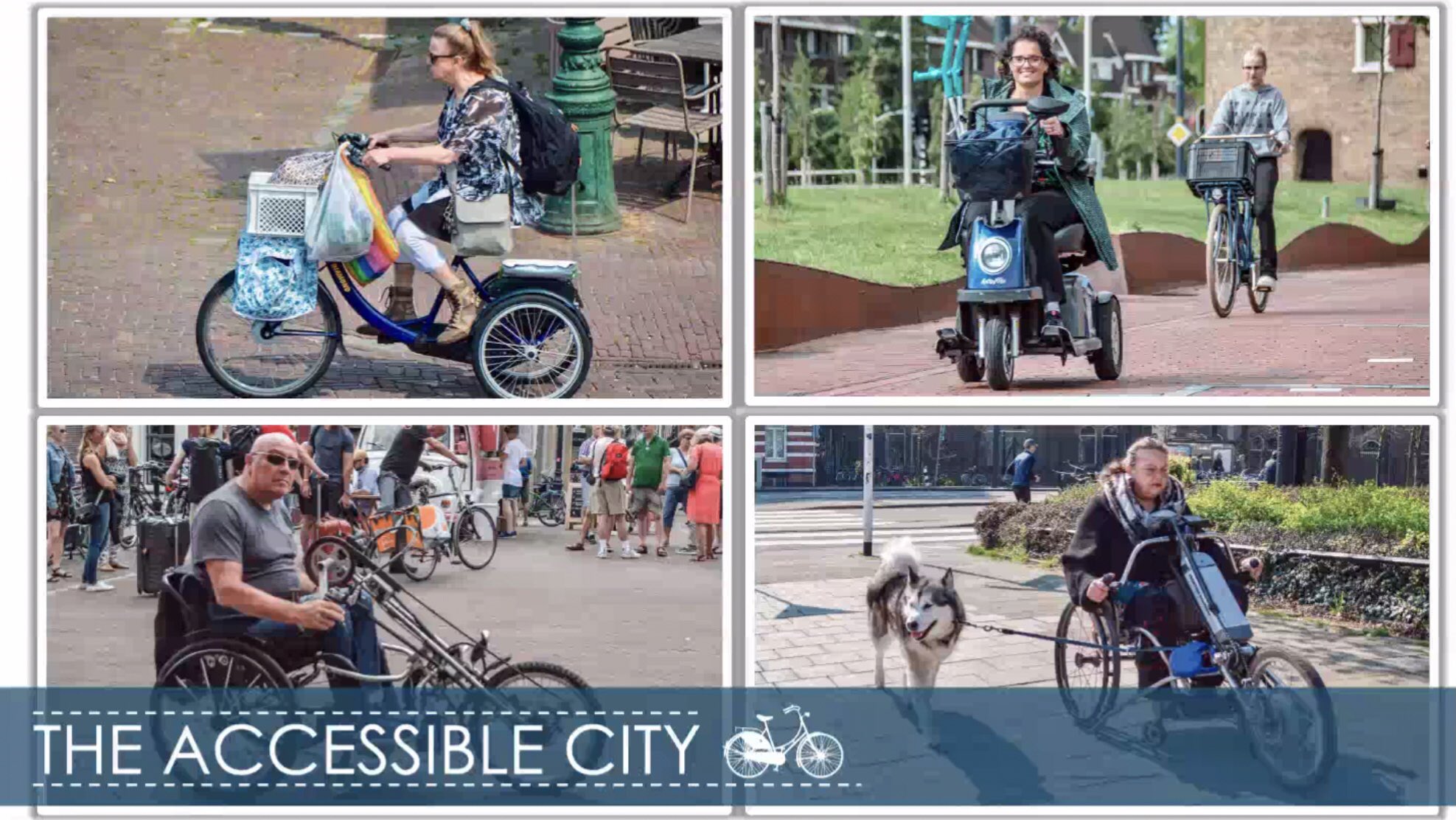
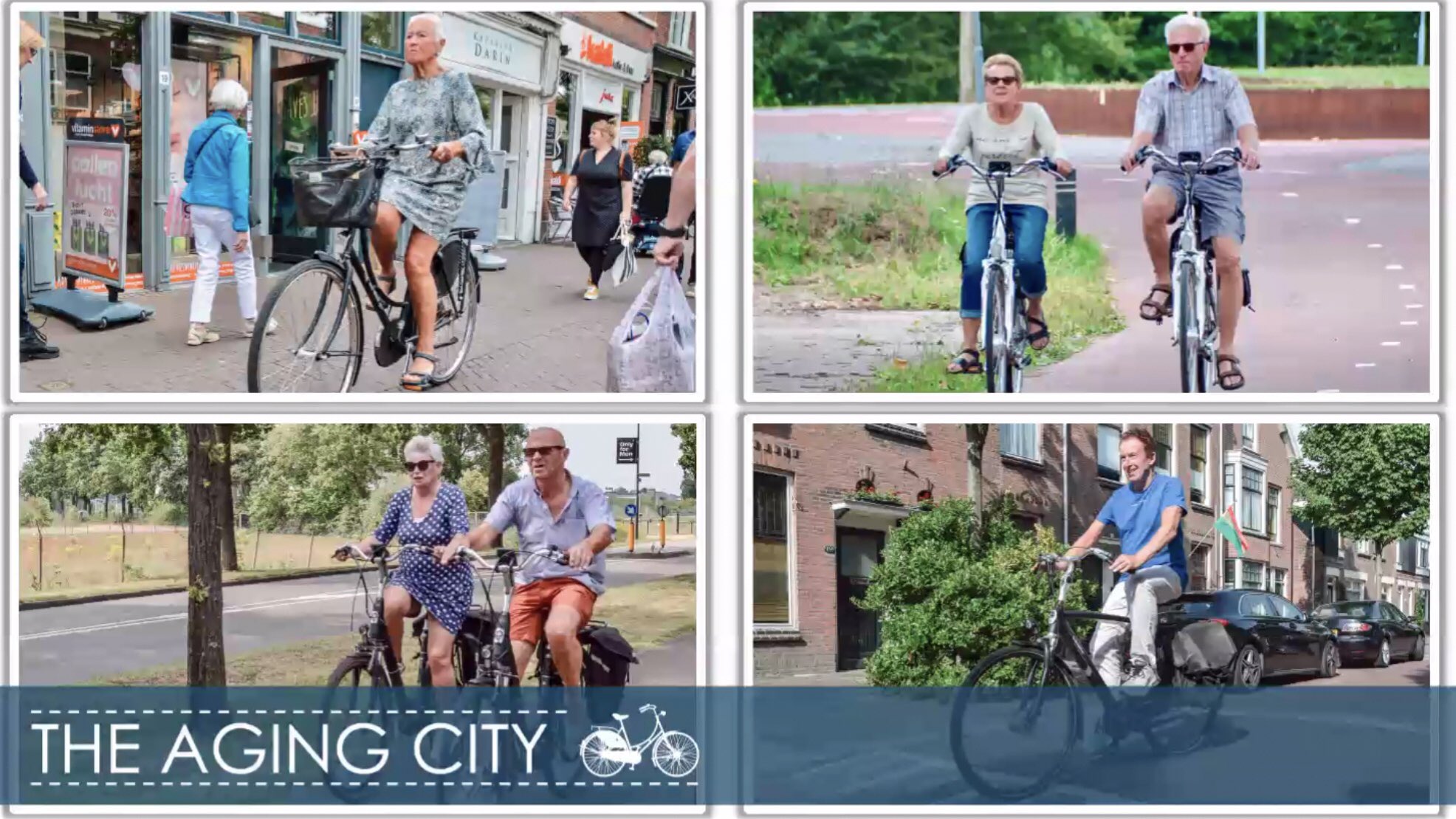
It’s also part of their case for a low car city that a low car city is a feminist city. It‘s better for our mental health, it fosters social trust, and it enables people of all ages and abilities to travel in an independent, safe and comfortable way.

Those are themes close to my heart and I’ve shared them here on the blog: Safe cycling is a disability rights issue and Bikes as mobility aids: Another reason to prioritize cycling infrastructure and Thinking about cargo bikes and gender.

I love the images below–from Melissa Bruntlett and Chris Bruntlett’s twitter–@modacitylife.

Enjoy!

Image
Image
Image
fitness · Guest Post

Skating through the pandemic (Guest post)

Rachel attempting a ramp at a local skatepark while locals look on. 

by Rachel Holden

2020 was a strange year. The things that used to bring me joy, just aren’t the same. Choices for entertainment were limited, and who we can do those things with even more so. So far, 2021 hasn’t been much different.

I’ve never been very athletic. Competitive to a fault, I gave up on sports at a young age because my body just wasn’t good at doing the things I wanted it to do. As a little girl I was told “scars don’t look good on girls” so I wasn’t allowed to do the rough and tumble things I really wanted to. As I got older sports and fitness were just another way to obsess about my body size and be disappointed in it once again.

A few years ago, I took up powerlifting and fell in love. The intensity, the competition, the fact that the contest was over almost before it began was what drew me in. But living a year in relative lock-down, trying to work a day job, manage a new business and trying to educate two children under 10 was intense enough.  The thought of doing another hard thing was just too much.

And that is where Skateboarding comes in. My 9-year-old son was the first to start. A great way to be outside, get in some exercise and socially distance. Then, my husband bought himself a board because he wasn’t going to be left just watching the fun. It took me a bit longer, but I finally gave it a try. My 9-year-old coached me and cheered when I didn’t immediately fall.

The next weekend we took it to a skate park, where two young girls, clapped and cheered for me, so happy to see a mom out there giving it a shot. Boys looked at me wide eyed, not believing what they were seeing and other parents mostly looked confused.

It was like learning to ride bicycle all over again. The wind in your hair, feeling like Bambi taking her first steps, learning to balance and feeling the terror. It was exhilarating. I was hardly moving and my watch caught my heartrate at 168 – turns out being scared will rev you up and make you sweat, for no apparent reason! Like riding a rollercoaster, the fear ebbs and flows and when it all becomes just a little too much – you can just jump off!

While kids are whipping around me flying around corners and jumping stairs, I am counting my pushes and reminding myself to bend my knees, sometimes out loud, to my own embarrassment. There have been injuries. Mostly bruises, some impressive, some forgettable. I did bring myself for X rays after an ugly fall while trying to board to the market. Turns out, real life boarding is much rockier than the smooth surfaces at the skatepark. Nothing was broken, but I sprained both hands. At the same time. Wear wrist guards. Do as I say and not as I do. Please. For your own good.

I took two weeks off to heal, put on my wrist guards and got back on. I was not going to let an injury beat me. I started slow, my heart racing, but warmed up quickly, back to the mediocre skater I was before. I bought myself this rad new board. I am not letting it go to waste.

If you’re looking for something exhilarating, stress inducing, and maybe a little foolish, skateboarding might just be for you!

Showing off my new skateboard – son smiling in background – board is red with a white graphic of a curvy woman line drawing.

Rachel Holden is the 43-year-old Founder of Uplift Ventures, a real estate investment firm creating new housing options for renters in Ontario. She’s also a mom to two kids, a powerlifter while not in lock down, and has little regard for her own safety. She can be reached at Rachel@upliftventures.ca

Book Club · fitness

FIFI Book Club: Why We Swim, by Bonnie Tsui This week: Survival

Hi readers– we’ve been reading a new book for this installment of the FIFI book club. It’s called Why We Swim, by Bonnie Tsui. We’ll be reading and commenting on the various sections of the book over the next several Fridays. We’d love to have you join us and add your comments to the mix.

Last week, we introduced ourselves in terms of our past, present and aspirational relationships with moving around in water.

This week, we report on the section of the book titled Survival.

First up, Kim:

At first, casual glance, “Survival” (section one of Why We Swim) looked to me like a basic history of some kinds of swimming (officially, as the title suggests, swimming to save your ass), and I confess I was a bit disappointed at the thought of putting down my other current bedtime read (I Am I Am I Am by Maggie O’Farrell) for it. I’m not sure what I wanted or expected; in hindsight I think I just wanted to be soothed, lulled, by words about water the way a good mid-day swim soothes and lulls me. Maybe I was asking too much of Tsui too early, I thought as I turned page one over to page two. Maybe this book is not going to be the substitute for my longed-for, desperately missed swims at the tail end of this terrible terrible pool-less time.

QUICKLY, though, I knew I was wrong. Tsui bookends “Survival” with the story of The Human Seal, Guðlaugur Friðþórsson – an Icelandic man who survived six hours in near-freezing water after his fishing trawler capsized, making it to shore only to have to swim out and around the cliffs of volcanic rock where he first landed to get safely home. The story is gripping: it is a brush with death like no other, a reminder of the power of water to harm us, batter us, but also to hold us, to secure us, and it’s ultimately, in the section’s final telling, a story about the power of community to hold story, to remember its shared history in and through the water. Tsui travels to Iceland; she meets and forms a bond with Guðlaugur; finally, she participates in the annual swim that the community holds to remember his extraordinary encounter with the water, swimming 6km in his village’s swimming hall (240 lengths of a 25m pool FYI).

I put the book down and made a mental note: I know what I’m doing as soon as I’m allowed to be in a pool for longer than an hour again. I’ve never swum more than 2km without properly stopping; this will be a chance for me to show the water what I’m made of, and for the water to challenge but also to buoy me.

Here’s Samantha:

I loved the story of Guðlaugur Friðþórsson and the author’s tale of swimming in Iceland but others have talked about that. I was also intrigued that other animals instinctively know how to swim and that humans have to learn. Of course, I remember learning to swim and that knowledge giving me a little bit more freedom near water as a child. I also remember teaching my own children to swim and feeling relieved when they got the hang of it.

I was fascinated too by Tsui’s stories of people who swim to the bottom of the ocean and stay there for a long time. The physiological adaptions the body makes after diving for a long time make me realize how flexible biology is. Not all parts of being human are fixed. Stories of people who dive and swim without supplemental oxygen always makes me realize that while I know how to swim and I’m confident in the water, I’m confident near the water’s surface. My head and face can be under but I’m not very good at staying beneath the water or even swimming to the bottom of pools. My swimming is utilitarian, it keeps me from drowning, but I wouldn’t be able to contribute to a family’s survival by diving for pearls. Of course my swimming is also for pleasure, and I gather that’s the subject of the next section.

Next up, Diane:

My normal choice for non-fiction is history and anthropology, so I was pleasantly surprised to dive into this book and read about the Neolithic images of swimmers found in Egypt at a time when the Sahara was green, and the Bajau nomads and Moken (free-diving fishers from southeast Asia). Those swimmers felt like kin, or at least kindred spirits.

I have always felt a deep, primal connection to water. In my family, we all learned to swim for safety, but I was the only one who loved swimming at every possible opportunity. Even my medieval research involves swimming and fishing. My favourite myths are those of the selkies and Sedna.

As a cold water swimmer, the story of Guðlaugur Friðþórsson was interesting, but I couldn’t help going into ice swimmer mode: did he strip off his clothes so he could swim faster? How could he have walked so far without getting into warm, dry clothes first? What was his stroke rate? When I am training properly, I know I can do a km in sub-5C water, but not much more. I can barely imagine surviving as long as he did. I have swum 6 km in open water, but unlike Kim I have no desire to do it in an enclosed pool. I would happily join Bettina for an outdoor 6 km swim in Iceland though, especially if I also get to visit some of the geothermally heated lagoons, pools or beaches to warm up afterwards.

And now, Bettina:

Like others, I was absolutely fascinated with the story of Guðlaugur Friðþórsson, and with the community he inspires in Iceland. It made me want to go there and do the swim they hold every year in memory of his feat. (I’ve always toyed with the idea of doing a long swim somewhere interesting. Like swimming the Bosporus or something like that – or swimming 6k in Iceland. One day it’ll happen, hopefully…)

The other parts of the “Survival” section were interesting too, like the bit about swimming in the Stone Age, and the section about “sea nomads” – people living in traditionally aquatic societies – but they didn’t grip me quite as much as Guðlaugur’s story. I’m even more excited to talk about the next section of the book in our upcoming post though!

Here’s me, Catherine:

Others are talking about Guðlaugur Friðþórsson’s astounding feat of survival, of which I am also in awe. It’s also one of many reminders in this book that we are all animals, managing our relationship with water. For me, reading about the author’s childhood, swimming at Jones Beach with her brother and parents, also reminded me of ways water helps us survive. For Tsui, swimming helped her survive difficult relationships, uncomfortable situations, and upheavals within her family.

I can relate. When my sister gave birth to her third child, I went down to South Carolina for 2.5 weeks (17 days, but who’s counting) to help out with her two other kids, ages 5 and almost 3. I love these children fiercely, but was overwhelmed by the details of tending to them for (luckily only) 14 hours a day.

However, we all experienced instant respite once we got to the local pool, which we rushed to every day. There might be screaming or crying in the car, pitched battles over some toy or sippy cup, but once we got out of the car and spied that blue water, everyone calmed down (myself included). It’s still true. My sister, her kids and l feel most at peace with ourselves, each other and the universe when we’re near or in water. In this way, water conveys the necessary feeling that life is good, life is doable.

Like Tsui, I wish we were amphibious. Remembering that we’re not is important for maintaining a respectful relationship with water. I love its power to envelop me and hold me, but I also know that it is bigger and more powerful than me, too.

So readers, what do you think? Are you reading or have you read the book? We’d love to hear any comments you have. Feel free to take a dip into the book if you’re interested.

fitness

Long weekend plans …

We are heading into the long weekend here in Newfoundland and Labrador. On the east coast of the island where I live, the forecast is calling for snow flurries on Monday the 24.

Now I’m not expecting that much snow as seen in the gif above, but we can get a couple of inches in the spring. An old folk cure recommends collecting May snow as it is good for sore eyes.

One thing I do know: May snow isn’t good for soothing sore muscles. However, I expect to get a couple of workouts in as we tidy the garden, and as I have managed to keep up my twice weekly workouts, I’m not expecting them to complain too much. This year’s spring cleanup is later than usual because I read a number of articles recommending we leave the grass undisturbed to encourage useful insects and wildlife.

I know lots of other places in North America are further ahead on the greening spring front, but this is as good a time as any to remember outside work is functional fitness too. The American Heart Association considers gardening moderate in terms of impact, and there’s lots of other benefits too.

The lovely crowd at Michigan State University have a a great resource on their website. The authors say gardening offers a range of physical activity, from pulling weeds to digging new beds. They suggest mixing up activities — try 15 minutes of weeding with 15 minutes of raking or 15 minutes of bagging garbage.

Being outside also means you can help rewire your brain. Fresh air, blue sky ( we will get some before the snow!) and happy trails all add up to some gentle low impact walking or higher impact running or jogging opportunities.

Quite a number of places are offering group walks engaged in forest bathing. Originating in Japan, forest bathing is all about experiencing nature through all senses. It offers comfort, helps you relax, and supports calmness and serenity by connecting you with the natural world. One of my favourite parts of being in the woods is taking time to notice all the tiny things, and some of the big things that winter has wrought.

Image shows a canopy of green trees on sunny day. Photo by kazuend on Unsplash.

If you still feel the need to be more active outside, you may want to build in some plogging while you are out on the trails or sidelwalks. A Swedish concept, plogging refers to the practice of cleaning up while walking or jogging. I wrote about plogging here a couple of years ago.

More and more often now, people are toting garbage bags, gloves, garbage picker, and recyling bags to collect trash along their walking routes. Sadly, you can fill a garbage bag in less than half an hour (don’t get me started on all the discarded paper masks blowing around!). Nonetheless, plogging helps you get a good walk in, vary your activities, and helps clean the planet.

I might not be pitching a tent this weekend, but I will still make time to get outside and enjoy the natural, green spaces around me. What’s on your fitness agenda this long weekend? Share in the comments. We love hearing from you.

Aikido · cycling · fitness · Rowing

The joy of synchronous movement

I’ve been thinking lately about what I miss most about working out with other people. I mean there’s the obvious social interaction and pleasure in seeing friendly familiar faces. Working out has also been for me one of the places where my life crosses work and educational lines. Aikido was the best for that. But cycling too. And the Y, of course. I got to chat with city bus drivers, emergency service workers, car mechanics, teachers, cooks, and working at home parents. There are more people in the world than university professors! It got me off campus, placed me in a context where I’m not an expert, and I get to chat with people about non-academic stuff. See, I can learn things too. I like connecting with the student side of myself.

Okay, so there’s all that and it’s important.

But there is another thing that I miss and that’s the pure physical pleasure of moving in time with other people.

Aikido is all about moving in harmony with other people. We do basic movements together as warm up, each person doing the same movement at the same time. We also match our movement to our training partners in a way that can feel at its best more like dance than martial arts.

It’s also one of the things I love about rowing. When I rowed outside, on the lake, I rowed in a four person boat, in the third spot. I followed the women ahead of me, matched my stroke to theirs. It’s a lot harder and more technical than that but it also just comes down to working together. When we were perfectly synced, we moved quickly and smoothly through the water. Indoors, on the erg, it was a similar thing. We worked on drills together and it was always easier for me if I focused on keeping pace with the other rowers.

It’s true too in cycling. If you’re riding behind someone the easiest thing to do is find a gear that allows you to match their cadence. It’s the best way to ride in group, close behind other people, and avoid running into them without using your brakes.

I’ve been missing that in my Zwift team time trials because you don’t know the other riders’ cadence.

But yesterday I did a YouTube rowing workout and while keeping pace with the workout leader I noticed I was smiling. It makes it easier somehow and more pleasurable.

The pleasure of synchronized activities with other people isn’t just found in sports.

It’s true too in music. That’s part of why singing with other people makes us happy.

Synchronous movements is known to form social bonds across divides. See Moving in sync creates surprisingly social bonds among people. It also just plain and simple makes us feel good. “Many group activities boost our sense of belonging, but research shows that doing things synchronously can build even stronger social ties and create a greater sense of well-being. Crew rowing, line dancing, choir singing or simply tapping fingers in sync increases generosity, trust and tolerance toward others, often beyond effects seen in more disorderly doings. It can even increase people’s threshold for pain.”

When people ask what I miss being physically distant from others, this is one of the things. It took a rowing workout to get me to realize that. Who knows what’s next? Maybe I’ll see if there are any good Aikido basic movement follow along tutorials on YouTube.

People in martial arts wear kneeling outside. Photo by Thao Le Hoang on Unsplash. I can’t kneel any more but I still appreciate the harmony.
charity · cycling · Guest Post · illness

I live with Parkinson’s. For me, raising funds for health charities is personal (Guest post)

By Susan F

I joined the military reserves when I was 18 to play the French horn in the Changing of the Guard band on Parliament Hill in Ottawa. In 2011, I flew to Maputo, Mozambique by myself to join strangers on a Habitat for Humanity build. I’ve even hiked to Annapurna base camp and para-glided off a mountainside in Pokhara, Nepal.

But my biggest challenge, and maybe my greatest accomplishment, is facing Parkinson’s disease head-on. I hope I do so with courage, fortitude, and occasionally even a little humour.

I am writing to share my experience with PD and Parkinson Canada, one of the 21 health charities supported by Federated Health .

I was diagnosed with Gaucher’s disease, a rare metabolic disorder, about six months before my PD diagnosis. At the time, I was told this meant I was at high risk of developing Parkinson’s disease.  When I subsequently developed a tremor in my right leg, I was not really surprised when PD was confirmed. In fact, immediately after the diagnosis, I texted my family, had a very brief period of feeling sorry for myself, and headed back to work from the hospital.  I subsequently learned how lucky I was to be so quickly diagnosed, as many people suffer for years before diagnosis.

In terms of how PD affects me, the most obvious symptom I have is tremors affecting my right side, which are made worse by stress. For me, the weirdest thing about Parkinson’s is that your body doesn’t do what it used to do automatically, so I have to try to tell it to do things. I have trouble with manual dexterity, things like typing, buttoning buttons and cutting bread. I also have to be careful walking so I don’t trip and fall. Lately, it’s been difficult to roll over in bed.

I am fairly lucky though that so far, my Parkinson’s disease is quite manageable. And my friends, family and colleagues have been incredibly supportive, especially over the past several months.

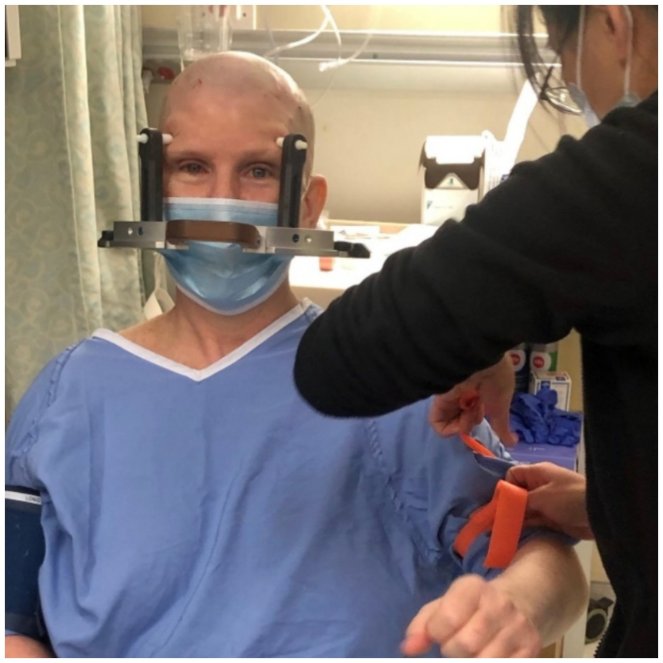
I was honoured earlier this year to be able to participate in a world-first clinical study which used an MRI-guided ultrasound to open the blood-brain barrier (BBB) on the left side of my brain. While my BBB was open, I was infused with a drug commonly used to treat Gaucher’s disease. The purpose of the phase one study was to determine whether this could be done safely. There were only four participants, and I was patient four.


Susan taking part in the clinical trial

Although there was no promise of any benefit to me, I was pleasantly surprised to notice a fairly significant difference in my symptoms. The most obvious change was that I regained a sense of smell. Many people don’t know that some Parkinson’s disease patients start to lose their sense of smell long before they are diagnosed. That had happened to me.  I can’t say that regaining smell is all positive given that the first thing I smelled was my cat’s litter box

Seriously though I have noticed positive changes: less tremors, less rigidity of my leg, and better manual dexterity. As the study has been a success so far, they are looking at the possibility of a phase two trial.  If it goes ahead, it will include a larger group of people with the focus on effectiveness of the procedure. I am very hopeful that this could lead to significant benefits in the prevention and/or treatment of Parkinson’s disease.

In closing, I want to mention Parkinson Canada as I really appreciate the work they do through their support groups, research and advocacy. I belong to two support groups including a “young onset” women’s group (“the Parkie girls”), and occasionally attend a Sunday afternoon drop-in discussion group, all of which are sponsored by Parkinson Canada.

I’m also part of a bike group called the Rigid Riders, whose focus is to encourage Parkinson’s disease patients to cycle. The Rigid Riders take part in an annual charity event, Pedaling for Parkinson’s, where 100 per cent of the funds raised goes to Parkinson Canada research.

Most recently, Parkinson Canada created an advisory group to their board made up of people with Parkinson’s disease. To me, this clearly reinforces their commitment to hearing patients’ voices and making their very best efforts to provide the support that we need. 

That’s why I am excited that Parkinson Canada is part of the Federated Health campaign.

To donate to my Pedaling for Parkinson’s Ride – https://donate.parkinson.ca/site/TR/Pedaling/CNO_pedaling_4_parkinsons?px=1153847&pg=personal&fr_id=2511

Parkinson Canada – https://www.parkinson.ca/getinvolved/waystogive/

Federated Health – https://www.canadahelps.org/en/dn/30863

Susan is a ‘Parkie girl’ who works as a lawyer. She tries to regularly practice random acts of kindness and is looking forward to days of hugs and travel.