Book Reviews · fitness · motivation

The 100 Day Reclaim: Day 61-70, Two (!) Fit Feminist Bloggers Weigh In

Three of us are reading Nia Shanks’ The 100 Day Reclaim: Daily Readings to Make Health and Fitness as Empowering as it Should Be. Most posts will include words from Catherine, and Christine and me, Sam, but today it’s just them. I spent the weekend at a wonderful philosophy conference in Arizona but then my travel back encountered the usual winter flight-delay problems. Sunday was seven extra hours in the Phoenix airport and I got home to my by three am. Work is extra busy (it’s academic budget season!) and I’m behind with all the things. A one day reprieve wouldn’t have helped so here’s Christine and Catherine going it alone. I’ll be back for days 71-80. I’ll be on holidays!

Read about Day 1 here.

Read about Days 2-10 here. ‘

Read about Days 11-20 here.

Read about Days 21-30 here.

Read about Days 31-40 here.

Read about Days 41-50 here.

Read about Days 51-60 here.

Catherine:

Day 61—if this happened to a friend

I keep struggling with Nia’s language even though I agree with and am warmed by her overall message. She gives an example of eating fast food for lunch instead of bringing it from home. All of us have done this, which she calls “giving in to fast food temptation”. Sigh. Then she says that doing so “typically leads to less-than -deal choices in the days that follow”. Argh.

But then Nia says all the right things (IMHO) about moving on, learning from what happened, etc. I feel like this is a tightrope Nia has to walk to please everyone: 1) people who are on a dieting track and suffer from guilt and self-recrimination; and 2) people who categorically reject dieting and see it as destructive and no-win. We bloggers (and lots of our readers) are in 2).

It’s so important for people in 1) to be able to hear Nia’s message, and I get that the wording she’s using is what is familiar to them. Here’s another example, talking about learning from what she calls a slip-up in eating: “…so you can handle it more productively”. I’d put it differently: “so you have some space for planning in ways that respect your desires and the realities of your life”. I don’t think Nia disagrees with me at all. I just prefer to lighten the language to remove as much value judgment as possible.

I’m liking Nia more and more as I read through this book. Hey Nia, I wish you could come by my house for tea and a nice walk at the park nearby.

Day 62—better, or tired?

Just before my first mountain bike race, someone gave me advice on how to pace myself: if I’m about to throw up, slow down. If I’m not about to throw up, go faster. That’s not terrible advice for a short race. But we’re not in short races most of the time. We’re in these bodies for the long haul. For me, “better” means keeping doing what I want to do for me, which is a variety of types of movement often, combined with enough rest to support myself, modifying when I’m injured or ill, or ramping up when I’m training for an event or curious about meeting some fitness goal.

Day 64—not good, not bad.

Here’s a friendly amendment for Nia: there are two other words that are often stealth terms for good and bad: health and unhealthy. These terms get used to bludgeon us into shame about what we eat and do. They scare us about the consequences of our eating and doing. Then, they coerce us into no-win diet patterns and physical regimens that are unfeasible and injury-conducive.

Is there such a thing as a healthy diet? Yes, there are loads of healthy diets. But there’s not agreement among health professionals about exactly what that looks like. I prefer the term healthy-to-me. This is awkward, and I don’t fault anyone else for not using it. It’s meant to convey my priorities and values (e.g. about meat or dairy consumption), constraints (e.g. allergies and tolerances, time and money, access and abilities for storing and preparing food), and preferences (some people just don’t like brussels sprouts, no matter what I say!). What we eat is up to us, and what we call healthy says a lot about us. It’s worth paying attention to that.

Day 66—coasting!

I love this so much. Coasting is a skill we all need to develop. It’s a powerful tool that will help keep us from self-blame, which is the worst thing we can do anytime. I have much more to say about coasting, but will leave it for a future blog post.

I read the rest of Nia’s posts, but will leave comments to Sam and Christine. You’ve heard enough of me for one day…

Christine:

Before I discuss this week’s sections, I just want to share a little about how this book has helped my mindset already.

I live on the island of Newfoundland (Province of Newfoundland and Labrador, Canada) and we just had a record-breaking snowstorm. On Friday past, my city had 93cm of snow (37.2 inches) and 140+ kph (86mph) winds and we have such huge piles of snow that several cities and towns have been under a state of emergency. This is the most snow that I have EVER seen fall at once, and we already had a lot of snow on the ground to start with.

On Thursday, I suggested to the other members of our Fit is a Feminist Issue team that I would do a post about shoveling and the other exercising I was going to do during the storm. I’m still going to do that post but it isn’t going to be the kind of post I expected.

I was expecting to do a fun little post about how during the stormiest day, I did yoga and some extra cardio by taking the dog out for a pee when it was super windy, then once the storm stopped, I would post about shovelling and the yoga I did to recover from shovelling.

Instead, the storm kept me edgy and distracted. I did yoga but it was late at night (and of course, I took the poor pup out whenever she needed it) and when our family started shovelling on Saturday, I went up to my hip in the snow. In the course of extricating myself, I wonked out my knee a bit. Nothing serious but enough to ensure that I had to be REALLY careful.

So, what does all of this have to do with The 100 Day Reset?

I didn’t feel bad about what I couldn’t do.

I focused on what I *could* still do. I did yoga and stretching. I switched up my usual shovelling technique so I could help, and I did it in small stretches. I thought about what I was eating instead of mindlessly eating foods that might make me feel worse about being stuck inside.

I’m a solutions-focused person anyway but I am also quite hard on myself when I feel like I might be slacking (self-perception issues are a companion issue with ADHD.) Thanks to Shanks’ book, I didn’t even consider that I was slacking off or being lazy – I was doing what I could in that moment.

So, thanks, Nia Shanks! You saved me a lot of frustration this weekend.

On to Days 61-70

I love a lot of the advice in this section, truly, truly love it.

I like being reminded to be kind to myself (Day 61) and especially the reminder to deal with ‘mistakes’ by gleaning useful information to prepare for similar future situations. I LOVE that she says that exhaustion is not a marker of success (Day 62) and that we don’t have to do an epic workout every time. In my coaching, I tell people that it is okay to create ‘placeholders’ for habits they are establishing (e.g. opening a document on the computer at a specific time – even if they aren’t going to be writing yet.) and I appreciate the way Shanks has similar advice for fitness habits here.

Day 63’s note about not giving into fear (fear of failing, fear of looking silly) was eye-opening for me. I realized (again?) that I can often be afraid of starting because I know I struggle with consistency.

I enjoyed this week’s sections about how to alter your thinking to serve you better.

Day 64 was about how to choose ways to view events in your fitness journey (i.e. the events are neutral, we assign the values to them, even when we don’t have to), Day 65 was a strong reminder that we can start/restart at any point and the key is to do SOMETHING now.

Day 66 advised us to recognize that there will be different rhythms in our schedules and we should work with what we have – working hard when we can, ‘coasting’ when we need to. (Important advice for me this weekend)

I appreciated the message in Day 67 about the futility of complaining and how we should look at the thing we are complaining about and make changes so it is no longer an issue. I like keeping the focus on finding solutions but, personally, I sometimes need to vent in order to clear my brain enough to start to see solutions. That’s not the same thing as ongoing complaining without taking action but my (sometimes overly-literal) brain initially balked at my mistaken idea that no amount of complaining was acceptable.

Day 68’s reminder to focus on what matters in the big picture was useful and I especially appreciate Shanks’ suggestion that we are just one workout away from being back on track and that we can do that workout today. That section dovetailed nicely into Day 69’s advice to mentally prepare for things going wrong and to plan the things you will do if your ‘what if’ came to pass.

Finally, I am all about Day 70’s advice to observe how things went ‘wrong’ and learn from them. Noticing how I got to a particular frustrating set of circumstances and identifying a different path for next time is an extremely useful piece of advice for me. I’ll be talking more about that in my ‘Christine weathers the storm’ post this Saturday.

By the way, throughout these sections, I can see the line that Shanks is walking with the way she talks about eating and I appreciate her efforts to steer away from diet-talk while still trying to engage people who are in that frame of mind. I, personally, would like to see her take an even stronger stance against the diet mindset but I don’t exactly know what form that could take.

Storm dog in the snow
body image · competition · diets · fitness · weight loss · weight stigma

Can you watch the Biggest Loser ironically?

No. That’s my answer anyway.

I have some thin friends who say that they just watch it for a joke. They’re looking forward to new episodes. It’s so bad, it’s good they say. I’m not a “it’s so bad it’s good” kind of person.

I said, just stop. It’s not funny. It’s abusive. It doesn’t work. It hurts people. But also, it affects your attitudes towards fat people. Did you know that?

“A 2012 study published in the journal Obesity found that people who watched just one episode of the show exhibited higher levels of explicit bias against fat people. “Participants who had lower BMIs and were not trying to lose weight had significantly higher levels of dislike of overweight individuals following exposure to The Biggest Loser compared to similar participants in the control condition,”the researchers found. Just one hour of watching the show left thinner people with an even greater personal dislike of fat people.” From Jillian Michaels and the Alarming Legacy of the Biggest Loser.

What do you think? We know that my sense of humour about the treatment of large bodied people by the media is running low. You might have read my very very cranky review of Brittany Runs a Marathon.

You can’t miss the announcements: “The all-new Biggest Loser | Premieres January 28th‎.” But you don’t have to watch the show.

We’ve written about the show before. Lots. As you can guess we don’t much like it.

From the Olympics to the Biggest Loser? Say it ain’t so Holly

TV shows, fitness, and weight loss: Love and hate

I know the mistake they made: The biggest losers just stopped exercising

More on the mistakes the biggest losers make: But what about muscle?

The biggest losers just did it the wrong way! They lost the weight too quickly!

Extreme Dieting and Metabolic Adaptation: The “Biggest Loser” Dataset (Guest Post)

Imagine if size didn’t matter. Can you?

So has Caitlin at Fit and Feminist:

THE ‘SHOCKING’ OUTCOME OF THE BIGGEST LOSER IS NOT ALL THAT SHOCKING

Don’t watch the Biggest Loser. Watch this great ad instead!

fitness · Guest Post · motivation

Aim Small: Why Big Goals Aren’t Always The Way to Start (Guest Post)

By Ella Connor

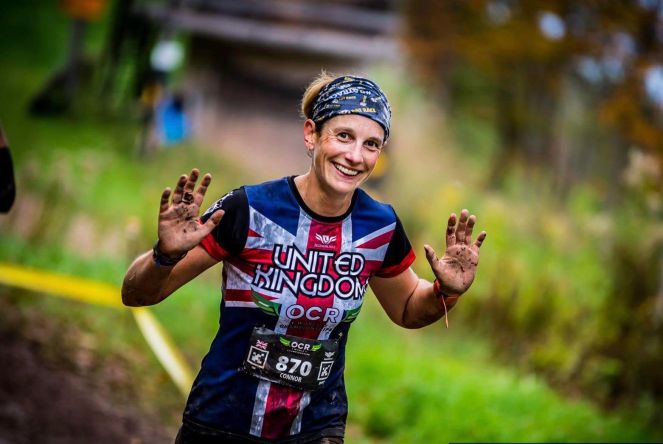
It’s a funny time of year to be involved with fitness. On the one hand it’s wonderful to see so much focus in the media and in general consciousness on the things that I value – health, fitness, strength, all the mental and physical benefits that come from exercise. Having those things in the forefront of people’s minds, if only for a few weeks, is undoubtedly a good thing. On the other hand though, I do find some of the messages around it, particularly on social media, to be unhelpful and, more importantly, actually potentially damaging in terms of people sustaining new fitness habits. 

An awful lot of the fitness messages that we receive at this time of year are grand in scale – “New Year, New You”, “Set Your Goals and Smash Them”, “Transform Yourself in 2020”, “Go hard or go home”. That sense of optimism and unlimited possibility is what gets an awful lot of people through the gym doors in January. But I’m not convinced it’s the best approach to keeping them there in February, March or 2021. Now, I’m not knocking big goals – I’ve trained for things in my life that a few years earlier, I wouldn’t have dreamed possible – but I didn’t start on the journey with those things in mind. Huge transformations are possible in anyone’s life, but they don’t happen overnight. The difficulty with starting your fitness journey with a big, transformative goal is that it won’t happen quickly and, quite often, it may not happen at all. Fitness isn’t linear, life gets in the way, stuff happens and best laid plans can go awry. Sometimes it turns out that the goal simply isn’t possible. I know we’re all supposed to believe that “if you dream it, you can do it”, but the hard reality of our fallible bodies, with their individual strengths, weaknesses and quirks is that sometimes you can’t. And it’s often not until you try that you find that out. 

If that’s the case, and your journey was entirely motivated by a fixed, inflexible end goal or vision, it’s hard not to see it as failure. And that sense of failure can kibosh the entire operation – “I tried, I failed, I give up”. Out goes the baby with the bath water – too much investment in an overarching end goal as the focus of a regime invariably means the little victories along the way go unnoticed. If your entire focus is being a size 10, and after three months of training you’re a size 12 with much better movement patterns and greater strength, chances are you’re going to see yourself as a failure and maybe throw away all those hard won benefits which could have taken you in a new direction. 

As a trainer, whilst I love new clients who have enthusiasm for change, I am always concerned about those who bubble over at the start with talk of how this is going to change their lives and be a totally fresh start for a new them. That all or nothing spirit and heavy investment in an imagined, often slightly abstract, outcome is unlikely to last through the inevitable set backs and hiccups that any kind of fitness journey involves. And it’s hard to get people with that mindset to appreciate the achievement of adding 5kg to their deadlift or improving their movement pattern for a squat because it doesn’t feel relevant to the reason why they are there. 

Often it’s the clients who start out with the aim of just starting who last the course. When you start any kind of fitness regime, it’s not a bad idea to simply see the process as the goal. Commit to three workouts a week rather than losing three stone, or getting totally shredded or being a size 10 by March. Decide that three workouts or runs or yoga sessions a week is good thing for you to do (because it definitely is!), do it for that reason and just see what happens. 

Chances are, as you progress, you’ll discover your own new smaller, measurable, more personal, achievable goals (nail that downward dog posture, run a sub 30 min 5 km, deadlift your body weight) which will motivate you along the way much better and lead to bigger goals in time. You might actually discover that your chosen end goal is an entirely different beast from the one you thought it was at the start – some of my best moments as a trainer have been when I’ve seen my client’s thoughts switch from a generic long term fat loss or aesthetic goal to a personal target of strength or speed – that’s when I know they have real investment in the process and a chance of genuine change. 

Slow change doesn’t make for great copy. “Be consistent and see what happens” is never going to be as catchy as “smashing your goals”. But it might just work. 

Ella Connor

I am a former lawyer turned personal trainer and fitness instructor. I love to lift heavy objects, run and climb obstacles. I work and train in Essex, UK.

accessibility · body image · cycling · fat · fitness

Fat cyclists in the news

I loved seeing this in my newsfeed: They call themselves ‘fat cyclists’ — and they want to get more people, of all sizes, on bikes. It’s a lovely story of two women, Kailey Kornhauser and Marley Blonsky who connected on Instagram and who now pursue bike adventures and cycling advocacy together. They both wear size 2X and they’re not riding to lose weight.

Kailey says, “I was always trying to change the fact that I was a fat cyclist into being just a ‘regular’ cyclist,” the 27-year-old says on a recent afternoon. “Now, I spend my time loving myself and moving my body because I enjoy moving my body and not as a punishment to my body.”

They’re not alone, of course. See Big women on bikes here on this blog. Also, Fat lass at the front.

One of my fave fat cyclist images. From the Stocky Bodies project.
fitness · habits · Happy New Year! · motivation

Happy Quitters’ Day!

Based on loads of data (48 million users worldwide logging their training), Strava says today’s the day when lots of us who made big new year plans give up. We abandon our new year’s fitness resolutions. This year Strava predicts January 19, two days later than last year.

It seems early to me. But who I am to judge? I typically don’t make super big “new year, new me” style resolutions. I did quit smoking on January 1 but that was in 1989, a very long time ago. And I started by cutting back in September so it wasn’t exactly cold turkey.

New year, new me!

Running Magazine has some good tips if your motivation is starting to wane but you want to stick with it: find a buddy, revise your resolution, schedule a race, and don’t be so hard on yourself. I like them. They’re good tips.

I also like a line I learned from Precision Nutrition coaches a few years back, quit tomorrow. It’s their motivation secret #2. “If you’re struggling with your fitness goals, feel free to quit. Just do it tomorrow.”

The idea is that we often quit at the start of a day or activity when things feel especially hard. Or in the middle of a really tough day when we’ve just had enough. Instead, just do the thing and see how you feel after. Still feel like quitting? Quit then. Allowing yourself the possibility of future quitting can help you keep going now.

What works for you to keep you going when quitting beckons?

fitness · planning

Little buds of optimism in January

It’s January. It’s cold. It snowed this weekend. Here’s what it looks like outside my house:

Wintry snowy scene (about 3 inches/6 cm) outside my house.

Of course, other places got more snow this weekend:

Two brave Newfoundland snowplows, making their way to open up a highway (yes, that's right).
Two brave Newfoundland snowplows, making their way to open up a highway (yes, that’s right).

Yeah, it’s January.

Despite all this January-ness, I’m finding little signs of spring. Yesterday I noticed that a few of my orchids are putting out new shoots with buds.

These orchids, by the way, are the champions of consistent, independent plant performance. I bought them at IKEA years ago for $11.99 apiece, and they have kept blooming and re-blooming, with very little help from me. What can I say, I think they like it here.

Budding plants are my favorite sign of optimism for the future. We don’t know that blooms will happen, and in the case of these orchids, it’s going to take some time for them to come into full flower. But as long as I pay a modicum of attention to them, they’ll do what they do, and I’ll be rewarded with blooms like these (this one’s from last March):

White orchid blooms in various stages.

This week, I was feeling some budding of my own optimism. I signed up for the Bikes Not Bombs bike-a-thon for this June 14. I’m doing the 30-mile ride and fundraising for this organization that gives bikes to kids, teaches them how to ride and maintain bikes, and how to be good world citizens through bike riding.

Bikes not Bombs bike-a-thon-- I'm registered!
Bikes not Bombs bike-a-thon– I’m registered!

And yes, there’s a little fundraising.

Getting started with donations-- $25 down, $175 to go.
Getting started with donations– $25 down, $175 to go.

Signing up for a June charity ride has got me feeling excited about spring and summer riding already. Of course, I’ve got to pay attention to preparation (yes, this means riding the trainer) in order for my riding to be in full flower by June. My orchids and me– we’ve got some work to do. And this is the time for it.

Color me smiling.

Smiling emoji, filling in for smiling Catherine.

Hey readers, what are you thinking about this January? Any budding thoughts or plans for spring and summer activities? How are you feeling about them? I’d love to hear from you.

athletes · equality · femalestrength · fitness · gender policing

Representing women in sports: we’re not there yet, but it might be getting better

As I temporarily merged with my parents’ couch over the holidays (save for the occasional jaunt outside for a run, to the pool, or to the table to eat all the festive food), I came across an article in The Guardian entitled “Powerful photographs perfectly illustrate the rise of women’s sport”. It’s an interesting article with loads of iconic pictures from the past year. If you need a fix of badass women doing badass things, I’d encourage you to head over there right now to read it. Megan Rapinoe, Simone Biles, Naomi Osaka and others, they’re all there, performing incredible feats.

This is a new thing, according to the article: in the past, sports photography focused on making women look conventionally attractive and erasing certain aspects, sports, or people by not picturing them. Progress is, admittedly, slow, as the article also points out. There was the online abuse hurled at Australian footballer Tyla Harris after a photo showing her performing an awesome kick, but also depicting her crotch area, was published. The network that originally published it first withdrew it, then put it back up apologising for giving in to the trolls. Then there was the shit storm over Megan Rapinoe and the US women’s football team’s way of celebrating their World Cup victory, which Donald Trump got involved in, because Of Course He Did. And there were many more.

So things still aren’t great, but they’re getting a bit better, slowly. In part, the Guardian article noted, this is also due to more female sports photographers being around who portray women from a female viewpoint rather than a male gaze. But there aren’t enough of them – photography, for women, is apparently just as sucky a profession as many others, rife with discrimination and unfair disadvantages. And even where things are getting better… “Getty hired two women photographers on internships who are covering the women’s game around the country”, the Guardian piece notes.

Wait, what? They hired them on internships? Could they not be arsed to give them a real job? Unfortunately the article doesn’t go further into this, but it definitely gave me pause.

Le sigh. As we head into 2020, there seems to be cause for cautious optimism, but our work here, fit feminist friends, is not done.

fitness · food

NY Times 7-Day Sugar Challenge review: skip the print, look at the pictures

It’s January. Everyone’s on the behavior change bandwagon. Or, if not already on it, they’re waiting for the right bandwagon to come by.

Comic of one person waiting at a bus stop, and loads of folks waiting at a bandwagon stop. Literal, but still amusing.

Cate wrote about the Yoga with Adriene 30-day yoga journey (a kinder, gentler challenge which I really like), and we get to see many of the good features of challenges there.

Out of curiosity more than any actual desire for radical change, I signed up for the New York Times’ 7-day sugar challenge. Here’s what they promised:

Every day for the next 7 days, we’ll share a simple new strategy for cutting added sugar from your daily diet [and] …readings about how sugar affects your body.

The Sugar Challenge will show you, step by step, how to cut all that added sugar in your diet as well as tricks for satisfying your sweet tooth. Each day you will take on a new challenge while repeating the challenges from the previous days. By the end of the week, you will have adopted several new healthful habits and discovered that life really is sweeter without all that extra sugar!

Great! I will have a whole new relationship with sugar (that of total abandonment, I assume) in just seven days. Wow.

Color me skeptical.

You never know what images will come up from Googling; I really like this one. It's a hippo, and the print reads Skeptical hippo is skeptical.
You never know what will come up on Google images. “Skeptical hippo is skeptical” is my new favorite sentence.

So as not to waste your valuable blog-reading time, I’ll put all seven days in a list:

  • Eat breakfast foods with no sugar (no grains, sweetened dairy, doughnuts, etc)
  • Start jettisoning packaged foods from your diet, as lots of them contain added sugar (even those that don’t seem sweet)
  • Eat fruit (but the higher-fiber and lower-sugar fruit– no bananas or grapes)
  • Drink only water (or plain selzer– whew…)
  • Eat spicy food (and you can maybe have some berries or orange slices after)
  • Roast root vegetables, and enjoy their sweetness
  • Savor a small piece of dark chocolate sometimes (but not every day)

Now, I do give the NY Times credit for finding scientific research behind all of these suggestions (which you can find in the articles). But honestly, this is pretty much advice of the buy-low/sell-high variety. Who doesn’t know that most sodas, juices and sports drinks contain a lot of sugar?

What they don’t do is what (almost) everyone doesn’t do– they don’t tell you HOW to bring yourself to the point where you can make what may be big changes and maintain them over time. Like almost everyone, they just say, “decide to do this, and before you know it, it’ll be a habit”.

(Brief aside: even though I’m skeptical hippo, I think Nia Shanks really gets that we need to dig deeper into the narratives we place ourselves in that keep us in habits we wish we could change. Check out what we’re writing about Nia’s 100-day reclaim here. Now back to the current blog post…)

Lest you, dear readers, think I’m just writing another rant about how media gets nutrition advice wrong, let me say this: I come here not to bury the 7-day sugar challenge, but to praise it. Well, its illustrations anyway. Check these out:

And these:

Yep, there are more:

And then there’s the chocolate:

Yep, this chocolate is made of paper, too.

The artist responsible for these marvelous yummy creations is Reina Takahashi, a paper artist and photographer. She does magnificent creative renderings of food, ordinary objects, scenes, all sorts of things. Her illustrations made me much more interested in beets and water pitchers and chili peppers than all the articles the NY Times could throw at me. Here’s what she said about some of her work:

This paper beet is my favorite of the series for the way that it photographed. The green leaves have crisp edges against their shadows and a good bit of texture, while the rest of the beet has a clean range of light/dark.

The little green hats on these red chili friends were my favorite part to make!

I bought a bar of dark chocolate in order to use its silver wrapper in this illustration (the contents went to good use, I promise).

Reina’s paper food art reminds me of the whimsy and fun that we can have with our food. Food is about color and texture and depth and light and little green hats and silver linings and more. Seeing my food in a different way– MADE OF PAPER!– made me think about possibilities for preparing it, serving it, displaying it and eating it differently. And that, my friends, is a good way for us to open pathways to new ways of being, seeing, doing, and maybe even eating.

These illustrations tickled me pink. I hope you like them too.

Oh, and about the sugar challenge: I say go straight to day 8: Make or draw or construct or paint or prepare some food (out of paper or just out of food), and enjoy its beautiful qualities.

So, readers, are you as transported by these illustrations as I am? Did you go to Reina’s blog? Are you impressed or unimpressed by the sugar challenge? Do you want to meet skeptical hippo? Let me know if you have inquiries about any or all of these issues.

fitness

Root to Rise: Voices on YWA Home

We’re all about the yoga this January at FIFI.  Many of us (me, Sam, Tracy, Susan, Christine — who else?) are doing the Yoga with Adriene Home 30 day yoga journey, along with scores of people in our 220 in 2020 groups and elsewhere.  It feels like a community tipping point, so I asked people what draws them to it.

(And to be clear, this is not a sponsored post — we are just really fans, lol).

  1. People appreciate who Adriene is as a teacher and a person

People have a lot of experience with yoga teachers who take it too seriously or give lectures about How to Live.  Adriene hits the right note of caring, humorous, affirming and expert.  

I enjoy Adriene’s humour, that she doesn’t take herself too seriously (Margot)

And she feels very affirming of where I am in that she regularly makes comments about how the hardest part is showing up. (Jennifer)

I find Adriene charming. I find her amusing, genuine, and supportive, which are unusual things to say about a person I don’t know at all, but–for me–this is what she projects.  (Maryjean)

I like how friendly (and marvellously goofy) Adriene is. She clearly takes yoga seriously but she doesn’t take herself too seriously. I like the foolish jokes she makes and the way she says ‘Hey-oh!’ If something she has said could have an off-colour interpretation.  (Christine)

I like her style – not so much yoga/spiritual/hippie stuff that I can’t manage, but just enough to help me buy in and learn more about myself. (Craig)

like YWA specifically because of the simple clean production of the videos and that she is not too too much into cultural appropriation. (Jason)

I also really appreciate her kind, calm, generous personality, as well as her unabashed goofiness. (Johanna)

For me, I cannot say enough about how positively I feel about Adriene. I have spent some time in every yoga studio in this town and I am invariably irritated by instructors. They are too advanced or they are too full of crap or they never stop talking when they should or they tell me how to solve all my problems and they are no older than my kids. Adriene triggers none of that for me. I relate to her even though she is about a decade or so younger. She is unserious, but totally serious. She has ease in her own self, even in her own self consciousness. It’s not perfect, nothing is, but it’s darn close, for me anyway.  (Susan)

2.  January is hard, and having a regular practice helps create resilience

January is resoundingly awful, at least for the last few years. For the second year in a row, the whole family is sick except for me. Which means, I am often the first one up and the last one to bed, making many meals and snacks, and cleaning up from all of those, and there is not enough time for any exercise outside of the house. But last year, I made space for YWA’s 30 days, and I felt like it was part of starting me on the right track for 219 in 2019, and it was also a huge part of keeping me healthy when everyone else was sick.  (Jennifer)

A victory of hope over experience? I do like a New Year’s resolution and the idea of having a goal is appealing to me. Without the goal, it’s easier for me to let things slide. (Maryjean)

3.  The practice is short and doable, but generates something real

It also makes me realize I have time in my life for exercise. I’m doing this on top of my running but don’t feel like I’m sacrificing anything.  (Craig)

It is the yin to my weight lifting yang. The older I get the more I feel the need for a balance of soft and hard exercise. I (Jason)

Some days I’m torn between thinking it’s exactly what I needed and I could have used more – there are also some days where I’m like “okay enough talking Adriene – let’s go” and others where I’m like “Holy smokes this is moving”.  (Craig)

Since I often only have time to sleep 6 hours per night, and I am spending a lot of the in between time exposed to the germs of school/commute/public transit/kids, YWA is just small enough that I can reliably make space for it, and it feels great.  I definitely find the time and space, and the getting to my yoga mat to be the hardest part, and if I spend the duration of the video breathing and trying (though often failing) to shut out my to do list, then I have accomplished something huge. So, the feeling of accomplishment provided by the YWA 30 Day calendar- especially the regularity of the feeling of accomplishment – is such a gift. (Jennifer)

They’re all shorter than I’m used but if they were a full hour I don’t know that I’d be as able to maintain the daily commitment. In some ways, knowing it’s short has given me an attitude of “of course I can fit this in before dinner”.  (Tracy)

The classes are a little short for me, but that makes sense for 30 straight days of yoga as opposed to my typical schedule, which might include no yoga or a quick 15 minutes on some days and an hour or more on others. (Jennifer2)

I’m doing it, not necessarily every day but many days and still her format makes it feel that you are right in pace. I like how she gives various challenge level for the moves.
I have a hard time keeping my eye on her as I am using my laptop and don’t know all the moves which can be a challenge but I like that I can go back and redo it after watching.
 (Alex)

4.  The dog!

OMG the dog !! (Alex)

I love that she makes her dog Benji a part of her practice that she shares with us. (Johanna)

And I love Benji and how she incorporates him into each episode. Like for the relaxing day she didn’t take the blanket away from him because he was sleeping. That was cute. (Tracy)

it’s fun that she has her dog snoozing away in most of the videos! (Christine)

5. Community

Doing it with others has also been great – I look forward to seeing others talk and share and have a community.  (Craig)

My daughters are both doing it too and we are encouraging each other, plus I enjoy reading people’s experiences here. and seeing Benji walk in and out of the frame is great 🙂  (Margot)

6.  It fosters self-reflection and growth

What I love about YWA is that she gets me to try new flows and new poses. I generally use yoga to keep my body functioning and tend to do the same familiar poses/practices week after week because I’m not trying to grow so much in my practice, but more, I guess, to maintain both physically and mentally? It keeps my together and sometimes puts me back together. (Jennifer2)

I also learned something about myself and the need to recognize that different people are at different places with their practice – despite what she says (and what I thought) sharing experiences here and seeing comments has made it clear this is not as accessible as I thought. Also made me realize I’m further ahead in my own practice than I thought.  (Craig)

I’ve done a few of her January yoga journeys (I love how she doesn’t call them challenges!) before and I find it super satisfying to be able to feel progress in myself (in terms of strength and flexibility) by the time I get to the end. (Johanna)

For me, she strikes the balance between neither treating yoga just like any other gym class nor being toooooo esoteric for my own personal tastes. I really appreciate the nudges to be mindful and to appreciate my own body!  (Johanna)

YWA helps me engage with yoga in a different way. After Dedicate last year I continued inserting a few internet videos, some YWA, some not, into my practice every month and some of it has stuck in my every day practice. So, YWA has definitely helped me expand my yogic horizons.  (Jennifer2)

She really makes it okay to do yoga at your own level. Lots of time online videos feel (to me) end up feeling like you are failing if you can’t replicated what they are doing. Adriene has regular reminders that you can modify the practice or just do what you can, and she somehow makes it truly okay.  (Christine)

***

There are challenges to YWA Home, mostly that it might not be easy to follow as a true beginner — even with the variations she offers, some people aren’t familiar enough with the poses to modify in a confident way.  She does build “vocabulary” over the 30 days — introducing new poses and concepts, and then referring back to them.

I’ve been doing yoga for 25 years, and my experience tends to be like Tracy’s — intellectually, it feels short, and I start out thinking “oh this is simple” — and then there is a moment of “oh my god that’s intense and challenging,” then “oh, it’s over.”  The practice is cementing daily reflection and presence to my body, and is the perfect adjunct to the more intense running, crossfit and spinning that dot my week.  Like others, I feel oddly supported and cared for by a person I have never met.  What more could I ask for?

What about you?  Have you tried YWA?  If you’re inspired,go to the link and click subscribe to home — you’ll get emails every day starting with Day 1.

ground


Fieldpoppy is Cate Creede, who lives and practices in Toronto.  This image is one of Christine’s daily yoga inspiration drawings.  It refers to the “ground” practice, and I love how it evokes my favourite of Adriene’s refrains — “root to rise.”


alcohol · beauty · body image · eating · fat · fitness · habits · health · injury · movies · running · self care · sex · stereotypes · weight loss · weight stigma

Sam watched Brittany Runs a Marathon and recommends that you don’t

Catherine wrote a blog post about Brittany Runs a Marathon without watching it. That was definitely the wiser choice. See her commentary here.

She writes, “So why I am writing about a movie I haven’t seen? Because I think the movie/advertising/fashion/fitness industries have (sort of) taken in the message that it’s not okay to blatantly fat-shame people or overtly identify lower body weights with fitness, success and happiness in life. Notice, I said “overtly” and “blatantly”.”

Catherine goes on to identify “some strong fitspo messages buried (not too deeply) in this film:

  • Health problems should first be addressed by losing weight
  • Weight loss is possible to achieve through physical activity
  • Weight loss makes physical activity possible and easier and better and more fun
  • Some deep-seated emotional problems will resolve through weight loss and physical activity”

There’s a lot to dislike about the film that I knew before I hit play. It erases larger runners, it promotes weight loss fantasies, and it’s fat-shaming. All that I knew at the outset.

So why did I end up watching it? I sometimes watch “bad” TV or fluffy shows while cleaning. Easy to follow rom-coms? Sign me up! I hadn’t seen the floor of my room in weeks. There were Christmas gifts I still hadn’t put away, clean laundry, bags of gym clothes, yoga mats etc all over the floor, the bed needed making, the socks needed sorting and so on. I needed something longer than a regular half hour show to deal with all of the mess. I needed a movie length thing at least. I thought I could handle the fat shaming and enjoy BRAM for its redeeming features. The trailer looked, as a friend put it, cute. The Guardian called it a fluffy feel good flick. It is not that. By the end, I did not feel good at all.

Friends, it was not mostly cute with a side of fat shaming, which I expected. Instead it was a dumpster fire of stereotypes and it was also super sex shaming. All of this was lumped into criticism of Brittany’s self-destructive lifestyle. At one point in the movie someone opines–in a line that was supposed to save the movie, “Brittany, it was never about the weight.” Instead, “weight” is just a stand in for all of Brittany’s problems. Before fat-Brittany is taking drugs and giving men blow jobs in night clubs and by the end of the movie, thin Brittany isn’t just thin. She’s also turning down casual sex. The friends-with-benefits/boyfriend proposes. There was way too much moralizing about sex and drugs. And I say that as someone who is no fan of drugs or alcohol and is often accused of moralizing in this area.

This happens because Brittany isn’t just a fat girl. She’s a fat girl with low self -esteem. She could have just gotten some self-esteem. But no, she gets thin and then gets self-esteem. She could have gotten self-esteem and demanded equal pleasure in the casual sex. She could have started using drugs and alcohol in a responsible manner. Instead, no. She gets self-esteem, says no to drugs, and holds out for a real relationship.

Not surprisingly, it doesn’t manage the weight-loss plot line well at all.

The Guardian reviewer writes, “The film struggles to square its protagonist’s weight loss with the pressure to present a body-positive position and ensure it doesn’t alienate the very female audience it courts. One minute it’s wryly poking fun at the expense and inaccessibility of gyms, the next it’s fetishistically cataloguing the shrinking number on Brittany’s scales. Indeed, as her body transforms, so does her life. She finds a new job, and supportive friends in her running club; men begin to notice her. Yet Brittany still battles with her body issues, unable to shed her identity as “a fat girl”. There’s a note of truth in Bell’s finely tuned performance as a character whose insecurities have calcified over the years, hardening her to genuine goodwill, which she frequently misreads as pity.”

For the record, fat Brittany is smaller than me. She starts out weighing 197 pounds. Her goal weight is 167. And we can track it because never in movie history has a person stepped on a scale so often.

(A blog reader pointed out a more charitable interpretation of why we see her stepping on the scale so often: “She steps on the scale a lot because she trades in her addictions to drugs and alcohol for an addiction to scale weight loss, which the movie portrays as an unhealthy obsession. What starts out as a good “oh look, I lost this many pounds now!” thing quickly escalates into a dangerous “go for a run, jump on the scale, dislike the number displayed, so go back out to run in the mistaken belief that it will make the number change” cycle. That’s why she steps on a scale so often. Because it’s NOT good that she does it.)

Forget the weight loss and the sex, even the running themes aren’t handled well. Friends tease Brittany when she first starts running because she isn’t a real runner. The longest she’s run is 5 km. Rather than tackling the “real runner” thing head on instead the film has Brittany run a marathon and become a real runner by the friend’s standards. Even her triumphant marathon finish is marred by Brittany’s continuing to run on her (spoiler alert) injured and possibly still stress fractured leg. We don’t know that but we do know she’s holding her leg and crying, running and not able to put much weight on it, and her first attempt to run the marathon was derailed by a stress fracture.

There is nothing to love here. Nothing cute or funny or feel good or fluffy.

Friends, don’t watch it. Not even on an airplane.