body image · fitness

You Do You

image

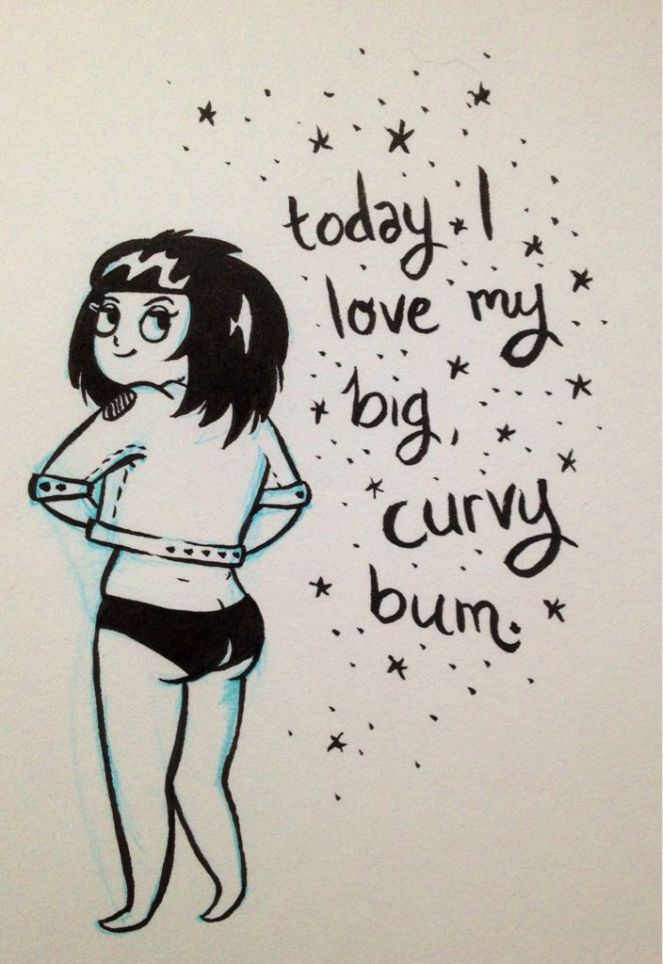
I’m not actually a plus size woman these days but I am big. I do like that there’s a bit more variety around these days in terms of bodies represented as sexy. Recent efforts mostly focus on including larger women, but I still hate all the comparing.

What kind of comparing?

Well, this.

And this,

But you can celebrate diverse beauty without invoking comparisons. You do you.

I do like this!

And this,

Pride:

And this,

diets · fitness

Behind the scenes at a no-nonsense for-real weight management course: wrestling demons

As we approach the end of 2015 and the beginning of 2016, we are pummeled with ads promising us that, if we just sign up for some new plan (however loony or expensive it may be), we will be renewed and transformed. Gone will be the extra pounds, the shame of unattractiveness, and the social rejection. In its place will be new-found confidence, social and professional opportunities aplenty, and inner joy. You can see for yourself right here:

new you

We’ll be posting a bit on this blog about the push to turn over a new leaf, start a new regimen, set new goals, and remake ourselves as soon as the calendar year turns over. And we also want to hear from readers, too, about how they are responding to the wave of self-improvement fever.

Not that I’m against self-improvement, or even against enthusiasm about new beginnings. The end of the year is a good time to take stock, reflect on what’s working in your life, what you want to change, and what goals you might want to pursue. However, doing a google search of images related to “new year’s resolution”, almost every image included the following:

lose weight

Sigh.

We all know (from great posts like these among other places) that losing weight may or may not be difficult, but maintaining weight loss over time is nigh unto impossible. But that doesn’t stop people from wanting it badly.

I do research on weight, weight stigma, health, eating and behavior change, have read and written lots about these issues.  But there is no substitute for hearing the stories of the struggles of real people as they try to make a more peaceful and accepting life that includes food.

Two weeks ago, I was invited to attend the last meeting of an 8-week course in Sydney, Australia on weight management run by Ginette Lenham, a counseler, therapist and support group facilitator specializing in weight management issues for women. She counsels women with complex sets of challenges ranging from fertility to gynecological to endocrine to psychological, working on how to respond to emotional eating and other triggers in their lives. Her website is here.

The stories these women shared were not surprising, but they were revealing. Here are some stories, and the underlying messages I am going to guard against as I face the new-year pull to remake myself in a more skinny image. These messages are powerful, but they are not true. The women in that room shared them in order to expose them for the falsehoods they are, and get some help in doing battle against them.

Message: Weight equals worth and status as a person

“You know, your position in a social hierarchy can change enormously with weight loss or gain. When you’re obese, people don’t see you as a person with control or discipline. My friends who have known me a long time (when I was thinner) have more confidence in me, in my abilities, than my newer friends (who only know me as fat). They think an obese person is a different sort of person, not a person like them.”

Message: Weight loss will fix any ailment

 “I joined a running club; it’s really helped my motivation and improved my performance. I was having trouble recently with getting blisters and talked with someone about it. She said, ‘oh—after I lost a lot of weight, I stopped getting them’. Argh! “

“One woman in our running club won an award; at the ceremony, all they talked about was how much weight she had lost.”

Message: There are ‘good’ foods and ‘bad’ foods, and it’s never okay to eat ‘bad’ foods

“I used to work as a waitress, and women were always apologizing for their orders. They would say to me, ‘I’ll have this cake but I won’t have any dinner.’”

Message: Eating “right” is a “natural” ability, which some have and some don’t

“I look at my kids to see how they are eating—what they eat and what they leave behind on the plate. I have no idea what to do, or how to eat intuitively.”

“Some people are just stronger and they know when to stop.”

Ginette’s approach is largely about helping people to identify these negative messages and then to set aside those harsh judgments, focusing instead on individual health and life goals. This is a long-term process, and is not about learning to love salad. There’s no gimmickry—no magic pill to swallow, no exercise machine to use. Will it result in weight loss? Maybe, maybe not. What she hopes for her clients is of course some solutions to their complex medical problems, some of which are weight-related, but more importantly, in her own words, “you can learn to be liberated from all the negative self-talk that is associated with your previous weight loss experiences.”

Now that’s a new year’s resolution worth making.

Screen Shot 2015-12-22 at 10.11.57 PM

body image

OMG It’s the Darn Photo Contest Again

Why, Precision Nutrition, why?  I know Sam already said how much she detests the PN photo contest. And I’ve already said how they lost me when they spent a month getting us all prepped for the final photo shoot.

Both of us attest that there are some good things about the PN program. But the photo contest certainly isn’t one of them. This week, we both got links to the women’s and the men’s finalists’ before and after shots so we could vote on the most amazing “transformation.”

Some of them do appear to amazing. But what’s so irritating is that all through the program they say it’s not about the numbers on the scale or even about the way you look — it’s a change in attitude and approach.

What’s the big change? It’s a habit-based program. And what it really encourages us to do is take up healthy habits. I know that for a lot of people the reason to take up healthy habits is to lose weight and get lean. It is, after all, called “The Lean Eating Program.”

So what did I expect? What’s so bad about a photo contest? Why do I despise before and after shots?

First of all, if you know anything about “before” and “after” shots, it’s that they’re not always indicative of the truth. There was that thing awhile back where people took “before” and “after” shots within minutes or hours of each other.

Remember the Australian personal trainer, “Mel,” who did a 15-minute “transformation”?

Andrew Dixon wrote “Seduced by the Illusion: The Truth about Transformation Photos” for The Huffington Post, where he talks about marketing campaigns that use before and after photos as a major selling point (sound familiar?):

Before I claim it’s all bullshit, I want to make it clear that there are definitely some very impressive, genuine physical transformations out there. What I do take issue with are the transformations that are manipulated with Photoshop, professional lighting, postures to degrade or enhance their look, pro tans, sucking in or pushing out a bloated belly or flexing muscles vs. not flexing to obtain an optimal look.

This is just the sort of thing PN encourages (not necessarily the gut sucking and so on, but definitely the professional photo shoot.  Dixon decided to experiment:

I decided to take my own transformation photos to see what was possible with just a few easy tweaks. About six months ago I was around 185 pounds and about 16 percent body fat. I was feeling particularly bloated on the day, so I asked my girlfriend to take a before shot. I then shaved my head, face and chest and prepared for the after shot, which was about an hour after I took the before shot. I did a few push ups and chin ups, tweaked my bedroom lighting, sucked in, tightened my abs and BOOM! We got our after shot.

Or there’s this instructional video about how to fake your before and after shots.

What this says to me is: be skeptical. Be very skeptical.

I’m not saying that no one in PN changes and that it’s all smoke and mirrors. But there is a lot of information missing from the contest. Like are they repeat-customers (“VIPs” as PN likes to call them)? How did they do with the habits?

And the million dollar question: maintenance. This is where so many people hit the wall. When the focus in largely on weight loss, that’s sort of the easy part. The struggle is keeping it off. The merit of a habit-based program is that you are supposed to be developing new habits for life. So you would think that the main indicator of importance would be how well those habits stay once the program is over. Or do we have to keep paying hundreds of dollars a month to keep up with those good habits?

I also don’t like the fact that PN uses the photo contest as its main marketing tool. It’s free advertising for them and they spend about a month trying to get the clients, who are already paying hundreds of dollars each month, to shell out for a professional photo shoot.

Of course photos from a pro shoot are going to be more flattering than the photos everyone took on day one, with their smart phone camera, at the beginning when they felt crappy about themselves.  I don’t know. That part really gets to me — the way they kept telling us “it’s worth it” and “you’re worth it” when really, more than anything else it’s worth it for them when their clients get the pro-shots and turn them over to PN for inclusion in the photo contest. We pay, they get to use the pics to get new clients.

I didn’t get a professional shoot and I didn’t give them permission to use any “after” shots. In fact, for me, the monthly photos were the worst part of the program because I was trying to get away from using appearance as a motivation for healthy habits.

So here we are again with the photo contest. And it happens to coincide with the “pre-sale,” which is an early sign-up that gives you 20% off of an unspecified amount and enables you to register a day earlier than everyone else for the January program.

My cynicism is not just because a year after the end of my PN experience I’m still struggling with the same stuff as I always have. It’s not just because I feel the need to find other bench marks because getting leaner eludes me. And it’s certainly not because I myself wouldn’t have ever been a finalist even if I had wanted to be considered for the contest.

It’s more because I wish there was a way of selling healthy habits without selling appearance-based “transformations” and without taking advantage of everyone’s susceptibility to being “seduced by the illusion.” I also think it’s just kind of embarrassing, in a way I didn’t used to, to put yourself out there to be judged on your appearance and your weight loss by countless strangers.

For all the pronouncements that it’s “an inside job,” the final photo contest just makes the program seem sort of shallow and the contestants desperate for a stamp of approval from others. Really? Do we have to keep doing this?


cycling · fitness

How far did you go? Or my motivation for a 60 km Boxing Day bike ride

The other day I checked my year to date distances with Strava.

I saw that I’d ridden 3942 km this year and 3675 km last year. I had a goal of riding 5000 km this year and despite doing two weeks of riding in South Carolina and Arizona during the winter, didn’t make it. Damn that canceled Manitoulin Island week of riding!

But I was anxious not to miss the 4000 km mark and so started planning a 60 km Boxing Day ride.

Then last night I remembered that Strava doesn’t count my commutes because I don’t use the Garmin on the multi-use pathway. The commutes get added, when I remember, manually to Garmin. So I checked my Garmin year in review. YAY! I’ve ridden 4,317 km. Now I’m feeling a bit better.

So it’s short the commutes but the Strava toolbox still has some nice info.

This year, I logged

124 rides

It means an average of

10.33 rides per month

Or, if you prefer, it equals

2.43 rides per week

More precisely, it is exactly

0.35 rides per day

In terms of distance, I totalized

3942 kilometers

They can be converted in

2449 miles

But please note that the kilometer
is the only official distance unit for cycling!

It is roughly like riding from

New York

to

Los Angeles

(which is exactly 3940 kilometers as the crow flies)

This is exactly the

9.84%

of earth’s circumference

My average distance this year is

31.8 kms per ride

It translates into an average of

328.5 kms per month

And obviously it means

77.3 kms per week

Basically, you can say I’m riding

11.2 kms each day

My total riding time this year is

8 days

4 hours

33 minutes

16 seconds

This is the

3.48% of my life

excluding an average sleep time of 8 hours

My average speed this year is

20.06 km/h

It can be converted in

12.46 mph

Again, you should start to learn
how the metric system works.

Talking about elevation,
this year I climbed exactly

175.5 meters per ride

Or, from another perspective, an average of

1813.5 meters per month

Yeah, it means that I climbed

426.7 meters per week

All the above is just to say
that I climbed a total of

21762 meters

Approximately, it’s like climbing

Olympus Monsx1 times

In fact, it is 21230m high from the surface of Mars
and it’s the highest peak in the Solar System

At about 12000m I would have passed
the tropopause and entered the

stratosphere

This is the highest atmospheric layer
that can be accessed by jet-powered aircrafts