fitness

The Parapan Am Games: Could You Compete?

panam gamesYesterday I was at a training session at work called “Mental Health First Aid.” It’s a Canada-wide initiative of the Mental Health Commission of Canada. Its aim is to educate people with enough understanding of mental health issues to be able to administer “first aid” in an emergency or crisis situation, until a person can get professional help. They want to “increase mental health literacy” among Canadians.

One of the goals of this initiative is to address some of the stigma around mental health issues, which is a good thing. One of the ways they do this is to draw frequent analogies with physical health.

So far so good. But you need to know that this is a pre-packaged course that they train various people to deliver. There is a set format and curriculum, set powerpoint slides, a booklet, videos, activities and so forth. It would be astonishing if a course such as this would contain no problematic narratives even if its aims are, on the whole, positive.

Here’s what happened. One of the activities is they give each group (yes, there is group work) a baggie full of slips of paper. Each piece of paper has a “disability,” “ailment,” or “impairment” on it–quadriplegic, paraplegic, total loss of hearing, severe dementia, gingivitis, asthma, bipolar disorder, depression–you get the picture. The assignment is to rank them in terms of “most disabling” to “least disabling.”

Now maybe it’s because I’m a feminist philosopher who, though no expert on disability, has reflected on disability and oppression in recent years, but at a certain point it became clear to me that the task could not be done. I raised this with my group. My complaint is that an identified condition is only disabling if the surrounding environment is constructed in a way that excludes people with that condition.

For example, if stairs and counter tops and sinks and taps and toilets were all built for people who were ten feet tall, that would, for pretty much everyone, be a disabling environment. I thought of the deaf community and how at least some portion of that community takes serious issue with the framing of deafness as a disability. See this video.

One of my colleagues at the table agreed with me. She had just been at the Parapan Am Games the night before and has had some involvement coaching athletes (I’m sorry I don’t know exactly what). She agreed with me that some of the athletes would be offended to be thought of as disabled.

When I raised this with the facilitator, I honestly thought that we would be told that we had the “right answer,” namely, that the exercise really couldn’t be done. But instead, I was told that I was “overthinking” the exercise and couldn’t I just see that the point of the exercise is to get us to see that some mental conditions are just as disabling as some physical conditions.

Right.

The Parapan Am Games are going on in Toronto right now. The other night on CBC radio I heard them interviewing an athlete in who’d earned silver in the archery competition, Matt Stutzman from Iowa. Matt was born without arms and holds the bow with his foot. He has amazingly dextrous toes, which he’s used his whole life in ways that most of us never have (or even could). When the interviewer asked if he hoped to be the best para-archer in the world, he replied that he hoped to be the best archer, period, in the world. This is not a longshot dream. He currently holds the world record of the longest accurate shot in archery.

Read more about Matt Stutzman here.

The point is, the athletes competing in the Parapan Am Games and who will compete next year at the Paralympics in Rio are incredible athletes against whom, I dare say, most non-disabled people wouldn’t stand a chance.

It’s not that I think we should deny the idea of disability. Politically, that would be the wrong way to go. But it’s important, I’ve learned over the years, to recognize that we live in an extremely ableist world and that much of what we think of as disability is really just lack of support, lack of understanding, or a mismatch between the way the world is designed and the people in it. Think about how you would fare if communicating with the majority of people required telepathy or if navigating the world required sonar, like bats.

In this respect, I applaud the Mental Health First Aid course in its goal of reducing stigma and improving mental health literacy. Their very own materials include the idea that someone could have a mental health issue but, with the right kind of supports in place, not be affected by it. But they have some distance to go in achieving their goals. It’s true that we need to recognize that people with mental health issues need help, understanding, and supports.

But to play up the idea that disability is an inherent quality and that various conditions can be ranked in terms of most to least disabling perpetuates the wrong idea that disability inheres in individuals and has nothing (or very little) to do with context and environment.

Reflecting on the athleticism in the Parapan Am Games is a good way to see that some people with what many of us think of as disabilities are in fact extremely capable, even more so than non-disabled people. So to draw generalizations about the extent to which some feature of a person is disabling is just a mistake and doing so can contribute to, rather than help to eliminate, stigma about disability and, by analogy (as per the Mental Health First Aid Course), mental illness.

Aikido · fitness · martial arts

Aikido: Touch me (without consent) and your first lesson is free


One of the most important lessons you learn in martial arts has nothing to do with protecting yourself from strangers. It’s about the importance of consent, ongoing consent, and your right to start and stop an activity as you choose.

I’ve written a bit about this before in a post on non sexual physical intimacy.

Let me explain. In Aikido we train with partners. One person begins the technique by striking but as all Aikido techniques are defensive the person doing the technique is the person struck.

What you do with the blow, grab, punch, strike depends on the technique.

There’s a lot of throwing and a lot of very mean pins.

You’re lending your body to another person to train and there’s a kind of intimacy about that. I know the bodies of the people in my dojo pretty well. I trust them with my body. I know what the people move like, what they smell like, and how hard they like to be pinned.

There are certainly people to whom I’m biologically related whose bodies I know less well than the people in my dojo.

Suppose you’re the person who started it all. You tried to strike your training partner so they could practise a defensive technique. They’ll defend themselves and take you to the ground where most Aikido techniques end. When they pin you, they’ll keep pinning, until you tap.

Once you tap, the person doesn’t let it all go immediately. That’s not good either. It doesn’t feel good. Instead they gently and slowly release you from the pin, keeping control.

Over time the lesson that touching requires consent and that consent can be withdrawn becomes part of who you are as a martial artist. I’m not sure how well I’d defend myself if attacked by a stranger in a dark alley. I think my responses now (I can yell pretty loudly) are much better than they were before Aikido.

I do know that when people touch me, in bars for example, without me wanting to be touched they get a pretty clear signal from my body language to back off. The idea that I’m in control of who touches me has become part of who I am. This kind of autonomy, a deeply embodied sense of autonomy, is part of what I love about training in martial arts.

cycling

Slow, slow, quick, quick: A week’s worth of rides

I often tell people to ride fast and ride slow.

I also recommend riding with other people. You learn a lot, I say. You should always ride with the fastest people willing to have you along. And to pay it back, you should be willing to ride with beginning cyclists some of the time. That give and take, learning and coaching, is one of my favourite things about cycling.

Cycling friends come in lots of different speeds. Get to know them all. It’ll ensure you work fast days and slow days into your training schedule without being that deliberate about it.

See more here

For more on this theme, read Things you learn from working out with others.

See also Riding slow and riding fast.

But you might wonder what a week with fast and slow days looks like, on the ground. Here’s my week of riding, just over 200 km, including fast and slow rides:

1. Fast training ride, Thursday
Distance 40 km (plus commute, day’s distance 62 km)
Average speed, 27.4

Where: Country roads north of the city
Who with: Coach Chris’s intermediate group

Highlights: Zooming down some stretches of road, doing some chase segments, racing up hills.

Not so good: Gravel, gravel everywhere! Will summer construction never end? We had to deviate from our usual route due to roadwork.

Age range: 15 (!) to 50 (me!)

2. Club ride, Saturday
Distance 57 km (plus riding to and from start, total 77 km–turned off the Garmin on the bike path. Why? See here.)
Average speed, 26.0

Where: Country roads southeast of the city
Who with: London Centennial Wheelers, Short ride

Highlights: It’s fun leaving the city as part of a big group, more than 50 cyclists, drafting some fast men, and making it home before the rain

Not so good: Construction (are you sensing a theme here?) meant that the advertised distance of 70 km got bumped to 110 km, so we turned back early. Also a group member brought his girlfriend along (I think she was his girlfriend) and it was her first time on a group ride, possibly her first time on a road bike, and that didn’t work out and they left after the first 20 km. Not the best introduction to group riding but our club has skills workshops and really, that’s were she ought to have started.

Age range: 35-52 (in our group, my best guess, again note I’m almost the oldest)

3. Social ride, Sunday
Distance 59 km
Average speed, 21.5

Where: Country roads southwest of the city, meandering through construction (of course!), some dirt sections, lifting bikes over “road closed” signs. Shhhh. Home along the bike path for coffee and baked goods.

Who with: Friends Nat and David

Ready to roll..leaving Cheddar behind

Highlights: Almost no cars, perfect temperature, and David and I had fun sprinting with Nat who is trying to get faster. We also raced up hills with her and as a result increased her best average speed by a couple of km/hr! That’s fun.

Not so fun: Nothing really. We were late back but partners were phoned and plans were changed. All good, I think.

Ages: 40-50 (again, oldest, guess I should get used to this)

4. Rainy commute, Monday
Distance 12 km
Average speed, not sure, but fast-ish for the bike path, maybe 24 km/hr

Here’s my status update from Facebook for that afternoon: “Three observations about riding home in the rain. 1. Sitting in your office thinking about riding home in the rain is worse than riding home in the rain, 2. The bike path is all guys on cx bikes and mountain bikes and they all smile at me, 3. I’m really glad you got the hot tub Jeff.”

My policy is that I’ll ride home in the rain but not too work in the rain. We all have our limits. But that afternoon I’d been putting it off. I’d ridden to work in a dress and riding in the rain in a dress just seemed like not so much fun. I got out there and loved it. The bike path was clear of small children and walkers. There were lots of guys on mountain bikes grinning. It was infectious. My ride home was warm, wet, and fun. I went straight to the hot tub after.

image

5. Social ride, Tuesday
Distance 5 km plus 12 km commute
Average speed 20 km/hr

Joy Cameron is the person behind Bikes ‘n Brains, an event designed to raise awareness about brain injuries and bike safety. Last year I spoke about women and cycling safety at the event and this year I’m on the organizing committee. (We’re doing it again. Hold the date: September 26th, 2015, in Wortley Village, London, Ontario.)

Joy is getting back to riding after her accident and is starting to use her bike again for commuting. She put the call out for friends to ride in traffic with her and I happily agreed. We chatted about when to take the lane and about Wortley’s new bike box. We rode for a bit on the path and on the road and then stopped for coffee and muffin and chatted about Bikes ‘n Brains. Fun times.

screenshot

fashion · Guest Post

I Tried the Lululemon Beer So You Don’t Have To (Guest Post)

I’m not exactly Lululemon’s target demographic. I mean, I could be. I grew up in Vancouver, where the company was founded, and I wear sub-size-12 clothing so it doesn’t “cost 30% more to make my clothes.” But according to some articles criticizing the athletic wear company, there’s lots ways in which I’m completely not the target audience. I’m Asian, but can pronounce the letter “L,” thanks. I also read Atlas Shrugged when I was about 18, but instead of it informing my life philosophy, I decided it was one of the worst things I had ever read. And I’m pretty stoked about the existence of birth control pills. So given the fact that I disagree with some of the company higher-ups on, well, life, I haven’t really felt the need to keep up with them.

But then 2015 brought us a new and exciting development, which was a Lululemon beer. And I like beer. I also like getting the chance to be snarky. It also seemed appropriate that if I was going to buy any Lululemon product, it might as well be a can of beer from a local beer store, because frankly I’m intimidated by the prospect of even walking in to one of their brick and mortar shopfronts.

The beer is made by Stanley Park Brewing to coincide with the SeaWheeze Half Marathon, and the inspiration is ostensibly the love of a cold beer after a sweaty run along the Seawall. Challenge accepted. But since I’ve never written a beer review before, I enlisted the help of my dog (who wanted to go for a sweaty run) and my boyfriend, (who’ll always try a new beer).

The Purchasing Experience: 9/10

Painless, and a tall can was only $2.50, which is pretty good as far as Canadian liquor store prices are concerned. I spotted a stack of the cans (sold singly!) on my way to a barbecue at my brother-in-law’s place and didn’t even feel the need to hide it in a brown paper bag. Though I did stash it under the seat and left it behind in the car, because Lulu beer isn’t what you bring to a barbecue with a bunch of mechanics. I needed to enjoy it in an atmosphere which was more alienated from the means of production, lest the ghost of Dagny Taggart turn up and challenge me to arm wrestle.

Can Aesthetics: 4/10

A pretty modest can that’s clearly meant to represent Vancouver’s Seawall, including a cartoon totem pole, for which it loses a bunch of points. Not exactly headdresses-at-a-music-festival level of cultural appropriation, but still not super cool. Especially for a company that sponsored an international day of yoga on National Aboriginal Day. When even Raffi disapproves of your actions, you’ve got to step back and evaluate.

Dog Review: 7/10

Since the ostensible inspiration for the beer was a celebratory drink after a sweaty run along the Seawall, my dog Bee and I decided that we should go for a short run in the park before drinking it to get closer to the full experience. So he agreed to pretend that I was a tall and leggy white girl, and I agreed to pretend that he was a well-behaved black lab or something. Target market, people.

Luckily it wasn’t too hot, because even though Lululemon claims that their running wear is made for super sweaty runs, I suspect from their product photos that their definition of “super sweaty” is the kind where you still look super hot afterwards. Let’s just say that’s not the definition of “super sweaty” I’m familiar with.

Only moderately sweaty

Anyway, the dog was pretty into the run and the selfie, but had basically no desire to drink the beer, which is fine, because let’s face it, he’s a dog and isn’t supposed to have beer anyway. The only reason he deducted 3 points from the review is because he didn’t get to go off leash for the run, because I wasn’t *that* willing to pretend he’s a well behaved black lab.

 Skeptical dog face
Skeptical dog face

Human Review: 7.5/10

The boyfriend (R) skipped the run and doesn’t do yoga, so he had to wait for the beer until we got home. We thought that maybe drinking it out of the 4 oz mini glasses we got at a beer festival once would make us cooler and more Lulu-acceptable. I at least felt a little more hipster, and isn’t that what this workout experience was all about?

4oz Beerfest glass
4oz Beerfest glass

The verdict: Your basic lager. A touch of hops, light and refreshing. Pretty sure you could go out and order one of these after a yoga class, especially if you’re still recovering from the discovery that your pants were see through. R would rather have had a mountain bike ride and a Lucky Lager, but not bad. Kind of a North American Corona. In which case it’s basically the same quality of beer you can get anywhere else, but a little more pretentious.

On the bright side, I finally got that thigh gap they’ve been telling me I should work on.

Finally, a way that beer can get me a thigh gap

fitness

Do We Really Need Less Sleep as We Get Older?

SleepI don’t know when I heard it, but somewhere along the way someone told me that as we get older, we need less sleep. I always felt kind of skeptical about this. As I’ve gotten older I can say for certain that I get less sleep. But need? I think I need as much as I ever did.

So I felt vindicated when I read this article, “Getting less than six hours sleep a night increases risk of early death.” General, I hate articles that raise fears about risk of early death because, frankly, so many things seem to increase that risk. But it makes sense to me that consistently getting inadequate sleep can compromise our health.

The article begins with an alarming pair of statistics:

Over a third of the population are getting less than six hours sleep a night raising their risk of an early death by 12 per cent.

They link lack of sleep to increased risk of diabetes, obesity, and heart disease. There is actually a hormonal change when we don’t get enough sleep–it leads to stress, which puts pressure on the heart:

Not sleeping releases hormones that increase stress levels and in turn speed up the heart rate and raise blood pressure sparking a host of health issues.

Not only that, there is a risk of some mental health consequences as well:

Research suggests that routinely getting less than six hours sleep a night can impact attention, concentration and memory and is also linked to Alzheimer’s disease.

And then there’s this idea that is kicking around that we need less sleep as we get older.  See this article, “Older Adults Need Less Sleep.”  According to the research reported there:

new research in the U.K. confirms previous indications that older people need less sleep. It also suggests that variations in sleep hours needed are normal and healthy — so long as one is not overly sleepy during the day.

“Healthy aging appears to be associated with reductions in the sleep duration and depth required to maintain daytime alertness,” the scientists said in a statement.

According to the UK study on a group of people who did not have any sleep disorders, people get less sleep as they get older. Here’s the chart:

During the first night with eight hours in bed, the resulting average sleep time, by age group:

Age 20-30: 433.5 minutes (7.23 hours)
Age 40-55: 409.9 minutes (6.83 hours)
Age 66-83: 390.4 minutes (6.51 hours)

Now, this was in a lab, so they’ve qualified their findings with a statement that these times are not necessarily “normal.” The key finding is the difference between age groups:

The researchers do not suggest that these times, achieved during lab conditions much different from real life, are normal. But the comparison between groups is what’s interesting, with the oldest group snoozing about 20 minutes less than the middle-agers, who in turn slept about 23 minutes less than the youngest group. The amount of time spent in deep sleep, measured as “slow-wave sleep,” was also less in the older groups.

What about naps? Do older adults nap more (or need to nap more?)? I’ve always welcomed an afternoon nap. To me, it’s an all-ages indulgence. Here’s what they found about naps:

Daytime sleepiness was measured by asking the subjects to nap, which count in tallying your overall sleep, said study leader Derk-Jan Dijk, professor of sleep and physiology at the University of Surrey in the U.K. (Previous research has shown that naps are good for you.)

“But, we need to be careful; naps very late in the day may make you feel better for the remainder of the waking day but also disrupt your subsequent night time sleep episode,” Dijk told LiveScience.

When participants were asked to lie in bed and try to nap, here’s how long it took on average for the members of each group to doze off:

Age 20-30: 8.7 minutes
Age 40-55: 11.7 minutes
Age 66-83: 14.2 minutes

They claim that if you’re sleepy during the day, then you probably need more sleep.  Pretty much all of their studies indicate that older people sleep less, take longer to fall asleep, and given an opportunity to stay in bed for an extended period time will spend less of that time asleep than their younger counterparts.

They recognize that lots of us are actually sleep deprived, but state as their conclusion that:

“The most parsimonious explanation for our results is that older people need less sleep,” said Elizabeth Klerman of Brigham and Women’s Hospital & Harvard Medical School. “It’s also possible that they sleep less even when given the opportunity for more sleep because of age-related changes in the ability to fall asleep and remain asleep.”

But the study about lack of sleep and increased health risk calls these findings into question, at least where the idea of “need” is concerned. As I said up top, maybe we need just as much sleep as ever as we age. We’re just not getting what we need. This is most pressing in the middle-age demographic, not just because so many of us are just really busy, but also because there is this prevalent idea that we actually need less sleep.

Recognizing that the 40-60 age group are the most afflicted by inadequate sleep, Public Health England is starting a new campaign aimed at that age group:

Focusing on middle-aged people the new campaign will ask people to make seven lifestyle changes including stopping smoking, drinking less, exercising more and improving sleep.

Describing the new campaign Public Health England said in a document released last month: “Only around 20-30 per cent of what we think of as “ageing” is biological; the rest is “decay” or “deterioration”, which can be actively managed or prevented.”

“The years between ages 40 and 60 are thus a unique but neglected opportunity for intervention.”

So do we need less sleep, more sleep, or the same?

Artis said: “It’s a myth that older people need less sleep. Middle-aged people need the same amount of sleep, even if they don’t get it in one big block like people in their 20s and 30s. It may mean that people catch up on their sleep with an afternoon nap.”

It may be harder to get that same amount all in a stretch. I know that while I used to put my head down on the pillow, fall asleep within a few minutes, and stay sleeping until dawn, it’s not like that for me anymore. It’s a relief to know that I can make up for some of those losses with naps, though the afternoon nap is still a luxury that is not possible in my regular work day and not likely on a busy weekend.

Still and all, it’s helpful to have this information because it reassures me that when I’m feeling tired, there’s a good chance that the explanation is quite simple: I’m not getting enough sleep.

aging · fitness · menopause

I’m late to the menopause party

image

Lots of people ask us to blog more about menopause since we’re at that age.

And it’s true I’m at that age. But I’m not yet menopausal. Indeed, my last period started on the first day of the bike rally. Of course it did. Perfect timing, as always.

Menopause is starting to feel like something all my friends talk about but I haven’t much to contribute. It’s a bit like back when in grade six all my friends seemed to start their periods. They talked about it a lot. I didn’t start that much later but by the time my period began it was old news. Yawn.

Some days I feel like the person perimenopause and menopause left behind. No hot flashes here.

The average age of menopause is said to be 51 so I’m not technically “late” yet. Two weeks to go!

But perimenopause is supposed to begin much sooner.

Here’s what Web MD has to say,

Perimenopause, or menopause transition, begins several years before menopause. It’s the time when the ovaries gradually begin to make less estrogen. It usually starts in a woman’s 40s, but can start in her 30s or even earlier.

Perimenopause lasts up until menopause, the point when the ovaries stop releasing eggs. In the last 1 to 2 years of perimenopause, this drop in estrogen speeds up. At this stage, many women have menopause symptoms.

So far, other than the dreaded age related metabolism slow down, I’ve had none of this. Even perimenopause seems to be passing me by.

I know there are some health risks to late menopause besides being late to the party.

So I was happy to read in the New York Times that there’s some health benefits to late menopause as well.

There’s actually some very good news for you if you went through menopause later rather than earlier: You may live longer.

True, late menopause is associated with an increased risk of breast, ovarian and endometrial cancers. But “on balance, most of it is good news: Later age at menopause is associated with better health, longer life and less cardiovascular disease,” said Ellen B. Gold, a professor emeritus in public health at the University of California, Davis, School of Medicine and principal investigator of the university’s Study of Women’s Health Across the Nation, or SWAN.

Those who go through menopause later are at lower risk for heart disease and stroke, and also tend to have stronger bones, less osteoporosis and fewer fractures than those who go through menopause earlier. The average age of menopause, when a woman has her last menstrual period, is 51, according to the National Institutes of Health.

fitness

The Great Urban Outdoors: Good for our Health?

Summertime is such a great time to be out and about. It’s warm, often sunny, and greenness and lushness abound. Flowers, fresh produce, trees, grasses—everything is busting out in full glory. I know, I know, it’s August 9, and summer is almost… uh… over.

But let’s not think about that right now.

As I was saying—summer is a prime time to be out in nature, swimming, walking, climbing, biking, camping, sitting, etc. And science tells us that contact with nature is good for us; it’s been shown to boost mood, reduce production of stress hormones. increase pain tolerance and now, we find it can even reduce our tendencies for negative thinking. A recent New York Times article by Gretchen Reynolds focused on a study investigating how being in nature affects our brain function so to improve mood. In short, taking a walk for 90 minutes can help keep us from brooding.

No, I don’t mean this.

brooding-bird

I mean this.

brood-teen

Here’s more from the article about brooding:

Brooding, which is known among cognitive scientists as morbid rumination, is a mental state familiar to most of us, in which we can’t seem to stop chewing over the ways in which things are wrong with ourselves and our lives. This broken-record fretting is not healthy or helpful. It can be a precursor to depression and is disproportionately common among city dwellers compared with people living outside urban areas, studies show.

Leaving aside a lot of the interesting neurophysiological detail (which you can find in the article) the researchers decided to test the effects of nature on brooding.

…The scientists randomly assigned half of the volunteers to walk for 90 minutes through a leafy, quiet, parklike portion of the Stanford campus or next to a loud, hectic, multi-lane highway in Palo Alto. The volunteers were not allowed to have companions or listen to music. They were allowed to walk at their own pace.

Immediately after completing their walks, the volunteers returned to the lab and repeated both the questionnaire and the brain scan.

As might have been expected, walking along the highway had not soothed people’s minds… their broodiness scores were unchanged.

But the volunteers who had strolled along the quiet, tree-lined paths showed slight but meaningful improvements in their mental health, according to their scores on the questionnaire. They were not dwelling on the negative aspects of their lives as much as they had been before the walk.

…These results “strongly suggest that getting out into natural environments” could be an easy and almost immediate way to improve moods for city dwellers, Mr. Bratman said.

Cool, huh? And not surprising. Our bloggers have written lots about the benefits of trips to nature, including here.   In Japan, the term forest-bathing  or shinrin-yoku, is used to refer to spending time outside in green spaces in order to get stress-reduction-related health benefits. There’s more info about it here.

But it does leave us with a question: what counts as nature for brooding-reduction purposes? I’m wondering because this year I’ve done a fair amount of urban and suburban adventuring outdoors—on a bike, on foot, on skis and in a kayak.  On Tuesday I went kayaking with my friend Janet and her sister in the Charles River basin. Here’s where we rented our kayaks:

rentalThis is a very urban and industrial (albeit watery) area. You launch the boat in a side canal, go under a rusty old bridge, and pop out in the Charles River basin, next to the Longfellow bridge, which is under construction. There’s a lot of activity, with a barge, lots of floating orange barriers, noise, and the sparks of welding going on. I didn’t take photos myself on this trip (didn’t want to tempt the fates by taking out my phone), but here’s an older photo I found online that gives you an idea of what it’s like:

bridge

In addition to navigating this steely industrial landscape, there were also the ubiquitous-in-summer duck boats trolling around. Here’s a lovely photo of one of them:

duck

Actually, the photo above is misleading, as there were in fact loads of them all over the place, so we had to keep watch for them and try to stay out of the way. Of course, we had a great time, enjoying a picnic lunch on the Esplanade park area along the river in Boston, then getting back in the boats to return to the canal docks.  We did, however, make a quick detour to the local mall before returning.  I didn’t get out of the boat, but here’s proof I was there:

me-kayak-mall

But the question remains: does urban nature provide those coveted mental health benefits? How many trees do I have to see, how verdant does it have to be in order to chill us out?

This may seem like a silly or pedantic question (and as a philosopher, I embrace both), but it could have real consequences for public health. If we know that some amount of green space in urban areas confers real benefits on populations (like lowered blood pressure, cortisol, pulse rate, etc.), then this would give us reason to fund more public green spaces and offer more nature programs in cities. There are lots of reasons to do this anyway, but here’s one more: it may be good for our health. We don’t know enough yet about the interaction between urban space and green space, which is worth pursuing. In the meantime, I’ll keep a healthy dose of urban outdoorsiness in my activity diet.

fitness

Tan lines solidified at the bike rally

I’ve written before about cyclists and our tan lines. See here.

I manage to avoid sharp tan lines on my arms thanks to arm coolers and sunscreen but my legs are another matter.

This year my cycling short tan lines really came into their own on the Friends for Life Bike Rally. Six days of riding in heat alert conditions will do that. Each day we rolled into the campsite, stashed our bikes, and changed into our bathing suits and hit the lake.

Each day I noted the expanse of white thigh between my bathing suit bottom and my tanned cycling legs and each day it got worse. And this year since my favorite pairs of bib shorts are different lengths, I even got the two tone version.

After the rally I hit the beach at the Pinery with friends, family, and dog and by then it was pretty remarkable. There’s no big solution. I’m not sure I’m even looking for one. I ride my bike a lot and it shows.

I’m not usually a big fan of the many rules of cycling but these days it seems I’m doing well by rule 7.

Rule #7 // Tan lines should be cultivated and kept razor sharp.

Under no circumstances should one be rolling up their sleeves or shorts in an effort to somehow diminish one’s tan lines. Sleeveless jerseys are under no circumstances to be employed.

What’s your strategy for cycling’s distinctive tan lines? Love them or hate them?

image

fitness · Sat with Nat

Defining my minimum activity level

This article from 2014 has been circulating through my social media feed the past week:

Can exercising for just 60 seconds a week transform your health?

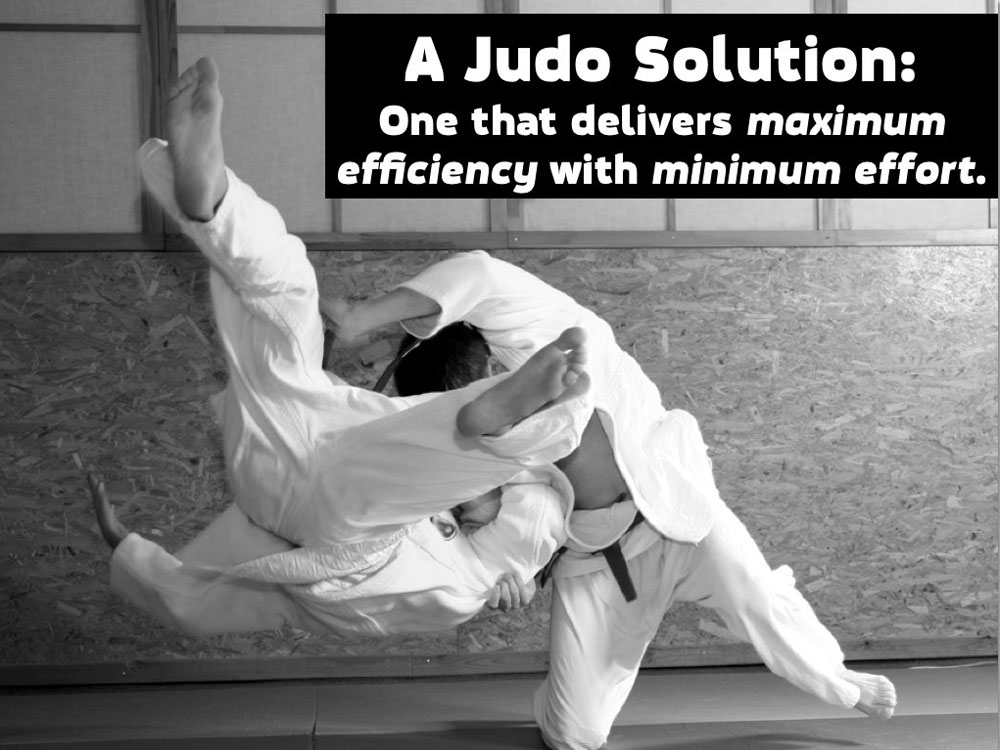
I highly doubt 60 seconds a week will have the health impact I need but it did get me thinking about how I now define my minimum activity level. For me it’s the minimum amount of movement I need to be mentally and physically well. It’s like the Judo effort:

My minimum is more than the minimum Canadian Physical Fitness standards:

“To achieve health benefits, adults aged 18-64 years should accumulate at least 150 minutes of moderate- to vigorous-intensity aerobic physical activity per week, in bouts of 10 minutes or more.

It is also beneficial to add muscle and bone strengthening activities using major muscle groups, at least 2 days per week.”

I realize minimum activity statements are there to give accessible activity guidelines to what most people need to be healthy. I’ve decided I need more than that.

First there’s a baseline of 1 hour of walking a day. Weekdays that’s my commute to and from work and on the weekends walking my two dogs on Saturday and Sunday. If I don’t walk that much I get aches and pains. I need that gentle movement to pop my joints and stretch my muscles.

Second, some high intensity stuff. I need 3 hour long workouts a week. Whether it’s swimming, running or cycling, I need that high energy activity to release all the stress response in my body.

Third, the functional doing of my life, lifting mulch, digging holes, going to the beach, helping friends are all served by the first two things. Need help moving? Yes, I can do that and not get hurt. For me I expect to be able to go camping on my own and be ok. To cut down a tree, to move furniture, lift my 90 lb dog or my 120 lb kid.

What is your minimum exercise threshold? Is it more than the recommended minimum of your public health agency? Less? How do you decide?

athletes · body image · menstruation

Bleeding while running and ending menstrual stigma

An awful lot of people have sent us the story about the woman who ran a marathon while menstruating and asked us to say something about it. Since I’m still menstruating despite my age (see an upcoming post called “Menopause: Seems I’m Late to the Party”) I thought I’d chime in.

Here’s the People Magazine version: Woman Runs London Marathon Without a Tampon, Bleeds Freely to Raise Awareness. That should give you a sense of how much attention this story is getting.

Kiran Gandhi, who has played drums for singer M.I.A. and Thievery Corporation, decided to run the London Marathon without a tampon. Gandhi let her blood flow freely to raise awareness about women who have no access to feminine products and to encourage women to not be embarrassed about their periods.

“I ran the whole marathon with my period blood running down my legs,” the 26-year-old wrote of the April race on her website.

Oh, and for God’s sake, whatever you do, DO NOT READ THE COMMENTS!


Here’s what Kiran has to say, in her own words, from her blog:

I RAN THE WHOLE MARATHON WITH MY PERIOD BLOOD RUNNING DOWN MY LEGS. I got my flow the night before and it was a total disaster but I didn’t want to clean it up. It would have been way too uncomfortable to worry about a tampon for 26.2 miles. I thought, if there’s one person society won’t fuck with, it’s a marathon runner. If there’s one way to transcend oppression, it’s to run a marathon in whatever way you want. On the marathon course, sexism can be beaten. Where the stigma of a woman’s period is irrelevant, and we can re-write the rules as we choose. Where a woman’s comfort supersedes that of the observer. I ran with blood dripping down my legs for sisters who don’t have access to tampons and sisters who, despite cramping and pain, hide it away and pretend like it doesn’t exist. I ran to say, it does exist, and we overcome it every day. The marathon was radical and absurd and bloody in ways I couldn’t have imagined until the day of the race.

I think there’s lots and lots to love about this in a society in which women’s menstruation is hidden and stigmatized. Think about all the BLUE BLOOD spilled on television commercials advertising “sanitary”(what the heck does that even mean?) products.

I’m not sure how effective this is a measure to raise awareness about women who have no access to “feminine” products but I take her point about stigma and embarrassment. Indeed, this was confirmed for me reading the comments on our Facebook page when I shared her story. There were more than a few people who thought it was disgusting and unsanitary. Exclamation marks were used.

They ought to read  IT’S NOT “UNSANITARY.” PERIOD.

Here’s an excerpt:

And then there’s the term “sanitary products” or “feminine hygiene products” to describe pads and tampons. That is so cold and distancing. We don’t call a band-aid a “sanitary napkin,” do we? No, we don’t. We call it a band-aid. When somebody gets shot in the arm and blood seeps through his shirt, he doesn’t blush and hurry to cover it up or run from the room full of shame and embarrassment. He worries about taking care of himself! And in turn, we don’t wrinkle our noses in disgust or revulsion and whisper scandalously to our neighbors. We worry about taking care of him! The message is clear: regular blood is a normal part of life and the experience of the person bleeding is most important. Menstrual blood, on the other hand, is dirty and shameful and the experience of the person bleeding, rather than being important, is something to cover up.

Women learn to be disgusted and angry with their periods, because they “get in the way” of “normal” life (i.e. the way a man lives). We distance ourselves from our blood and feel disgusted by it, even though it is, for all intents and purposes, a clean and nutrient-filled substance. For God’s sake, babies are swaddled in this stuff for the first 9 months of life—it is clearly healthy and safe!

Here’s Everyday Health on this topic, ” Menstruating Women Are Not “Dirty”: No way! There are many ancient menstrual myths about women being “unclean” when they menstruate. Some cultures and religions separate menstruating women from others during their time of the month. Menstrual blood is not dirty or dangerous. Although the thickness and color of the blood might change depending on the day of your cycle and your hormone levels, it’s not dirty or gross and you should not allow old beliefs about it to make you feel unclean.”

The belief that women are unclean when menstruating leads to nothing good. It’s led to the segregation of girls and women during menstruation. It’s a barrier to girls’ schooling in many parts of the world. See What Life is Like When Getting Your Period Means You are Shunned.

I also think Kiran got something just right when she picked a marathon to do this. Marathons aren’t for the squeamish. Don’t believe me? Here’s the five most disgusting marathon photos of all time. Click through. I dare you.

You can see from those photos that she wasn’t the first women to finish a marathon covered in blood.

In 1996, Uta Pippig became the first woman to win the Boston Marathon three times in a row. This historic accomplishment seems even more remarkable when you consider that she reportedly crossed the finish line with menstrual blood and diarrhea dripping down her legs — and live television cameras rolling.

As Pippig recalls, “I started having stomach cramps about 5 miles into the race, and shortly after I had diarrhea. I was self-conscious [about it] not only for me — but in a caring way for our sport.”

She considered dropping out 7 or 8 miles in and even walked a little. Although uncomfortable, her focus shifted from winning the race to staying in it and running as well as she could in this situation.

Later in the marathon, she admits “I was frightened when I felt blood flowing down my legs.” That red trickle was widely attributed to menstrual problems, which Pippig says was a misconception. After winning the race, she was diagnosed with “ischemic colitis,” or inflammatory bowel disease.

What’s my experience with this? I haven’t ever run while menstruating and gone without tampons but I have chosen to ride that way.

Why? It’s not that I can’t afford menstrual products now though I remember being a student and that being an issue. (I’m still shocked when I see places giving them away. Our business school has free tampons and pads in the washrooms, for women who presumably could afford their own. And when I’m there the student in me is still tempted to take a stash for later.)

Here’s why: I don’t find tampons that comfortable for long rides. It’s hard to find a place to change them anyway without bathrooms and making do with roadside pee breaks. I’m cerainly not going to stick a maxi pad on to a bike short chamois. Bike shorts have their own built in padding and they’re black so there’s no visibility issue. And I have quite a few pairs of old bike shorts I’m not worried about staining. I don’t think I’d run that way, not because menstrual blood freaks me out–it doesn’t, but because I don’t think I’d like the squishy wet soggy feeling of running with bloody clothes. But that’s me.

How about you? What do you think of Kiran’s choice as a move towards ending the stigma around menstruation? Would you do it? Why/why not?

Natalie has blogged about menstruation in her posts Period Panties and Have Diva Cup, will travel?and Tracy has  written about menstruation and women’s sports, see The Taboo of Menstruation in Sports.