Today is National Parkour Day, so 1) feel free to leap onto your bed or sofa in its honor; and 2) take a look at my blog post from 2019 about a 50+ parkour class I took. It was much more rigorous than I expected, but I enjoyed it. Another thing to return to as we venture out into the world more.
Covid vaccines and vaginas: a link round up

I had a follow up mammogram a couple of weeks ago, and the first thing the tech asked me was if I’d had a vaccine yet. I thought she was making conversation, but it turns out that vaccines can cause inflammation in the lymph nodes, resulting in inaccurate results.
I tucked that information away, but started noticing a lot of buzz about whether there is a relationship between any of the covid vaccines and fertility (apparently a lot of healthcare providers are not getting their vaccines because “I haven’t had my family yet”), and more recently, vaccines and periods. Is this all just noise? Or is there anything to it?

First — and the most important thing — is that researchers haven’t yet really studied the relationship between the covid vaccines and the menstrual cycle. There’s a whole long patriarchal history behind this, but as this New York Times piece outlines, researchers just don’t study (or understand) menstruation well enough. But there does seem to be some increasing anecdotal suggestion that many period-having people have some disruption in their menstrual cycles following vaccination, either skipped periods, breakthrough bleeding or heavier, earlier periods. So what does that mean? Should we be worried about the intersection between vaccines and reproduction?
To try to unpack this, I turned to The Vajenda, my favourite source of gyne-related info, written by Dr Jen Gunter, an OBGYN and pain physician. (It’s a substack, so you have to subscribe, but there is a free option that gets you about half the posts.)
Here is her definitive post on the vaccine and menstruation:
The covid 19 vaccine and menstrual irregularities
Here are two related posts:
Don’t blame bleeding after menopause on the COVID-19 vaccine
The COVID-19 vaccine and mammograms
And my favourite:
The Covid-19 vaccine is a vaccine, not a spell — no, it can’t affect other people’s reproductive cycles by proxy. More on this below.
I’ll distill the key takeaways from these posts — with the most important being that even if scientists haven’t fully studied menstruation and vaccines — and they SHOULD, hello patriarchy — we can still use science to do some thoughtful and factual analysis of what might be happening.
First, mammograms.
- The point of a vaccine is to engage the immune system to teach it how to fight a foreign interloper that looks specifically like the thing you are being vaccinated for. A critical part of the immune system is lymphocytes, which produce the cells that make up the antibodies your body needs to fight to off any illness or infection. You have lymph nodes — small glands that produce and filter lymphocytes — all over your body, but very noticeably under your armpits.
- About 10 – 15% of people experience swollen lymph nodes after any vaccines, which is totally normal, because it means the immune system has received a signal that something foreign has happened and it is marshalling its little knowledge system to figure out how to respond to it.
- These swollen nodes can show up on mammograms as an irregularity, which can mess up mammogram results — so if you are going for a regular screening, try to put it off for “at least four to six weeks” after your last vaccine dose. But don’t put off scanning for any problem you might be experiencing.
Now, menstruation.
The first thing Dr Gunter underlines is that there may actually be no link between vaccines and period weirdness — it may be something people are connecting because it’s happening anyway and they just happen to be paying attention to their bodies in a more heightened way, or there may be changes caused by stress. But IF there is actually an impact for some people, there are different hypotheses for why this might be true. All of them come back to the relationship between the uterus and the immune system.
I have to say, I’m pretty interested in menstruation — I’m well known around these parts for a post on menstruating well into my 50s that shows up in the top 10 almost every month — and even I did not know that there are “a lot of complex immune system interactions in the lining of the uterus that are also involved in menstruation.” In other words, your period isn’t just a thing happening out there on its own little agenda, it’s highly intertwined with all of the other things going on in your body around health and your general experience of immunity. This is why stress and fatigue and colds and other illness can affect menstruation.
Dr Gunter outlines three different mechanisms for how the vaccine could possibly interact with the menstrual cycle:
- nitric oxide, which is produced when the immune system is activated, also has a role in causing endometrial tissue breakdown — so it could accelerate a ‘normal’ cycle
- vaccines can trigger the release of inflammatory cells called “mast cells”, which also relate to the enzymes that break down the lining of the uterus
- proteins called “toll-like receptors” (Tlrs), which play an important role in regulating the essential functions of our uterus and ovaries, are also sensitive to changes in single-stranded RNA; COVID-19 is a single stranded RNA virus, and the Pfizer and Moderna are RNA vaccines.
I could go down a rabbit hole here, but the basic upshot is: menstruation is intertwined with the immune system; vaccines trigger the immune system; ergo, just as we may experience immune responses like chills, fever, fatigue, etc after a vaccine, we may very well experience effects in this menstrual part of our immune system. And as Dr Gunter underlines, actually CATCHING COVID-19 is likely to have an even more powerful impact on your menstrual cycle.
So. Don’t put off getting vaccinated because it might mess with your period: serious illness will mess with it more. Do, however, pay attention if you bleed after the vaccine after menopause — that IS something to pay attention to. And if you want to participate in the first research to track the relationship between vaccines and your period, here is a link to a brand new study:
https://redcap.healthinstitute.illinois.edu/surveys/index.php?s=LL8TKKC8DP
Now, what about fertility?
First, studies have been done on the relationship between pregnancy and vaccines, with the conclusion that the COVID-19 vaccine is safe for pregnancy, not associated with miscarriage, and does not damage the placenta. And again, it’s more dangerous to actually get COVID while you’re pregnant. The province I’m in added pregnant people to the list of vaccine priorities last week because of ICU admissions for pregnant people.
I do understand anxiety about something unknown and pregnancy — someone very close to me didn’t even want general anesthetic when she had to have her appendix out during a pregnancy for fear of what it might do to the fetus. (The surgeon, appropriately, said no, she needed the anesthetic, and both she and the baby were fine.) Pregnancy can be an anxious time, and this is new. But again, the science is helpful here.
There is a full, great explainer of how vaccines work here in the New York Times. But the basic takeaway is that once either type of vaccine has done its work of teaching your immune system how to specifically respond to the spike protein on the surface of the COVID-19 virus, it disappears. It has one job, just like every other vaccine. It shows up, livens up the party, does a little dance, and leaves, leaving you with a temporary hangover.
So yes, it’s possible that the parts of your reproductive system related to the immune system might be triggered during the time you are actually responding to the vaccine — but that goes away. There is no reason whatsoever — no hint in the science, no hint in the research, no hint in the logic of how vaccines work — to think that there will be any more impact on long term fertility than any other vaccine. For more in-depth understanding, read the piece linked above in Nature — it details how the rumour about mRNA vaccines and fertility got started, and why the science completely counters it.
Now, lunacy
The final thing I want to just briefly touch on is the lunacy that people who have been vaccinated could affect the reproductive cycles of other people. There are alarming pockets of the world who believe this, including a private school in Florida that has forbidden people who’ve been vaccinated from interacting with their students. That’s just plain bonkers. As Dr Gunter wrote, it’s a vaccine, not a spell. And it’s a terrible indictment of people’s complete illiteracy about basic biology.

So the bottom line: of course I’m not going to tell anyone what to do. But if you’re hesitant, spend some time dwelling in the science. Even though these vaccines are new — we didn’t even know this virus existed 18 months ago! — the science behind them is tried and sound. Reassure yourself. And protect yourself. And everyone else.
Fieldpoppy is Cate Creede, who is an amateur immunologist. Here is her vaccine selfie, for which she is very grateful.
Back on our bikes! Six thoughts on spring riding and training (#reblog, #blogluv)
It’s spring! Right now it’s sunny and the temperature is in the teens. Here’s my things to remember about riding outside in the spring. Enjoy!
Virtual Challenges
In these days when gyms are closed and exercising alone at home can be dull, I have discovered the joy of virtual fitness challenges.
The first one I heard about was Ottawa Race Weekend, to replace events that had been scheduled for late May 2020. It is on again for this year, with more than a dozen different running challenges for kids through to team events. Both it and the Canada Army Run, which runs in September, are going virtual again this year, and you must complete events during the weekend or week that they would normally take place in person. There also a couple of virtual triathlons, but, oddly, I couldn’t find any bicycle events in Canada; there are virtual cycling events in other countries.
The first challenge I tried was offered by Masters Swimming Ontario, to get swimmers into open water when all the pools were closed last summer. We could do any or all of four distances from (1, 3, or 10 km) by Labour Day. I did three of the four distances, but didn’t feel ready to try 10 km in the river because of the current. Maybe this year, if I can get a friend to provide support from a boat.
Over the past couple of weeks, I have been playing along on UK-based Henley Swim Brass Monkeys challenge. This series of cold water swims, which must be completed before April 30 in any unheated outdoor water, has distances ranging from 50M to 1500M, in water temperatures from under 6C to under 14C. There are 18 possible swims, with difficulty rankings from Plucky through to Intrepid. I completed the 1,000M swim on Saturday.

I’m also tempted by the Lake George Virtual 32 Mile Open Water Swim, for the months of July and August. Lake George, in the Adirondacks, normally hosts a major open water swimming competition in August each year. My friend Nadine did a virtual double crossing of this virtual swim last year. She says she knows full well she could just swim it on her own, but the virtual swims through an event are uplifting and the support on social media is a bright spot for her.
Many of these events are fundraisers for local causes, and all seem to have fun swag. That’s great if it’s what gets you motivated. It doesn’t do much for me though.
I walked Hadrian’s wall through a very large organization called The Conqueror Challenge. You can do any distance-based exercise to complete 20 virtual trails on virtually every continent. The medals are gorgeous, and there are even social media groups so participants can connect and get advice or share successes. It was okay, but not has fun as I had hoped. I was disappointed by all the chat about weight loss. It was, however, the first one I encountered that was great for people with mobility issues because there is plenty of time to complete each challenge, and assistive devices such as wheelchairs are an option.
The one I am focused on right now is Walking to Mordor. It is delightfully low-tech, and perfect for this unsocial hermit. The distance achievements are simply locations along the route from Bag End to Grey Wood, as laid out in the Lord of the Rings trilogy. That’s 3,109.17 km in total, a very satisfying walk. There is no swag; there are no completion medals. It’s just a simple distance log with the feature of being able to follow your friends along the way. The best part is that it gives me a great excuse to re-read the trilogy, something that will probably be as gratifying as completing the walk.


Has Pandemic Weight Gain Helped You Notice Your Own Fat-Phobia?
Feature photo credit: GR Stocks via Unsplash
CW: Talk of weight gain, negative body image, and the potential for intentional weight loss
I’ve put on some additional body fat this year. I’m not totally ok with it. I mean, I’m OK in the sense that my world isn’t coming to an end, but I was more comfortable in my body when it was smaller. And the habits I had that kept me at that smaller size were absolutely healthy, sustainable habits for me. Until they weren’t for a while.
I’m going to say some things that I know aren’t in alignment with everyone in this community, starting with the fact that I’m ok if you have decided you’re more comfortable in a smaller body. I don’t think that feeling is always problematic. However, I do think we need to examine the reasons why we are more comfortable and make sure we’re being honest about what we have control over and that our reasons for wanting to be smaller that are based upon our own values, not someone else’s.
After all, what if you do some soul-searching and realize you have a belief that being a bigger size makes you less successful? What if you feel less attractive or less worthy in a bigger body? Most likely, these are not beliefs that stem from your own values but rather a reflection of internalized fat-phobia. So, when you notice this bias, approach it with curiosity, and then decide how you want to live your life and what kind of world you want to live in. If it’s important to you to address this internalized fat-phobia, then there are things you can do to counteract it. One of them isn’t being mean to yourself for realizing you have work to do. I think unlearning fat-phobia and misogyny are lifelong processes, just as unlearning and dismantling our complicity with White supremacy will require a lifetime of attention and learning. I’m ok with that. These are complicated challenges, and we are co-creating new societies and cultures. That work will take time, and it is appropriate that it does.
So, I’m not gonna get down on you, or myself, for noticing some shame about the changes in our bodies. I’m also not going to say that the only solution is learning to accept our bodies larger. We can choose that solution. It’s on the table to do absolutely nothing to intentionally change size and to instead focus on feelings. In fact, if you or I decide we aren’t ok with this larger size, we will still need to deal with these feelings in order to find a healthy, balanced approach to changing things. The lifestyle and habit changes that come from a place of shame or self-judgement are not going to be changes anyone would want to sustain. Who wants to live in perpetual self-punishment?
Doing the work of learning to accept ourselves without judgement, even when we’re currently uncomfortable in our bodies, will likely take some time and reeducation. We must notice our feelings. Question the beliefs that they stem from. Learn to reframe our thoughts. It will take time and patience for this process.
I am bigger that I was a year ago and for a long time, it was really uncomfortable for me–physically and psychologically uncomfortable. I found myself feeling like I’d failed, like I was less valid.
However, I’ve been working on building up my healthy habits again and finding new mindsets that help me see the work I’m doing, not just a measurement against some false finish line. One of the biggest lies of diet culture is that the only changes that matter are big changes and the only changes in our bodies that matter are dramatic transformations. I’ve been working on noticing my internalized fat-phobia–how often I’m so much harder on myself than I would be to anyone else, expecting myself to make big, dramatic changes, and I’m working on counteracting this narrative in my head. As a result, I’m feeling pretty good right now. I’m a tetch smaller than I was a few months ago, but that doesn’t compare to how it feels to being able to move again without pain in my joints. It doesn’t compare to how it feels to be eating in ways that gives me more consistent energy–not bouncing between loaded down and overfed, and hungry and undernourished. I’ve made this progress because I’ve given myself credit for the work along the way, even when it seemed small or “insignificant.”
For me, this work is about how I feel in my body every day and having the freedom to pursue the life that I want to live in this world. Feeling good IN my body is helping me feel better ABOUT my body. It’s helping me counteract my internalized fat-phobia, showing me the strengths of my body rather than focusing on perceived weaknesses.
It’s ok to notice that you’ve internalized fat-phobia. In fact, the only way we can address it is by acknowledging it. Shaming yourself, or someone else, for participating in the dominant culture isn’t going to lead to lasting, healthy solutions. Do the work to learn to accept yourself, your body, and your thinking as you are right now, as a work in progress, and then find solutions that work for you from that place of love.
Marjorie Hundtoft is a middle school science and health teacher. She can be found questioning her beliefs, picking up heavy things and putting them down again in Portland, Oregon. You can now read her at Progressive-Strength.com .
Happy #WorldBurlesqueDay!

From Days of the Year: “World Burlesque Day celebrates the dance form that is burlesque. Burlesque is a form of entertainment similar to a cabaret. The type of burlesque that people talk about these days closely resembles the kind of shows that were made popular during the early part of the twentieth century which would consist of strippers, comedians, and a master of ceremonies.”
To celebrate we’re sharing some past posts about our burlesque experiences:
Sam has fun at body positive burlesque (Sam Brennan)
Building Confidence Through Burlesque (Diane Harper)
Burlesque: bawdy body positivity (Catherine Womack)


Cold water swimming fever: Catherine’s caught it
It seems like everyone is talking about or doing cold water swimming. Of course, it’s been around for a long time (pretend I’ve inserted links here to historical polar bear swims in many places and times and locations). Sam just posted this morning about the siren call of the cold water that she’s hearing. Diane’s actually doing it, as well as guest blogger Lynette.
Once our crack administrative team at Fit is a Feminist Issue Headquarters has fixed on dates for our upcoming FIFI book club on Why We Swim, by Bonnie Tsui, I’ll be posting more information. We would love it if you wanted to join us in reading the book, and even posting some of your comments and sharing your experiences of swimming (in water of any temperature).
In the meantime, here are my current plans for cold-water-swimming-according-to-me:
Last Monday, I spontaneously dipped toes, then ankles, then almost-to-knees in the coldish water of Walden Pond on a warm spring day. I can’t find into on the water temps that day, but I’m thinking low 50sF/10-11c). Some swimmers in wetsuits were out in the water. Here’s documentation of my progress:


As I said, it was a lovely day.

This week, there are several warmish days. I’m going to be following the advice in Sam’s post and doing some slow dips/immersions/something, probably accompanied by squealing. I’ll wear a bathing suit or maybe bike shorts and sports bra. There’s a nice bathroom nearby for changing into warm dry clothes. Will report back (obvs).
Wish me luck!
Readers, what are your outdoor swimming activities like right now? Are you considering dipping toes in, waiting until warmer weather, already in a routine of swimming? We’d love to hear from you.
Wild swimming? Cold water swimming? Whatever you call it, Sam is tempted to try it
Here on the blog we’re having lots of thoughts about cold water!
Catherine dipped her toes in and is thinking about more. Blog regular Diane Harper wrote about winter swimming back when she was a guest poster. Another regular guest Lynette Reid has been tempting me in with her beautiful Nova Scotia winter swimming pictures. She blogged about it here. And I’m officially on record, along with Catherine, as intrigued and tempted. See also here.
We’re also, as a group, reviewing Why We Swim by Bonnie Tsui. We usually do it chapter by chapter, book club style, so readers can join in. Details to follow later this week! (And yes, in the interests of transparency, that’s an Amazon affiliate link. We don’t make much from them but they do cover the costs of an ad-free WordPress blog.)
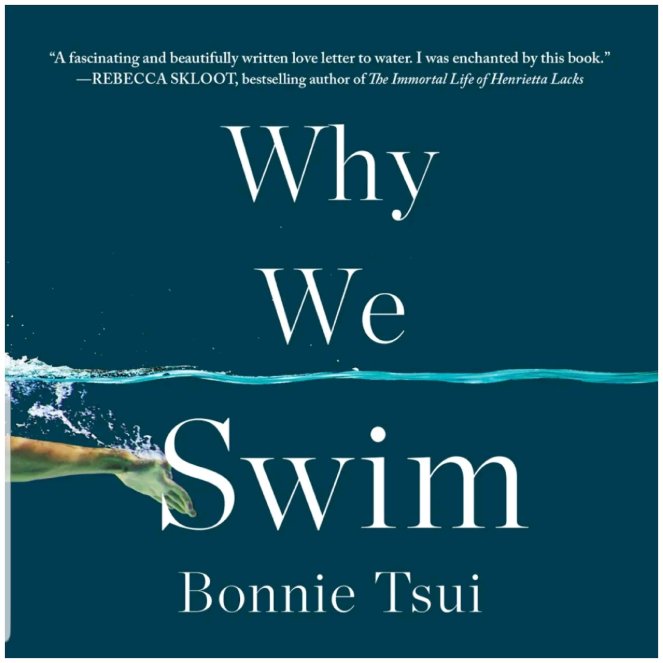
Here’s the back of the book blurb: “An immersive, unforgettable, and eye-opening perspective on swimming—and on human behavior itself. We swim in freezing Arctic waters and piranha-infested rivers to test our limits. We swim for pleasure, for exercise, for healing. But humans, unlike other animals that are drawn to water, are not natural-born swimmers. We must be taught. Our evolutionary ancestors learned for survival; now, in the twenty-first century, swimming is one of the most popular activities in the world. Why We Swim is propelled by stories of Olympic champions, a Baghdad swim club that meets n Saddam Hussein’s palace pool, modern-day Japanese samurai swimmers, and even an Icelandic fisherman who improbably survives a wintry six-hour swim after a shipwreck. New York Times contributor Bonnie Tsui, a swimmer herself, dives into the deep, from the San Francisco Bay to the South China Sea, investigating what about water—despite its dangers—seduces us and why we come back to it again and again.”
What’s ‘wild swimming’? As Rhiannon Lucy Cosslett in the Guardian notes we used to just call it ‘swimming’ or ‘outdoor swimming.’ It’s like ‘forest bathing’ which used to just be called ‘hiking in the woods.’ What’s new is an emphasis on the physical and mental health benefits. And wild swimming often involves swimming off season–not just in the hot summer months, but fall and spring, and for some of the braver souls like Diane and Lynette, wintertime too. I don’t think the term has quite taken off here in Canada like it has in the UK.
Why am I tempted at all? Here’s my two main reasons:
- Fond childhood memories of Newfoundland and Nova Scotia. On the east coast of Canada the beaches always meant cold water swimming even in July and August. Mostly kids went in while adults huddled on shore. I want to recapture some childhood feels. Biking does that. Maybe cold water swimming will too?
- I love swimming outside but I can’t seem to get into pool swimming. I like indoor rowing (hi erg!) and outdoor rowing. I love indoor biking (hey Zwift!) and outdoor riding. But swimming? Nope. No matter how much I try it’s never taken. But I love being in the water outdoors.

Okay how do I move from ‘feeling intrigued’ to ‘giving it a go’? I asked some of my winter swimming friends for advice. Should I wait until summer? Start now?
Albert Nerenberg, a friend from my undergrad student newspaper days, writes, “You can really start any time because the two key components are the breathing and the cold showers. You can get most of the benefits from cold immersion from those two practices. But people naturally escalate to outdoor swimming. Cold exposure doesn’t have to be long. 3-5 minutes for benefits. So anytime is good because the breath warm up can be done with even warmer water and you’re still in the process.”
Brrr!
Albert is an advocate of the health benefits of both cold water swimming and laughing. He combines them in this video.
Here’s the specific breathing technique Albert recommends.
Lynette’s words of wisdom? “One piece of advice people give is to acclimatize over a few years and extend the season rather than starting early. But last year I started early because who wants to hear that in April? Go in slowly (walk I don’t dive) and monitor your breathing so you start to notice when you involuntarily hold your breath or take a breath in and re-establish it before going in farther. Wind is a worse enemy than temperature.”
What about special gear? Do I need any?
“You can put neoprene gloves booties and a cap on. Or wetsuits or whatever versions of wetsuits triathletes wear which have greater mobility. Or your bathing suit. At the beginning you just get in and out. Dip. Swim later. Never push yourself with goals and expectations in cold water swimming. Get warm after,” says Lynette.
Also, research safety tips before you go. Here’s cold water tips from Outdoor Swimmer magazine and more tips from the outdoor swimming society.
Here’s Lynette, photos from her earlier post.


Diane also recommended safety first. (We’re like that here on the blog!)
She writes, “I would start with Nadine’s website, which has lots of info based on years of training for cold swimming. My advice would be to listen to your body and don’t ever push beyond your comfort zone. Everyone is different and some very experienced long-distance open water swimmers can’t get in, while other people find it relatively easy. Some use wetsuits, others don’t (I don’t because I worry about struggling to change out of a wetsuit when I’m cold). Personally, I found that just extending my season in the fall was the best way to do it. But when I was swimming today, I saw a man, a kid and a dog all in the water, so now is also manageable.”
The colder it is, the more you need to be concerned about safety.
“In cold weather, wind and precipitation can be brutal, both physically and psychologically. The usual water safety rules apply more than ever – swim with buddies, have a plan, know your swim area, wear a float for visibility, especially if there are boats or windsurfers in the area. Bring snacks for when you get out as you will be hungry – cake is traditional,” says Diane.
I wondered if most people actually swim in the water or if it’s more ‘get in, get out’ like the polar bear dip.
Diane says she actually swims.
“I actually swim, but there is usually some time spent getting acclimatized. Sometimes it’s all head’s up breaststroke because putting my face in is too hard. Today it was about 350 m I think, and I was in for a little over 20 minutes. I would have stayed in longer but my swimming buddy is new to it and she was starting to get cold. The colder it is, the harder it is, obviously. I have trained for an ice mile (bathing suit and one cap, not gloves or socks, in water under 5C). I will never do one because I’m just not fast enough to complete that distance in under about 40 minutes, which is extreme. But a day like today, with water at or above 10C, 45 minutes is easy now.”
Here’s Diane and her friend Nadine making the cold water look as welcoming as a hot tub.

What’s next? Well, I promise to give swimming outside this spring, earlier than usual, a go. And I’ll report back. If Catherine lived closer–damn you geography and borders–I’d give her a call and we’d go swimming together.
I also want to write about British swimmer Kate Steele who has done not one, not two, but EIGHT ice miles! What’s an ice mile? “Find a body of water that is below 5C, and swim one mile under supervision wearing only your swimming costume, a pair of goggles and one silicone swimming hat.”
And stay tuned for our group book review of Why We Swim.

Catherine dips her toes in
Saturday was one of those glorious New England spring days– sunny, warm (70F/21C) and beckoning. Everyone heard that call, as I saw folks out on foot, on bikes, in kayaks– anywhere under blue sky.
My friend Norah and I headed to one of our favorite places, Walden Pond in Concord, MA. Yes, that Walden Pond. The one where Thoreau hung out (even though he regularly walked back to town to do his laundry and get a free meal from friends).

I had gone to Walden that Monday, too. It was a Boston holiday– Patriots’ Day— so I went in the early afternoon. It was warmish (64/18) and a little overcast. The pond and the trees and the beach all looked more brown than green still; spring is slow to arrive here, but the turn is always sudden.
Throughout the pandemic, I’ve been cautious– wearing a mask all the time outside my house, curtailing my activities, engaging in social distancing, etc. One of the effects for me has been difficulty in leaving my house, even under conditions of safety, like walking or riding outside. It’s been hard. I bet many of you reading this know exactly what I’m talking about.
Now I’m fulling vaccinated– thank you, J&J! One and done, with pretty mild short-term side effects. It’s been two weeks since my shot, so I can venture out (mask on still, but that’s okay) with more security.
But, like very big boats (I’m not naming names here), I don’t turn on a dime.

Out by the pond on my own last Monday, I was feeling anxious–an altogether too-familiar sensation from the past 12 months. It’s brought on two very unpleasant anxiety attacks, and I still fear a return of them. Wearing a mask and trying to focus on my breathing, I made my way to the beach and spied a large rock in the distance. Claiming it as my own, I sat down and continued breathing and looking around.
I’m reading Why We Swim by Bonnie Tsui, (stay tuned for future FIFI book club posts on this book), and have been intrigued by the properties of cold water. She interviews people who do long-distance cold-water swimming, and also does some herself.
In that moment, sitting on that rock, looking at that brownish water, I was struck by the urge to feel some cold water on my body. Shedding my shoes and socks and rolling up my pant legs, I ventured in. It was indeed cold. And it was a strong sensation. It took over my awareness, and the anxiety receded. I became much more interested in exploring that feeling of the water, and waded out as far as I had bare skin to accommodate it.
It was wonderful.
So I did the same thing yesterday, talking Norah into joining me. She dipped her toes in, which was enough for her. Norah has been outside, walking and biking, throughout the pandemic. I’ve joined her a bit, and she’s been a great help to me. She even drove us together (we’ve both been vaccinated–yay again!) to Walden.
But on Saturday, the water was calling me, not her.
I waded in, and again it felt cold, and again it felt great.
We talked about coming back for swimming soon. Norah is no stranger to swimming in bracing water, but it’s still a bit cold for her. However, I think I may need to venture further in, and soon. It’s feeling both symbolic and practical. I’ve always loved swimming, but haven’t made much time for it in recent years. For me it’s great exercise, and the combo of the water and sky always makes me feel at one with the world.
Add to all this the feelings I’m getting of joy in sensation. Healing, even. Respite from anxiety. Can I wash that angst right out of my hair? I think I’m going to find out. Will report back.
Readers, what is calling to you these days? Anything? Everything? Are you finding new paths to the outside world? Have you been keeping to those paths throughout the pandemic? I’d love to hear from you.
Freedom To Define Fitness: I’ll Do It My Way (#reblog)

I’m new to the blog and feel it’s important to toss out a disclaimer before I continue: I am unapologetically fat and super great with that. Now, you’re either tossing your hands in the air excitedly about that proclamation with a ‘yassss-girl-on-the-internet-I-don’t-know’ or you’ve hit the X and I lost you and that’s ok too. […]
Freedom To Define Fitness: I’ll Do It My Way (Guest Post)
A few years ago Jenn wrote this terrific post about the freedom to define fitness on your own terms. Loved that idea then and love it now, especially since during the pandemic, under varying degrees of lockdown and stay at home orders, fitness is doing different work than it used to.
Has the role fitness plays in your life changed during the pandemic? How? Tell us your fitness story in the comments?