aging · death · fitness · meditation

Chronicles of 50, part 1: Kim reflects on dealing with loss and coming to terms with profound change

by Kim Solga

(This is part one of a two-part post about Kim’s turning 50. CW: talk about eldercare and subsequent death)

Sam and Tracy started this blog two years ahead of their 50th birthdays. Their goal: to be their fittest selves at 50, and to show the world how it’s done, the feminist way. I started following them early, and Sam invited me to join the blogging team in 2013. I’m younger than many of the bloggers here: when I started writing for FIFI I was 38, a long distance cyclist, and cocky as hell. One of my first posts was report on what remains one of my proudest cycling achievements: in July 2013, for the disability arts charity SCOPE, my then-husband and I rode the 450+km from London (UK) to Paris, France in 24 hours and 14 minutes.

Last September, the day before my 50th birthday, I climbed Jordan’s highest mountain, Jamal Umm ad Dami, on the border with Saudi Arabia. (I was hiking the country along with eight other adventurers and a hilarious and kind guide called Mahmoud. For the mountain climb, we were also joined by an insanely fit young Bedouin guide called Mohammed.) On my birthday morning, I woke up at 5am to ride a camel into the desert sunrise; it was magical. It was also still late evening in Montreal, where I was born, so *technically* I was still 49 at the time. And don’t think I didn’t tell people.

As that day progressed and we traveled the highway to the Dead Sea, I felt the ache of the previous several days’ hiking in all of my bones, and especially in the ones connecting my left leg and hip to my spine. I’d crashed my road bike in early July, requiring surgery (and a lot of metal props) to repair my shattered left radius. My left hip, already a liability of sorts because of my joint-munching autoimmune disorder (Ankylosing Spondylitis), had been giving me extra trouble ever since. What’s worse, that crash was avoidable. It happened close to home, in my local park, because I was over-tired from attempting to ride 157km solo across June 30 and July 1, to mark not Canada’s birthday (of course not!) but rather 157 years of… settler colonialism.

Cate and Susan teased me a lot about that one; dumb idea all around, Kim.

I had to admit they were right, and not just because my made-up justification sounds, well, REALLY BAD when you say it out loud. The truth was that 38-year-old Kim would not have minded at all 157km in one go. Kim at 43 would have groaned but done it anyway. Forty-seven-year-old Kim would have been daunted, but she would have made.

And nearly 50-year-old Kim? She was nervous. And so decided she had to do it anyway.

To prove nothing had changed. To prove she was the same woman, same athlete, as ever.

To prove her body was still hers to boss around and control.

Except it wasn’t. It isn’t.

***

I was away two months last fall; that’s one of the benefits of my incredibly good, very lucky job as a university professor. I was on sabbatical, and because I have tenure I didn’t need to hunker down and write a new book. I’d long decided that this was the sabbatical I was going to gift myself self-care; in fact, I’d made that a promise to my rheumatologist when I saw her in the spring.

You see, the thing a lot of folks don’t tell you about reaching this age has to do, intimately, with care. If you are a woman reaching this age, you probably won’t have been thinking much about care in the years leading up to and through perimenopause, because, well, you’ll have been too busy doing it. If you’re a woman my age with kids, those kids are finally launching (if you are lucky). However, at the same damn time, your parents are aging, and fast.

I’ve got no kids, but in April 2023 I was a parent to an extremely old doggo called Emma that I loved more than anything, and two elderly parents who refused to look their endgame in the face. I helped Emma pass on 1 May 2023, and I’m proud I gave her such a good death, because at the time I was fighting my dad on literally every care decision we were trying to make as we navigated his rapidly plunging heart and lung health and my mother’s wheelchair-bound semi-mobility. He wouldn’t accept care for her; he insisted on doing it all himself. He wouldn’t accept care for him, either. He refused to say anything was truly wrong.

I was swimming in the ocean off the coast of Cornwall in June 2023 when my mother emailed me to say that dad was in the hospital. Less than a week later I was flying back to Toronto; he had been admitted to palliative care. The next few months are a blur. I took over my mother’s life management, realizing with horror how little she knew of bank accounts, bill payments, and What Happens Now. By hook, crook, and the help of an amazing Senior Move Specialists called Janice, by Christmas we had her safely moved into a wonderful new care facility. She had her own apartment (for the first time in her adult life!), and, briefly, I felt easy. Then, in April 2024, she had a bad fall; she was not wearing her alert button. She lay half-dressed in her bathroom for what we guess was about 16 hours; she went from the tile floor to the ICU, and she never came home again.

***

In Buddhist traditions, practitioners learn to value the present – to be here now, as they say. The present moment is the one we occupy this very minute, and it is all around us, in all oof our senses. It’s not in our phones and it’s not in our other distractions. It’s also not the moment that was the present of our past selves, past bodies, or past expectations. Those moments are gone; we may have learned from them (if we are lucky) but whether or not we did, they are the past now.

I’m trying hard to be more Buddhist these days; I’ve been practicing in the Plum Village tradition of Thich Nhat Hanh for a couple of years now. In Plum Village, we often say: present moment, wonderful moment.

But who am I now, in this new present moment?

***

What happened after mom died? I’d been a wreck so long, managing eldercare and trying to do my job alongside, that initially, briefly, I felt free. But then I started to notice things. For the first time in a long time I was paying closer attention to my self: my body, my heart, my injured soul. I began to realize that I wasn’t just getting older – I was there. I could see clearly that I was in perimenopause, and that I probably had been for some time.

I began to realize that I was more tired than ever. I reasoned, of course: you’ve been to the wars, Kim. It’s only natural you need to rest! But resting had never before been in my vocab; like so many people my age (so many women my age!), rest is defeat. Keep going, keep hustling, keep riding and lifting and burpee-ing until you drop. That, to me, was my superpower.

I did not drop – I could not drop.

Until now.

death · family · feminism · fitness · illness

The Heartbreaking Work of Parental Care

This winter has been hard. My dad was diagnosed with late stage cancer just before Christmas. Then my mom fell and broke two bones at opposite ends of her body. Until now, they have been each other’s primary caregiver (when one was needed), but now they are both struggling.

Mom and Dad still live on their own, in a house with stairs. Luckily it’s only a half-hour drive from my house. And luckily I channel my anxiety into cooking, so they have been well stocked with easy-to-reheat favourite foods. And care services have been great, with a nurse, personal support workers, physiotherapist, and even someone to clean the house.

Still, I have been very busy taking them things or helping them with computer issues, driving them to appointments (and managing their calendar), or just sitting and keeping them company. Thank goodness I retired last summer.

I’m not exactly part of a sandwich generation, as my own kids are grown, but the feeling of being pulled in multiple directions is very real. I love my parents and I’m glad to support them as much as I can, but it is physically and mentally exhausting sometimes. Despite my cheery post yesterday, I am struggling to fit in time to take care of myself.

The newness, the rawness, and the pain of caring for someone who will never get better has me breaking into tears far too often. My dad has been the best feminist ally a person could ask for. He has always been so supportive of mom, my sister and me, and is so proud of my daughter. He was a wonderful role model for my son, who has grown into a feminist husband and father.

I try to tell myself that this is the normal cycle of life, and that Mom played the same role for Grandma (Dad’s mom, who moved in with them for the last few years of her life and died at home). I’m deeply grateful that my parents ensured my sister and I are financially literate, and that they have all their affairs in order. I can’t imagine what it would be like to be dependent on someone all your life, and then suddenly left to deal with taxes, banks and bills, and maybe the loss of income.

Normally I would end a post with some sort of jokey anecdote or clever final words, but all I can think of right now is something a colleague said to me over 30 years ago. His father had just died and he said the death wasn’t the hardest part. His father had lived a long life. It was realizing you were no longer someone’s child, even if you were already in your 50s. I’m not ready to stop being a child.

My parents on their wedding day, in 1961.
cycling · death · fitness · sex · weight loss

To listen, read, and watch this weekend, #ListenReadWatch

Sarah Thomas on the TOUGH GIRL podcast

To Listen

The Tough Girl podcast interviews Sarah Thomas, ultramarathon swimmer and breast cancer survivor.

Listen here.

To Read

There are lots of weight loss success stories out there but not very many of the people who write them, also write a follow up when they gain the weight back. That takes real bravery. Thanks Greta Christina for sharing both parts of your story. Read I Lost Weight The Right Way. I Still Gained It All Back.

At the time Greta was losing weight I followed her story eagerly. I loved the title of her diet. It was the THE FAT-POSITIVE FEMINIST SKEPTICAL DIET.

If you’re a philosopher you might know Greta for her work on death. See Comforting Thoughts About Death That Have Nothing To Do With God. Or for her widely anthologized paper, Are we having sex now or what? I think it’s in most of the philosophy of love and sex anthologies I’d consider using. And we share some of her blog posts about her new trike over on our Facebook page.

To Watch

The Professional Women’s Hockey League!

Here’s Ella Shelton scoring the first ever PWHL goal.

death · Fear · health · illness · mindfulness

Does a Diagnosis Change Who I Am?

Two months after an emergency visit to the hospital for 3 days (which I wrote about here), I’ve finally been diagnosed. I have Addison’s Disease. So, not enough for me to have a name for what ails me. It has to declare itself a disease. That causes a lot of dis-ease for me. There’s a strand of thinking that says we are empowered once we are diagnosed. Along the lines: Knowledge is power. Now you know what you’re dealing with. And that classic marketing tag line: If it can’t be measured, it can’t be managed. With a diagnosis, I’m in measurable territory. There’s a map. I can manage.

I should be relieved.

Instead, I feel defeated. I’m not yet able to accept that the price of staying alive is medication for the rest of my life. Before, when my condition was nameless, I could imagine it being easily solved by the integrative medicine protocol that I undertook with great optimism. In fact, the calculated risk I took in going off of the prescribed conventional medications did not, at least in the short term, work out. I had imagined myself proudly declaring to my medical doctors that I’d been off the medication and wasn’t my healing capacity amazing. Instead, I ended up with blood work results that clearly indicated my body spiraling toward another emergency visit. I could feel the deterioration happening. The exhaustion coming back. Instead of my smug satisfaction with the medical doctors, I was contrite, owning up to my infidelity to their recommendations. As the endocrinologist said, I can’t impress on you enough how important it is that you take these medications seriously, if you want to stay alive.

I do. Want to stay alive.

Most days.

My energy rebounded quickly after getting back to the recommended protocol. And, I feel ridiculously fragile. Death accompanies me everywhere. Sure, I know in that mindfulness way that, I could die at any moment. Now this consciousness is not about mindfulness, it’s the knowledge that if I stop putting these little pills in my body three times a day, then my heart will quit. Some days, I hold the pill in my hand and toy with the idea of not taking it, of letting nature take its course.

I wonder if my vitality even counts anymore. My energy is so much a part of my identity. If it’s not real, am I a fake? Who am I?  

I understand that the fact that I have not been on medication before now is a massive privilege. I was not nearly as aware of that privilege as I am now. I understand that what I write here risks triggering people already on medication. You have every right to think, Get over yourself.

I had distanced myself from the possibility of disease. That won’t happen to me, I thought. I took credit for my health; thought I deserved it. After all, I exercise, eat veggies, sleep, meditate … you know, all the things we’re supposed to do. Right? Then my adrenal system stopped functioning. For no discernible reason. Except … these last 18 months have been stressful—my 28-year marriage dissolved; I lost my financial security, my home, my mother, my cat; and now, the cherry on top, this business with my health. I’ve written about the mountain of grief here and the psychological toll of my financial insecurity here.  I haven’t even gotten to the perilous state of the world. 

A loud inner critic attacks me: You failed to manage your stress. This disease is all your fault. More. You deserve this disease, because you have not had adequate empathy for others’ illness, because you were so cossetted in your healthy person privilege. You have brought this on yourself with your hubris, with every time you’ve answered a health questionnaire with the word robust to describe your health. The critic could go on at much greater length, but you get the picture.

A friend of mine, who was trying to be helpful, recently told me that I just needed to shift the narrative in my head. She tried to reassure me by saying that everything happens for a good reason, that there’s always a silver lining and that I need only put a different spin on the events unfolding. My inner critic was delighted to be so affirmed. See, she said, your fault. Oof. I get that my friend and my inner critic have good intentions. They fear that I’ve lost my belief in myself and they want me to pull up my socks. I want to pull up my socks. There’s nothing more annoying than a falling down sock that pesters the foot. Yet, sometimes I just want a caring human to sit down beside me while I take off my shoe and look at my sock and bemoan it’s falling down-ness, as if I were a character in a play written by Samuel Beckett.

At the same time, I actually do want to put one foot in front of the other and I know that will be easier with functional socks. So, even as I still crave the accompaniment and patience of another human, I’ve come up with a sock-friendly narrative I am working on adopting. New narratives don’t happen in a minute.

Here it is: Everything that’s happened in my life, just happened. Not for a good reason. Not with a silver lining. I am grateful to Thomas Moore, the author of Dark Nights of the Soul, for his clear-eyed book, in which he spoke with many people who had been through serious ordeals. Although they had all learned from their challenges, they did not say they wouldn’t have it any other way, or that they were grateful to their ordeal for having awoken them from their slumber. Instead, they said, in more eloquent words than the ones that follow, what happened sucked, I wouldn’t wish it on anyone, and, despite the bad hand I was dealt, I made the decision to grow from the experience and not to fold beneath its weight. The book gave me permission to feel all my grief and rage. Life will serve lemons. We have the right to gnash our teeth and wail or not get out of bed or whatever we need to do to honor and embody the ordeal. What doesn’t serve us is to resist the dark feelings that come with the dark nights. And, the and is key, we then have a choice about how we want to alchemize the lemons we’ve been served. We can bypass and add lots of sugar, hoping to hide the bitter. Or we can make bracing fresh lemonade that cleanses our system.

What is, is. I can either fight against what is, or I can work with it. Some years ago, I had the word compassion tattooed on my arm. It was supposed to remind me to have compassion for others and, crucially, for myself. This ordeal has brought me face to face with the compassion gap caused by the unconscious bias of my previous privilege. My inner critic screams into the gap, provoking an echo response from the canyon walls inside my head. The lemonade opportunity in all this is compassion. So simple. And so not. A super tall, skyscraper of an order.

I have the beginning of a to-do list for this new narrative: I need to begin with a hand outstretched to my critic. After all, compassion, like most things, starts at home. She is working hard to keep me upright and aware. I want, too, to create more ritual around taking my pills, to honor the fact that every time I take one, it’s a conscious choice to live. My friend Lori, who is a Reiki Master, suggested that I infuse my pills with the energy of Reiki and bring to them the intention of receiving their grace into my body as pure light and healing. I had a sudden flash of, Oh, that’s what my levels 1 & 2 Reiki certifications are for. More compassion put into practice.

The last thing that I’ve come up with so far, is to be compassionate with the critic and with all the other voices in my head who are having a hard time: The anxious part of myself, who trembles faced with all the unknowns in my life right now. The grieving part. The demotivated part. All of them.

Just as I long for someone to sit beside me and my falling down sock, I will sit beside my critic and my anxiety and my grief. After all, they are friends who need my support. Earlier in this piece, I wondered who I am and whether my diagnosis changed the answer. I’ve found my way here to several answers. First, I am the same person, with many different, sometimes conflicting and hopefully evolving characteristics. Another answer is aspirational, I want to be a person who sits beside others. And I’ll start with myself.

Now.   

death · running · self care

When Grief Is Your Running Companion

In Joy Hargo’s poetry collection,  Conflict Resolution for Holy Beings, there is a poem titled, We Were There When Jazz Was Invented, interspersed with lines of italicized words I didn’t recognize. Wey yo hey, wey yo hey yah /hey.I like to read poetry aloud and, as I read her poem, a series of strong emotions swept through me — sadness, longing, love. I am often overtaken by the emotion of a poem while I’m reading, but, in this case, I didn’t even know if I was reading proper words. I later learned that they weren’t words. They are what’s called vocables (more on that in a moment). Yet, I could feel their meaning as I spoke the sounds aloud. They compelled a chant that seemed to start in my very DNA. I read that poem in summer 2019.

The feeling of that poetic chant came back to me suddenly last Tuesday morning when I was running. My beloved 17.5- year-old cat had died in my arms 3 days before.

The loss arrived less than six months after the loss of my mother and my relationship of almost 29 years. I felt (feel!) like I have been thrown into a bottomless abyss. The nausea of falling and falling and falling; of fear & grief and fear & grief and fear & grief. Of ear-ringing silence. And yes, I had gotten myself out to move my body, if only for a reprieve from the desire to crawl out of my own skin. As I was running, I started to cry. The tears were not enough. I started to moan quietly as I ran. Then I found myself vocalizing sounds, as in Joy Harjo’s poem. Of course, I couldn’t remember what her exact not-words had been, nor did I remember that they were called vocables. I just remembered the feeling of the chant.

As I ran, I let sounds arrive on my out-breath, until I settled into a pattern of Hee Ya, every second out breath. I varied the pitch, tone and emphasis as I chanted. I varied the volume according to how close other people were, getting louder when I was less likely to be heard. Still, I saw some heads turn as I ran by. I didn’t care if people thought I was crazy. Maintaining the chant was a challenge. I had to control my breath more consciously than I usually do when I’m running. More like swimming. At times, I felt like I wasn’t getting quite enough air. I continued. I had the sensation that my nervous system was shifting into a different gear. Slower. Deeper. Even as my running pace picked up. Breathe in. Chant out. Breathe in. Breathe out. Breathe in. Chant out. For the last three miles of my run. Over and over and over. Here’s what that sounded like.

I was not containing my grief. I was opening a channel to allow the grief energy to flow. When I finished my run, I was rinsed. The desolation was not gone, but it wasn’t stuck inside me either.

And I wanted to share the practice with you. In case any of you are going through a challenging time. I remembered that I’d written about reading Joy Harjo’s poem. I rummaged around on the internet until I found that piece. I had completely forgotten that later, on the very same day I first read the poem, I was reading Ursula K LeGuin’s book, Always Coming Home, when I came across a footnote that read (the italicized paragraphs that follow are directly from my 2019 piece): “This is LeGuin’s tribute to Native American tradition, in which the syllables “he-ya” are common vocables, or wordless syllables. As American folklorist Barre Toelken comments on a Navajo song that is all vocables, ‘it has no words, but is all meaning. (The Anguish of Snails: Native American Folklore in the West, 2003).’”

At the time, I was astounded by the not-coincidence of this explanation landing in my field, on the very same day. Today I am amazed to see that the very vocables I landed on, for no conscious reason, are common vocables.

Understanding! The words in the poem were vocables. Now I had a word to describe their wordlessness. The footnote went some way to explaining why I had responded with such feeling to Joy Harjo’s poem. I felt, too, how grabbing at the word for my experience satisfied me intellectually, but left me wanting to understand at a more visceral level.

The next morning, I listened to a meditation guided by Thich Nhat Hanh. Our breath, he said, is how we access the oneness of our body and mind. Aha. Three points of contact with an idea and a glimmer of gut-level connection clicked into place.

Song is like breath. If there are no words, only wordless syllables, then our bodies and minds can receive the song, as breath, without judgment, without trying to figure out meaning. We can’t think our way to the answer. We have to feel. Chanted vocables enable us to access the oneness of body and mind.

As I ran, the chant was opening access to my body-mind, to my wholeness. No compartments. Clearing a channel for the fullness of my emotions.

I intend to explore the practice on my next runs. I’ve noticed with embodied practices, like this, that once I have a better intellectual grasp, I’m often able to deepen the impact. As if having agency (which I define as intention + choice) enriches an experience. We shall see.

And if you decide to test drive the practice, let me know how it goes.

competition · death · Fear · fitness · health · motivation

Pain and the Human Playground (a mini review)

We watched the first episode of a fun documentary series at my house the other night, The Human Playground. It’s on Netflix, narrated by Idris Elba. There’s a book project of the same name released to coordinate with the Netflix series.

Cover of the book The Human Playground: Why We Play

We watched the first episode, Breaking the Pain Barrier which included a marathon in the desert, bullfighting, a brutal bicycle race, and ice swimming.

What was striking was that three of the four athletes featured were women

The first was Amy Palmiero-Winters who raced in the Sahara Desert, in Southern Morocco in the most painful marathon in the world, Marathon des Sables, French for “marathon of the sands.” It’s a six-day, 156-mile-long ultramarathon, equal to six regular marathons. One marathon a day for six days over blazing hot sand and yet there are hundreds of participants each with their own personal reasons for taking on this very painful challenge.

Needless to say we weren’t tempted and I’m still shocked that there are that many participants. It’s not the back to back marathons that make it look impossible but the conditions including the bright sun, the heat, and the scorching hot sand.

You can watch the documentary or read An Amputee’s Toughest Challenge Yet: Her 140-Mile Run in the Desert in the New York Times to find out more about Amy Palmiero-Winters’ motivations.

Amy racing across the hot red sand of the desert

Next up was cycling and the story of the famous very dangerous Paris-Roubaix race and its first women’s event.

The episode follows Ellen van Dijk, one of the first women to ever compete.

Why is this race so dangerous? It includes sections on ancient cobblestones, the bicycle’s worst enemy. This race is so bad it’s called the Hell of the North. There are numerous inevitable crashes and broken bones and damaged bikes. It looks terrifying to me.

Ellen van Dijk with mud and dirt on her white jersey and helmet and her face

The episode also includes the story of a woman who swims below the ice in bone chilling temperatures. And there was a dude who did some sport that involved risking his life dodging horned animals while unarmed. I confess I tuned out about during that bit. Not because the athlete was a man but I’m not a fan of sports that involve animals in combat.

Back to the theme of pain and suffering.

Now I’ve written about athletes and pain before. See Are athletes masochists?, Greetings from inside the pain cave, and Why are painful workouts so much fun? (And other questions about suffering and athletic performance). Also Sam thinks about pain, endurance, and performance (Book review in progress).

And I’m someone who has enjoyed her fair share of punishing workouts and pushing myself. That said, this show did not really help me understand the athletes who seek out the extremes. The ice swimmer’s story involved recovery from sexual assault and she sought out very painful (and very risky) extreme cold swimming as a way of dealing with trauma. But I worried she was going to die beneath the ice from passing out from the cold the whole time I was watching her swim. I thought, “get a therapist!”

The scorching sand marathon? No way on earth. And even the bike racing–the least deathy of the activities and most in my wheelhouse–didn’t appeal even though the worst case outcome involved broken bones and not death and there is skill involved in not crashing. The bike race and the horned animal avoiding sport at least looked like there was more skill involved than just your body’s ability to endure the extreme conditions but still, no way on earth…

Watch it and let me know what you think.

I asked Sarah who watched with me if the show either helped her understand the athletes’ motivation or tempted her to undertake such painful and dangerous sports. She’s promised me her two cents in a separate blog post.

Stay tuned!

death · fitness · kayak · meditation · paddling · swimming

The power of water

My favorite thing about summer is the knowledge that, at any time, I could run and jump in water. Ocean, lake, river, backyard wading pool– just about anything will do. All of them call my name throughout the season. My best real-estate fantasies include a backyard pool, with beautifully landscaped surroundings, all of which are magically maintained by unnamed third parties. Alas, I know (second-hand from my sister) how much work and expense a pool takes. So far, none of my friends have taken the plunge and kitted out their residences with a gorgeous aquatic oasis. But one can hope…

In fact, I’m lucky to live not far away from both ocean and freshwater places to swim and paddle. This summer, my plans include regular dips and laps and floats and strokes and landings and submergings, always surfacing for that big breath of air waiting for me.

Surfacing, taking big breaths of air. I think of those children and teachers in Uvalde, Texas, with no more breaths of air awaiting them, and my own breathing becomes more ragged from anger and grief. I’m not alone. Author and meditation teacher Sharon Salzberg led an online loving-kindness talk and group meditation on Friday night. One thing she said that resonates with me is that sometimes, the breath is not the thing that settles us. Sometimes it is sound, or a visual image, or a touch. Maybe it’s the feeling of the weight of our bodies in contact with a cushion, mat, chair or floor.

What always settles me and puts me in contact with the world and myself is the feeling of my body in (and even on) water. I feel feelings I rarely experience on land: I’m buoyant, weightless, sleek, smooth, strong, even patient. I know, right?

I don’t know what to do or say right now. I don’t even know how to settle my breath when I read about or focus on the horrors that are happening in the US. There’s a lot to be done, and I want to do my share, pull my weight. This requires strength and stamina and stability. I think that being in and on and around water– for me– will help me gather myself for the work to be done.

Readers, I hope one or more of the elements speaks to you and strengthens and sustains you. Thank you for reading.

death · fitness · illness

When you just can’t move

For the past four weeks, someone I love has been in a hospital intensive care unit with an unexpected and grave medical crisis. Immediately, friends and family mobilized, and many of us tried to keep ourselves busy with tasks ranging from dog walking to email updates for work colleagues. COVID regulations plus ICU rules severely limit visitors, so hanging out at the hospital, walking the corridors and trading off bedside shifts is not an option. As a result, there hasn’t been much to do except wait, worry and try to maintain our regular life routines.

Yeah, like that’s going to happen.

I know, I know: the advice we’re all given when a loved one is very ill or dying is to try to make a little space for self-care: eat food that feels good (and doesn’t come out of a vending machine if you can help it); get some rest as you can; and do some kind of physical activity, preferably outside.

The internet has all kinds of articles telling us that movement is helpful for grief, sadness, depression, pretty much whatever ails you. This article seems to suggest “sweating out the sadness”. However, others are more balanced and modest in their advice for those dealing with stress, sadness and grief. In this article, we hear from an expert who, given my current experience, really gets it:

“This is not a time to be judging oneself and it’s important to listen within. People become more fatigued and can become more accident-prone during grief. Both of these can affect exercise and this is not a time to ‘push through it.'”

“Sometimes all one can do is walk to the mailbox and back”…

Thank you, internet article expert. Because I have not been moving much at all the past four weeks. I’m teaching my classes and dealing with the absolute necessities, but as soon as I get home, I flop on the couch and talk on the phone to give or receive medical updates (yes, I’m one of those throwbacks who uses phones for real-time two-way audio). Or, I watch episodes of Top Chef or Blown Away or other craft or cooking reality shows. For food, I’m scrounging in my kitchen or ordering takeout.

But movement? My yoga mat is sitting on my living room floor, mostly unoccupied (I’ve managed a few sessions, but nothing like I want or need). My bike trainer is not set up. And the outside remains too far away for me to venture out. I’m just too sad, too flattened, too depleted to move.

So I’m not moving a lot these days. I am, however, moving a little. Sometimes I’ll hear a song on the radio in my kitchen (again, throwback moment– I have a radio that plays songs real-time over the airwaves; but I don’t churn my own butter, in case you’re wondering). That might get me into a rhythm, even inspire a few dance moves. I’m parking in the lot not closest to my office at work so I get a few more steps in. I’ll stretch before bed and after my morning coffee.

And then there’s meditation. Meditation is saving my bacon right now. I’m meditating several times a day right now, mainly because I have to in order to 1) get out of bed; 2) get through the transitions of my day; and 3) get to sleep. You don’t have to move to meditate. In fact, it’s recommended to stay relatively still. Yes, I can do that.

One thing meditation teaches is that, when you’re paying attention, things change. All the time, they’re changing. I don’t know the outcome of this crisis for my loved one. But I do know that things will change. I’ll move more again. Just not right now.

Readers, if you feel like sharing any thoughts or experiences you have with grief and physical activity, I’d be honored to read them.

advice · death · disability · Fear · health · self care

8 Lessons for Living with Uncertainty From a Perennially Vulnerable Adult

I get it. You’re facing down the barrel of your mortality right now, and the mortalities of your parents, grandparents, children and other people you care for. It sucks. Random, horrible things can happen and change your life forever. Or end it. But this isn’t news. Life can change in an instant, and it can be completely out of your control, and that has always been true. The only difference is now you are being forced to face the reality you could comfortably deny as long as your life was banally humming along. Welcome to my world.

At the age of 24 I went from a healthy, active person to someone with a disabling, life-threatening immune condition. Random chance, totally bad luck, threw me a curve ball that kept me in the hospital for a month, left me missing a big chunk of one lung and unable to walk up a flight of stairs without assistance. I spent 8 months on high-dose Prednisone and three years after that on weekly chemotherapy drugs to keep my body from attacking itself and killing me. I hate stories about how some horrible cancer diagnosis “was the best thing that ever happened to her” or how some terrifying ordeal “helped him have gratitude for the important things in life.” I don’t think my immune conditions (I’ve developed more over the years) have made me a wiser, better person. But I have learned from the experience, and I’d like to offer you these potentially comforting observations I’ve noted along the way.

The hardest part is the not knowing. It took about half a year before I had a diagnosis. Even with a diagnosis, the prognosis was up in the air. At one point I was told that I had only a 50% chance of living past 5 years. Later on, I was told they really didn’t know, there was just too little data to base any predictions upon. I believe that knowing is always easier than not knowing. How do you live your life day to day when you can’t plan for the future? You will make very different decisions when you know that something is temporary than when it may be indefinite. Coming to a place of accepting that you don’t know, living in the moment while planning for the future is the best balance I can suggest. For me, I have had to learn over the years to consider my barriers and limitations as flexible unknowns–I have to push against the boundaries to test them–is this a real limitation or simply something I feared would limit me? It’s a constantly moving target, and I’ve learned to be flexible as situations have changed.

Your life is at increased risk. You can get used to it. In fact, if you are going to get on with your life, you have to get used to it. We can only hit the pause button for so long, and then we need to get back into the swing of things. You will need groceries, a paycheck, a new pack of underwear. I live my life every day with the awareness that my condition can come back. Every time I have a cough, I have to consider, “Does this feel more serious than just a cold? Am I being irresponsible if I wait it out before going to the doctor?” Every little aberration in how my body moves and feels carries a heightened awareness to it, and yet, I don’t go around constantly anxious about my future. I notice it, I pay attention, and then I move on. Most of the answers to my questions come with time and patience. If you can avoid insisting on instant reassurance, you will find that you fare better.

Most people facing their own mortality don’t have the benefit of a social circle that understands. Don’t take it for granted. When I got sick, I was alone. Only about 6000 people in the entire United States have been diagnosed with the condition I’m facing. Not to mention, my peers at the time of 20-somethings could not even kind of relate to my ordeal. Lucky for you, pretty much everyone around you is dealing with some version of the same fear right now. You can support each other because you understand your shared uncertainties. On the other hand, you are at higher risk than I was for “social contagion.” The downside of collective awareness is that your anxieties can compound upon each other, fear can beget more fear, and as social animals, we are built to mirror each other’s emotions. Compassion and empathy are important, but I encourage you to temper them with calm and mindful acts of support.

It isn’t helpful to let the current situation dominate your thoughts. Practice the discipline of reframing your thinking, and you will experience less stress. This would be an excellent time to limit your exposure to social media, too. You don’t need other people’s fear speaking voices in your head. For those of you who like that woo-woo shit, feel free to increase your focus on your “gratitude practice” right now. Me, I’m going to limit my exposure to the news and increase work on some neglected projects around the house. This seems like an excellent time to begin planning my basement remodel. This sort of intentional shift of focus gives me something productive to put my energies towards rather than stirring up fears of the unknown.

On a related note, don’t let fear be your guiding principal. Consider making important decisions when your mind is feeling more calm–like right after a good meal with some satisfying, slow-digesting carbohydrates in it. Your fear-based decision might be making people like me less safe, if it means you switch to antibacterial soap, for example, and increase the likelihood of superbugs. The panic that has led to emptying store shelves isn’t doing the community any good, either. Consider finding other ways to take care of yourself than giving in to the hedonic needs of your fear.

If someone near you gets sick, when it is safe to do so, literally embrace them and return them back into your life. I developed mysterious lung symptoms and a persistent, low grade fever just about the same time SARS was in all the news. When I was released from the hospital, we didn’t know why I had nearly died, but we did know it wasn’t an infectious process. Despite this, I was treated like a pariah. No one would hug me, hold my hand, pat my shoulder. People would literally take a step back when I told them what had happened to me. It was like they were afraid that my near-death would rub off on them. It was exceptionally isolating in an experience that already left me alone in so many ways. So I ask that you please, please, welcome back the folks who become sick. Love and support them, touch their hands, kiss them on the cheek, and help to reintegrate them back into your world.

You don’t know what’s going to get you. That’s always been true, you’re just now having to face it. I used to feel like I knew better than most people what was likely to kill me. However, even when my condition was quite severe, I still could get hit by the proverbial bus. That hasn’t changed, and it’s true for all of us. None of us know what is going to get us in the end. We can’t live our lives dancing around the edges, hoping nothing will ever take us down. We have to live the best life we can with the life we’ve been given. Uncertainty will always be a part of the equation. Part of making the best of it is keeping that in mind and keeping it in perspective. That’s how I live my life every day, and I encourage you to do the same.

Marjorie Hundtoft is a middle school science and health teacher. She can be found picking up heavy things and putting them down again, and wondering when the gym will be closed, in Portland, Oregon. You can now read her at Progressive-Strength.com .

#deanslife · death · monthly check in · motivation

Sam is Checking in for December, #monthlycheckin

A red and pink heart shaped rock, resting on fall leaves on the ground, sprinkled with snow. It’s hand painted and the black letters read “every day is a fresh start.”


You can read all my past monthly check-in posts here.  They all have a content warning for discussions of weight loss, including this one.

What’s up? (and down?):  I’m working out a fair bit. I’m going to easily make my goal of 218 workouts in 2018. I’m doing lots of different things and enjoying them. But something feels different now. It’s catch as catch can. I don’t mean that in a bad way but I’m not training. It’s not purposeful. It’s fun and it feels good but I’m learning that, for me, that’s not enough motivation. It’s got me thinking about life and plans and what makes me tick.

On the one hand I’m impressed that I’m managing to work out while dean-ing, but on the other, I want to achieve something. I need goals, people. Big goals. Like being the fittest by fifty! But not that. I’ve been there and done that and co-written the book. You can buy it here

I’m a type A goal achieving sort of person and I need that in my fitness if it’s going to be fun.

But there’s only so much Type A my life can take. And Dean-ing is a big job. I don’t mean that just in terms of hours. It’s also about scope of responsibility and making big plans. It’s no surprise that my big fitness burst took place during my break from academic admin roles. I was Chair of Philosophy at Western from 2002-2011 (with a year off for good behavior somewhere in the middle, hello Australia!). I started Dean-ing in 2018. The fittest by fifty challenge and this blog began in 2012. Tracy and I turned 50 in 2014.

So big ambitious jobs and big ambitious fitness goals aren’t fitting together very well for me. That might be just fine.  The one, modest but very important goal I do have concerns my knee. It’s a lot of work!  All of this damaged knee maintenance is wearing me down. Yes, I’m doing the thing. I’m losing weight. I’m doing physio. I’m so far successful at wearing the knee brace when I am doing long walks. 

And fitness is still fun but I’m also still sad about all the things I miss: No more running. (See sad bye bye running post.) Definitely no more soccer. I’ve  also said goodbye to Aikido, but not here on the blog. I’ve been too sad to even write about that loss. I’ve got a post in the drafts folder about how I miss throwing people around but I can’t finish it. 

I keep  thinking I should just stop blogging about fitness-y things, make it a less central part of who I am.  Blog about dean-ing? Or, sometimes I keep looking for big fitness goals I can do, like riding and lifting. Or continue to make progress with swimming. Or new things I want to try like horseback riding.

Basically, I’m a bit at sea with things, still struggling, and not sure how it will all turn out.  December is also a sad time. It’s the third anniversary of my father’s death. My uncle in England just died.  I still think this doesn’t get easier, losing people. See One of the hardest parts of getting older: Friends, family, illness, and death.

Oh and it’s dark, really dark. We’ve got the earliest sunsets right about now. And some days it doesn’t ever seem to get light at all.

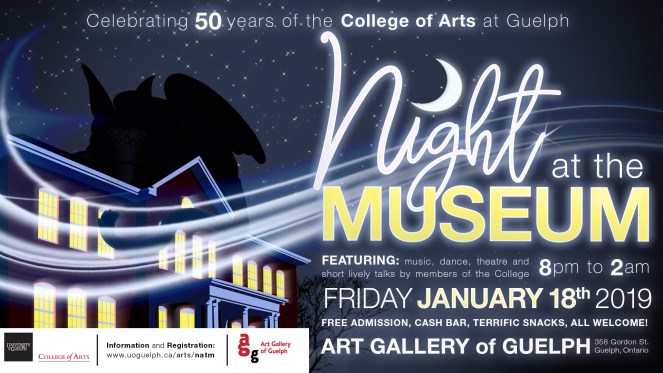
On the bright side, I’m really loving my new job. I love the College and all the exciting work that’s being done here. I also love Guelph. You can come check it out in January at the Night at the Museum Event. Register here.


Obviously, I’m still thinking this all through. The one thing I do know is that I’ve got some big bike goals for 2019. I am reading about kicking my cycling goals into high gear.

And I might schedule knee surgery–partial knee replacement–for the future. If I could choose the date it’d be fall 2019.

Have you ever had “at sea” times? Big life changes? Tough stuff but I’m thinking it through!

I share lots of #sportsselfies but here’s a #deanselfie to balance it out!