accessibility · equality · fitness · swimming

A Tale of Two Water Parks

For decades, families in southwestern Ontario have cooled off in the summertime heat at the St. Marys Quarry, formerly a limestone quarry that was converted to a public swimming area in the 1940s.

Thank to a recent addition to the quarry—the Super Splash Waterpark—there are two different swimming experiences for quarry goers. I share about my one experience, which was shaped in part by the other that I did not have.

Basic and Super

Before the coming of the Super Splash Waterpark (SSW), with an admission ticket guests could swim around freely to about the middle of the quarry. The basic park now includes play features like a few rafts, a slide, and a trampoline.

The Super Splash Waterpark website explains that for this added option guests pay general admission and then 3x more to access to a giant inflatable on-the-water playground. Only a limited number of tickets are available for 2-hour time slots. Reservations are made through an online portal.

With one of the hundred spots reserved for SSW, at the quarry get a wristband, a fitted yellow life jacket, and a safety primer. SSW guests must access the inflatable playground by swimming through the “basic” swim area, now limited to the front quarter of the quarry.

The SSW park has a large set of access and safety rules. Few if any of the quarry’s water features are fully accessible, but the SSW definitely isn’t. Here’s a view of the quarry from land.

The St Mary’s Quarry, featuring the roped off Super Splash WaterPark behind the general admission section. Pic by me.

A Super Time at the Basic End

You might predict where my story of goes next. Some friends and I decide to go to the quarry, but due to the limited number of SSW tickets only half of us get access to the inflatable park. The rest of us—basic access only.

Let me tell you—there is nothing that makes an inflatable water park look like more fun than when your friends can go but you can’t (even if you are an otherwise mature, mid-life, child-free cis-woman). I sat on the grass in my suit, grumpily contemplating whether I would go in the water at all. Take that, quarry!

I asked a friend (who had walked away from her computer mid-reservation so was similarly relegated to the basic quarry area) how a 10 year-old kid might feel seeing but not being able to access the SSW. She recited some parenting wisdom about how making one’s own fun on the basic quarry side is better because it builds character. But I already had character, my 10 year-old self whined—what I wanted was the fun-looking waterpark!

My gaze could not even escape the inflatable obstacles that filled the quarry horizon, a constant reminder of where I could not go, the fun I could not have. Even my once-greater swimming freedom was reduced to a quarter of the quarry by that blow up monstrosity!

My friends eventually came back from the inflatable side—removing their special wrist bands and yellow life jackets—to spend time with the rest of us. And, as the oldest ladies on the trampoline on the “basic” side of the quarry, we did indeed make our own fun.

Next Time at the Quarry

Aside from my poutiness, it all seemed some sort of microcosm of the inequalities besetting some exercise activities in a capitalist society: only a percentage of people get access to what looks like a bigger and better time if they plan in advance, have the added money to spend, and are physically able to participate. Those with less info/tech savvy, disposable cash, and/or differences in ability are more likely to be excluded but must also watch from the sidelines.

My friends reported that the SSW part of the quarry was harder and more tiring than they had expected, and they probably wouldn’t pay for it again.

If I went back, would I choose to plan further ahead to reserve a limited SSW ticket, even if the park is less accessible, I have to pay 3 times as much, and I may not even have that much more fun?

Sadly, my answer is probably yes—because I know that the real privilege of privilege (in a capitalist society or a two-tiered Waterpark) is having the freedom to choose.

accessibility · cycling · disability

Sam’s sad post bike rally day saved by Bixi!

So the bike rally is over and all we’re left with is a giant pile of dirty laundry… so much laundry.

We’re still waking at 6 am hungry but there’s no breakfast waiting for us.

Also, our bikes are on trucks heading home to Toronto.

Yes, we have lots of wonderful memories. See here’s me bike dancing waiting for the final stretch into Montreal.

Sam bike dancing

But the day after the rally isn’t easy. But it’s especially not easy if like me you can’t walk very far at all. Yes, I can ride my bike from Toronto to Montreal but my knee is in such tough shape that I struggle to walk.

I had a miserable walk to breakfast with Sarah when Sarah spotted the Bixi bike stand. Yes, our bikes might be on trucks but we could still ride!

Breakfast was delicious and after we biked over to Bota Bota, the spa on a boat and soaked in tubs of various temperatures.

I love riding the Bixis. Mina is the Bixi Queen of Montreal but I feel like honorary visiting royalty. No helmet, regular clothes, no clip in shoes, a bike that weighs at least twice as much as my road bike, and it’s a totally different cycling experience than the rally. Not zoom, zoom more cruise, cruise.

They’re fun. But for me they’re also very much necessary. Another reminder that safe cycling is a disability rights issue. I really struggle with walking any distance these days but I love cruising around the city on the Bixis.

accessibility · fitness · inclusiveness

Moving back into the world but who are we leaving behind?

Today I posted on Twitter.

https://twitter.com/SamJaneB/status/1503064734698024964

And then Pandemic Dark Dance posted to Facebook, “Tomorrow Night… Hopefully the last online Pandemidarkdance for a long while. I fully expect all 600-some members to login for it. We can’t take 600 requests, but we can take a few. You got any? Next Thursday (17th) we’ll be back in the Owls club, like olden times… Like nothing had ever happened… save for the vax check, tea-light squares, and the entry and exit wearing of masks…”

So we’re moving our fitness lives back into the world and the online options are closing down. Mostly (see above) I’m thrilled about that. I’m back at the gym I’m doing in person yoga again.

But who is being left behind?

I’m struggling with this in the university context too, trying to balance accessibility concerns, with wanting to be back on campus for in person learning.

It’s not just about being high risk for covid, or having perfectly reasonable concerns about social gathering when the pandemic isn’t over. There are also disability access needs that have been met during the pandemic. In addition, there’s the rural/small town/big city divide. I remember, in the early days of social media, when online friends in big cities would talk about getting off LiveJournal or Friendster or Facebook in favour of in person friends in the real world. I’d point out that their real world looked different than mine. I didn’t have the same access to in person events that they did.

So too with Dark Dancing.

What is Dark Dancing anyway?

Elan blogged about it here.

From the No Lights, No Lycra page:

“WE DANCE IN THE DARK IN MORE THAN 75 LOCATIONS AROUND THE WORLD AND WE’VE BEEN DOING IT SINCE 2009! We turn off the lights and crank up the tunes to release our inhibitions, move our moods and work up a wild sweat – all completely sober. We are mums, dads, students, lawyers and baristas, from 12 to 100 years old. We all have one thing in common; in the dark we come alive, shake the blues away and get lost in the music….We grew from a small gathering in Melbourne into a global community, simply because joy is contagious, and people love to dance. Lights Out, Let’s Dance – there’s room for you on our dance floor. 

When the pandemic hit, dark dancing took off in peoples’ homes. If you use Spotify there are more than 300 No Lights No Lyrca playlists. I can’t dance due to my knees but these playlists have saved my life on the bike these past two years.

So as Dancing in the Dark returns to clubs, that’s great I guess. But what about those of us who don’t live in Toronto, New York, or London or who are choosing to stay out night clubs until the pandemic is gone for good? Or what about those people who dance in bed, or in their wheelchairs, for whom the night club, even sober, might never have been a real option?

I was happy to see that some dark dancing groups are running hybrid dance parties, in the club in whatever city they are in and on Zoom and or YouTube as well.

And I’ll be curious to see where we land in terms of hybrid forms of participation.

How is this working out in your online fitness world? Are you losing online fitness options? What do you think we ought to do to keep online and in person fitness communities going? How is hybrid working out, if your communities are going that route?

accessibility · challenge · fitness · walking

We’ve made it to Saskatchewan!

We’ve got some fit feminist groups doing the PaarticipACTION challenge this year. You can read about our kick off here. There are at least two teams that I know of. Teams are limited to 8 so we had to break into groups.

My team has made it to Saskatchewan so far.

We’re in Saskatchewan in the ParticipACTION challenge.

So far I’m enjoying the challenge and the hope of winning the team trip to the Yukon. It’s been a good reminder for me to get out and walk everyday. I’m still biking lots too.

With my horrible end stage osteoarthritic knees, I’m never sure how much is too much. Yes, walking hurts but it’s not making things worse and I like being outside and walking with family members and our dogs.

Mallory, Sarah and I are considering a hiking back country camping trip this spring and I’m really curious to see if I can do it. Knee replacement seems to be on hold forever and I’ve got to get on with my life. I’m not sure if I’m just getting used to being in pain or if walking is actually less painful some days.

Here’s galleries from three of my walks since the challenge began!

Walk with London kids after emergency dental visit!
Beautiful fall colours on my morning walk with Cheddar
Mum and me and the dogs walking on one of the Guelph trails
accessibility · camping · cycling · fitness · Guest Post

Bike Tour Voting Challenges

Over the course of about ten days, I spent several hours on the phone with Elections Canada being transferred to one person after another as I tried to get correct information about my voting options, figured out how to vote by mail, and how to resolve complications with the process. I could have voted at any Returning Office before the 14th, but by the time I learned that I was in Espanola and was under the impression that I still had plenty of time to vote by mail since September 14th was listed as the deadline to apply.

Unfortunately, this is misleading since in reality it wouldn’t allow for enough time to receive the special ballot via Canada Post and then get it back to Ottawa by 6pm on September 20th. That’s right, post mark dates aren’t what count here; it has to physically arrive in Ottawa by the 20th. That sort of turn around *might* be possible, but only for those who can afford $85+ to courier it there.

Why is the government not footing this expense for all mail in ballots given the impossibility of the deadline they have listed? Disabled folx and those in remote communities (like Northern Ontario) will be disproportionately excluded by this process. How many ballots will arrive late and thereby be excluded? During the last election “11.1 percent of national ballots and 11.8 percent of international ballots were returned late” (Elections Canada Vote by Mail FAQ). Clearly this is a significant issue even outside of a pandemic.

I applied on September 9th, but even this wasn’t enough time by regular post and maybe not even by express post. My ballot finally arrived to Iron Bridge on September 15th. At that point I was in Thessalon and had been told by Canada Post that the mail left at 5pm. Express post should get it there in three days – just enough time. I packed up as quickly as possible and rode hard and fast to get there in time. 

On the way I made a quick stop at Little Rapids General Store for food. I’d heard they had lots of delicious smoked meat and cheese and I needed food anyway to get through the next stretch without grocery stores. Little Rapids did not disappoint. The smoked rainbow trout and taco flavoured cheese curds were delicious. Beyond that though, the town is a beautiful hole in the wall spot that most drivers would likely miss. I was disappointed that there wasn’t time to hike out to see the salmon spawning or take in the heritage museum. It also had lots of spots that looked great for stealth camping.

Standing outside Little Rapids General Store with dinner and on the go protein (taco flavoured cheese curds, smoked rainbow trout, dried turkey, and dried elk!)

About half way to Iron Bridge I realized that without taking the highway I’d never make it. Pro tip: avoid this stretch of highway 17 at all costs. There’s no paved shoulder and drivers will risk your life here. If I hadn’t been so emotional about the messed up system I likely would have bailed and hoped it would get there anyway. As it was, I plowed on.

My cousin didn’t have time to drop my ballot off and I knew there was no way I’d get to the their place and then the post office in time. A random kind gentleman in his driveway picked up the ballot from my cousin’s (only a few blocks away) and dropped it off at the post office across the road. I made it to the Iron Bridge post office just before 5pm! 

But I got misinformation for the bajillionth time: mail left at 3pm, not 5pm. Couldn’t have gotten there earlier anyway. I cried… not for the first time about the likelihood of my ballot not being counted. I jumped through so many hoops trying to get this ballot in – including changing my route multiple times. Right now it’s not looking hopeful – as of now it’s showing a Tuesday arrival and has no updates since it left Iron Bridge on Thursday. 

Giselle (Canada Post staff) and I crossing our fingers in hopes that the ballot arrives in time to count.

As someone who has lived in poverty since my teens, the right to vote is a huge deal. It’s how we raise our voice, call for change, and hold our government accountable. If you weren’t planning to vote today, please get moving and go vote. My vote probably won’t be counted, but yours still can (if you have the privilege of accessibility). If transportation is a barrier phone the office of anyone who is running and a volunteer will help you get there!

accessibility · camping · cycling · fitness · inclusiveness

Rest and Spoons


By the time I reached Whitefish Falls on September 7th, I was tired. More tired than I realized at the time. 

An incredible view of the escarpment as I left Whitefish Falls en route to Espanola.

I called my cousins who recently moved to Iron Bridge to let them know that I was heading their way. They asked if it would be cheating for them to pick me up. I was *relieved* at the offer. My body needed a break. I told them I wanted to bike one direction, but didn’t need to bike both ways. Miles are fun to celebrate, but for me it’s about the adventure far more than kilometres ridden.

The next day I biked to Espanola, had a delightful visit with Ben & Hector (en route to Victoria), bought a few necessities for the cooler weather, and then loaded my bike into my cousin’s car. In the next couple days, I was surprised at how frequently I conked out on the couch in the middle of an admin task, too tired to even bother moving to my hammock. 

Inside my cousin’s car trunk with my bike and bags loaded for a lift to their farm.

People who have chronic health conditions marked by fatigue often call ourselves “spoonies” or make comments like “I’m low on spoons today.” I’m a spoonie, so in contrast to the average person with a full set of spoons it’s easier to overdo it (even when I’m *not* on a bike tour!) and more challenging to return to my baseline after overdoing it. On the Patients Rising blog, John provides a great overview of what Christine Miserandino‘s Spoon Theory means to so many of us with invisible chronic health conditions.

I’d always planned to prioritize pacing and sufficient rest, but this is easier said than done. Sometimes it feels like I’m playing tug of war with myself… trying to find the ever elusive line between challenging myself *just enough*, but not so much that I push into a crash. 

Ableism makes this more challenging as well. People who have never done bike camping generally think that 30-60km in a day (my original goal) is an astonishing amount to aim for, while many (most?) people who have done bike camping think it’s a really slow pace. These opposing perspectives on what constitutes a great accomplishment mean I must pay close attention to my own goals and not allow my sense of success to be swayed by how others view me or my abilities. As far as spoonie life goes, paying attention to my physical and mental health needs are key, which subsequently means that flexibility is key… so focusing on numeric based goals feels like asking for disappointment. 

Freeze dried chicken stir-fry while watching a spectacular sunset from the dock at Roe Park.

After four days of rest, on Sunday evening I rolled onward with strategies for a slower pace including: scheduling rest days, scouring Google Maps in advance for mid-ride rest spots (which could double as an early overnight spot), and ordering freeze dried meals so that running out of food doesn’t force me to ride further than I have energy for. Sunday evening I employed many of these tactics after leaving later than I’d planned. I rode 10km before enjoying a freeze dried chicken stir-fry while watching a beautiful sunset at Roe Park (aka Sunset Beach). It was perfect. 

For those of you who are wondering, I’m writing this from the cute city of Thessalon after a very eventful night… but that’s a story for another time!

I couldn’t resist adding one more photo from Sunset Beach (Roe Park)… this one looking out at the dock and lake was taken during sunrise.
accessibility · camping · cycling · fitness · Guest Post

Beyond Comfort Zones: What if you fly? (Guest Post)

There is freedom waiting for you,
On the breezes of the sky,
And you ask “What if I fall?”
“Oh but my darling,
What if you fly?”

This quote by Erin Hanson has strengthened me in an enduring way that only a couple other quotes can lay claim to. The start of it is engraved on my iPad as a form of resistance to the impact of perfectionistic ideals that often hold me back. But since my collision in 2013, these words have encouraged me to push beyond my comfort zone in countless ways. 

As recently as last summer, I was super anxious about everything that might go wrong on a hypothesized weekend canoe trip with a friend. But interestingly, internalized ableism was a significant contributor to my camping trip fears. Because of this, solo camping (even bike touring) actually feels less daunting: I can go at my own pace without fear of slowing anyone down.

Even so, it’s plenty daunting! I’ve never biked on country roads, never ridden more than 40km in a day, and I pitched my first tent this July… I’m a newb in every possible way and I’m diving in anyway! 

I finally made it out of London on Saturday evening and was shocked that I made it to Lucan without needing more than brief water breaks on the side of the road. Not sure if that’s thanks to electrolytes or adrenaline, but I’ll take it!

Even before I made it out of London there were plenty of hiccups! I figure that’s par for the course given the steep learning curve! But I’m fumbling my way through, figuring it out, and pushing back against gender stereotypes and ableist views that say I shouldn’t do this… especially as a solo female. I’ve heard “you’re so brave” way too many times already in response to these plans. Do people also say that to men embarking on solo bike tours? I’m guessing not.

Adventure was not the initial driver of this trip, but despite the complicated backstory it appears to be shaping into a delightful adventure. I’m doing all the things that excite and also terrify me… but I’m more excited than anything… which is a major shift even in the past few weeks! I’ve no doubt this adventure will significantly change me and the decisions I make through life… I think it already has in many ways. Because how could showing myself all that I am capable of not change me?

After a second draft of packing, I called London Bicycle Cafe and declared, “This is not going to be a thing. Something has to change. It’s way too wobbly and I don’t know how to fix it.” So Ben and Andrew helped me rearrange things and taught me key principles for balancing my bike. It’s only a few days into my trip and I’m already starting to feel like a pro!
Bubbles (my dear bicycle) is fully loaded and ready to go after adjustments at London Bicycle Cafe!
accessibility · cycling · feminism · fitness

A low car city is a feminist city….

Image
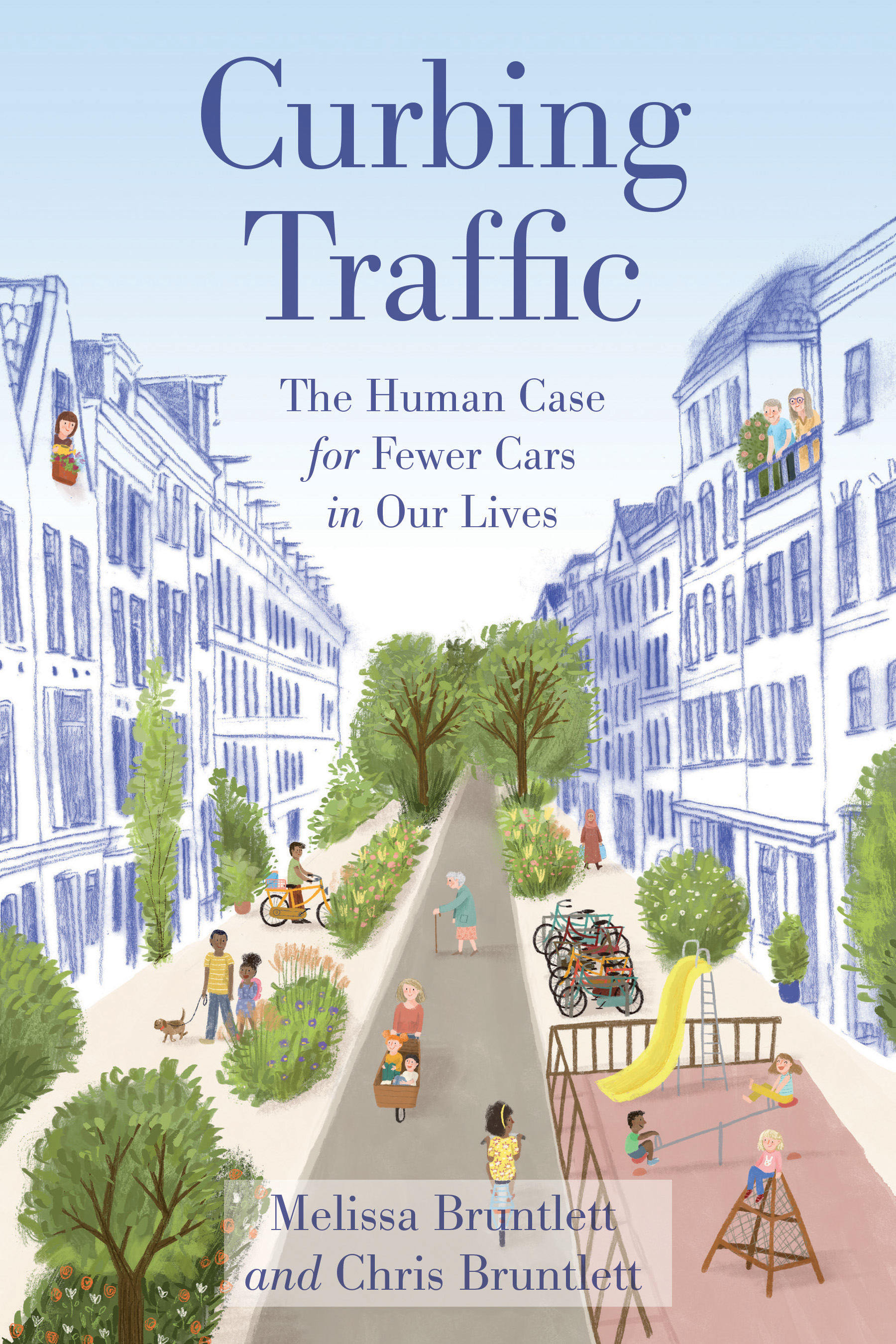
On my to read list! Curbing Traffic: The Human Case for Fewer Cars in our Lives

Melissa Bruntlett and Chris Bruntlett’s new book Curbing Traffic: The Human Case for Fewer Cars in our Lives is coming out this summer. Curbing Traffic argues for an end to auto-dependency and supremacy, through the lenses of equity, well-being, resilience, and social cohesion.

Find out more about the book here.

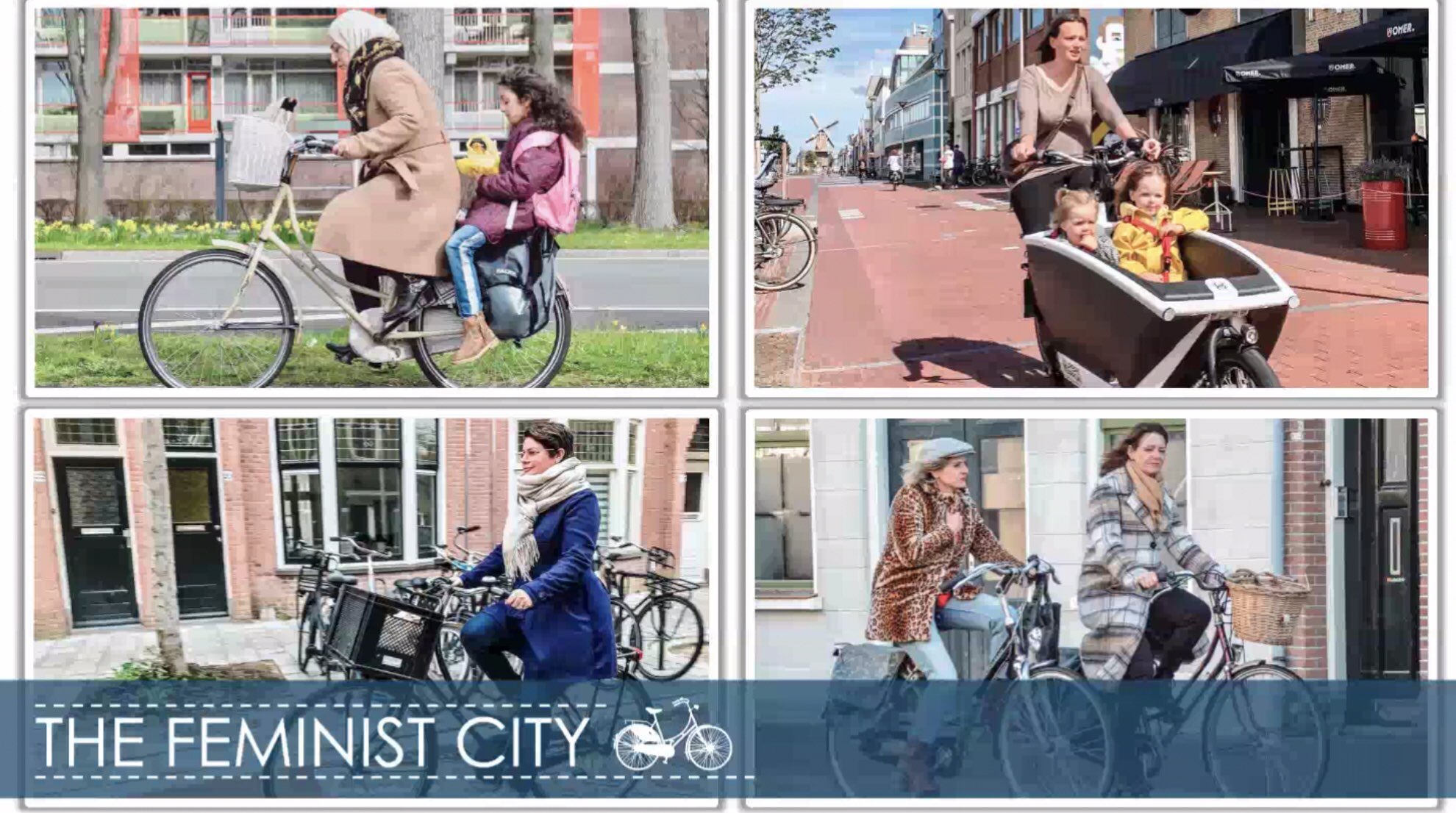
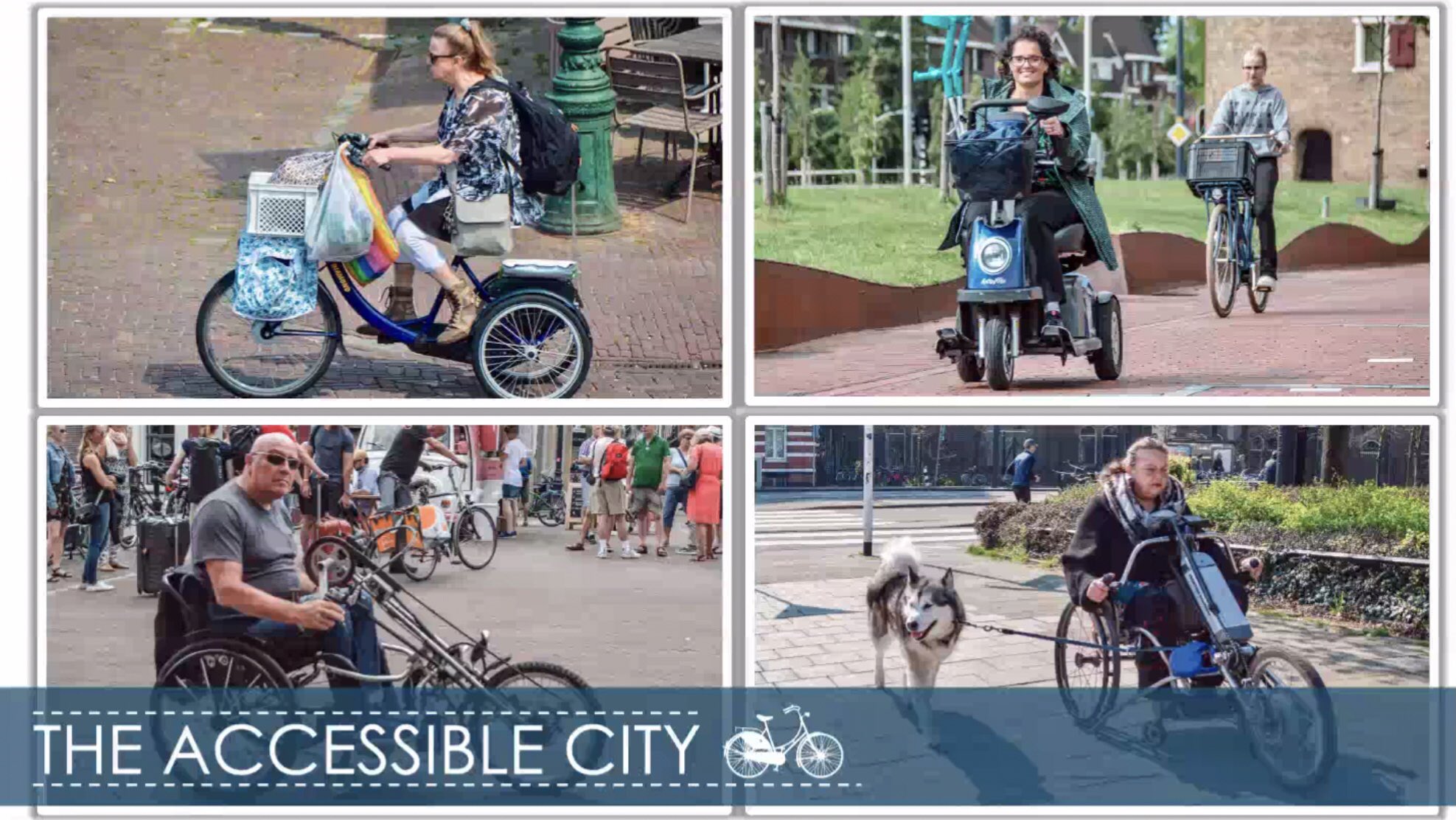
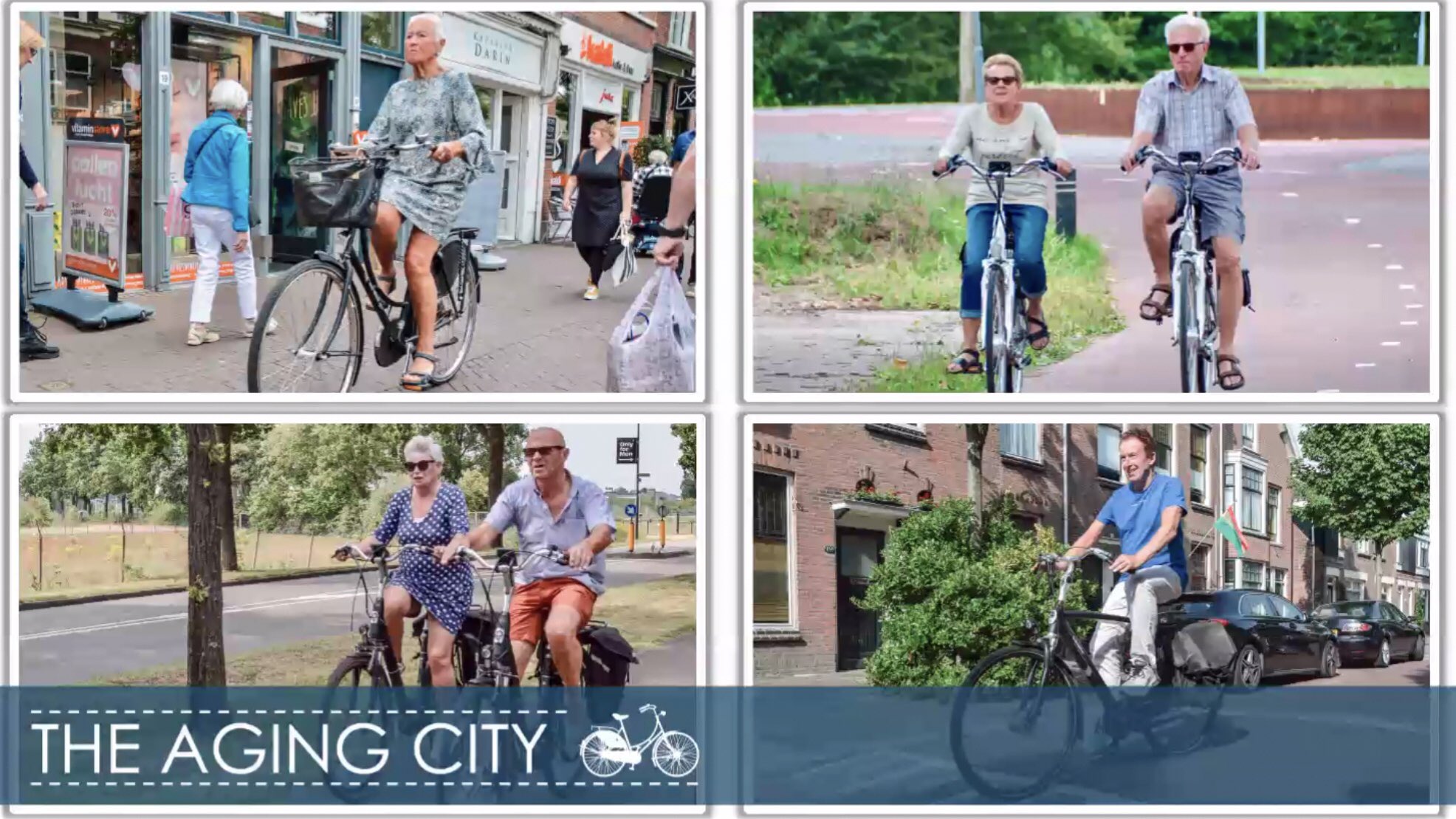
It’s also part of their case for a low car city that a low car city is a feminist city. It‘s better for our mental health, it fosters social trust, and it enables people of all ages and abilities to travel in an independent, safe and comfortable way.

Those are themes close to my heart and I’ve shared them here on the blog: Safe cycling is a disability rights issue and Bikes as mobility aids: Another reason to prioritize cycling infrastructure and Thinking about cargo bikes and gender.

I love the images below–from Melissa Bruntlett and Chris Bruntlett’s twitter–@modacitylife.

Enjoy!

Image
Image
Image
accessibility · fitness

Nike reveals hands free running shoes but don’t read the comments

I first saw the story on Twitter–Nike unveils first hands free trainers that don’t require you to bend down–clicked through and read, “Nike has unveiled its first hands-free shoe, meaning that it can be easily put on and taken off without the assistance of one’s hands. It is one of the first times that the sportswear giant has created a footwear product suitable for people with a range of physical abilities. Although the trainers have been designed with adaptive athletes in mind, and the campaign is being fronted by Paralympian champion fencer Bebe Vio, Nike says the style will also be useful for everyone from students or parents in a rush.”

A friend commented on Facebook, “A great example of how accessibility can benefit everyone. I’m sure so many moms (and dads) would find great help from this!”

I thought about my recent purchase of crocs, one of the virtues of which is the ability to kick them on and off easily for quick runs to the hot tub, or to the curb with our recycling. Bonus: They’re leopard print! Did I mention that?

I was filled with warm thoughts and happy feelings about access to fitness, inclusion, and universal design. I liked this story too, Nike’s New Hands-Free Sneaker Is Being Called a Win for Disability Design.

And then I started read the comments. There was lots of talk about lazy people, and fat people and how the world is ending now that shoe manufactures are pandering to people who don’t want to bend over and tie their own laces. So much judgement.

And that’s often the case with products at making tasks that can be tricky, for people with arthiritis, for example, easier. See Products mocked as “lazy” or “useless” are often important tools for people with disabilities.

My two cents:

These look terrific for all sorts of reasons, for all sorts of people. Yes, the elderly and people with disabilities and those carrying babies. But also the busy runner of errands and the teenager who likes to kick off their shoes. You do you.

Also, never read the comments.

accessibility · aging · fitness · inclusiveness · strength training

Sam wonders about balance: How to applaud aging and weight training for functional fitness without shame and blame for those who can’t

There’s a very moving ad making the rounds about a grandfather strength training for Christmas so that he can lift his granddaughter up to put a star on top of the tree. I got teary watching it and likely you will too. You’ve been warned.

I love his grit and determination. I also love his smiles.

It’s called Take Care of Yourself and it’s the Doc Morris Christmas Advert for 2020.

I also love its message of functional fitness and strength training as we age for all sorts of very practical reasons.

I share a lot of ‘keep strength training as you age’ motivational material on the blog’s Twitter and Facebook page.

See, for example, 5 key steps to build muscle and its many science-backed health benefits.

“A small 2013 study of people between the ages of 88 and 96 years old found that those who performed strength-training exercises for two days a week over a 12-week period showed improvements in balance and a lower incidence of falls when compared to those who didn’t exercise. “It’s safe and important for older people to include strength training,” Jackson says. “Even simple bodyweight exercises like squats, push-ups, and dips can help with strength and muscle building.”

See also What Older People May Be Missing in Their Exercise Workouts

Answer, “As people age, they often focus on cardio. They shouldn’t forget strength training.”

I’m not here to criticize the beautiful and moving strength training grandad commercial. Don’t worry. But I do worry that the focus on strength training for independent living buys into the message that physical dependence is a necessarily a bad thing. I hope to put off the time when I need assistance with everyday household tasks and personal care as long as possible. But I also hope when I need help that I and others can accept it without thinking I ought to have done more kettlebell swings or that it was a moral failing of mine to not care enough about my own health and strength.

I worry that our affection for the weightlifting grandfather is connected to a kind of ableism that celebrates movement and blames those who move less, even when we have no choice. In my own case I’ve talked about that in the context of becoming a non-runner and slower walker.

Regular long time readers will know that it’s hard to hold these two thoughts in balance. You’ll know that it’s something I struggle with.

After all, I wrote both Is Aging a Lifestyle Choice? and What does 74 look like? And how much choice do we have really?

Balance

Thought 1 is that older people are encouraged to slow down. It used to be that when people retired we bought them reclining chairs and told them to ‘relax.’ After all, they’d worked hard their whole lives. Not so much now as times are changing but it’s still true that gyms and fitness culture generally are geared towards young, fit, able bodied people. Older women worry they’ll look foolish exercising. If all of our fitness culture is geared towards aesthetics and maintaining beautiful youthful bodies, no wonder older people feel like they don’t belong.

We see this in the ad above when his neighbour looks to be judgemental of his fitness efforts. She seems puzzled about what he’s doing and why.

And yet, there is a huge cost in losing muscle, losing mobility, and increasing our risk of falling if we don’t continue to exercise–including weight training–as we age.

Older people have far more at stake than the young. The young can get away with a lot. They recover quickly if they are injured. And they bounce back from time off fitness efforts pretty speedily too. All of this gets more difficult as we get older. Indeed, if gyms should be there for anyone, it’s for the elderly.

Thought 2 worries that some of our dislike of old age is a tangled mess of ageism and ableism.

The thought here is that we engage in blame about the failure to age successfully when lots of people encounter the kinds of illness and injury in old age that can’t be overcome with kettlebells and powerwalking. In my post about what 74 looks like I talked about my very fit and physically active mother-in-law who used a wheelchair for mobility in the time after her diagnosis with ALS.

If you’re an academic reading the blog have a look at Christine Overall’s Old Age and Ageism, Impairment and Ableism: Exploring the Conceptual and Material Connections in the National Women’s Studies Association Journal.

See Valuing Old Age Without Leveraging Ableism by Clara W. Berridge and Marty Martinson. They argue that our medical model of “successful aging” without disability sets up the majority of the population, especially women, for failure. Berridge and Martinson write, “Phrases such as “70 is the new 50” reflect a “positive aging” discourse, which suggests that the preferred way of being old is to not be old at all, but rather to maintain some image of middle-age functionality and appearance.”

We want to encourage ourselves to keep moving and to stay strong. At the same time we need respect and compassion for those who can’t move and lift in the same way. It’s a battle I feel personally as I struggle to accept my physical limits without self-blame and still push myself in those areas of physical fitness where I can push. Wish me luck!

I’d appreciate your thoughts about keeping these two thoughts in balance, the push to stay fit and strong and mobile, on the one hand, and the understanding and acceptance when it’s not.

One thing I would say, going back to the video that began this post, is that I wish he wasn’t lifting alone. I wanted a community centre for him to go too. I wanted peers for him to lift with and walk with and drink tea after. We need to do better as fitness communities making inclusive spaces for those who are aging, those who move in different ways, and those for whom both these things are true.

Sam’s biitmoji lifting weights

Often when I start thinking about inclusion and fitness I search for an older blog post by Krista Scott Dixon that always makes me smile, All are welcome in this house that strength built.

“So give me your poor, your tired, your weak of spine and crumbling of bone. Give me your mushy of muscle and burbly of digestion and bored of treadmill-hamstering.

Give me your old and young and everything between early bipedalism and death. And while you’re at it give me your non-bipedal: your limps and gimps and wimps and wheeled and caned and casted and bandaged. Untangle your sweaty hospital sheets and IV tubes and tentacles of fear and shame and move whatever isn’t strapped down. A finger, a leg, an eyelid. Whatever you can move, keep moving it. Next week, add some weight to that.

Give me your saggy, your baggy, your faggy, your haggy. Give me your freaks and geeks; steers and queers; sportos, motorheads, geeks, sluts, bloods, wastoids, dweebies, preppies, jocks, stoners, poindexters, punkers, rockers, hicks, drama dorks, superstars, homebodies, farmers, New Wavers and socs.

Give me your bodies wracked with life’s whims; your hormonally challenged; your rattling bottles of pills like morbid maracas; your diseases of disuse. Your old knee injury from when you tried drunken trampolining.

Give me your your shit-talkers and funk-walkers; the voices in your head who sing the Rocky training montage; your sniveling inner toddler who stamps and says “No!”. Leave your inner critic at the door, or do five pushups every time you speak to yourself seriously in her voice.

Give me your clueless big-eyed newbies and grizzled gray-prickly veterans. Give me your squashy and scrawny. Give me your chickenshits; you people hunting for your fighting spirit and tending the tiny flame of Yes we can inside your ribcage.

It doesn’t matter who kicked the sand in your face. Spit it out and let’s get to work.”

There’s more…go read it. And I love how it ends, “Wherever you are in your journey of strength, you are welcome here. This place is for you.”