diets · eating · weight loss

The Mesh Tongue Patch for Weight Loss. No Thanks.

small mesh rectangle held between thumb and index finger wearing rubber gloves.Not too long ago I wrote about men who body shame women. One of the people at the centre of the latest controversy when I wrote that was an influential Venezuelan beauty pageant host named Osmel Sousa.  His name has come up again in an interview with a Venezuelan “beauty queen” who has, at Sousa’s advice, had a boob job and surgery to get rid of a slight “hook” in the shape or her nose.

But breast augmentation and nose jobs don’t really shock me much anymore.  I still wish women weren’t so fixated on their looks that they would go under the knife to look different, and I do think that it would be bad for women if the culture of cosmetic surgery (for purely aesthetic reasons) really took hold so that it was expected.  At the same time, I have known women who did indeed feel better about themselves after surgeries.

And body transformation is so rampant in our world, through means that range from extreme dieting to heavy weight training with all sorts of stops in between. But the interview made me aware of a new method for losing weight that seems like some sort of medieval torture.  It’s a mesh patch that is literally stitched to the tongue.

How does it aid weight loss?  By making it too painful to eat solid food!  If we have to draw the line somewhere on the continuum between taking good care of ourselves and abusing our bodies and ourselves so we can lose a few pounds, I’m going to say we should draw it on THIS side of mesh tongue patches that make it too painful to eat solid food.

One thing is for sure. The mesh tongue patch is a short term solution.  The patch is temporary, and so is the weight loss.  Why? Because it doesn’t work on habits. Just like any weight loss diet, the real test is not whether the weight comes off, but whether it stays off.

If you put a patch on your tongue so you can’t eat solid food for a few weeks, how likely is it that you’re going to start eating regular food as soon as the patch comes off? If it were me, I’d be grabbing for whatever solid food was in my grasp–from fruit to chocolate cake, from hummus to veggie burgers, I wouldn’t care–as soon as my tongue healed enough for me to tolerate eating solids.

A doctor who spent 14 seasons on the Biggest Loser thinks it’s “barbaric.” According to this article:

Studies show most extreme dieters who lose weight rapidly eventually gain it all back — and more, he said.

“There’s not one scintilla of hope or evidence that putting a patch on your tongue and not being able to eat for a month is going to have any effect on you at one year, or two years or three years,” he said.

That sounds about right.

Here’s more about the tongue patch fad in Venezuela:

http://www.youtube.com/watch?v=IRDhVvvH1Gg


diets · eating · weight loss

“Vegan” Is Not a Fad Diet

cake I’m vegan. And that’s my birthday cake (back in September) from my favorite vegan restaurant.  It’s bar none the very best chocolate cake I’ve ever eaten.  And it’s vegan. No eggs, no dairy.

You’ve probably heard by now about Beyonce’s 22-Day Vegan Challenge with her hubby, Jay Z.  I heard about it when it was announced, and I’m hearing regular updates about how it’s going for them on what is often described as their “health kick.”  The Daily Mail (I know) reported that one week into her vegan “health kick,” Beyonce is flashing her abs.

Everywhere I turn these days I’m reading about how losing weight is one of the big reasons to become vegan.  It’s starting to drive me to distraction!

See that chocolate cake? It’s not health food.  Vegan is NOT a sure fire way to drop pounds.  Losing weight isn’t even the best reason to eat a vegan diet.  Why? Because french fries and potato chips are vegan. That cake is vegan.  Coconut milk ice cream is vegan. Vegans, no less than anyone else, don’t just eat fresh fruit and vegetables.

Now I think it’s a good thing that you can still find all sorts of indulgences and follow a vegan diet. But what that means is that you need to do a lot more to drop pounds than switch to a plant-based diet.  I myself didn’t lose a single pound when I become vegan.  Nothing. Nada. Rien. 

So why become vegan?  The two primary reasons have nothing to do with your health: 1. animal welfare reasons and (2) environmental reasons.  I won’t go into all the details here, but billions of animals a year suffer unspeakably and unnecessary cruelty in industrial farming.  I’m not talking about cruelty inflicted over and above the regular conditions of their lives. I’m talking about the very conditions they live in day to day.  If you’d like to know more about that, read Eric Schlosser’s Fast Food Nation or Peter Singer’s Animal Liberation or even just go to the Vegan Society website.

Livestock farming is bad for the environment and the atmosphere. It’s a huge contributor to global warming.  There’s that great statistic: a vegan who drives a Hummer makes a smaller carbon footprint than a meat-eater who drives a Prius.  Yes, there are other variables, but there is no question that mass livestock production is hurting the planet.

And yes, there’s lots of evidence that it’s good for your health. But there are still all kinds of not-great-for-your-health choices available on a vegan diet. So there is no automatic free pass or anything like that, and some things, such as lean protein, become a bit more challenging (not impossible with some knowledge).

Back to the 22-Day Challenge that Beyonce and Jay Z are on.  If the reasons for being vegan are compelling (and they are!), then being vegan for 22 days just isn’t quite “getting it.”  I mean, I’m glad that Beyonce and Jay Z are bringing some good press to being vegan. They’re even saying they feel great and it’s not difficult. Lucky for vegan PR that they aren’t having a negative experience — if it was a struggle and they had an adjustment period where they felt bloated or tired what have you?  Animal welfare and the environment would still matter.

But you don’t hear about animal welfare or the planet when you hear about their vegan challenge.  Given the facts, it’s just irresponsible to promote veganism without even mentioning these other reasons for being vegan.

Most ethical vegans extend their vegan choices beyond their diet, making an effort to avoid animal products in other areas of their lives. You’re unlikely to find a leather couch in a vegan home, and if you look on-line you can find all sorts of vegan footwear.

Another misconception that needs clearing up and now’s as good a time as any to do it: being vegan doesn’t mean being gluten free.  Gluten is from wheat; wheat is not an animal product. Therefore, you can be vegan and not be gluten free.  It’s very disappointing to someone like me who loves baking to go to a bakery where all the vegan options are also gluten free. Worse yet if they’re also raw.  There are raw vegans, but most vegans are okay with cooked food. Why? Because there is no animal welfare or environmental reason to go raw.

Here’s a nice article where the author promotes the idea of veganism as a lifestyle change, not a diet.

There are also successful vegan athletes like ultra-triathlete Richard Roll (author of Finding Ultra) and the no-meat athlete, Matt Frazier (author of The No-Meat Athlete). Although both emphasize “plant-strong” over “vegan” (see Sam’s posts about the difference here and here) the point is, you can be a vegan athlete.

If you’re interested in learning more about becoming vegan, in addition to the resources above that outline some of the ethical and environmental reasons, I found these books to be really helpful:

The Ultimate Vegan Guide by Erik Marcus

Main Street Vegan: Everything You Need to Know to Eat Healthfully and Live Compassionately in the Real World by  Victoria Moran and Adair Moran

Becoming Vegan: The Complete Guide to Adopting a Healthy, Plant-Based Diet by Brenda Davis and Vesanto Melina

And some good vegan cookbooks:

Veganomicon by Isa Chandra Moskowitch and Terry Hope Romero

La Dolce Vegan by Sarah Kramer

The Happy Herbivore by Lindsay Nixon

Bon appetit!


body image · diets · family · motivation · weight loss

“You’ve Lost Weight! You Look Great!” Isn’t a Compliment

Last week, a friend reported how horrible she felt when someone in her workplace whom she didn’t know very well complimented her on her recent weight loss. As it happens, my friend is losing weight to prepare for a figure competition. But this remark made her question her “before” look.  In her case, her “before” body is the one she has whenever she’s not prepping for a competition because the competition body isn’t sustainable.  (see here for why that’s the case)

Implicit in the so-called compliment about weight loss is the assumption that you really didn’t look so great before.  But now!  Wowza!  Looking good!

There are lots of reasons to think that you’re not doing anyone any favors by trying to give them the “look at you! You’ve lost weight!” compliment.

1. When we think of it in that way, it’s not such a great compliment. It’s a set-up for self-consciousness and negative self-judgment of our past selves. When remarking on weight loss is offered as a compliment, the speaker clearly thinks that there’s been a noticeable and notable improvement in how the person looks.  Without the normative standard of “thinner is better,” the comment would have no value as a compliment at all.

2. It’s also a set-up for our future selves because, for the most part, diets don’t work in the long run. Much of the research out there shows that those who lose weight by dieting now have a pretty good chance of gaining it all back and more within 2-5 years (if not sooner).  Diets and weight loss programs have very poor results over time.  See Regan’s post, “The Thing about Weight Watchers” and this report from UCLA.

3. It reinforces the notion that it’s okay to monitor other people’s bodies.  When the blog first began, I talked about “the panopticon” in relation to tracking.  The panopticon is a prison design (from 18th C philosopher Jeremy Bentham). Its key feature is that the prisoners cannot tell when they are being watched and when they are not.  The uncertainty about when they are under surveillance means that prisoners begin to regulate themselves. Philosopher Michel Foucault, and later, feminist philosopher Sandra Bartky, offered the panopticon as a metaphor for contemporary society.  Bartky uses it to explain how women fall into line with the standards of normative femininity.  If we condone comments on people’s weight loss (or gain, but we are loathe to do that since it’s thought to be an insult), we are promoting a panopticon-like scenario where people the expectation of random surveillance becomes the norm.

4. It reinforces the idea that it’s okay to let people know that we are monitoring and judging their bodies. One thing that shocked my friend in the story I opened with was that she really didn’t even know the person who commented on her weight.  And yet the person felt completely entitled to say something. What kind of a twisted world do we live in where the state of our bodies is fair game for comments from whoever feels like making them?

5. It assumes that we are trying to lose weight and that, therefore, our weight loss is an accomplishment worth congratulating us for.  I know, I know. For lots of people this is actually the case. When I attended Weight Watchers, we would literally applaud people for losing weight.  I’m sure I read somewhere in WW literature that receiving compliments from family and friends was a good motivator to keep us on track in “our weight loss journey.”  But hello!  Not everyone, everywhere is always trying to lose weight.  It’s offensive to make that assumption.

Almost 20 years ago, Sam and I learned our lesson about casually offering, “You’ve lost weight; you look great!” as a “compliment.”  If that’s the compliment you’re looking for, you won’t get it from us.  We ran into someone who used to work in our office but had moved to another unit.  We complimented her heartily on her lost weight.  Her response, “I have cancer.”

Awkward moment ensued.

Lesson learned.

If I could push rewind, I would approach it differently. I would say, “It’s so great to see you.  How have you been?”  At that point, she could choose either to tell us of her health issues or not tell us.  We could have a conversation about what we’ve been up to lately that focused on things that really matter instead of how her body looked to us.  Thankfully, our friend has since recovered from her illness. But we re-live the mortification of that major faux pas on a regular basis, pretty much any time we catch wind of anyone saying to anyone else, “You’ve lost weight. You look great.”

I do know that lots of people are in fact trying to lose weight and change their body composition.  They are putting in an active effort. They are not hiding it from anyone.  They themselves regard their progress on these fronts as accomplishments.  That’s all good. I myself would like to gain more muscle and I do have another trip to the bod pod scheduled to see how that’s going (for the sake of research, I swear!).

Nonetheless, I still urge everyone to re-think the weight loss comment as compliment for the reasons outlined above.

It’s nobody’s business whether someone has lost weight or not.  Friends, family, co-workers, and strangers do not have a right to monitor our bodies closely enough that they notice changes in our weight.  Even less do they have the right to talk about it, among themselves or to us.

You might want to say that it’s okay if we ourselves initiate the conversation. Still, I feel wary (and weary) of embarking on conversations in which the main topic is somebody’s weight.

And despite the good intentions that most have when they offer this compliment, it often comes across as a covert way of telling someone that they really didn’t look so good before.  We live in a society obsessed with “before and after” shots (it’s through those that WW “leaders” gain their credibility with the clients).  “Before” is always unacceptable. “After,” the “new you!” is to be congratulated and praised.

This whole approach comes perilously close to casting thinness and those who “achieve” it as virtuous.   The occupants of our “before” pictures are seen in a negative moral light.  Not only were we not so attractive with our unwieldy bodies that everyone noticed but kept silent about until we changed them, but also we were not so virtuous, were we?  It may be subtle and covert, but it’s shaming nonetheless.

Please join me in the boycott.

Read more about body image, body shaming, and the assumption that thin is better:

On Comparing

The Day I Discovered the Dreaded Camel Toe

Why the “Thigh Gap” Make Me Sad

Loving the Body You’ve Got

diets · eating

Intermittent fasting and why it might not work as well for women

You’d have to be living under a rock not have noticed the latest diet trend, intermittent fasting.

It’s gone from making the rounds in the Paleo community (see Intermittent Fasting And The Paleo Diet) to mainstream with the 5-2 diet. See British 5:2 diet craze heads to the US. See also When you eat key to intermittent fasting (CBC).

The basic idea of the 5-2 version is that you “fast” for two days and then eat whatever you want for the remaining five. It’s not strictly speaking an actual fast because you do eat about 500 calories on the “fast” days.

There are many versions of intermittent fasting (or IF as many fans call it) from some that sound just like skipping breakfast, to others that have a more complicated structure throughout the week, to some that are geared to a very specific purpose such as avoiding jet lag.

The evolutionary basis of this approach to eating seems obvious. Humans have evolved to do well in feast and famine conditions. The problem with the contemporary North American diet is that it’s all feast, all the time. Many cultures around the world practice fasting and seem to suffer no ill effects from periods of fasting, followed by periods of feasting.

It’s striking how much IF deviates from the regular feeding, three meals + two snacks, of most other nutritional plans for athletes, including fitness competitors and body builders. On those plans you eat regular small meals, not going more than three hours without food.

But arguably the fasting habit isn’t for athletes. As you might imagine there’s been controversy over this. For the argument against IF for athletes, see here. The argument against relies on the large amount of data we have on the performance of Muslim athletes during Ramadan. Short version: athletic performance suffers. Also athletes need fuel to train. See that argument against here.

And of course, some athletes and coaches think it’s terrific, if done right, read more here if you’re interested.

Regardless most advocates and fans of intermittent fasting don’t have athletes in mind. The 5-2 diet is described as being perfect for the average person, no big changes in what you eat required, except of course on the two fasting days.

Is this just the latest fad diet? You should read what Tracy thinks about fad diets and the meaning of success here.  Does it work? Again, as Tracy says that depends on what you mean by work. She’d likely tell you to try intuitive eating instead. Intermittent fasting is kind of the opposite of intuitive eating. Rather than noticing and hunger and eating when you’re hungry, on a fasting diet you follow the clock, not your stomach. You learn to notice hunger and then ignore it.

There are lots of versions of IF out there.  Anthony Mychall does the Warrior Diet–one meal a day. He writes about it in this blog post, How to Start Intermittent Fasting and Kick Hunger Aside. How to cope with hunger? “The best way to forget about hunger is to literally put yourself in a position to forget about hunger. Keep active during your fasting window and put yourself in a situation where you can’t eat. Hell, sleep in if you have to.”

What about more extreme versions? In Inhuman Experiment: An experimenter in search of prolonged youth we read about another IF propocol. This one requires 24 hours of fasting as it’s based on alternate day feeding, called ADF, of course. See the blog post, Intermittent Fasting: Understanding the Hunger Cycle for more about hunger: “The feelings of hunger during intermittent (24 hour) fasting vary with time. The one thing to keep in mind is that, in my experience, the most difficult part is near the 20th hour into the fast. That’s when the hunger is replaced by a general lack of energy and focus. This feeling will, however, pass in an hour or so, after which fasting becomes much easier again.”

I’ve often thought of intermittent fasting as one tool in the careful eater’s bag of tricks. I do a version of IF I suppose (though I’ve never called it that) when I decide to not eat after dinner, thus lengthening the period in the day when I go without food. I do this on days when I’m not working out in the evening. I go to bed a little bit hungry but since I always wake up hungry no matter what there doesn’t seem to be any other change in my desire for food.

A few years ago on the advice of a personal trainer I experimented with morning workouts on an empty stomach but that was a bit of a disaster. See comments above on waking up hungry! Halfway through my morning run I was prepared to go knock on doors in search of breakfast.

I’ve had more some success with eating lots less when I travel. It’s a good time to experiment since the food options are crappy and expensive. I haven’t tried IF as a way of combating jet lag though I might the next time I head to England or British Columbia.

On jet lag and fasting. read more here:

But one thing seems clear about these various eating schemes, your mileage may vary: what works for some doesn’t work for others. If regular  intermittent fasting is successful for you, great, but there are concerns it doesn’t work as well for everyone and very specific concerns that it doesn’t work as a nutritional strategy for women.

I read Shattering the Myth of Fasting for Women: A Review of Female-Specific Responses to Fasting in the Literature and was shocked that for all I’d heard IF touted as good for people, most of the research supporting IF had been done on men. Surprise, surprise. For the effects of fasting specifically on women you need to read about studies with rats and mice, and the news isn’t good. Women, it seems (well at least female rats and mice) don’t get the same benefits from fasting and they suffer some additional ill effects.

Yet, I’ve had intermittent fasting recommended to me by several young men, heavily involved in fitness and nutrition.  In light of these experiences, I was thrilled to read a terrific rant (she gives the best rant) by Krista Scott Dixon, at Stumptuous.

In “The First Rule of Fast Club” she  rants about and aims fury and righteous rage in the direction of lots of things including the following: why intermittent fasting may not be the cure all for women’s weight woes, why in general what works for young men won’t work for women, and why women shouldn’t listen to young, thin, male personal trainers.


“The first rule of fast club is: Don’t talk about fast club.

The second rule of fast club is that skinny guys no longer get to tell me what to do. (Although I love you guys. You look so cute with your pants falling down!)


I come not to bury young male ectomorphs, but to praise them. In fact, I married one. They are a fascinating species. I have observed my own specimen for years, like Jane Goodall amongst the chimps.

Here are some interesting facts about these wonderful creatures.

1. Many of them can live on fumes. Craving neither food nor drink, these hominid hummingbirds apparently draw nourishment from the air. They sup on dew and dine on dust.

2. When they are stressed out, they don’t eat. Actually, when they aren’t starving, they don’t eat. Which is to say, most of the time. Can you believe not eating when you’re stressed? I know! Ha ha! Crazy! I keep trying to explain to my specimen that giving a loaf of bread a butter enema then dipping the whole thing in chocolate and rubbing it all over your esophagus will always make you feel better. Thus far I have failed to convince him.

3. When they do eat, it doesn’t seem to matter. Have you seen the food these guys can put down? It’s like they encode for some MAKE_ABS1 gene. In their bodies, somehow cookies turn into tummy bumps.

4. To lose weight, they do crazy shit like give up drinking so much beer. I hear women from all over the globe gnashing their teeth at their partners’ superhuman abilities to get riptshizzled with no effort. I’ve been busting my ass and I lost 1 lb in a month! That jerk’s doing my nutrition plan along with me and he’s lost 40 lb in the same time, just by eating one less strand of spaghetti a day! I hate him!

I hear ya. My home dinner table conversation sometimes goes like this.

Me: Ugh, I feel the estrogen demons again. I feel like an inflated wet sponge. The only thing that fits me is the Snuggie my grandma gave me last Christmas.

Him: I don’t feel so good myself. I had a whiff of anxiety today and dropped 5 lbs. Then my shirt tore itself on my abs.

Eeyup.

There there ladies. Cry it out.

And here is point #5, which may be the most obvious:

5. They are not us.”

Go read the whole thing here.

Here’s a very useful resource if you’re thinking about giving intermittent fasting a try: Precision Nutrition, Experiments in Intermittent Fasting.

Have you tried Intermittent Fasting? What do you think? How did it make you feel?

diets · eating · overeating · weight loss

Why Food Is Beyond “Good” and “Evil”

Image description: a half an orange and an orange. Credit: pexels.com
Image description: a half an orange and an orange. Credit: pexels.com (free stock photos)

Recently, in response to a comment I made about the calories in fruit juice, a friend said to me that fruit juice is “evil.” I am a philosopher who does a lot of ethics. So “evil” means something quite severe to me. Hitler and Pol Pot were evil.  Fruit juice, not so much.

I checked back with my friend. No, he didn’t mean it was literally evil. Just that it’s as bad as a can of Coke.  Still pretty bad, if not downright evil. It’s a “sometimes” food, not an everyday food. Other anti-juice people jumped in to clarify further. Juice is really, really bad FOR you. Harley Pasternak demonized it the other day in his talk too.  He said that a cup and half of OJ has 240 calories. That’s not quite right, since a cup has 112 calories.

But I don’t want to quibble about orange juice in particular. It’s this whole notion of good foods and bad foods that really gets under my skin. Very few foods, eaten in moderate quantities, are actually bad for you. I ate a big and delicious piece of vegan chocolate cake yesterday.  I don’t believe it was in the least bad for me. Why? Because I don’t eat cake every day. I eat it about once or twice a month.

I can’t trace the quote exactly, but a long time ago I read a great response by George Cohon of McDonald’s, to the claim that McDonald’s food was “bad for you.” He said something like that McDonald’s never said you should eat its food three meals a day, seven days a week.  I hesitate to agree with him (because McDonald’s is problematic in other ways, in my view), but I agree. McDonald’s and orange juice, chocolate cake and potato chips…all of these can be part of a healthy diet without doing damage to the person who ingests them.

Moralizing food by calling some of it “bad” and some of it “good” gives the false impression that foods in themselves have moral qualities. It isn’t a huge jump, and people make this jump all the time, to the claim that people who eat “good” foods in the “right” amounts are virtuous and people who do not are bad.

We frequently think of chocolate cake as “sinfully delicious” and “decadent.”  I’ve spoken to many a dieter who said, not that they had a good week, but that they were “good” that week.  If they wandered off the plan by eating something they weren’t supposed to, they were “bad” that week.  Some foods are considered “guilty pleasures.”

One of my favorite parts of both the  intuitive eating approach and the the demand feeding approach to food is that they both tell us to “legalize” all foods.  Carrot sticks are as legal as carrot cake, neither better nor worse than the other. I can already hear the rumblings in the comments.  “But carrot sticks are better for you than carrot cake!”  I can even hear those who would jump in against carrot sticks because they have a higher sugar content than celery sticks.

The whole thing brings me back to the idea of moderation, which Sam wrote about in such a lovely way recently.  We can live life by strict rules and have all sorts of forbidden foods on a black list if we like.  But forbidden foods are, for many of us, more attractive for being forbidden.

I know that when I finally truly legalized all foods, french fries, which I’d considered my favorite food for all of my life, suddenly lost their appeal. They’re okay, and I do enjoy them from time to time. But are they my favorite foods? No. If I had a choice of giving up fries for the rest of my life or giving up mangoes for the rest of my life, I’d give up the fries. And not because they’re “bad” or even “bad for me,” but because I simply love a good fresh mango.

The food police are those people who like to jump in and tell you about the evil foods that are bad for you and that you should avoid. I’m not interested in what they have to say.  I am extremely well informed about nutrition and used to be able to rhyme off all sorts of fun facts about countless foods. I wrote them down every day and kept meticulous count. I avoided fruit juice and all caloric drinks so as not to waste the stingily parceled out grams of this or that.  Like so many people, I felt so incredibly virtuous when I stuck with it, often for months and even years at a time.

I convinced myself, as I have heard so many others do, that I just loved this way of eating. It was so great! And I was so good! Meanwhile, I felt deprived, especially around celebrations and special occasions, which are enhanced by taking a meal together.  I had my false sense of virtue, but it wasn’t much fun.

I have also witnessed the effect of “virtuous” eating on others who were not so virtuous but who thought they should be. People would apologize for themselves for eating. “I shouldn’t be having this, but…”  That is always a preamble to the next day’s self-flagellation, “I was so bad at my daughter’s wedding yesterday.”   Or this one, “I’ll just take a sliver.”  When I was a young adult, my mother and I polished off close to whole banana loaf over the course of an evening by taking little slivers.  Even today I look back and think I should have just cut off a good sized slice, slathered it with butter, sat down with it, and enjoyed it. Instead, I sneaked into the kitchen a few times and shaved off inadequate pieces that left me wanting more.

When we moralize foods into good, bad, evil even, we deny ourselves permission and set ourselves up not just as failures, but as moral failures.

If the foods that made people feel so bad weren’t forbidden or “sinful” in the first place, they’d be less attractive and people would be less likely to eat more of them than is comfortable.

Are there any foods that, for health reasons, we simply should not eat EVER, that even in tiny amounts are “evil”? For some people, there are “trigger” foods that they simply cannot moderate.  I will have more to say about that in another post. And of course, some people are allergic to things that will kill them if they eat them. And as a vegan I am keenly aware of social, moral and political reasons for avoiding certain foods.

But those foods aside, I’m not sure if there are any foods that should never, ever, under any circumstances, be eaten because of our health. And if there are, fruit juice is not among them.

Some other posts about food, diets, and moderation:

Three Amazing Rants about Food, Nutrition, and Weight Loss

Metabolic Health Is a Feminist Issue

Raspberry Ketone, Pure Green Coffee Extract, Garcinia Cambogia, and the Fallacy of the Appeal to Authority

Why Sports Nutrition Counseling Is Not for Me

Moderation versus All or Nothing

[photo credit: Good-Wallpapers]

body image · diets · eating · overeating · sports nutrition · weight loss

Intuitive Eating: What It Is and Why I Love It!

Recently I wrote about my (personal, not for everyone) decisions not to get further sports nutrition counseling and to stop weighing myself.  I committed to re-acquainting myself with two books that helped me a lot back in the early nineties when I was a compulsive dieter and exerciser with a diagnosed eating disorder (that I didn’t believe I had because I wasn’t skinny enough).

The books were Overcoming Overeating: How to Break the Diet-Binge Cycle and Live a Happier, More Satisfying Life by psychotherapists Carol H. Munter and Jane R. Hirschmann and Intuitive Eating, Third Edition:A Revolutionary Program That Works by nutritionists Evelyn Tribole and Elyse Resch.  You can find my review of and experience with Overcoming Overeating here. There I say that while I liked a lot of the principles, Intuitive Eating resonates much more strongly with me.  So today’s post is about this approach and why it’s working for me.

Intuitive Eating (IE) is based on ten principles, to each of which the authors devote a full chapter:

  1. reject the diet mentality
  2. honor your hunger
  3. make peace with food
  4. challenge the food police
  5. feel your fullness
  6. discover the satisfaction factor
  7. cope with your emotions without using food
  8. respect your body
  9. exercise: feel the difference
  10. honor your health with gentle nutrition

The authors introduce the concept of IE. They identify a number of different eating “personalities” who have an unhealthy relationship with food–the Careful Eater who is obsessed with nutrition, the Professional Dieter who is perpetually on a diet, and the Unconscious Eater who pairs eating with another activity, such as watching TV or reading, or just generally eats mindlessly because they are too busy, vulnerable to the presence of food (like the cookie jar or the donuts at meetings), or they don’t like to waste food (they’d rather clean their plate and then move on to their children’s or spouse’s plates), or they use food to cope with emotions.

The Intuitive Eater, by contrast, has what the authors consider to be a healthy relationship with food. They “march to their inner hunger signals, and eat whatever they choose without experiencing guilt or an ethical dilemma.” The authors believe children are born as intuitive eaters, but that social messaging leads many people to develop an unhealthy preoccupation with nutrition, weight loss, and food. The goal of the book is to help people who, in their words, have “hit diet bottom” become Intuitive Eaters.

The first four principles help to change the diet mentality, where food is the enemy and needs to be controlled and restricted to reach the ideal weight.  Principles 5 and 6, feel your fullness and discover the satisfaction factor, nudge us in the direction of a more intuitive relationship to the food we eat. Principle 7 addresses the issue of emotional eating and offers alternative modes of self-care that are more successful.  Principle 8 calls upon us to stop body-bashing, and, as Samantha has recently urged, respect the body we have.

Principles 9 and 10 are introduced last for a reason. The authors think that both exercise and attention to nutrition (The Careful  Eater) can be used as covert ways of implementing The Diet Mentality.  Not only that, many people with a history of dieting and food obsession have negative associations with exercise in particular. They strongly suggest that people work with the first 8 principles to become comfortable Intuitive Eaters and only then pay close attention to exercise and nutrition.

I can’t go into the principles in detail, but I want to say a bit more about my favourites.

Of course, I love the idea of rejecting the diet mentality. I’ve spoken of it here, here, and here.

Feeling your fullness (Principle 5) is the one that challenges me the most and that I have worked with most closely since I started this approach back in early January. The authors claim that “the ability to stop eating because you have had enough to eat biologically hinges critically on giving yourself unconditional permission to eat (Principle 3: Make peace with food).

In order to feel your fullness, the authors recommend conscious eating. Instead of moving into autopilot, they suggest paying attention, eating without distraction, pausing part way through a meal to register whether the food still tastes good and whether you’re still hungry. Samantha is doing the same thing with her recent attention to mindful eating. They introduce the idea of comfortable satiety, where you’ve had enough to eat but are not overstuffed.  Respecting your fullness means stopping at comfortable satiety. In order to achieve this, you need to eat engage in mindful or conscious eating.

Their approach to both exercise and nutrition focuses not on weight loss but on how good both make you feel and how they act as methods of self care.  In fact, the authors note that exercise is a great stress buffer.  A good relationship with exercise, when it is a part of your life that you actually enjoy instead of see as an obligation, can go a long way to curbing emotional eating.

The IE approach appeals to me for so many reasons.  I am convinced that diets don’t work for long term weight loss and I despise food tracking and monitoring.  So the idea of learning to identify and respond to my body’s natural hunger signals provides an exciting alternative and a reason for optimism. Since I started focusing on mindful eating and respecting my fullness I have been much more capable of eating when hungry and stopping at the point of comfortable satiety.

I am eating foods I enjoy, engaging in exercise I enjoy, and have no hard rules around the foods I choose.  My tendency is towards nutritious foods anyway. I love salads, legumes, soy, whole grains, and fruit. I have a sweet tooth which I satisfy with a whole range of things, from medjool dates and dried pineapple to my favourite vegan chocolate cake and home-baked coconut cranberry chocolate chip cookies.  I have discovered a few things too, like I prefer mangoes to french fries. I have total permission to eat either, depending what I feel like.

The recommendation to toss the scale, found both here and in Overcoming Overeating, has been the single most positive change for me.  I love not weighing myself and instead tuning in with how I am feeling.

On my recent sailing trip to the British Virgin Islands, I maintained an easy level of activity with snorkeling, kayaking, and swimming with a few push-ups and burpees thrown into the mix, ate when I felt hungry and stopped when I felt satisfied, and drank one totally indulgent virgin cocktail (I don’t drink alcohol) a day.

I am sure that I gained no weight and quite possibly lost some (of course I can’t be sure). What matters most is that I feel really good, like I took care of myself, ate well, and kept moving during my vacation. Though I experienced a bit of self-consciousness in my bikini at the beginning (I adjust more quickly to being totally nude than being in a bikini, as explained here), I respected my body and didn’t engage in body-bashing.  After a day or two I felt good.

A couple of other things about the book.

Since the original edition came out in the early nineties, there have been quite a few studies on the approach to gauge its success as a health strategy. The authors have included a chapter about the science behind the IE approach. The chapter adds scientific validity to the author’s suggestions and makes a strong case that Intuitive Eaters experience both mental and physical health. Moreover, they cite studies that show it as a viable solution for the prevention of eating disorders and obesity.

It includes chapters on raising children to be intuitive eaters, and on using the IE approach to treat eating disorders. It also has a Q and A appendix to answer common questions about Intuitive Eating, such as “If I let myself eat whatever I want, won’t I eat uncontrollably and gain lots of weight?” The authors do not believe this will be the case because “when you have made complete peace with food and know that what you like will always be available to you, you’ll be able to stop after a moderate amount. If you’re only giving yourself pseudo-permission, it won’t work, because you don’t really believe you’ll always have access to food. So check out how genuine your permission-giving is.”

Finally, the book has a really helpful appendix that outlines strategies for implementing each of the principles.

I’m a total convert to this approach to eating.  I don’t think about food all the time and don’t spend a lot of time planning my meals and snacks. I just make sure there I’ve always got lots of good food that I like on hand for when I am hungry. I do pay attention to nutrition though I am not a slave to it, and I am as active as I want to be, minimally doing at least one weight training or yoga session a day and one “cardio” activity a day.

I never track and I no longer weigh myself.

If you are ready to do something different and truly willing to commit to never dieting again, I highly recommend that you read this book.

body image · diets · eating · fat · fitness · motivation · sports nutrition

“Nutrition is the foundation of health and fitness. You simply cannot out train a poor diet.”

The quotation above is from Greg Glassman, the founder of Crossfit. I’ve been thinking a lot lately about the relationship between nutrition and fitness and thinking about where there’s room for improvement in my efforts to be the ‘fittest by fifty.’

Unlike my co-blogger Tracy who has decided that sports nutrition counseling isn’t for her and who has stepped away from the scale, I’m continuing with habit based nutrition counseling. I’m a numbers geek, I like tracking, and I’m looking forward to getting leaner in the year ahead.

It’s not about hating the body I’m got, I’m quite fond of it thanks, and it can do amazing things, but I need reminders to give it the love and attention it deserves. With three kids and a busy career, I sometimes struggle to take care of myself. I’m not quite the opposite of the food obsessed dieter but it’s true that for me, more often than not, convenience and the needs of others, take precedence over my own food choices.

Whether it’s a banana and a protein bar before Crossfit, a drive thru coffee and bagel on the way to rowing, a pizza slice post Aikido or instant oatmeal as a warm bedtime snack, some of my food choices aren’t the best. And given the demands I place on my body, I need to do better.

For some reason, for me, physical activity is easy. I love it, can’t get enough of it, but nutrition is another matter. And yet, eating well supports everything else I do. And I do a lot so I need to eat very well. So I’m setting out to work on the foundation this year, to try to pay as much attention to nutrition as I do to other aspects of sports performance. I’m trying to think of eating as part of sports training. Nutrition counseling helps serve as a reminder that this matters.

I’ve blogged here about my reasons for wanting to be leaner but I need to balance that goal with making sure I eat enough to support my physical activity.

I just did another check in at the Bod Pod this week and I’m happy with my progress so far. I’ve lost another 4 lbs overall but more importantly, as part of that overall, I’ve also gained 2 lbs of muscle since my last check in, and so my per cent body fat is down 2%. Yay Crossfit! Yippee new muscles! I’ve joined Tracy in the merely “excess fat” category, heading towards “moderately lean.”

I’m also now following the Lean Eating program at Precision Nutrition.

You’ve probably read a few wonderful rants I’ve linked to by Krista Scott Dixon. Here’s my faves:

In addition to having put together the best women’s weight lifting site on the web, and having a PhD in Women’s Studies she’s also the Coaching Program Director for Precision Nutrition.  I’m actually working with another Precision Nutrition Krista though. Krista Chaus is another woman with a pretty impressive bio.

“Since beginning her competitive career as a strength athlete 10 year ago, Krista has become one of the Canadian Powerlifting Union’s Top 20 Female Powerlifters. She is also a National champion, provincial record holder and two times Commonwealth Championship medalist.

Recently, Krista has turned her competitive attention to the physique side of the industry, capturing 7 overall finishes in bodybuilding in 2008 and placing 5th at the 2009 Arnolds Amateur Bodybuilding Championships.  She’s currently working towards a National bench press record with the Canadian Powerlifting Association.” from her PN bio

It’s not a diet, in terms of short term change. Instead, I’m trying new habits on for size and trying to make them part of my life. The first big change for me is that one will sound familiar to those who’ve been following the blog: slow mindful eating.

There’ll be no vibrating forks for me though. I’m hoping to pay more attention to my food and less attention to electronic gadgets at the dinner table.

Anyway, wish me luck.

body image · diets · eating · fitness

Shame, social networking, and fitness

I am one of those people.

I’m the friend who posts details of my workouts to Facebook. Using the check-in function I tell friends when I’m at Aikido, Crossfit, or more recently, the London Rowing Club.

Sometimes I even give details. This morning I did 5 rounds of the following: 40 medicine ball throws, 30 sit ups, 20 push ups, 10 burpees.

Using Endomondo, I track distance, speed, and route when hiking and biking and that too, I share to Facebook. I’ve started tracking hikes in part because I’ve gotten lost twice recently in parks and it’s nice to be able to look at the map in progress and see if I’m heading back in the direction of the car. This summer, on a 30 degree + day, a 1 hour hike turned into a 3 hour hike without water (for me, the dog was happy was the river) so now I always turn on Endomondo for the map if nothing else.

Indeed, the idea for this blog came about about when I posted a note to Facebook about my “fittest by fifty” idea. A lively discussion about what it means to be fit ensued, Tracy joined in, and thus our blog was born.

I’m not one-sided about this. I like it when friends share their fitness activities too. I smile when I see Tracy’s been out running, or that J has been to karate, or that S has lifted a ton of weight at the gym. I cheer them on and their active lives serve as a source of happiness and inspiration for me. Besides if it’s tiresome for others to read about what I’m up to, they can always learn to use the “see fewer updates from this person” function in Facebook or opt to not see posts from Endomondo.

So all of this is just to say, I’m a big fan of social networking for support for myself and others with our fitness goals.

But social networking has a dark side it turns out. And that dark side is shame and punishment.

A new crop of fitness apps work by paying you when you meet your activity goals and keeping your cash when you don’t. Other apps shame you by posting workout failures to social networking sites.

From The Huffington Post:

Dubbed the “Gym Shamer,” this application tracks your fitness goals (e.g. “visit the gym 3 times a week”) and sends a shameful message to your social media contacts if you slack off.

Gym visits are recorded via Foursquare check-ins, while Facebook and Twitter integration maximize the full reach of your potential “embarrassing, degrading, and insulting” shame.

Gym Shamer is the brainchild of New York entrepreneurs Tal Flanchraych and Volkan Unsal and was conceived during an early-January Foursquare Hackathon.

“New Year’s resolutions are on everyone’s mind right now,” Flanchraych explained to The Huffington Post in an email. “So we thought it was a good theme to build on — especially considering that getting in shape is the most common resolution we hear about.”

“The problem with most fitness apps,” she continued, “is that they’re wholly reliant on your existing level of motivation — there are no consequences if you forget to use them or start getting lazy (and don’t we all?).”

Here’s an example tweet, provided by Gym Shamer:
gym shamer

And it’s not just fitness. There’s the diet program Virtual Fridge Lock – which works with a device that attaches to the refrigerator and  senses when the refrigerator is opened, and shames the midnight snacker by posting to  Facebook.

“This person just raided the fridge.”

Aherk! might be the worst. Aherk! describes itself as a goal-oriented self-blackmailing service.” When you sign up for Aherk! you set a goal, such as running 10 km or losing 10 lbs, and send in an embarrassing photo – referred to as “the bomb.”  If you don’t meet your goal, then news of your failure and the bomb get posted to Facebook.

So far I haven’t seen any “Jane didn’t run 5 km today as planned. She missed her workout” showing up in my newsfeed and I’m pretty glad. I don’t think shame is  motivational for most of us.

What do you think? Would the threat of public shaming motivate you to get to the gym? Are there circumstances under which you’d use one of these tools or are you like me, a fan of the positive sharing with no shame involved?

Read more here:

Foursquare Hackathon Winners: Shame Yourself for Your Lack of Gym Motivation and More

Aherk! uses power of shame to motivate

body image · diets · eating · fat · overeating · sports nutrition · weight loss

Overcoming Overeating: Overview, Review, and Update

oocoverA few weeks ago I announced that I’ve given up the scale — no more weigh-ins. This new commitment to dispensing with weight as a measure of my fitness progress came in part because I’ve been following some of the recommendations in Overcoming Overeating: How to Break the Diet/Binge Cycle and Live a Healthier, More Satisfying Life by Jane R. Hirschmann and Carol H. Munter.

The book is aimed at chronic dieters who feel ready to break free from the cycle of weight gain, weight loss, weight gain, and the food obsession and body hatred that accompanies that cycle.  I first encountered the book back in the early nineties and its methods have helped me get perspective over the years.

But the holidays, coupled with my personal trainer’s insistence on weigh-ins, had me right back in the despair of poor body image and food obsession.  And that’s why I picked the book back up, along with Intuitive Eating:A Revolutionary Program That Works, Third Edition, by Evelyn Tribole and Elyse Resch.

Today’s post is about the plan outlined in Overcoming Overeating. The authors do an excellent job of explaining the psychology of the diet-binge cycle and the horrible feelings associated with it. They are also pretty convincing on the futility of the “Change Your Shape, Change Your Life” game. The game has a few well-known rules: 1. Fat is bad, 2. Fat people eat too much, 3. Thin is beautiful, 4. Eating Requires Control, 5. Criticism Leads to Change. The rules take us in one direction:  dieting.

The game is futile because….drumroll please…DIETS DON’T WORK.  Roughly, they don’t work because the natural response to rules and control is rebellion (i.e. the binge).  They also have a  metabolic impact that undermines our efforts. If diets don’t work, then we need a new approach.

Their approach begins with two radical ideas. The first is to accept the weight and body you have now as if it will never change (for this, they have you engage in a thought experiment where you live on a planet where they inject a gas into the air that, once inhaled, makes it impossible to gain or lose weight ever again. They urge us to think about how we would approach food in this scenario). The second is the idea that you can eat your way out of your “problem.”

I was good with lots of their recommendations. They encourage people who do not own a full-length mirror to get one and to stand in front of it, naked, and observe their bodies in a purely objective, descriptive way. For example, “I am round here, smooth there, bony here, hairy there.” This is supposed to get you in touch with what your body looks like in a neutral way.

They tell you to toss the scale.

There is the old stand-by: the closet clean-out. This is where you get rid of the clothes you plan to wear when you lose a few inches and the clothes you plan to wear when you gain a few inches.  You get rid of that dress that pinches at the waist, the beautiful blouse that pulls across the back, the bra that needs constant adjusting, anything with a hole in it. You keep only the clothes you feel good in.

If that leaves you with very little, go shopping. Buy according to fit, not the size on the label.  I’ve always liked cleaning out my closet because it serves the dual purpose of helping me declutter. Occasionally, I even discover things that I forgot I had and can start wearing again.

And finally, the one suggestion that makes all chronic dieters absolutely terrified and giddy, sad and relieved: dump the diet.  If you can’t face this idea, they remind you of the facts: 1. The vast majority of dieters regain their weight plus some, 2. Diets make you fat, 3. Deprivation ensures a fight-back response—the binge.

With the diet dumped, many of us need a new way to live. I had already pretty much resolved not to diet for weight-loss anymore. But diet-like behaviors  and thinking started creeping back into my eating when I started personal training and began to concern myself with “sports nutrition.”  For me, tracking and planning and measuring and counting, even in the name of sports nutrition, created a diet mentality. This might not be the same for everyone.

The new way to live involves legalizing food — carrot sticks are not any better or worse than carrot cake. No food is forbidden (allergies and moral commitments aside, of course. If peanuts will kill you, don’t eat them. If you don’t eat animal products, you don’t have to start).

Up to this point in the plan, I’m on board. It’s the next part where I jumped ship this time. That’s where they tell you to stock up on all your favourite foods in quantities so vast you couldn’t possibly eat them in one sitting.

If you adore dark chocolate, don’t buy one chocolate bar, buy ten. If you love carrot cake, don’t buy one cake, buy three so you can keep two in the freezer.  If you like crusty bread, buy a few loaves.  If you want the whole soy milk instead of the light, buy it! Cashews and almonds—buy the family sized packages.

This part just didn’t speak to me this year. It may be that I am already over the food categories for the most part from the work I have done over the years with the very ideas recommended in the book. I do have bars and bars of dark chocolate in my pantry already and that’s not a problem for me. Sometimes I eat a few pieces of chocolate. Other times it just sits there for weeks or months untouched. I do prefer the regular soy milk over the light so that’s what I buy.  And I haven’t found a vegan carrot cake that I like, so carrot cake is off the menu these days anyway. The triple chocolate cake at Veg Out is bar none the best chocolate cake I’ve ever tasted in my life. But I am happy enough to know that I can go have a piece whenever I like. I don’t need a few cakes in my freezer.

halloween2009_candy_bowlWhen I was a graduate student, my housemate and I followed the suggestion to overstock the pantry with favourites. We had a big bowl of Halloween candy on our kitchen table and we kept it filled to the brim all the time.  The first week or two, we ate a lot of candy and had to refill the bowl frequently.  By the third week, the pace slowed. And by the fourth week, it was so commonplace that some evenings it just sat there, or we might take one Aero bar.  After a few months, having convinced ourselves that candy was truly “legal,” it had lost its mystique.

Whether you need to do this will depend how game you are to legalize food.  Overstocking is part of the process of convincing yourself it’s okay.

The is all a prelude to the central idea in the book: food on demand.

The idea is this. We chronic dieters have spent our lives eating controlled, pre-determined portions of pre-planned food at specific times of the day. How much, what, and when we ate had nothing to do with how much or what we wanted or whether we were hungry. And then there were those times we ate from “mouth hunger” instead of “stomach hunger.”

Demand feeding requires learning to feel and respond to stomach hunger. Imagine a ledger (or even keep one for a few days) that has two columns — stomach hunger and mouth hunger. If a chronic dieter recorded whether she ate from one or the other each tie she ate, she’d have more check marks in the mouth hunger column.  The goal then, is to move the checks from the mouth hunger column to the stomach hunger column.

This re-calibration of eating habits requires vigilance. In particular, it requires that we attend to emotional reasons for eating, since a lot of times we seek food for comfort (mouth hunger) even though what comfort it brings is fleeting. How do you move the checkmarks?

Let yourself get hungry as much as possible during the day and eat just enough to satisfy that hunger each time.  Carry a food bag, filled with your favourite foods, so that you are never hungry and without something to satisfy that hunger.  Stop thinking in terms of meals or of food that is appropriate to specific times of day. If you wake up hungry and feel like eating a bowl of chili, eat it. If it’s “lunch time” and all you want is a piece of chocolate cake, have the cake.

Stop eating when you are satisfied — not stuffed.  This makes total sense.  Of course it does. For me, this is the one area of eating with which I have always struggled.  If I am not paying very close attention, I will eat more than I need to eat, and I will feel over full.  The authors recommend sticking with this, learning to forgive yourself, keeping at it long enough to convince yourself that you can stop now because, in an hour when you are hungry again, it will be okay to eat.  The idea is that if you know you will have permission to eat later (unlike when you’re dieting), it’ll be easier to stop at a comfortable place.

I tossed the scale and dumped the diet. I didn’t overstock the pantry and I do not carry a food bag. I have not stopped thinking in terms of meals — I like meals.  But I do pay closer attention and find myself eating smaller portions. I eat what I want. What I want turns out to be fairly nutritious for the most part.  I actually do like salad as much as I like fries, and which I have depends on what I feel like eating at the time.

The authors suggest that over time, the nutrition issue will take care of itself.  In my case, this has happened, but my issue has always been more about the “how much” of eating than the “what” or even “when” of it.  In order to keep with the program, you need to have a lot of faith in the process and just forge ahead, trusting that the authors are not leading you astray.

The plan is not designed for weight loss, but they maintain that if you have been overweight from the diet/binge cycle, you may indeed lose weight in the long run.  At the beginning, it’s pretty normal to gain a bit when all the favourite foods become legal.  What they do promise is that over time, people who follow this plan will find that their weight settles. Instead of the crazy range that many of us have become accustomed to, we’ll reach a comfortable weight and moreorless stay there.

I’m not sure about that because I’ve not followed the plan 100% and what little I have followed I’ve only been doing for about a month. Before I started, my weight had been in a four-pound range for quite some time (about a year).  Since I’ve tossed the scale, I can’t say where it is now, but I can say my clothes all fit me still.

If you are a serious emotional eater, there may not be enough in the book to help with your “core issues.”

I know I haven’t really come down strongly in favor or against the plan outlined in the book. I like some of the suggestions and think that, as an alternative to dieting, it has potential. But the suggestions about stocking up, carrying a food bag, and feeding on demand were a bit too much for me.  Still, I am more in touch with the feelings of hunger and satiety since I started reading this and Intuitive Eating (which I am more partial to and will explain why in a later post).

If you’re tired of dieting and ready to try something else, it’s worth a read and a try.  The advice that resonates most strongly with me is: toss the scale, legalize food, dump the diet, and pay attention to how you feel (both emotionally and physically) when you eat.  I like the visual of moving the checkmarks in the ledger over to the “stomach hunger” side.  Mindful or conscious eating is a good goal.

How has what I’ve tried worked for me this month? I feel freer. I’m drastically less preoccupied with food than I was just a month ago and not at all preoccupied with weight. I’m eating less at a sitting and enjoying what I eat more. All good outcomes.

For more information about the plan, check out the authors’ website.

diets · sports nutrition

Chewdaism and vibrating forks

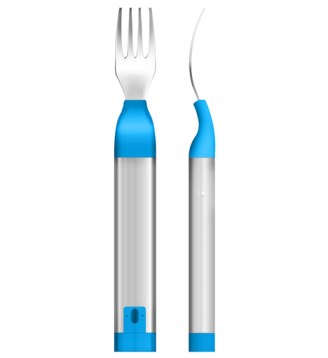
HAPIfork by HAPILabsChewdaism is the theory that chewing food slowly and thoroughly delivers health benefits.
I first encountered this idea while reading AJ Jacobs’ Drop Dead Healthy: One Man’s Humble Quest for Bodily Perfection. It’s one of the healthy ideas he tries out during his year long experiment with improved exercise and nutrition habits.

Chewdaism is obviously a portmanteau (a combination of two words and their meanings) of the words “chew” and “Judaism” though there isn’t any connection that I can see between the idea and Jewish dietary laws.

According to Jacobs, Chewdaism is a kind of food mindfulness. The central tenet of Chewdaism, is that chewing your food 100 times  before swallowing it makes you healthier. Jacobs aimed for just 50 chews and found even that a challenge. He describes a night where his family abandoned him at the table, and left him chewing away into the wee hours.

“They say chewing will cure stomachaches, improve energy, clear the mind, cut down on gas, and strengthen the bones,” Jacobs writes. “Those claims are overblown. But chewing does offer two advantages: You can wring more nutrition out of your food. And more important, chewing makes you thinner, as it forces you to eat more slowly.”

Eating slowly and paying attention to your food, mindful eating as they say, seems obviously to be a good idea. But how to tell if you’re eating slowly enough? Don’t worry. There’s now a fork that monitors your eating speed.

Food tracking which Tracy and I have both blogged about here may turn out to be small potatoes as far the Panopticon goes, given the new food health and nutrition apps and gadgets that are on the way. You can log your steps with a pedometer, of course but new versions of Google on your android phone estimate how far you’ve walked and biked based on the movement of your phone.

“Google Now continues to try and improve our daily lives one little step at a time, and the latest addition seems to be doing just that. Some users are reporting this card now appearing when they open up Google Now, which reports on the distances you walked and cycled in the last couple of months, with a comparison of the two. Pretty nifty, and while not quite at the same level as an actual pedometer, those of you who like to keep active will no doubt find it useful.  How accurate it actually is — especially for the cycling — remains to be seen. Presumably this relies on having your location data, so turning this off should disable it if you’re not too keen.” Read more here, Google slips a walking and cycling tracking card into Google Now.

But back to the smart fork, pictured below. The vibrating fork doesn’t count your chews exactly but it does vibrate if you eat too quickly. Luckily, I don’t eat M and Ms or ice cream with a fork. From the article HapiFork Vibrates if You Eat Too Fast:

“The fork is, well, a fork. But inside it has a capacitive sensor that knows how long it has been since you have taken your last bite. Say you take a bite of that piece of fish, chew it and then go for another bite within 10 seconds. The fork will know that and gently vibrate to tell you have been eating too fast.

The fork also pairs with HapiLab’s iPhone app so you can see how long your meals are, how long you are pausing between bites and even track the number of times you bring the fork to your mouth. The app will also let you track your food intake”

I find myself thinking they could just have it give you mild electric shocks too while they’re at it. Slow mindful eating is good but this seems a bit much monitoring even by my standards. And I like good tracking!

Read more about Chewdaism and about vibrating forks:
Chewdaism: Chew Your Food! on the blog The Jew and the Carrot