fitness

“My whole life is workout time”

I was thinking again today about the contrast between those who make exercise part of their everyday life and those of us who go the gym and do something special and different that we think of as ‘working out.’ I blogged about that here, In praise of everyday movement.

And then I came across this beautiful post The Thousand Cuts Fitness Program from Leo Babauta author of the Zen Habits website. It’s a terrific post, full of great suggestions, and you should read the whole thing. Here’s his conclusion:

“Always be active. It’s not hard, if you do it in tiny bits. You can’t say no to 1 minute, or even just a few seconds. And if you do a thousand of them, you’ll be fit. Fitness is a part of my life now, but it wasn’t when I started. I did it in little bits, without designating a certain time as “workout time”. My whole life is workout time.”

fashion · weight lifting

Why deadlift? I mean, besides for the cool socks

I had a deadlifting breakthrough this past week. When I started CrossFit eight months ago I could deadlift about 40 kg.

Deadlifting made me nervous because as a result of a rather dramatic run in with a wave on a beach in Australia (which ended in the emergency room after being picked up by a huge wave while body surfing and then being carried into shore and going boom, crash into the sand) followed by a cross country ski collision the following year, I have a pretty twitchy lower back. (Where “twitchy” is just absolutely amazing compared to the outrageous amount of pain I was in following these accidents. I had no idea that you could even be in that much pain as a result of sudden impact without having broken anything.)

But last week (on Thurs, Jan 10 to be precise) I hit a new 1 rep max in deadlifting: 95 kgs. I benefited from advice from Crossfit coach Dave Henry (I worked on my breathing, my stance, and my grip) and it helped being cheered on by my training partners. Tracy has blogged about the joys of working out alone but this style of lifting really requires training partners.

What is the deadlift?  You perform a deadlift by lifting a loaded barbell off the ground from a stabilized, bent over position. The deadlift is one of the three canonical powerlifting exercises, along with the squat and the bench press. (I plan to blog later about the distinction between powerlifting and Olympic lifting and about how both of these styles differ from muscle specific body building.)

To get an idea of what’s involved you can read the wiki-how instructions or watch the You Tube video here, Aneta Florczyk, three-time World’s Strongest Woman, deadlifts 250 kg.

Clearly I have room to get stronger. She’s amazing.

But you might be wondering, since this doesn’t look easy or particularly fun, why deadlift? Here’s some answers:

  • “The Deadlift is one of the most ancient, fundamental and just flat out alpha lifts out there. In no other lift do you raise hundreds of pounds of weight off the ground with your bare hands. There’s really something magical about the Deadlift. You just don’t feel the same amount of confidence and joy doing Squats or Bench Pressing as you do while Deadlifting. There’s a reason so many people look forward to Deadlift day.” The Deadlift
  • It’s a whole body exercise working almost all of the major muscle groups (Spinal Erectors, Quads, Glutes, Hamstrings, Lower Back, Middle and Upper Trapezius, Abdominals and Obliques, Lats, Calves) and whole body exercises are great for developing full body strength, especially in the core. Your back will thank you for it.
  • Deadlifting has real functional applications. Picking stuff up off the ground is something we actually do, a lot. “When you perform physical labor, you frequently pick up items off the floor and lift them. Performing deadlifts develops the muscles and the movements that are involved in many forms of physical labor. Also, because deadlifts normally involve lifting heavy weights, they help you develop a strong grip, which is also associated with many physical tasks.” Read more at Livestrong, What Are the Benefits of Deadlifting?
  • “All lifters MUST wear extended knee socks when Deadlifting.”
    That’s what lifting competition rules say. And there is a practical reason, to prevent your shins from getting scraped. But they also come in lots of funky colours and patterns. See pic above and for more, lots more, see here. I know one reader of the blog wrote in to say she didn’t look forward to having to wear them to compete, but I have a soft spot for knee socks. Practical and cute.

menstruation · yoga

Yoga’s ‘Red Tent’: Iyengar yoga and the menstrual practice

I remember back in high school gym class when girls sometimes sat out of virgorous activity, and definitely out of swimming, because it was “that time of the month.”  I can already feel the feminist sense of affront rising as I think back on it. The very idea of relegating girls to the side lines because they were menstruating. Please.

Through my teens and twenties, taking a time-out because of my period made absolutely no sense to me.  Though I did suffer from body ache, tiredness, and unpredictable moods prior to my period each month (yes, I believe in PMS and you can’t convince me otherwise), the minute I started to menstruate I enjoyed a surge of energy (and optimism) that stayed with me through the duration of my period and on into the better part of the month!

So I experienced much resistance, annoyance, and feminist skepticism when, upon attending my first class of Iyengar yoga in January 2000, the instructor said that women should let her know if ever we were menstruating because there was a “special practice” we should follow.  The practice involves mostly restorative poses and completely avoids inversions (such as headstand, shoulder stand, elbow balance, or full- arm balance) and vigorous standing poses.  I’ve also been told that twists are to be avoided.

Geeta Iyengar, daughter BKS Iyengar (founder of the Iyengar method), writes: “During menstruation, if one does inversions the blood flow will be arrested.  Those who tried to do it out of enthusiasm or callousness will have noticed that the flow stops abruptly.  This is certainly not good for health since it may lead to fibroids, cysts, endemetriosis, and cancer, damaging the system.” 

Apparently, it’s not clear that these medical risks of “arresting the blood flow” are borne out by the research.  Dr. Timothy McCall, writing for The Yoga Journal, says that “One study, however, found that retrograde menstruation naturally occurs in 90 percent of women, most of whom never develop endemetriosis. So we do not know for sure if inversions increase retrograde flow or whether the backward flow increases the risk of endemetriosis.”

And of course, yoga comes out of a tradition that pre-dates the modern medical model.  It is not surprising, therefore, that some detractors of any special practices around menstruation believe they are more linked to beliefs about women’s impurity at that time of their cycle. Many religious traditions hold to the view that women ought to be segregated while menstruating–e.g. the red tent.  Assuming most feminists reject the view that menstruating women are impure, this reason for practicing alone instead of with the class won’t go over particularly well with them.

In addition to giving medical explanations, Geeta appeals to the ayurvedic medical model, maintaining that menstrual blood is like any bodily waste–urine, feces, phlegm, mucus–and that all wastes ought to be excreted. The process ought not be hindered because these forms of waste, if retained, “invite diseases.”

Iyengar yoga has special practices for all sorts of things from stress and depression to head aches, back pain, and respiratory issues. Circulation issues?  There are multiple sequences of asanas for that. Lower backache?  They’ve got it covered. Stress, depression, headaches, mental fatigue, insomnia? That is one of the things I really admire and respect about this form of yoga.  The teachers are well-trained enough to be able to modify poses to respond to the special needs of students.

Of course, the ayurvedic tradition is not the same as the Western medical model. The medical explanations for some of the recommendations might seem foreign to those of us raised in the Western medical tradition. But the sequences of asanas do offer some relief for acute issues and, practiced over time, can alleviate (if not cure) some more chronic conditions.

But back to the monthly.  For every one of us who breeze through it, there’s another who suffers with major cramps and heavy flow, headaches, back aches, what have you.

And it doesn’t always stay the same from that first shocking experience to menopause.  From my easy time of it for the first twenty-some years, things started to change for the worse in my mid-thirties.  I felt more tired. On occasion, I might experience cramps.  And just generally, life can get stressful. And that’s around the time I first began to practice yoga.

While I remain skeptical about the medical explanation for refraining from inversions, I have actually come to enjoy the sequence of poses contained in the menstrual practice.  The practice is inward and restful yet energizing at the same time. Some of the poses do wonders for the particular kind of lower back pain I get with my period. And I kind of like that at the studio we are comfortable enough with ourselves and our bodies to say when we need the special practice.

In our class, lots of us opt for this “red tent” when we have our period. I also know that on occasion some of the men, feeling especially tired or exhausted sometimes, have expressed the wish that they could do “the menstrual practice.”  I agree that they should have the option of doing it or something like it.

We all have energy cycles. Not everyone is always up for a vigorous class of standing poses and 5-minutes each of headstand and shoulder stand. Sometimes a quieter, supported sequence is the right choice.

And it’s not the right choice for everyone. My younger self, with her increased energy and light flow, would have balked at the idea of taking a time-out for something as inconsequential as menstruation.  And regardless of what Geeta says, I do think she should be permitted to make that choice without risk of being called “callous.”

As an experienced student, I could stay home those days and do the practice there.  But I usually will attend class anyway for a few reasons. First, the energy of the rest of the class, even if I’m not doing what they are doing, feels good. Second, depending on what’s being taught, sometimes it’s possible to do what the rest of the class is doing, with minor modifications (such as substituting other postures for the inversions). Third, the studio has more equipment, making it easier because all the props are on hand. And finally, if I do have a question about one of the asanas in the sequence, my instructor can help me out. I have learned a lot from my teacher over years of doing the special practice in class from time to time.

In my case, I no longer feel offended at practicing off to the side when I am menstruating. It’s not the same as being side-lined from gym class and forced to do homework. We are given a full alternative practice to do instead. It feels good. It’s a good option and I take it. But it does need to be optional, not mandatory.

athletes · fashion

Prom dress rugby and lingerie football: what’s the difference?

I love prom dress rugby. It makes me grin.

I like rugby more than football. I have a teenage son who plays both sports, rugby at the provincial level and football on his high school team. Over the years of watching both games I’ve developed a pretty strong preference for rugby. Now that might just be my British heritage, combined with a small streak of anti-Americanism, showing but rugby seems to me to be a much more athletic game.

I also love prom dress rugby and hate lingerie football. The picture above is from UCLA’s prom dress rugby match, a fundraiser for breast cancer research. Sorry, no photos of lingerie football here. This is our sandbox. But there’s loads of lingerie football photos everywhere else on the web.

It seems to me there are important differences between the two sports though beyond my simple preference for rugby over football. (Rugby is the sport I would have played if I’d been an athletic child and if rugby for girls had been an option in the 70s and 80s. You can read about my regrets here.) Both prom dress rugby and lingerie football play on the clash between traditional notions of feminine beauty and and the rugged, traditionally masculine nature of the sports involved. It’s the juxtaposition of frills and lace and tackling that makes me grin. Both get humour value from, and take pleasure in, playing the game in non-traditional attire.

But here it seems to me the similarities end.

What are the differences?

  • Most importantly girls and women play rugby in regular uniforms 99% of the time. Prom dress rugby is annual event, a one-off thing, put on in the spirit of fun.
  • Prom dress rugby events are usually fun events put on by the teams as fundraisers for charity and to draw attention to the non-prom dress version of the sport. Of course, the teams themselves belong to amateur or community leagues or more commonly to high school and university athletic associations. Lingerie Football is a for profit sport. That by itself doesn’t make it better or worse but it does make it different.
  • There’s a punky DIY ethos to prom dress rugby. As a friend said, it reminds him of the other tough women of amateur athletics, roller derby girls. Some women play in hideous bridesmaid dresses they’ve been required to wear, others in their own actual prom dresses, and many scout thrift stores for prom dresses–the flouncier the better–worth trashing.

Lingerie Football used to be just an American thing, but like Hooters, it’s made its way North. Toronto even has its own Lingerie Football League team, the Toronto Triumphs.

Arguably as the game goes international, with Canadian and Australian leagues, its tone is changing too. There’s even been a re-branding. In a press release issued last Wednesday the owner and founder of the LFL Mitchell Mortaza announced its new name, the Legends Football League rather than Lingerie. So still the LFL.

“While the Lingerie Football League name has drawn great media attention allowing us to showcase the sport to millions, we have now reached a crossroad of gaining credibility as a sport or continuing to be viewed as a gimmick,” writes Mortaza in the press release.

And the press release promises sports attire rather than lingerie although frankly the performance attire looks like they’ve upgraded to skimpy beach wear instead of bedroom attire. No more garters, no more chokers, and no more strappy lacy things. Think Baywatch, rather than Victoria’s Secrets.

You can watch the press conference and see the new bikinis–I mean football uniforms–here.

I also feel the need to say something about my preferences since feminists are so often misunderstood on this front. I’m a feminist but I’m also a liberal. I’m not in favor of censoring lingerie football or condemning those who enjoy playing or watching. In matters of what attracts you, what makes you grin, I’m an unrepentant liberal. What I’m doing here is explaining why I like prom dress rugby much more than I like lingerie football. It’s an invitation to see the world from my point of view, rather than an argument against yours.

There’s a great photo of prom dress rugby in Sports Illustrated Photos.

I love their tag: “We kid you not. Feast yer peepers on the Next Big Thing. Lingerie football is so, like, yesterday….”

I hope Sports Illustrated is right.
Uncategorized

Philosophy of Sport: Call for Papers

I presented a paper to a meeting of the International Association for the Philosophy of Sport held at the American Philosophical Association this year. Interesting topics, smart people, and lively, enriching conversation. What’s not to like? Here’s the call for papers for the main conference. I’m thinking of submitting something.

2013 IAPS Conference – Call for Papers

The International Association for the Philosophy of Sport invites the submission of abstracts to be considered for presentation at the 41st annual 2013 IAPS meeting. The conference will be held September 4-8, 2013 at California State University Fullerton.

Abstracts are welcome on any area of philosophy of sport, including metaphysics, epistemology, aesthetics, and ethics, and from any theoretical approach, including analytic philosophy and critical theory. While IAPS recognizes, values, and encourages interdisciplinary approaches and methodologies, acceptance is contingent on the philosophical content of the project. Emerging scholars are encouraged to submit works in progress.

A Program Committee of three IAPS peers will review abstracts. Contributors will be notified about the status of their abstracts by May 20, 2013

Proposals for round table and panel discussions, including a tentative list of participants, are also welcome and should follow the same format as paper abstracts.

2013 R. SCOTT KRETCHMAR STUDENT ESSAY AWARD

IAPS is proud to announce the third edition of the “R. Scott Kretchmar Student Essay Award.” Interested undergraduate and graduate students should submit a full paper by June 17, 2013 (in addition to an abstract, see below).

Find out more at http://iaps.net/conference.

GUIDELINES

Abstracts should be 300-500 words long, in English, and must be received by April 1, 2013. Please, follow the following instructions (incomplete proposals will be returned).  Provide:

  1. Name, E-mail, current position, and employer
  2. Title of Program
  3. Key Words (three to five)
  4. Primary Content Area/s (choose no more than 2)


  1. Ethics                                    d.   Epistemology                        g.   Applied
  2. Metaphysics                       e.   Phenomenology                   h.   History
  3. Aesthetics                           f.   Comparative                        i.   Other (explain)

5. Indicate special Audio-Visual requirements (computer & projector will be provided)

The preferred mode of submission is by e-mail.

Please send the abstract blind-review ready as an attachment, preferably in Word, to the Conference Chair at: jilunda@linfield.edu <mailto:jilunda@linfield.edu>

Contributors who lack access to e-mail may send a hard copy instead to the following address:

Jesús Ilundáin-Agurruza
IAPS Conference Chair
           Associate Professor of Philosophy – Linfield College
4786 Brisa del Bosque
Los Alamos, NM (USA)

diets · sports nutrition

Chewdaism and vibrating forks

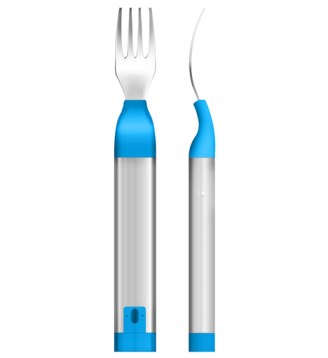
HAPIfork by HAPILabsChewdaism is the theory that chewing food slowly and thoroughly delivers health benefits.
I first encountered this idea while reading AJ Jacobs’ Drop Dead Healthy: One Man’s Humble Quest for Bodily Perfection. It’s one of the healthy ideas he tries out during his year long experiment with improved exercise and nutrition habits.

Chewdaism is obviously a portmanteau (a combination of two words and their meanings) of the words “chew” and “Judaism” though there isn’t any connection that I can see between the idea and Jewish dietary laws.

According to Jacobs, Chewdaism is a kind of food mindfulness. The central tenet of Chewdaism, is that chewing your food 100 times  before swallowing it makes you healthier. Jacobs aimed for just 50 chews and found even that a challenge. He describes a night where his family abandoned him at the table, and left him chewing away into the wee hours.

“They say chewing will cure stomachaches, improve energy, clear the mind, cut down on gas, and strengthen the bones,” Jacobs writes. “Those claims are overblown. But chewing does offer two advantages: You can wring more nutrition out of your food. And more important, chewing makes you thinner, as it forces you to eat more slowly.”

Eating slowly and paying attention to your food, mindful eating as they say, seems obviously to be a good idea. But how to tell if you’re eating slowly enough? Don’t worry. There’s now a fork that monitors your eating speed.

Food tracking which Tracy and I have both blogged about here may turn out to be small potatoes as far the Panopticon goes, given the new food health and nutrition apps and gadgets that are on the way. You can log your steps with a pedometer, of course but new versions of Google on your android phone estimate how far you’ve walked and biked based on the movement of your phone.

“Google Now continues to try and improve our daily lives one little step at a time, and the latest addition seems to be doing just that. Some users are reporting this card now appearing when they open up Google Now, which reports on the distances you walked and cycled in the last couple of months, with a comparison of the two. Pretty nifty, and while not quite at the same level as an actual pedometer, those of you who like to keep active will no doubt find it useful.  How accurate it actually is — especially for the cycling — remains to be seen. Presumably this relies on having your location data, so turning this off should disable it if you’re not too keen.” Read more here, Google slips a walking and cycling tracking card into Google Now.

But back to the smart fork, pictured below. The vibrating fork doesn’t count your chews exactly but it does vibrate if you eat too quickly. Luckily, I don’t eat M and Ms or ice cream with a fork. From the article HapiFork Vibrates if You Eat Too Fast:

“The fork is, well, a fork. But inside it has a capacitive sensor that knows how long it has been since you have taken your last bite. Say you take a bite of that piece of fish, chew it and then go for another bite within 10 seconds. The fork will know that and gently vibrate to tell you have been eating too fast.

The fork also pairs with HapiLab’s iPhone app so you can see how long your meals are, how long you are pausing between bites and even track the number of times you bring the fork to your mouth. The app will also let you track your food intake”

I find myself thinking they could just have it give you mild electric shocks too while they’re at it. Slow mindful eating is good but this seems a bit much monitoring even by my standards. And I like good tracking!

Read more about Chewdaism and about vibrating forks:
Chewdaism: Chew Your Food! on the blog The Jew and the Carrot
body image · fashion · running

Running skirts and sexism

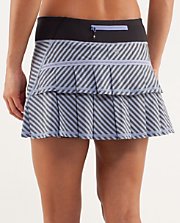
You’ve seen them, I assume. Maybe you even wear them. They’ve entered the mainstream, now available at Mountain Equipment Coop and Lululemon (complete with butt frills for added cuteness). You can browse them here at home of the running skirts where you can buy ruffly black tanks to go over your leopard print skirt.

Cute but I do think they make women look more cheerleader, less serious runner. Arguably I just need to change my view about what serious runners look like. And I do know that cheerleaders can be serious athletes too.

As you can see, I go back and forth on this issue…

In the end, I think they’re a bit much.  But are running skirts sexist?

The philosopher in me cringes at this question. Skirts aren’t moral agents, they aren’t even rules or regulations or states of affairs. They’re things. Can a thing even be sexist, just on its very own?

seems to think so. Here’s what she says in her piece Why Running Skirts Are Sexist And I Would Never Wear One

“While these skirts have been around for at least the last four years, apparently, it’s becoming more of a trend to want to look stylish when we work out (Runner’s World even nicknamed such females as “stunners”. Get it? Stylish runners?) But to me, nothing could be more detesting than trying to look cute when it comes to running. I just couldn’t take myself seriously while donning a frilly skirt all covered with sparkles and shit.

What’s even worse than the skirt itself (and I do get that some women swear these are totally comfortable), is the fact that they can create a sexist atmosphere on the road or at a race–places where women should be seen as athletes, not girly girls trying to look all adorable.”

Now I’m with Dunham on athletic fashion and preferences and I want to cheer her on when she asks, “When did running become all about body image and “hugging the right curves”? Can’t we just put all of that aside when we hit the road and embrace our bodies for what they do versus how they look? We’re not out there for others to gawk at. We’re out there to get shit done. And for me, that’s in a basic pair of black shorts and a tank.” And I’ve written as much here in my post Athletic versus Aesthetic Values in the Pursuit of Fitness.

But I recognize that lots of women do care about looking good while working out. See past posts on padded sports bras, and on body conscious sports performance attire as a barrier to entry for women in sports.

So here are my worries about running skirts:

  • I worry that they contribute to yet more pressure on women to look good at all times–even while running marathons.  Triathlete  Nicole DeBoom even won an Ironman competition in a skirt. Can’t athletic events and training be times for other values in women’s lives? Can we get a break from caring about our appearance? Please.
  • There’s also a note of modesty and body shame about them I don’t quite like. The ad for the tri skirt, in hot pink of course, says “Slide this one over a tri one-piece. It holds your race number and gives you the psychological edge of wearing something cute and carefree.” But it’s an added piece of clothing. Why not just run in your tri one piece? In transition between the swim and the bike, seconds count. No added function, just fashion and a bit of modesty.
  • And there are a few too many sports with skirts for the girls and shorts for the boys. Think about the recent debate about skirts for women’s boxing in the recent Olympics. Think netball in the UK, Australia. and New Zealand. Tennis, of course, too.

But I disagree with Dunham on two key points.

First, I start getting angry when I hear people claim that the skirts play a role in a sexist male behavior at races.  This sounds a bit like blaming men’s predatory behavior in nightclubs on the clothes of the female patrons. My clothes are my responsibility and if I want to have fun with them, I will. Your behavior is your responsibility. Let’s draw some clear lines here.

Second, I would also never judge another person’s choices of running attire. You want to run in an evening gown, a tutu, some fishnets? How about stilettos?  Go for it.

I’m also with the coach quoted in the New York Times article below who says if the skirts get more women out running so much the better.

In the end I’m happy pluralist. You want to run in a skirt? Cool by me.

Take the extra seconds to put it on in a triathlon? Fine.

I’m living by the Underpants Rule as explained here: “The Underpants Rule is simple: everyone is the boss of their own underpants so you get to choose for you and other people get to choose from them and it’s not your job to tell other people what to do.”

More reading:

The One Where I Revisit My Most “Controversial” Post Ever. On the blog Run Angry. Warning: very angry and lots of language your parents might not like

fitness · training

Fitting it all in and scheduling recovery time

I’m a big fan of doing lots of active things and fitting it all in is often a challenge.

The physical activities I love aren’t tasks I need to complete. They don’t feel like work or something awful I need to do to lose weight or get fit. Instead, for me, physical activity is my fun. It really is a great source of joy and pleasure in my life.

During the course of a normal week this winter I am doing Crossfit three times, Aikido three times, and Masters indoor rowing three times. I also play indoor soccer on the weekends and take my dog hiking or dog jogging a couple of times.

Less often I do hot yoga.

And soon I hope to get the cross country skis out.

And I hope to swim once or twice a week to get ready for a triathlon this summer.

And I plan to ride my bike lots, once the weather permits. In the meantime, I’ll take it for a spin once in awhile on the rollers inside.

Other people watch TV or do jigsaw puzzles, I suppose. Often the people who ask, ‘How on earth do you do all that?’ have regular commitments to non active past times I don’t share. No doubt they do more housework and have beautiful gardens. They might even iron shirts and send birthday cards.

But some weeks recovering between all of my different workouts is a challenge. Each one has its own internal rhythm that makes sense. Crossfit work outs are hard and varied but since club members do them together they tend not to trip over one another too much. A hard leg day isn’t followed by another demanding leg workout unless that’s part of some larger evil plan. But the point is, there’s a plan and a structure.

Ditto rowing which has its own rhythm. Ditto Aikido.

But the challenge comes with clashes between them. Monday at Crossfit we got out the rowing machines for a wee bit of competitive erging. Fine, fun. But Tuesday was our monthly 2 km time trial at masters rowing. Advice on doing well says to rest for the two days prior. Hah.

Wednesday morning at Crossfit, still tanked from the 2 km erg test the night before, I did the hardest Crossfit work out I’ve done so far- 100 thrusters and an equally unhappy number of burpees, box jumps, and push ups.

Wednesday’s Aikido class was a lot of fun. New shiny techniques that weren’t part of test review. Yay. But I was in a bit of pain and getting sleepy by the end.

Thursday morning I got my new one rep max weight in dead lifting at Crossfit and Thursday night was lactate threshold stuff at rowing.

I’m kind of amazed I made it through this week. Lots of clashes and conflicts and not enough recovery time in between. I’m glad this only happens once in a awhile. But I’m still smiling.

Today is rest day. Like the koala in the tree, I’ll be resting. Yawn.

chi running · meditation · running

Om…Fitness Practice as Meditation

The first philosophical problem I ever encountered was the mind-body problem. The question: what is the relationship between mind and body? How do they interact with each other when the body is physical and the mind is mental? I returned to this problem many times as a philosophy
student, both in my undergraduate studies and graduate studies.

But it wasn’t until I started to practice meditation that the mind-body connection became meaningful to me as more than just a philosophical puzzle. A meditative approach to my physical activities has had a transformational affect on my experience of them and my performance at them.

I learned to meditate as a graduate student. I picked up a book called The Joy Within: A Beginner’s Guide to Meditation (by Joan Goldstein and Manuela Soares). I wanted to find a way to settle my spinning mind.

At the beginning, two minutes of sitting in silence with my eyesclosed (I wouldn’t yet call it “meditating”) seemed like an eternity. But using the exercises in the book, I eventually developed the capacity to sit for 20-30 minutes. For many years, practicing the techniques outlined in that book, I sat in meditation for 20-30 minutes every day.

Without me trying, the stillness and focus I achieved in meditation started to spill over into other areas of my life. If I was stuck in traffic, for example, it no longer bothered me. Waiting in line for the bank machine became an opportunity to rest instead of an occasion to get irritated. In general, I found myself to be in less of a hurry.

One day, while working out with weights in the gym, I found myself in what can only be described as a “heightened state of consciousness.” I picked up each weight with a sense of quiet, focused purpose. If I was doing bicep curls, I focused my attention on form, on the feeling of the muscle in my upper arm working, on my breathing, in pace with my movements. I felt totally present, as if the world had shrunk down to include only me and the weights I had in my hands. In short, that day (and from then on), approached my weight training with the mind of meditation.

By the end of the workout, I felt completely serene and at peace, much as I did whenever I meditated.

There are many forms of meditation, some associated with religious or spiritual traditions, some not. The most effective meditation course I’ve encountered is on mindfulness meditation. It was developed specifically for Westerners and isolates the practice of meditation from any spiritual or religious context. You learn simply to be present and in silence for extended periods of time (from about 15-20 minutes and longer).

A few years ago, I took such a course — Mindfulness Meditation for Stress Reduction — with Dr. Kate Partridge (London, Ontario). One of the first techniques we learned was the body scan. This is a guided meditation where the guide (either in person or recorded) talks you through a body scan, focusing attention on specific body parts one at a time. In class, Kate always had us engage in mindful movement (yoga lite) before we lay down for the body scan. This physical activity prior to the meditation brought our awareness to the feelings in our bodies.

By the middle of the eight-week course, the body scan exercise became my favorite. It’s the one I think is most useful for athletes. The reason is that it seriously heightened my ability to direct my awareness to very specific parts of my body (e.g. the big toe on my left foot). Doing the body scan brought me back to that experience I had in the gym that day and for many days afterwards. Having gotten away from weight training for some years, I’d forgotten that sense of focus that careful attention to the body can bring. At the end of a complete body scan sequence, I feel completely relaxed and at peace.

Having worked with meditation for so many years, I have taken it into my fitness practice in many different ways. Apart from the experience with the weights — something that I cannot capture when working out with a trainer or a partner, as I am doing these days — I have used swimming, walking, running, and yoga as meditation practices. The capacity to focus on the body that I learned in the mindfulness class is one way of bringing meditation into these activities.

Another common meditation technique is to focus on the breath. This too brings wonderful awareness to physical activity. When I am swimming or running, the combination of focusing on my breath and the rhythm of my stroke or footfalls takes me into a meditative, almost thought-free state where I lose all track of time.

Since I’ve started to practice the technique of chi-running, I have used the body scan to check my form. Keeping my awareness on form in that way also has a meditation affect, bringing the awareness of body into sharp focus in the mind. Approaching running or yoga or swimming or weight training (or anything physically demanding) from the perspective of meditation has the added bonus of making it easier to endure the hard parts (I even use it when I’m undergoing a root canal at the dentist, or getting a new tattoo). One of the gifts of meditation is that it teaches us to stay with difficult feelings instead of fleeing from them. Much like changing my experience of being stuck in traffic or caught in a long line-up, meditation changes my experience of my training when I choose to use it.

I do not always choose to use it. For example, lately I have been experimenting with music while running. It too helps me endure the hard bits, but in a totally different way.

Meditation focuses attention and draws me strongly into the experience, almost as an observer or a witness; in contrast to that, music is more like a distraction. I similarly distract myself when I choose to read on the cross-trainer. No such distraction presents itself when I do laps in the pool. Or when I turn off the music while I’m running (which, for at least part of every run, I do).

Note that, for me, it doesn’t take the place of periods devoted solely to sitting in silent meditation.

For all my experience of the mind-body connection through meditation and physical movement, I have not come any closer to solving the philosophical mind-body problem. But I do know that, for those who are engaged in athletic pursuits, getting the mind focused through meditation can be wonderfully transformational.

Right now I’m enjoying an excellent book, Running with the Mind of Meditation by Sakyong Mipham. And I’m just about ready to turn off that music while I’m running!

[Image credit: JordanD]

body image · clothing · fashion · gender policing

Padded sports bras and nipple phobia

I know this is a controversial issue among women who run because the minute I whine about the problem of padded sports bras, friends leap to their defense. So I see that other people love them. I, however, do not.

I get that tastes can vary. I don’t like padded anything really. (Bike shorts might be the one exception.) And it’s getting more difficult to find non padded bras of any sort in A and B cup sizes. And then the problem continues because all dresses are now made to fit at least a C cup and when they don’t fit, the answer is the padded bra.

So I get that people like them, and like them they must, since it seems most sports bras now come with padding.

The complaints against the non padded kind are of two sorts, roughly related to breast presentation and size, on the one hand, and nipple visibility on the other.

One woman writes into the forum on bras at Runners World and describes the two flaws with non padded bras saying that they, “1. Squash my breasts so that my breasts are even smaller or so that my breasts merge into one small horizontal lump 2. Exhibit my nipple shape for all to see. I might as well paint on two black circles and arrow signs on my chest with the words “and HERE are my NIPPLES!” when it’s cold outside.”

Here’s one happy padded running bra customer: “While I’d like to say that I went searching for a padded sports bra to get extra coverage, the truth of the matter is when I work out, I’d like to look more like a woman and less like a 12-year- old boy.” (Read more Padded Sports Bra Reviews – Best Padded Sports Bras – Good Housekeeping)

I think I’d be happy to look like a 12 year old boy when I’m running and mostly I don’t think too much about my workout appearance. I like to be sleek and have as little extra material material as possible.

For advice on choosing a good padded sports bra you could do worse than read this advice from the folks at Livestrong.

So let me be very specific here, what I loathe isn’t the existence of padded sports bras, it’s their ubiquity. It’s their domination of the sports bra market. Try finding a non padded sports bra in my size. Oh, and it shouldn’t have an underwire either. Good luck with that and call me when you’ve succeeded.

A friend who works in television suggested a reality tv show, Bra Hunter. They could help me and help the women looking for brown bras, since ‘flesh’ colored bras are decidedly beige. You can read about the Brown Bra Scavenger Hunt here, Not MY Nude — Why I Started the Brown Bra Scavenger Hunt.

Looking around for some guidance and discussion about the whys of the rise in popularity of the padded bra, it turns out the real issue isn’t keeping up with breast-implanted Joneses. Instead, it’s paranoia about nipple visibility.

Nipples are now what VPL, or visible panty lines, used to be to my generation, before thong underwear came into vogue. In The Tyranny of the T-Shirt Bra: Do You Live in Fear of Your Own Nipples? Bonnie Downing writes for the Hairpin:

“Foamy, modern, molded bras have taken over more than their share of the bra market. They seem to insist that if we decline silicone breasts, we should at least have the courtesy to hide our actual breasts under smooth, springy, vaguely breast-like shells….

They continue to encroach, creeping in under new names all the time: Contour Bras for a “sculpted silhouette”; Foam-Lined Bras, defined on the Bare Necessities as the go-to choice for “protection against nipple show through”; Seamless Bras “virtually invisible!” (Like your nipples.) T-shirt Bras for an “ultra-smooth look” (you know by now what that means). Microfiber Bras! They’re all the same bras, really. OneHanesPlace adds Laminated Bras, which they admit are “a lot like Molded-Cup Bras,” which “mimic your body’s contours because the fabric is molded on a cone-shaped form. So, they fit like a second skin… and work with your shape, not against it.””

So I gather what I’m seeing are t-shirt bras, the running version.

Yes, women athletes have nipples–we’re not like Barbie–and when we’re cold or pumped with adrenaline from physical activity, they’re sometimes visible.  Deal with it please.

And when I find a nice non-padded running bra in my size, I think I’ll buy a half dozen and be done with it!