eating · food · nutrition

Make-Ahead Lunch Meal Prep: Boxed Lunch

Continuing with the discussion of make-ahead meal preparations, today I thought I’d tackle lunch. Christine nudged me this way during my previous post on oatmeal, and I admit, I started with oatmeal because it was easier to describe and to write about! The trouble with lunch is all the pieces you need to have ready in advance in order to make the prep painless. Over the years, I’ve developed routines to make this pretty easy for me, but it took a while, and many Sundays spent too long in the kitchen, to develop the routine. However, I kept plugging away until it became habitual, and now I spend less than an hour prepping lunches for the week (sometimes a lot less), which works out to under 10 minutes per meal.

So, I am going to write this post with two parts, “Saturday” is going to be the prep that needs to happen before you want to make your meals for the week. This doesn’t have to be Saturday, of course, but at least a day before you need those ingredients. Judicious use of your freezer space can allow you to do this part weeks in advance, and as you develop a meal-prep routine, I strongly suggest you do it that way. “Sunday” is your meal-prep day. I always make enough to eat one of them that day, so then lunch planning is done.

A final note before I get to the recipes–you are going to have to experiment with how much variety you need in the week and from week to week. I do not require much variety to be satisfied with my breakfast and lunches. When I was single, I also ate the same dinner for four or five nights in a row. However, I know many people would be very disappointed in their meals to have so much sameness day to day. You will have to adjust these plans to meet your meal-variety needs, but be aware that the more variety you decide to require, the more time the preparations will take. Easy switches like a different serving of fruit or vegetable may be enough to give you a hit of variation without throwing off the whole week of preparations.

Saturday
Prep your protein. My go-to is boneless skinless chicken breasts and/or thighs cooked in the slow-cooker on low heat for many hours. You can also do these in a low oven 20-30 minutes on a baking pan. I usually fill my slow-cooker to the top and leave it on medium for the day. This gives me enough chicken to last a month or so. Whatever I don’t need this week will be chopped up, placed on a cookie sheet and frozen individually. Then, once it’s frozen, I put it in plastic zipper bags to be pulled out as needed for the next month. You could sub in cooked ground or roasted turkey easily enough. I do not eat red meat, but I’d guess you could do something similar with beef. If you want fish or seafoods, I would recommend you keep them frozen until a day before you want to eat them to avoid spoilage.

Photo description: A cookie sheet with diced, cooked chicken breasts. They have been frozen and are ready to use or store in the freezer.

Prep your grains/beans. Whenever I cook rice, barley, dried beans, lentils, quinoa, etc. for dinner, I make extra. Then I freeze the leftovers in convenient amounts (3 cups, if I’m going to add them to lunches.) Thaw just before you do your prep for the week. I often use canned beans to save time. Just drain and rinse in a colander before using. You can also find cooked grains and beans in the freezer section of the grocery store, and they work well, too.

Consider prepping vegetables. I “cheat” and buy frozen veggies these days, but when I had fewer financial resources and more time, I would buy fresh vegetables, chop and steam them to have ready for lunches all week.

Sunday
Basic “boxed” lunch
This is my go-to lunch. To make it interesting week in and week out, I change which variation of flavorings I use. This is the starting place.

  1. Put out 6 reusable 4 cup containers with good lids.
  2. In each container begin with:
    1 ½ cups chopped, cooked vegetables (I like broccoli, carrots, cauliflower, summer squash, and/or green beans, it’s ok if they’re still frozen)
    4 oz chopped chicken, turkey, or protein of your choice (also fine if frozen)
    ½ cup beans and/or brown rice, quinoa, or other cooked grain (more if you’re vegetarian)

Teriyaki boxed lunch variation
Add the following to each container of the the basic boxed lunch:
Use black beans or small, mild-flavored beans like azuki or black-eyed peas
⅓ 8oz can of sliced water chestnuts, drained (about ¼ cup)
2 Tbs prepared teriyaki sauce (I use Kikkoman Takumi collection original)
1 tsp toasted sesame oil
2-3 tbs cashews
Suggested fruit pairing: tangerines, oranges and/or pineapple

Tex-Mex boxed lunch variation
Use pinto and/or black beans and rice.
Either use a prepared salsa or make a spicy tomato sauce by stirring together:
2-3 cups tomato sauce
2 tsp cumin
2 tsp chili powder
hot pepper flakes to taste

Put ¼ to ½ cup sauce/salsa over the veggies.
Sprinkle with 1 tbs. pumpkin seeds.
Add 1 oz grated monterey jack or pepper jack cheese on top.
Suggested fruit pairing: diced melon and/or papaya (with a squeeze of lime!)

Italian boxed lunch variation
Use garbanzo or white beans.
Either use a prepared marinara sauce or make one by stirring together:
2-3 cups tomato sauce
2 tsp dried basil and oregano
1 tsp dried thyme
1 minced garlic clove

Put ¼ to ½ cup sauce over the veggies.
Sprinkle with 1 oz grated mozzarella cheese and 1-2 tbs. parmesan.
Suggested fruit pairing: grapes or an orange

For each of these, when you’re ready to eat, simply remove the lid and heat them up until hot, 3-4 minutes in the microwave. This is what I’m eating these days, although I’ve gone through periods when I was eating soups, stews or big salads instead. I’d be happy to share some of those recipes and ideas in future posts if folks are interested, so let me know and keep an eye out for them!

Do you have a go-to lunch that you like to make ahead for the week? Please comment below, and do let me know if you try any of these and what you think!

Marjorie Hundtoft is a middle school science and health teacher. She can be found eating out of reusable containers, picking up heavy things, and putting them back down again in Portland, Oregon. You can now read her at Progressive-Strength.com .

Photo description: What you can see in my refrigerator right now–containers of “teriyaki boxed lunch,” scrambled eggs, tangerines, and portions of greek yogurt with chopped apples.
eating · eating disorders · fitness · food · habits · Happy New Year! · holidays · new year's resolutions · overeating

Still Recovering From Holiday Overeating? Here’s what I’m doing next.

CW: Discusses disordered eating habits and negative self-talk.

Continuing with my normal life.

No, seriously. The moment the celebrations are over and I feel like, “hmm, maybe it’s time to eat fewer cookies, get a little more sleep and find that gym membership card again,” then I’ll just take one thing and do what is normal for me. I’m not going to ramp up, push hard, or go strong. It is not time to atone, make up for, or negate.

I’m just going to let myself fall back naturally into my old routines. It might take a few days, or a week, or whatever, but I’ll find them again. The key is to not spend my time wallowing in guilt or blaming myself in anger. The more emotion I put behind the transition, the harder it is.

I know because I’ve been there before, and not just at the holidays. You see, for nearly as far back as I can remember, I’ve dealt with compulsive overeating. I stole food and hid it in my room as a little girl. As a teen, I would spend my allowance on donuts and pastries that I would eat while walking home from school. I managed my emotions, my sense of loneliness and isolation, depression, traumatic experiences and their aftermaths with food.

I have spent the better part of the last decade extricating myself from these patterns, and while I can’t say I will never overeat unintentionally again, I can say it occurs less and less frequently.

One of the most powerful tools that helped me was to learn to remove emotions from my observations of these patterns and to switch my internal talk to neutral observations. “Why was I so stupid and ate all that cake again?!” has become “I have eaten more cake than I planned on eating.”

I don’t immediately go into damage control mode. I don’t promise to eat only a salad for dinner that night or swear off cake for the rest of the week. I don’t immediately go out for a run or plan a brutal lifting session. I try to just notice it and move on.

I think the noticing is important, although I haven’t read this anywhere else. My friends who are chronic dieters often seem to do a “I’m eating whatever I want, I don’t care” move and then use that as a way to “ignore” what they are overeating. From what I’ve observed on the outside, this seems to backfire as shame and guilt in the long run. It looks like the act of pretending one doesn’t care builds up increased levels of emotional connection to choices rather than diminishing them.

So, the first step isn’t to pretend I am neutral, but to acknowledge the feelings and the choices and consciously rewrite the observation into a neutral statement. “I care about how much I’m eating and I’m going to eat this cookie anyway” is a much more powerful sentiment than trying to convince myself that I don’t care when I actually do.

Then, when I’m ready to make a different choice–the party is over, I’m not out to brunch with friends, I’m back from vacation, and it’s just another meal–I do whatever I would normally do. The only exception is if I really, truly, just don’t feel like it. If my “usual” is dessert after lunch and dinner, but today I’d rather start with a piece of fruit at lunch, then I eat it. But I have to be honest with myself–it doesn’t work to try to convince myself that I should only want a piece of fruit. And this goes for the other direction as well–if my “usual” is a piece of fruit and I really want dessert, I have to be honest with myself about that, too. Again, the act of trying to convince myself creates too high of stakes and too much emotion. So, I have a serving of what I really want while practicing being neutral, and then I get back to my normal routine.

This works with other habits and routines I’m trying to get back to, too. Stopped going to the gym? Letting myself stay up too late? Need to call my parents more often? I observe it. And then allow myself to do one thing that I used to do that helped me maintain that behavior in the past. I only commit to trying ONE thing. It may be as small as putting it on my calendar or packing my gym bag. I break the inertia, do that one thing and observe it without judgement. And then try again.

And before too long, it will be just another day.

Marjorie Hundtoft is a middle school science and health teacher. She can be found practicing neutral observations, picking up heavy things, and putting them back down again in Portland, Oregon. You can now read her at Progressive-Strength.com .

food · habits · nutrition · planning

Make-Ahead Breakfast Meal Prep–Oatmeal!

Catherine recently mentioned her desire to do more meal prep. I love to prep ahead my meals for the week. I have a Sunday routine in which I make enough breakfasts and lunches to last me through Friday. These little containers give me peace of mind–reassurance that I will be well-fed without a hassle all week. If dinner has to be on the fly, that’s somehow more manageable than breakfast or lunch. For me, the hardest part of making meal prep a routine was consistently coming up with the plan before I went to the grocery store on Saturday. If I forgot to think about the entire meal–forgot a serving of fruit, or didn’t think to check if I had enough eggs–then the meal prep would be off for a whole week. So, in the spirit of helping others prep, I thought I’d share some of my recipes and shortcuts.

Today, Oatmeal.

I eat oatmeal at least 6 days a week, sometimes twice a day. Here are some of my favorite ways to prepare it in advance. I make it a complete meal with coffee, a couple eggs, some plain Greek yogurt and fruit, if there isn’t some added to the oats already.

Easiest Apple Oats.
This is my go-to oatmeal. It is endlessly variable, depending on what sounds good to me and what fruit is seasonal at the time. Apples are the easiest, since they stay pleasant all week, whereas pears, bananas, peaches and such can eventually become brown and soggy. Canned or dried fruit are options as well, of course.

1. Set out as many reusable containers with tight lids* as meals you are preparing ahead (I make 6 at a time, eating one the morning I prep).
In each container, place the following:
½ cup old-fashioned oats
¾ cup water
a sprinkle of cinnamon
1 tbs coarsely chopped nuts
1 tbs raisins, dried cranberries, or cherries
½ a chopped tart apple

2. Store covered in the refrigerator. When you are ready to serve the oats, remove the lid and cook in the microwave 2 minutes, or until the oats have soaked up the liquid.

3. Serve with a little brown sugar, milk/nondairy milk, or Greek yogurt on top.

Slow-cooker Steel-cut oats
These are just as easy as the last recipe, you just cook them ahead. Using the slow-cooker allows you to avoid the regular stirring and management that cooking steel-cut oats on the stove-top requires. These cook in about 30 minutes on the stove, if you want them faster, but be aware that they can stick and burn if not regularly stirred.

1. In your slow-cooker, place the following:
1 ½ cups steel-cut oats
6 cups water
Tsp or so of cinnamon and/or anise seeds

2. Cook on low heat overnight, or at least 8 hours, until most of the liquid is absorbed and the oats are chewy.

3. If you want to add fruit, add it now after it has cooked. Otherwise, it breaks down over the long cooking time and becomes unpleasant.
Optional add-ins to stir in now:
6 Tbs raisins or other dried fruit, chopped if appropriate
6 Tbs chopped walnuts or other unsalted nuts
3 chopped apples

4. Divide into 6 containers, cover and refrigerate until needed.

5. Serve warm by reheating in the microwave when you’re ready to enjoy it. This will thicken up considerably when it cools, so I like to serve it with milk (or actually soymilk, since I’m lactose intolerant) and a bit of butter and brown sugar.

Muesli
I like this variation in the warmer months or when I need to pack breakfast somewhere where the extra liquid would be unwelcome. (Note that TSA might give you a side eye on this one, so I don’t recommend it for breakfast on a morning flight in the US.) Multiply the basic recipe by as many servings as you want in advance.

1. Using a wide rubber spatula, stir together in a large bowl:
½ cup old-fashioned or quick oats
¾ cup plain Greek yogurt
½ tsp vanilla (cheap fake vanilla is fine for this)
½ coarsely chopped apple
1 tbs chopped nuts
dash cinnamon
optional but recommended:
½ chopped orange or a whole tangerine
some grated citrus zest

2. Press the mixture into a container that seals well and store up to 5 days. Optional but delicious–drizzle with a little honey before enjoying!

Your turn: do you have a favorite way to prep oatmeal in advance? I’d love to hear about it! And do let me know if you give any of these a try and how it goes!

*Oh, as a side note, any reusable container with a good lid will do for these. We have switched over nearly entirely to a set of Pyrex storage bowls in the last year. The lids are pretty tight (sometimes there’s a little liquid loss in transit, if I’m packing it to work in the morning), and the bowls are nice to reuse since they don’t take on flavors like plastic can. I caution you to not heat the lids, if you have these, though. They do not hold up well in the heat.

Marjorie Hundtoft is a middle school science and health teacher. She can be found eating oatmeal, picking up heavy things and putting them back down again in Portland, Oregon. You can now read her at Progressive-Strength.com .

eating · fat · food · health

Trigger Warning: Pseudoscience

CW: Discusses diets, food, BMI and commonly held misconceptions. If you like to believe everything you think is 100% correct, are prone to all-or-nothing thinking, or want your beliefs reinforced on all things health and fitness, you may not want to read this post.

I think I’ve reached the point that I need a pseudoscience trigger warning. I am finding myself angry to the point of nearly yelling whenever someone mentions their “love languages” like it’s anything more than a convenient construct. The other day, I wanted to ram into the minivan ahead of me on the freeway with their anti-vaxxer bumper sticker. If I have to listen to one more Republican politician espouse a conspiracy theory as if it were the truth, I might remove my car radio and throw it out the window.

I am a science teacher, and trained to think like a scientist. I believe in facts and research and data. And we live in a world in which science is discussed with such ignorance that the presence of a single study is enough to sway/reinforce the incorrect beliefs of people. No one discusses the preponderance of the data. No one is asking for the big picture data over time. And this lack of scientific literacy is hurting people.

I live in a city that doesn’t fluoridate its water because a majority of the voting public considers it unsafe. These voters aren’t thinking about the consequences for the uninsured and underinsured children who don’t receive regular dental care and benefit measurably from fluoride treatments. Instead, there’s a mindset that “impurities” or “chemicals” are “toxins” and therefore things we should all want to avoid. This is pseudoscience.

The debate about organic produce focuses on these fears of “toxins” as well, instead on the very real dangers of overproduction, potential lack of sustainability or concerns for workers’ rights. And don’t get me started on the fear of GMOs. I am concerned about GMOs, but not for any personal health reasons–rather, I don’t like the idea that we are reinforcing monocultures, cloned products with no biodiversity designed to be sprayed with levels of chemicals potentially unsafe from the workers doing the work and the communities that live downwind. On the other hand, if we can design GMO versions of staple foods that reduces environmental degradation while providing sufficient nourishment for the food insecure nations of the world, who am I to say they can’t have it? There is NO evidence that these products are dangerous to human health once they reach the dinner table, and yet that is the only discussion we are hearing. We can’t have a meaningful debate about the real costs and benefits of these products when we aren’t even agreeing upon the basic facts.

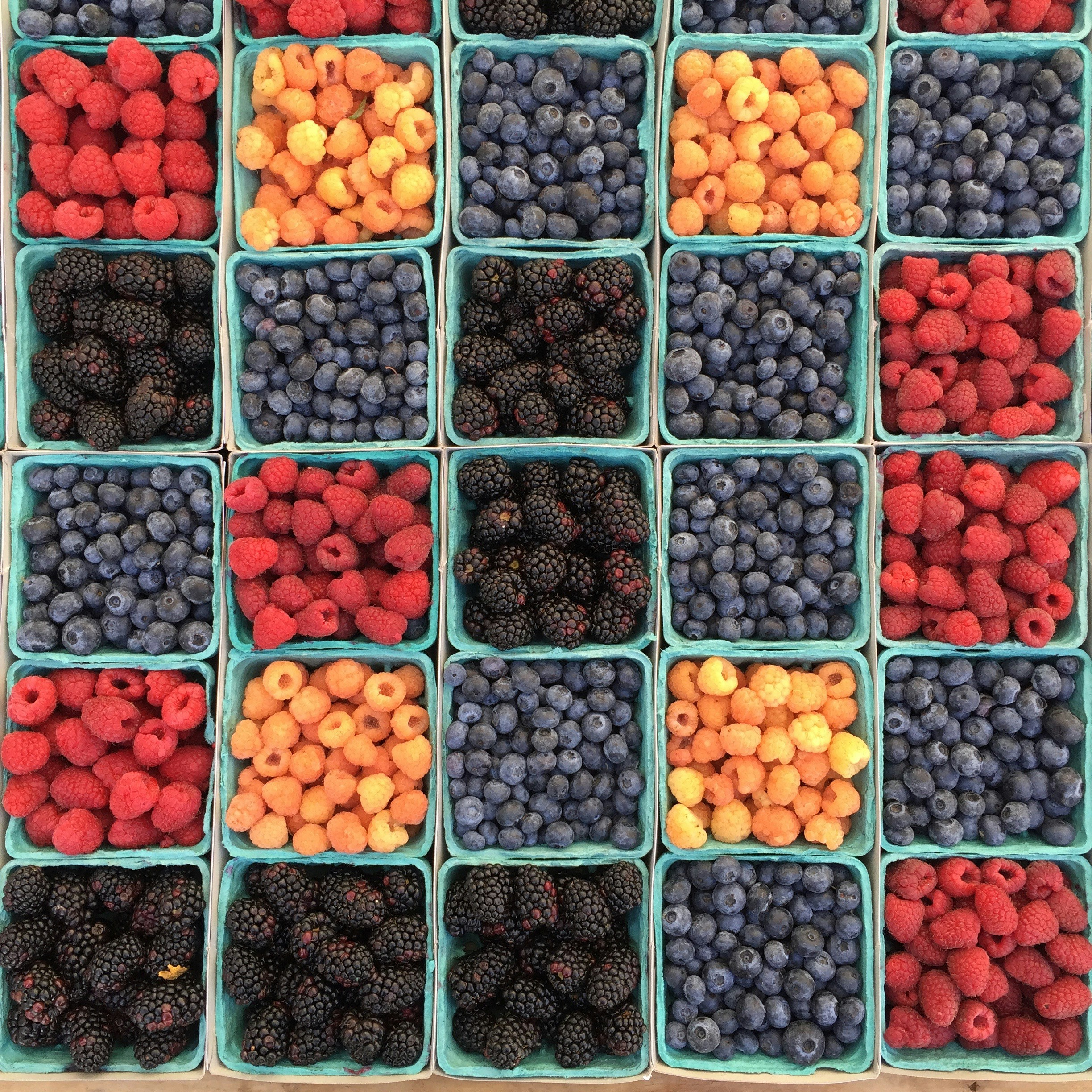
Image description: Pints of beautiful blackberries, raspberries, blueberries and salmon berries.

Want to get pissed off at some pseudoscience? Watch pretty much any of the food “documentaries” created since Supersize Me became a blockbuster. There you can learn the half-truths behind the values of juicing, eliminating sugar, paleo diets, vegan diets, Twinkie diets, McDonalds diets, and so much more. Look for the warning signs of pseudoscience as you go–are they using anecdotal data and individuals while avoiding comparing larger sample sizes? Do they ignore the facts that run counter to their arguments? Do they set up false dichotomies requiring an all-or-nothing comparison–the worst of the standard diet against the best/purest of the proposed diet? If so, consider this your pseudoscience trigger warning.

Health, diet and fitness culture is rife with this sort of pseudoscience. Every named diet ever formulated has some sort of “data” to argue that it is the best way to make you healthier, happier, and fitter. Every single one of them cherry-picks the data, jumps to conclusions outside the purview of the research, and uses logical fallacies like false dichotomies to “prove” their superiority. Their goal is to sell their books, products, and edible non-food meal replacement products, not to inform you. And every time a friend or family member of mine begins to starve themselves in a new way or to take outrageously expensive supplements, it pisses me off. I’m not angry at them, I’m angry at the liars shilling these products and false promises.

I’m angry at the diet and fitness industry for convincing so many people that it is exclusively their own fault for having a larger body and that the solutions are simple. I’m angry that people believe they need to go “on a diet” in order to live a healthier life in a body that more closely meets their needs. I’m angry at the lie that we should exercise to control our body size and the willful ignorance that avoids discussing the dozens of other actually good reasons for regular exercise, regardless of our body size. Commercials, paid spokespeople, and poorly written news reports that ignore this bigger picture really do deserve a pseudoscience trigger warning.

But of course, it is the nature of pseudoscience to not identify itself as such. It would lose some of its intended power if it had to remind you first that what they were about to say has limited evidence to support it.

But wouldn’t it be wonderful if these warnings existed? Imagine a world in which news broadcasters interviewing the latest fitness guru had to first announce, “Trigger warning, everything we’re about to say has limited or questionable data to support it.” What if dietary supplements came with a bold statement that said “we cannot prove that anything will happen when you take this pill, and maybe it will make things worse.” What if any time your friend/family member/colleague began to espouse how great it is to go Keto they found themselves first saying “there is absolutely no evidence that this is going to work for me long term, but I’m going to try it anyway.”

What if your doctor had to say, “Now, there’s mixed evidence that BMI has a causal relationship to other risk factors, it is only accurate as a measure of body fat percentage for about 60% of the population, and it’s commonly used to reinforce anti-fat stereotypes. Given all that, I’d like to discuss how much you weigh.”

Think of how much more empowered we would be if these warnings were expected and required. I am so sick and tired of hearing bullshit being espoused as fact. We live in an era in which genuine experts are distrusted and suspected of ulterior motives, in which confirmation bias is treated as an acceptable alternative to hard truths. People rely upon the news, doctors, experts and friends and family to help them sort through the data to make the best decisions for themselves and their health. We can’t make good decisions with bad data, and until we find another way to sort through the pseudoscience, I would appreciate a trigger warning.

Marjorie Hundtoft is a middle school science and health teacher. She can be found yelling at her car radio during long commutes, picking up heavy things and putting them back down again in Portland, Oregon. You can now read her at Progressive-Strength.com .
fitness · strength training · weight lifting

Breasts and the Myth of Perfect Form

There’s a lot of unnecessary anxiety out there regarding weightlifting and “perfect form.” While technique may be important to avoid injury and to maximize the benefits of a lift, I would encourage you to consider letting go of this particular worry.

There is no perfect form. There are a plurality of good forms, and they are dependent on the micro (and macro) differences in each of our unique physiologies. To illustrate this point, I would like you to consider breasts.

The presence, shape and size of breasts can change the pathway of motion for innumerable lifts, although I feel that they are most noticeable in how they impact back exercises. Take a seated, cable row–you are sitting on a bench (or perhaps kneeling on the floor), and your hands are extended straight out in front of you, gripping a cable attachment. If the distance between your hands is shorter than the width of your shoulders, it is possible for your upper arms to come in contact with your breasts. If your breasts are smaller and closer together, you may only notice a slight brushing against the inner arm; however, the larger and further out your breasts spread beyond your ribcage, the more likely you will find yourself adjusting your hand position to reduce mashing your breasts as you pull the cable towards your body. Or, another option is to adjust the pathway of your elbows so that they open “out,” away from your body instead of straight back. This is less desirable, but may be necessary, especially if you have a larger upper body in general. The “perfect” form for you is the one you can achieve consistently while targeting the desired muscles of your back and without causing undue breast squishing! If your breasts are larger and getting in the way, I would suggest a wider grip on the cable row so that you can pull back as straight as possible, aiming for a pathway of motion that allows you to squeeze your back muscles tightly without straining your elbows.

Some other examples of breasts changing a lift:
Anything “chest supported”: These exercises are performed lying forward on an incline bench. Regardless of the size of your chest, you will have to guide your elbows around the bench as you pull up. Find a cushioned bench, and pull dumbbells wide enough to get around squished breast tissue. For barbell variations, you may need to hold your hands wider than lifters without breasts.

Dumbbell chest press: Bench pressing with dumbbells gives you more freedom of movement than barbell. As a result, it is great for shoulders, elbows and other cranky joints. If your breasts extend beyond your ribcage when you are lying down, however, you will need to also move dumbbell weights a little further from your body than someone who does not have that physiology. I use a hybrid grip for these, with my hands about 45 degrees from my chest (rather than pronated, the more traditional hand position with palms facing the direction of my toes). This gives me more room (and therefore more power) to push up and also helps me avoid smooshing my breasts on the release downwards again.

Bicep curls: Two possible workarounds for these that I like–the first is to use dumbbells or single-hand grip on a cable and angle the lift slightly to the side of the body instead of to the front. The second option is to hinge your hips forward from a standing position, so that when the weight (dumbbells or barbell) is pulled all the way up, there’s about 30 degrees space between your upper arm and your chest.

These adjustments sometimes vary from what folks will claim is perfect form. However, chances are very good that the folks who make these claims are not people who have had to problem-solve lifting around one’s breasts. These variations do allow more diverse body shapes to access lifting and to make it a more comfortable experience. They also are only specific to one physiological difference–breasts!

Again, I want to stress that there is no one perfect form. I am using breasts as an exemplar of how each of our unique bodies will do lifts with good form differently, but they are hardly the only physiological difference that matters. The width and angle of your hips changes how you lift. The ratio of arm length to leg length changes how you lift. The proportion of your upper body strength to your lower body strength changes how you lift. ALL of these differences will lead to differences in your form, and none of them make you wrong. The goal is to lift in a way that does not cause you harm, does not cause you lasting pain, and helps you target and train the muscles that you are aiming to improve. Do these things, and you are using perfect form, for you!

I don’t have a good video of someone negotiating a great lift around their breasts (sorry!), but here’s one for your consideration. Watch Lamar Gant deadlift and tell me he isn’t using perfect (for him) form!

Marjorie Hundtoft is a middle school science and health teacher. She can be found perfectly imperfectly picking up heavy things and putting them down again in Portland, OR. You can now read her at Progressive-Strength.com .

fitness · strength training · weight lifting

This is My “Why”

“Why do you do that?”

The tone of incredulity was hard to miss. My mother, who I love very much and is, and has always been, very different from me, clearly could not fathom why I would want to learn to lift heavier weights. You see, I’ve recently hired a personal trainer to teach me the big barbell lifts, and while I am thrilled about it, my mother is clearly concerned.

I don’t share her fears. And I LOVE lifting weights. Why?

Lifting gives me a sense of mastery of a skill–a skill that few have pursued with seriousness, male or female, but especially us females. We aren’t encouraged, of course, but there is something wonderful about feeling really and truly capable at lifting heavy things. Or perhaps in part, it is because it is not encouraged? There is definitely something subversive about the pursuit of strength for a woman–a willingness to stand out, to stand up proud, and to possibly pursue taking up MORE space in a world that encourages us to achieve endless smallness instead.

Lifting gives me a space to focus purely upon myself and my own goals. I do it for myself, because I like it, and I enjoy the results. I know not everyone here supports aesthetic goals associated with exercise, but I admit, I like the definition in my arms when I flex. I like the subtle ripple of muscles on my back when I move. I celebrate these changes in my physique as evidence that my body, at least to some extent, is something I can mold to my desires. I grew up bigger and softer than most of my peers, and I falsely believed it was my fate to remain that way. Redefining my goals with lifting has shown me that I have more control than that over my appearance–they aren’t always dramatic these changes, and I’ll likely never look like a fitness model, but they are real, and measurable proof that I can have some impact on my appearance, to look more on the outside like the strong person I know I am on the inside. Lifting helps my appearance more closely mirror an authentic sense of myself.

Truly though, the goal for me is so much more than the pursuit of an aesthetic; I enjoy feeling strong. Feeling and truly being strong helps me feel safe and in control. I like how it allows me to move with confidence through the world, literally changing how I show up. Because of my lifting, I hold my shoulders and head up a bit higher, walk a bit more confidently, move with more self-assurance. Lifting also reduces my pain so I move a bit less like the “old lady” I can feel like some days, and it gives me agency to improve upon challenges that otherwise I’d have no venue to improve. I am strong enough to dig my own holes, open my own jars, and assemble my own Ikea cupboards. Lifting gives me the confidence to do these physical tasks and to believe I can be competent at them.

Lifting builds my mental toughness. Learning that what I thought were my limits were in fact surmountable feats has helped me to challenge other assumptions I’ve had about myself. Pushing the boundaries of strength in a climate that does not encourage me to do so has helped me to ignore naysayers who would try to hold me back in other aspects of my life. It is easier (although still not always easy) for me to speak up when I have had many opportunities to stand up for my space at the gym. It is easier for me to speak my truth when I have had to listen to myself and acknowledge my truth as an athlete.

Lifting challenges my own belief that I am a sickly person, who will always suffer poor health, bad luck, and the chronic pain that comes with it. I can be proactive in this way, when so much of my health is so out of my control. In this one element of my life, I can choose to increase the odds in my favor. It won’t grow back missing organs or wipe away the scars of surgeries. It doesn’t allow me to quit all my medications, although maybe it helps me manage with lower doses. It doesn’t end all my pain, although maybe it reduces the severity. It doesn’t mean I can suddenly ignore troublesome symptoms, although it may help me notice important changes sooner. I am not a genuinely healthy person, but lifting certainly makes me healthier.

Lifting for me is a celebration of life and abundance. I recognize my ability to lift is a gift and a privilege. Not everyone can do what I am doing. I have not always been able to do what I am doing. I may, some day, no longer get to do what I am doing today. I am so grateful for this time, for this opportunity to push myself and to have the health and strength and resources to lift like I do, as often as I get to do it. I love lifting weights because it brings me joy and gratitude for this moment. That is why I do it.

Now it’s your turn–do you have a powerful reason why you move the way you do? Please share your thoughts below!

Marjorie Hundtoft is a middle school science and health teacher. She can be found joyfully picking up heavy things and putting them back down again in Portland, Oregon. You can now read her at Progressive-Strength.com .

Image description: A woman in black and purple workout clothes, kneeling on a bench while rowing with a kettle bell.
feminism · fitness · strength training · weight lifting

Is Grunting While I Lift Contributing to Patriarchy?

Over the last couple months, I have returned to the gym after nearly 2 months away. I have been healing from a hysterectomy, and it is time to get back into my pre-surgical routines. In addition to being “newly back,” I am also trying out a new gym. I had problems with the culture of my last gym, and we moved a couple weeks prior to my hysterectomy, so I had an easy excuse to break things off and try some place new.

The new gym is mostly unmonitored, so the ownership uses a board to communicate policies, recent equipment repairs and such. And, somewhat surprisingly to me, the members seem to feel free to add their own two cents.

The board recently stated the reminder from the male gym owner, “Fellow Men, Please be aware of the energetic physical space we take up. For example, grunts are for homes, not gyms.”

What followed were comments from the community, including, “PATRIARCHY = men get to take up more space than other genders. . . stop ignoring power dynamics,” alongside requests that someone stop erasing the word “men” and changing it to “human,” and a note from the gym owner that “if you dislike the word ‘man’ you are likely the reason it was written in the first place.”

Image description: A portion of the whiteboard at my gym. It reads “Fellow men: please be aware of the energetic physical space we take up. For example, grunts are for homes, not gyms. Wear shoes at all times. Yes, please. Please leave laptop on Pandora only,” and more.

And all this back and forth leaves me wondering, IS grunting contributing to the patriarchy?

There are definitely guys who take up more “energetic physical space” than I would like them to do. These men grunt, growl or yelp with every repetition, from the first set to the last. Often, they are also whipping from one exercise to the next in a manner that feels frenetic to me. My totally judgmental opinion of these guys is that they are deeply insecure, and they are making up for their lack of confidence as a lifter by supplementing their strength with vocalizations and momentum (swinging a dumbbell up rather than doing a strict lift, for example).

On the other hand, I, too, sometimes grunt during a difficult session! Especially now, as I’m taking extra care to ensure that I’m not holding my breath while I’m lifting (and thus increasing the internal downward pressure in my abdomen and pelvic floor), I intentionally expel air during the toughest part of the movement. Sometimes, that just means I make a “puf” sound. But sometimes it’s more!

When I’m lifting heavily, there can be something wonderful and freeing about pushing out a breath during a hard lift. Think about the incredible, strong and powerful movements of Bruce Lee and all his accompanying vocalizations! The man’s movements were a work of art, and he used his breathing to help power them. Now, I’m no Bruce Lee, but I feel like I tap into something powerful nonetheless when I let out an involuntary “whoff” as I stand strong in a lift. It makes the lift less arduous. I feel stronger and more capable. I feel more prepared to do it again for another rep.

Am I buying into patriarchy by making these noises? Am I somehow collaborating or contributing to the oppression of others by “conforming” to men’s norms in this way? No, I don’t think so.

Grunting and other vocalizations while lifting is, technically, something I can control, but only as much as we can control how we sneeze. Yes, I can hold in my breath, cover my nose, and try to make a “cute” sneeze that seems more feminine. Or, I can relax, exhale, and let it out loud and proud. Either way, I’m going to sneeze. Likewise, to some extent, grunting is unavoidable. I have some control over the volume and nature of it, but sometimes, as I’m straining all the way up, tension riding up into my neck and shoulders, I’m releasing air through tightened vocal cords to fuel that final contraction, and “UGHHH.” The noise is part of the effort.

The possibly insecure men whose noises annoy me are grunting because they are often lifting too much for them to control properly. They can control their vocalizations most readily by being realistic about their current fitness level and starting with more appropriate weights for their present strength. I don’t think they’re being patriarchal, they’re just being human. My advice to them isn’t “never grunt at the gym,” it’s to be mindful of how your lifting impacts others (and maybe get a trainer to help you set realistic goals).

I don’t deny that there is more pressure for women to be quiet, out of the way, and more conscientious of how their behaviors may impact others. I feel that pressure, too, as I set up my lifts off to one side, out of the line of sight of folks who might need the mirror, the dumbbell rack or some mat space. And as such, men likely give less thought to how their noises may make some people uncomfortable, or may intrude upon their gym experiences. I have no problem with reminding people to be thoughtful of others’ needs and to remember that those needs are diverse and varied. But I can’t help but wonder, if there were more women who lifted, would there be more understanding of the occasional need to grunt?

Feel free to leave me a comment below and let me know what YOU think!

Marjorie Hundtoft is a middle school science and health teacher. She can be found occasionally grunting, and often picking up heavy things, and putting them back down again in Portland, OR. You can now read her at Progressive-Strength.com .

fitness · kids and exercise · strength training · weight lifting

“How much do you bench?” and other signs of ignorance

I am a middle school teacher, and therefore spend my days surrounded by sweet, well-intentioned, and deeply ignorant little humans. I love my students, and I am often amazed at their unique perspectives, their senses of humor, and their boundless energy. I am also often amazed at how deeply entrenched in the public zeitgeist they are already. Their mental sponges have soaked up popular opinions without skepticism or discernment. As a result, they can be a challenging combination of opinionated and without practical experience. Their assumptions around personal fitness, nutrition, and body size are especially illustrative of this reality.

I choose to teach with a very open style. I believe that the best learning comes about when we share stories and make personal connections with the material, and so I freely share much of my life with my students. Beyond being my philosophy of education, it is also just very authentic for me to be open and transparent. I have never been very good at masking my emotions or filtering my responses.

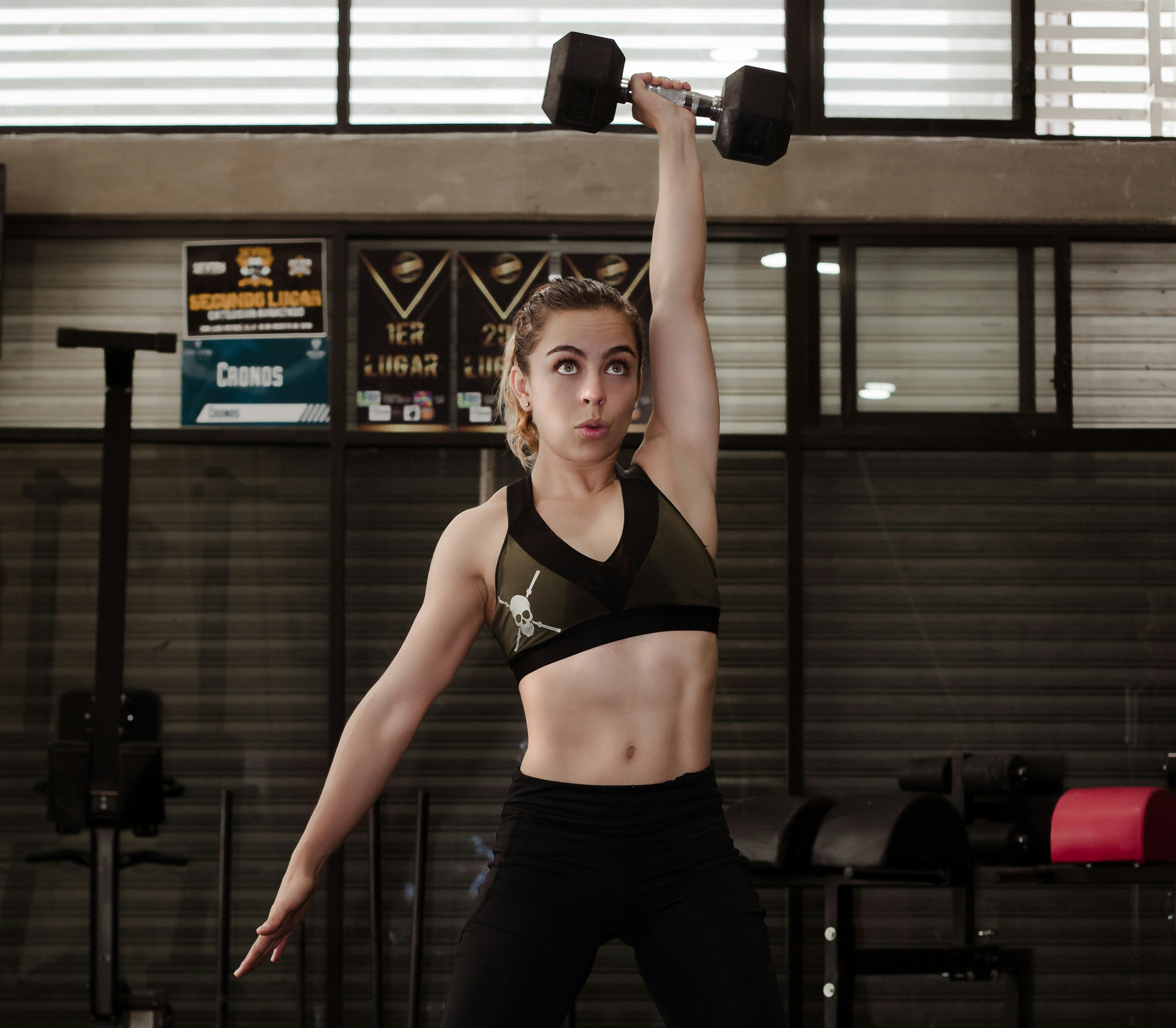
Woman in a black sports bra and leggings holding a dumbbell over her head during a lift
(Photo from Unsplash)

In any case, this penchant for sharing myself means that it is not uncommon for me to mention my workouts with a class—maybe I’m discussing Newton’s laws and drawing an example from a recent lifting session at the gym. And usually, after the first incredulous question, “You lift weights?” the immediate follow-up question will be, “oh yeah, how much do you bench?”

And I get stumped. I imagine my more skeptical students taking the inevitable pause as proof that I’m deceiving them about my weightlifting (I clearly do not fit their mental image of someone who strength trains regularly). But what I am actually stopped by is how overwhelmingly difficult it is to retrace their misconceptions back far enough to answer their question. Where do I begin?

Firstly, I want to explain, it takes years of lifting to build any sort of visible muscle for most of us, and how visible it is is highly dependent on how much body fat you have. And, as a cis-female, I don’t have the necessary hormones to encourage huge muscle growth, even with years in the gym.

Secondly, you can lift for strength without significantly increasing the size of your muscles.

Thirdly, you can lift for strength or muscle growth without ever maxing out your lifts or learning what your “one rep maxes” are.

Fourthly, barbell bench pressing is not the best exercise if your goals are functional strength of the pectoral and supporting muscles of the chest, shoulders and back—dumbbells will actually require further stabilizing and therefore may be a better exercise for overall fitness.

Fifthly, strength athletes who are not powerlifters aim for balanced training, which means they don’t usually specialize in a few moves like the bench press (unless they’re specifically training for a powerlifting meet).

And finally and far most-importantly, there is value in strength training even if you cannot lift an impressive amount of weight at any given time, since the point is working at the edge of your limits, wherever they may be. The skill and discipline of lifting is the point of the work, and our goals are always a moving target. So what you lift this week doesn’t matter, the real strength comes from lifting more, with better quality, consistently, over time.

Usually, I skip to the end of this diatribe in class, but I can feel my students tuning me out, hearing it as an excuse to not divulge what they assume will be an unimpressive number. I know that I am leaving the conversation without impressing them, without changing their minds, and without furthering their understanding of the nature of weightlifting as a lifelong endeavor.

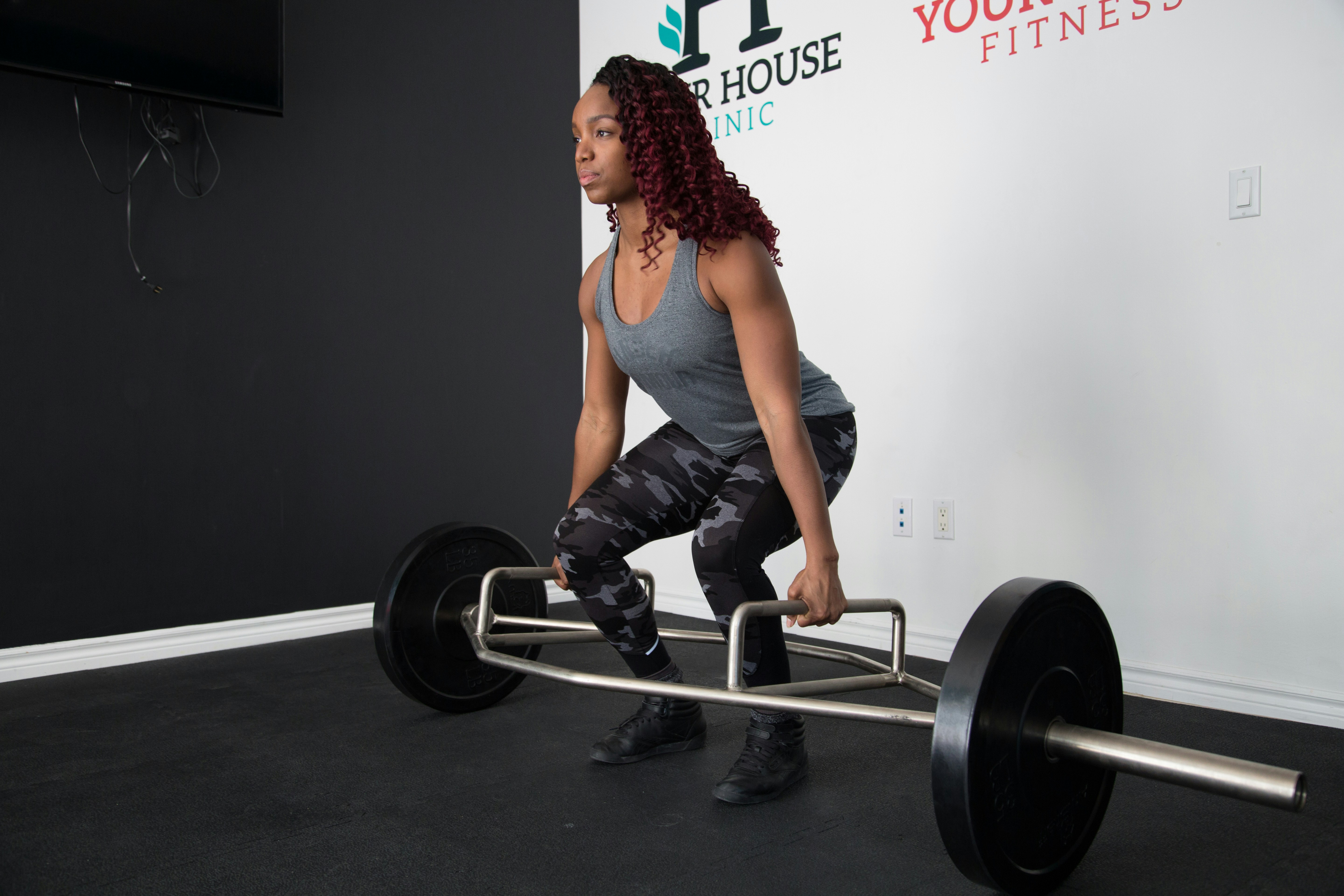
Woman in a grey tank top and camo leggings using a hex bar to squat
(Photo from Unsplash)

I get a similar look from my students when we talk about running. Although there is the practical difference that most of them have, at least, done some running. But again, they have the mindset that speed is what matters and seem completely focused on the goal of being “faster than” rather than any interest in the intrinsic value of running for its own sake.

I try to encourage more open-minded appreciation for the achievement of doing the running, even if it isn’t fast or far, by sharing that I am slow and that it is a challenge for me. I also talk about how I just don’t think I’m a natural runner, but I enjoy it anyway, and I like that I’m slowly improving, even if my current reality isn’t impressive. I want to impress upon them the consistency, the effort, and my willingness to push through the discomfort. But I don’t know how to help them switch their mindsets away from prioritizing being better than others in order for the effort to be worthwhile.

In fact, at this age, asking them what they enjoy doing is synonymous with asking them what they are good at. They enjoy most what they find easy to do, and what they receive the most positive support and praise for. If you ask a kid why they don’t like doing something, they will likely tell you because it is hard. This is a deeply held and completely natural response, and yet I find it frustrating both as a teacher and as a fitness enthusiast trying to spread my love of an active lifestyle. How do we teach kids to be open to the process, not just the destination?

I’m not sure how to convince a student that a physical activity is worthwhile, even if the numbers are not impressive. But, I am certain that however we do it, it needs to begin before I meet them in middle school. By the age of 12, most kids are ready to judge an effort based on the final score.

And this is a problematic point of view, if we want to raise kids into adults who can enjoy active, healthy lives. Not only will they be terribly limited in their own activities if they only enjoy them when they are “good” at them, but it constrains their perceptions of other people. Exercise is worthwhile and healthful for everybody and every body. Old, young, fat, thin, strong, weak, healthy, sick, we all benefit from being physically active. No population hasn’t been shown to be able to improve with regular physical activity. Even people in their eighties, lifting weights seated in a chair, have improved muscle strength, bone density, and prevented falls, when following a consistent program. But you won’t become that old person lifting weights if you think that you shouldn’t bother because you’re not any good at it.

And so I try to model doing the work and enjoying it, even though there’s plenty room for growth.

If we fail to teach them otherwise, what happens to these kids as they grow up and learn that it is more complicated than they assumed? What happens when their bodies prove to be imperfect, messy, complicated things that reflect all sorts of life experiences, genetic predispositions, and random chance? Will they learn to be more forgiving, more open-minded about success, and more tolerant of diversity? Or will they grow up to be forever dissatisfied, or filled with self-loathing at their seeming failures, or give up before they ever really try because it wasn’t as easy as it “should” be? I hope not. I hope I can help them find the joy in the everyday, in the journey and the process.

What do you do to ensure that you are teaching a love of movement to the next generation? How do you measure success?

Marjorie Hundtoft is a middle school science and health teacher. She can be found asking kids hard questions, picking up heavy things and putting them back down again in Portland, Oregon. You can now read her at Progressive-Strength.com .

Woman in gloves holding the ropes of a boxing ring, facing the camera straight on
(Photo from Unsplash)
fat · fitness · health

Today in Not News, “Fatter people not taken as seriously by their doctors as less fat people”

Sometimes, when you see a repeated injustice, you get cynical or resigned and roll your eyes. And sometimes, you get teed off. I’m guessing you can guess which one I’m more predisposed to.

Sam shared this twitter story (here and here) from Jen Curran, who had elevated protein levels in her urine during her pregnancy, and she was told to “lose 40 pounds” and come back. Weeks, and a second opinion, later, she learned that she had blood cancer. Her regular doctor ignored what she was saying, and focused on her size instead (as she was pregnant, no less). This is not news.

And it pisses me off.

How is this STILL happening to larger bodied people? How is it that doctors are looking at our sizes, our weights, and our BMIs as if they are useful pieces of data unto themselves?! Do fatter people get cancer? Broken vertebrae? Appendicitis?

We are far past critical mass here–it is long past time for doctors to take a long hard look at their biases. Because make no mistake, that is exactly what this is. In their core, many doctors believe that fatness is of bigger importance to their patients’ health than almost any other factor. The proof of this supremacy is in their persistent focus on weight, above the narratives provided to them by the patients. Every fat person has a story about how their needs and concerns were ignored as their doctor asked them about trying to lose weight.

And this bias is causing life and death decisions to be made, and fatter people are dying.

As an example, people with more body fat are more likely to die after a cancer diagnosis. Is this because of something intrinsic about body fat, or is it because fat people go longer before they reach a diagnosis? Are doctors more reticent to be aggressive with treatments because they are distracted by the “elephant” in the room, possibly assuming that the fat person doesn’t do their part to take care of themselves? Obviously, doctors are not listening to their fat patients as openly–does that mean they miss critical complications until they are too difficult to treat? How much of the “fat is bad for you when you have cancer” conversation is colored by these unconfronted fat biases?

When I was a fat teenager, I dreaded going to the doctor. No conversation at the doctor did not also include a conversation about my weight. I had nearly disabling low back pain from carrying a heavy book bag for years, including on the couple miles walk home from school each day. Did they offer me exercises to strengthen my core muscles? No. I needed to lose weight.

Depression? Have you tried to lose weight?
Irritable bowel syndrome? What have you done to try to lose weight?
Broken bones in your hand after punching a kid in the hallway for calling you a “freak?” Well, you get the idea. I’m pretty sure my weight came up in that conversation, too.

And, I’m sorry to say it doesn’t get a ton better when you go from being a medically fat person to a merely, nearly fat person.

I changed doctors last year after a frustrating conversation along these lines. I am no longer medically “overweight,” but I am just barely so. Over about six years, I changed from a BMI of about 32 to about 24, just under the “normal” threshold. I have also reduced my health risk factors in innumerable ways–I eat more produce, less processed food, and less added sugar and salt. I do some kind of intentional exercise most days of the week. I don’t smoke or drink alcohol. I have been working hard on managing stress (still a work in progress), and I try to get enough quality sleep. I see a therapist regularly to help me manage my depression and trauma.

And when I went in to get a referral for a physical therapist, what did he say? “Your BMI is ok, it’s in the normal zone, but just barely. You might want to do some work to bring that down.” This had NOTHING to do with my current medical concerns. In fact, the opposite. As I have increased my activity levels over the years, underlying imbalances I’ve lived with for nearly two decades have become problematic. It may not have mattered that my muscles and nerves were out of whack when I wasn’t pushing them. But the more physically fit I’ve become, the more I’ve become aware of how my surgical history has permanently impacted how my body works. I was there to see him so I could continue to be physically active, something I’m sure he would recommend as a part of “fixing” my BMI to a lower end of “normal.”

I challenged him on this and reminded him that I was a weightlifter. That maybe some of the “extra” weight I was carrying might be muscle. He said most people overestimate how much that is a factor. I don’t disagree with him, but I kinda wanted him to lie down on the floor, so I could prove I could deadlift him up off of it.

But of course, my BMI in that moment, or any, wasn’t really relevant. BMI is a poor tool for estimating body fat. And body fat is a poor tool for estimating health. What we’re really seeing time and again, people like Jen and me, and so many others, is the biases of our doctors, who see fat and can’t see anything else.

Fat bias is a habit, and habits are hard to break. Doctors who are serious about improving the health of their patients need to begin the hard work of challenging their own assumptions in these moments. To stop themselves before they bring up their patient’s size and ask themselves, “If this patient were smaller and came to me with these concerns, what would I suggest to them?” Fat people know they’re fat. Most of them have tried, and failed repeatedly, to be less fat. Ask them what they are doing to take care of themselves. Ask them what they are hoping to get from the appointment. Ask them what they think is going on. And for goodness sake, treat them like people, not just bodies.

Marjorie Hundtoft is a middle school science and health teacher. She can be found picking up heavy things and putting them back down again in Portland, Oregon. You can now read her at Progressive-Strength.com .

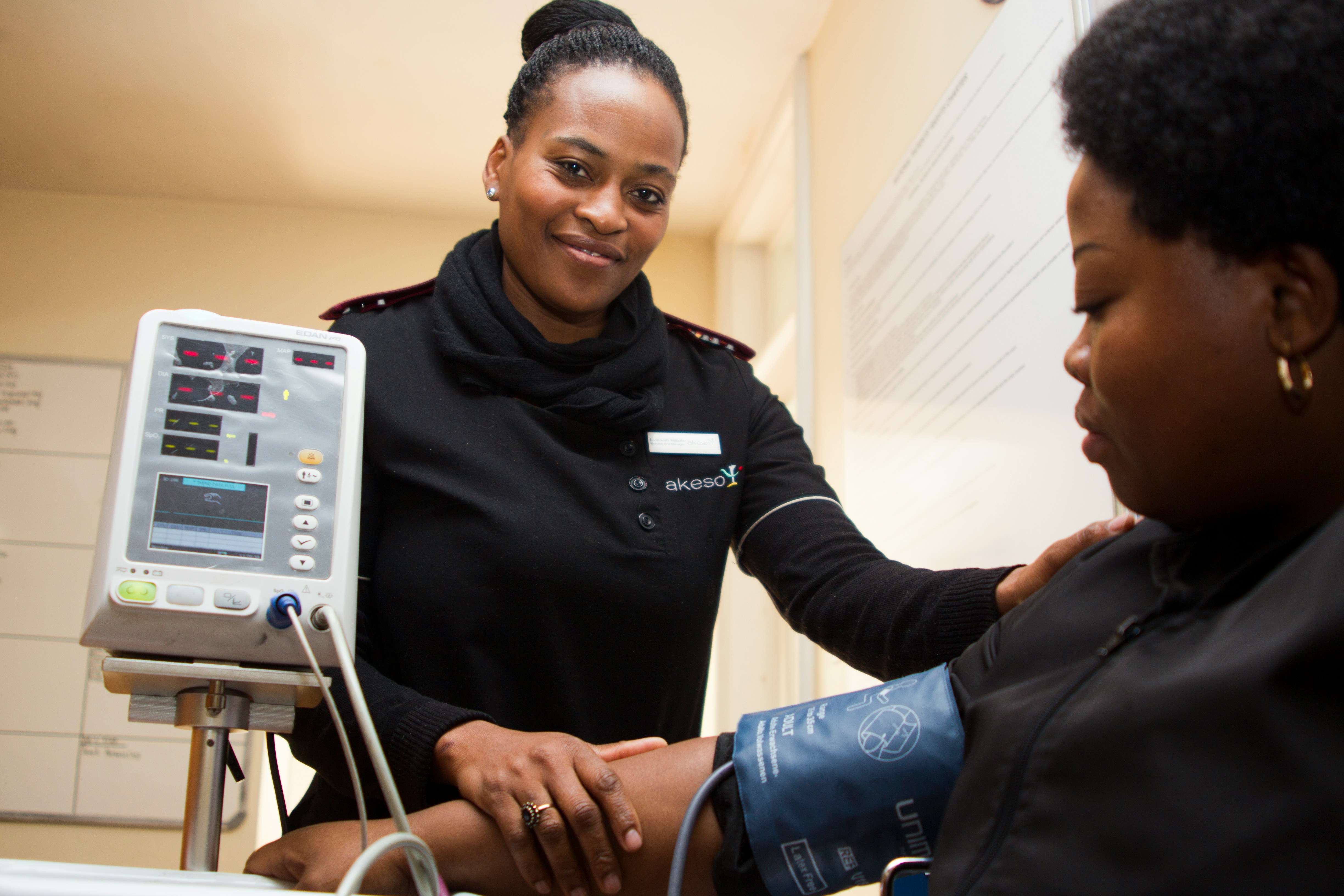
Standing woman helping with a blood pressure reading for a seated woman.
Photo from Unsplash.
advice · Guest Post · strength training · weight lifting

“Just trying to be helpful?” How to know it’s ok to offer me advice at the gym

If you see me doing something at the gym that I could maybe be doing better, I would like you to hold your tongue unless at least a few of the following criteria are met:

*You know my name. This isn’t the first time we’ve spoken to each other.

*You know my goals. How we lift changes outcomes. Do you know if I’m lifting for absolute strength, power, or hypertrophy (increasing muscle mass)? Do you know if there’s an imbalance I’m working around or trying to bring up?

*Related to the previous bullet point, you should probably know my injury history before offering advice. I have a long one, and it impacts the work I do and the pace I do it in. For example, I have internal scar tissue on my right side after the removal of the middle lobe of my right lung. This impacts my range of motion, how efficiently I use the impacted muscles, and proprioception (how I perceive where my right arm is in space).

*You are genuinely motivated by MY best interests. You aren’t trying to sell me something or some service. You aren’t flirting or finding an excuse to make conversation with me. You aren’t trying to impress me with your thick and rippling . . . knowledge.

*You recognize that there are few absolutes in fitness. If your suggestion is about to include the word NEVER or ALWAYS, I’m not interested. The more we know, the more nuanced our advice necessarily becomes.

*You’ve asked ME for advice in the past. This shows that you recognize that I know some of what I’m doing, and you respect it. I would LOVE to have someone with whom to talk about lifting at the gym; but I don’t want a mentor, I want a collaborator. I want someone who sees when I know something and can honestly evaluate when they have something to share. This kind of co-teaching is built on mutual respect, rather than the paternalistic mindset that assumes one person has all the answers.

*Your routine includes more than the bro standards of bench press, bicep curls and crunches.

*You’re not wearing ‘80’s short shorts and a headband non-ironically. Ok, I know this one is petty, but I’m kinda serious.

I am, admittedly, a bit of a nerd when it comes to weightlifting and personal health. I’m a biologist by education and a science and health teacher by profession. I like doing research; I’m not intimidated by primary sources and big words. Most of all, I enjoy reading and exploring these topics. I spend hours a week reading and researching programming, musculoskeletal anatomy, and optimizing nutrition for one’s goals.

This does not make me equivalent to a personal trainer or a physical therapist, and I readily acknowledge that I don’t have those skills. It does make me very good at identifying bullshit, and over the years I’ve honed my ability for identifying which sources to trust on these topics. So the lifts I do, the frequency and volume, are based on professional programs, adapted to my individual needs. And that adaptation is educated by professionals, too, honed by literal years of physical therapy, learning what my unique body needs to be successful in this hobby that I pursue with seriousness.

I welcome conversation and camaraderie, built on mutual respect for each other’s unique goals and experiences. But if you can’t see yourself in at least a few of the criteria above, please keep your thoughts and “advice” to yourself. It isn’t helpful, and it isn’t welcome.

Are you open to advice in your athletic pursuits? What are your rules and requirements in order to be receptive?

Marjorie Hundtoft is a middle school science and health teacher. She can be found picking up heavy things and putting them back down again in Portland, Oregon. You can now read her at Progressive-Strength.com .

Image description: A rack of dumbbells in the near view. Further away a white woman in black clothes using some of the dumbbells. Photo from Unsplash.