fitness

Making Sick Days Work for You (But Not Too Hard)

Let me just come right out and say that I think the whole idea of adequate sleep, rest, and taking the time needed for recovery is a feminist issue. It’s a feminist issue because the chances of the majority of women putting themselves and their self-care ahead of that of others are slim. Feminist issues arise when gender inequality is the result of structural and systemic features of our social world.

There is a mindset of sacrifice and pushing ourselves. Now I know that the mindset of pushing ourselves is not just a woman thing. But it’s that guilt that’s associated with “not doing enough” that–if you’ll allow me to make a sweeping generalization with a fair bit of confidence–plagues women more.

I’ve seen this in my own case lately because I was really under the weather for a couple of weeks with a cold and cough that settled into my chest and made me feel miserable and tired.  I had to take almost total rest. Though I only missed one session with my personal trainer, I missed four swims, two bike classes, and I didn’t run for two full weeks. Heck, I didn’t make it out to yoga, not even the yin class.

At first, I felt really guilty.  For me, the guilt comes when I feel as if I should be doing something that I’m not doing. Nevermind that I could hardly breathe. Nevermind that I felt achey all over. Nevermind that I could hardly even Then I had a thought, “I’m going to appreciate these sick days and use them to get the rest that I obviously need.”

We’re not all that good about scheduling rest and recovery (you can read that as the royal “we” or as “you, me, and lots of our friends”–your choice). Even I, with my minimalist approach to working out, have very little rest scheduled into my ideal schedule–Long run Sunday, spin Monday, swim Tuesday morning, bike training Tuesday evening, personal training Wednesday, tempo run Thursday, swim Friday morning, personal training Friday late afternoon, hot yoga Saturday (and that’s only because I bailed on adding a second indoor bike class).

When Sam talks about her schedule, it’s always packed. Caitlin from Fit and Feminist has a paper calendar that is fuller than full with her workout schedule. Both Sam and Caitlin work on the premise that they don’t need to build in rest because life happens. That will take care of rest days.

Life is that thing that interrupts our ideal routine: illness, late meetings at work, family emergencies (or occasions), vacations, traffic jams and house guests, etc. Caitlin goes into the month thinking that at least some of what’s on the calendar won’t be happening.

My approach is similar, but I have what they appear to lack: guilt. That’s why getting sick works to my advantage. Even if I feel negative about it at the beginning, I can move into acceptance and, most importantly, permission. Being sick gives me the permission to take a break.

No other reasons work for me in quite the same way. And I think that’s a problem (at least for me it is) that’s connected to the difficulty I have with self-permission to slow down, take a break, get the recovery that’s needed. I’ve seen this with other women who even struggle against it when their swim coach or bike coach or triathlon coach insists that it’s time for them to do a lighter week or taper to prep for a race.

What I want to say is that it’s fine to use sick days as rest days. But if the schedule is so impossible that you’re counting on sick days for rest, that might be kind of stressful in a way that’s unnecessary. I hit a point during my two-week illness where I actually felt relieved that I was still sick because I really didn’t want to get out of bed to go swimming. Now, it’s true that perhaps, had I not been sick, I might have been more excited about the swim. But I loved the luxury of feeling as if it was perfectly acceptable, even necessary, for me to stay in bed.

When I used to attend an Iyengar yoga class regularly, I liked how we cycled through each month with very vigorous practices the first three weeks of a month, and always a supported, quiet, restorative practice in the last week of each month. Some people hated the supported week. They felt like it was a waste of time. But oh, how restored I used to feel after it.

Knowing that, you’d think I’d have an easier time scheduling in rest. Right now, the Monday spin class almost never happens. I’m sure it would be psychologically healthier for me to just accept that it’s not going to happen and call it a rest day instead of a day that I should be going to spin class but I’m not.

How about you? How do you do with scheduling in rest? Are you like Sam and Caitlin, who seem to have no problem over-scheduling on the premise that something will come up that forces them to take a rest day here and there?  Do you suffer guilt when you miss a workout, or are you able to just roll with it?

And most of all, do you welcome sick days with a kind of relief, in that they are the only days that you well and truly have total permission to take a break?


cycling

#30daysofbiking, kicking spring riding off in style

http://30daysofbiking.com/

30 Days of Biking is a pledge to ride your bike every day in April, any distance, any destination, and share your adventures online. Hashtag #30daysofbiking. Make the pledge!

Spread the word about 30 Days of Biking with our Captain’s Kit and show off your pledge with our 2016 Spoke Card.

Follow us on Twitter and Facebook, too!

Make the Pledge.


I’m in. Yes, I’ve got some work travel booked in that month. But I’m sure the hotels have spin bikes. That counts.


It’s also good for your brain. See How Cycling Makes You Smarter and Happier.

Ride, work, ride, repeat. It’s a scientifically proven system that unleashes some unexpected benefits of cycling. In a recent study in the Journal of Clinical and Diagnostic Research, scientists found that people scored higher on tests of memory, reasoning, and planning after 30 minutes of spinning on a stationary bike than they did before they rode. They also completed the tests faster after pedaling.

boxing · fitness

Sam puts on boxing gloves and starts learning how to punch


image

If you’d have asked me a year ago I would have told you that boxing definitely wasn’t my thing. Hitting people definitely isn’t my thing.

But times change, people change, and I might just actually like it, a little bit anyway.

Three things got me wanting to give it a try.

First, there were Rebecca Kukla’s posts about boxing. See here and here. She makes actual boxing, not even just boxing training, sound fun.

Second, Sarah trains at News Girls and they’ve been in the news a lot lately. See Leslieville gym empowers women, inside and out: Club helps domestic violence survivors find new strength with practice on a punching bag. See Toronto Newsgirls Boxing Club offers free classes to trans people and abused women and Toronto Women’s Boxing Club Plans To Crash Pro-Rape Rallies.

Newsgirls is an amazing place. See my favourite quote on normative thinness above. No other gym I’ve ever been in has that kind of thing on display.

I asked Sarah what she likes about boxing and here’s what she said,

There’s a lot to love about boxing. It doesn’t have a steep learning curve at the beginning. After just a few instructions to make sure you don’t hurt yourself, you get to hit things!

The hitting part is fun and surprisingly cathartic. But there’s a lot more to boxing than just throwing punches, and learning and refining both striking and defensive techniques, regardless of whether you ever plan to box competitively, could easily be a lifelong challenge.

And that’s another thing I love about boxing. It’s easy to change the intensity of your workout to suit how you’re feeling on any given day. I love that people of all different ages and abilities box at Newsgirls. I think that says a lot about how fun and approachable boxing can be!

Third, I’ve got a very practical Aikido related reason. My training in Aikido is being hampered by my inability to hit people seriously. Yes, Aikido is a gentle martial art. Yes, all the moves are defensive. But when you’re training, one person has to be the attacker. For the techniques to be effective you have to try to strike the person who is practicing the technique with some speed and force. Many of the advanced techniques don’t work if you just go through the motions of pretending to attack your training partner. You know, where your fist stops shy of where they are standing. Maybe, you don’t know that. But I do. I blogged about it about my struggles with uke’s role in this post about training with the brown belts.

(Oh, and then there’s this: 3 Great Reasons Women Over 50 Should Take Up Boxing — ASAP)

So last Sunday I found myself learning how to wrap my hands and punch various kinds of things.

I enjoyed the blocking session best, perhaps because it had the most in common with Aikido. I discovered I have martial arts instincts. A couple of times I took people off balance and I found myself thinking of the next Aikido movie I’d perform. I also don’t have the instinct I had when I started Aikido which is to back up. I’m good at moving into an attack. (Backing away is how people being attacked by knives end up covered in the stab wounds. Getting close to the person, giving them less room to work with, is better but harder to do.)

Punching itself will take work. Lots of work. But I’ll go back and keep at it.

Something must be working. I hit a black belt yesterday, right in the gut. According to club tradition, he owes me $5.

fitness

Celebrating 5000 on Facebook!

image

In addition to the blog we also have a thriving Facebook page and community where we discuss fitness from a feminist angle. It’s a big tent and you won’t like everything we post but there’s a lot of good discussion and commentary.

If Facebook is your thing, come hang out with us there!

fitness

Sarah turns 50 and upgrades her fitness tracker (Reblog)

Sarah writes,

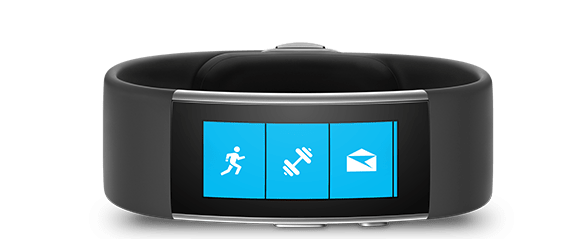
I was getting bored with the Fitbit Charge: kind of plain and it doesn’t track my heart rate. Just having turned 50 (I think of it as upgrading to version 5.0), and having a chat with doctor, it was time to get a device that monitored my heart.

The last time I looked at the Fitbit HR Charge, $199.99, it still didn’t have an app for my Windows phone. And it’s still boring.

This is the problem with most fitness trackers, people get bored with them.

I started looking for something else.

You can read the rest here: Stepping up from the Fitbit to the Microsoft Band

fitness

Make Half Marathon History with the Harriet Tubman Finishers’ Medal: Who Wants to Join Me?

Last June I had a great time with Anita at the Niagara Women’s Half Marathon.  I wrote about the wine and whine of it all here.  There were all sorts of cool things about it, including the finishers’ medal. But in 2016, it proves to be even better with the most meaningful finishers’ medal I’ve ever seen: the Harriet Tubman Finishers’ Medal.

How amazing is that? To get a medal that honors an African American woman who served as a “conductor” in the Underground Railroad?

The Niagara Women’s Marathon Facebook page made the announcement on the weekend with this note from Ross Robinson, Race Director:

Harriet Tubman will be honoured by the Niagara Falls Women’s Half Marathon. Her picture will be on the 2016 Finisher Medal presented to over 3,000 runners and walkers.

She was an icon of American courage and freedom, risking her life as a “conductor” on the Underground Railroad. She led over 300 slaves to freedom in Canada. They followed the North Star from Maryland to the Niagara River, travelling at night, cold and poorly fed and being chased by bounty hunters.

We hope that while our runners and walkers are in Niagara Falls, they will take time to learn about Underground Railroad history on the Canadian side of the border.

The Medal is an artist rendering and the finished size is approximately three inches in diameter.

I wasn’t really planning to do the event again quite so soon. But with the announcement of this medal I’m starting to re-think my plans.

I’ve got a collection of medals that give me a sense of accomplishment as they gather dust on a hook on the back of my closet door.  But none of them has any deeper meaning beyond that. To have a commemorative medal that honors a heroic woman from Canadian history–that would be something really special.

Anyone else interested?