That was the actual piece of advertising copy on a sports bra I almost tried on. Hot pink and very pretty. I wasn’t put off by the slogan, the hot pink, or by the pretty. I passed on it because it was padded and I’m no fan of padded sports bras. But I am curious about the role looking good while working out plays in the lives of girls and women.
Think about my yoga pants post. A number of people responded to my criticisms of Lululemon’s 100 dollar yoga pants by noting how good they looked wearing them and how looking good inspired them to work harder. To be fair, they also noted that they were extremely durable and worked well. As if “they make your ass look great!” is a knock down argument. (Okay, maybe it is.)
Or have a boo at this article on Huffington Post, Cute Workout Clothes Are The Key To Getting You Off The Couch And To The Gym, which is basically just a before and after slide show of gym-goers and other exercisers with new and improved workout attire. “Ditch that ratty tshirt and run in this instead!” You get the idea.
“Exercise can be a chore. Like laundry, it’s another thing on the to-do list that we’d rather not do, but we kinda have to. In an effort to make working out a little less painful (on the eyes, at least), we searched for the cutest workout clothes out there.”
So looking good clearly matters to all sorts of different people, with different definitions of good.
I’m not immune to this. I have hot pink running shoes, and I could have bought black. I smile when I put the pink shoes on and I actually like the way I look in work out gear, especially my cycling clothes. I have a serious soft spot for fun cycling clothes. I don’t own the bike jerseys pictured here but I’ve admired them from afar. It’s easy for me to workout without make up since that’s my usual state of affairs, except for lipstick which comes with me everywhere, even on very long bike rides.
In the comments on an earlier post, a reader asked why can’t girls and women have fun with our femininity?
And I agree. Playing with gender can be a lot of fun. Playing with one’s appearance can be a lot of fun. But for it to be fun, for me, it has to be optional.
Have fun with your appearance, sure. But it’s a bit of a double edged sword because looking good while working out raises the bar. Maybe this time it’s for fun but next time you’ll think you can’t go to the gym if your favourite outfit is in the wash or if you’re having a bad hair day.
What’s fun today too quickly becomes tomorrow’s necessary condition. If it’s obligatory, in my books, it’s rarely fun.
I started colouring my hair in the 80s, the era of cotton candy punk. I had pink, blue, purple streaks in my bleached blonde hair. And it was a blast. Until it became a chore and then I stopped.
I’d also like some spaces, some times and places, in my life, where I don’t have to worry about what I look like. A mirror free zone. Camping has long been that for me in an extended way but I like little mini-bursts of that throughout my week. And physical activity has been one of those places of refuge.
So if it’s fun and motivational, great. But if turns into one more place where you feel there’s a bar you need to meet before getting out the door is acceptable, then maybe it’s time to pay attention to athletic values rather than aesthetic ones.
So dress cute if that’s your thing. Me, I’m doing my bit to keep the bar low. I’ll be be bringing standards down in my grey tank and whatever capris or shorts were on the top of the clean pile. I don’t wear make up or jewelry to the gym.You can thank me later!
It’s a big tent and there’s room for all of us.
And hey, here’s Hilary Swank in Million Dollar Baby. Doesn’t look like she’s wearing make up or stylish athletic fashion either!
I had a deadlifting breakthrough this past week. When I started CrossFit eight months ago I could deadlift about 40 kg.
Deadlifting made me nervous because as a result of a rather dramatic run in with a wave on a beach in Australia (which ended in the emergency room after being picked up by a huge wave while body surfing and then being carried into shore and going boom, crash into the sand) followed by a cross country ski collision the following year, I have a pretty twitchy lower back. (Where “twitchy” is just absolutely amazing compared to the outrageous amount of pain I was in following these accidents. I had no idea that you could even be in that much pain as a result of sudden impact without having broken anything.)
But last week (on Thurs, Jan 10 to be precise) I hit a new 1 rep max in deadlifting: 95 kgs. I benefited from advice from Crossfit coach Dave Henry (I worked on my breathing, my stance, and my grip) and it helped being cheered on by my training partners. Tracy has blogged about the joys of working out alone but this style of lifting really requires training partners.
What is the deadlift? You perform a deadlift by lifting a loaded barbell off the ground from a stabilized, bent over position. The deadlift is one of the three canonical powerlifting exercises, along with the squat and the bench press. (I plan to blog later about the distinction between powerlifting and Olympic lifting and about how both of these styles differ from muscle specific body building.)
Clearly I have room to get stronger. She’s amazing.
But you might be wondering, since this doesn’t look easy or particularly fun, why deadlift? Here’s some answers:
“The Deadlift is one of the most ancient, fundamental and just flat out alpha lifts out there. In no other lift do you raise hundreds of pounds of weight off the ground with your bare hands. There’s really something magical about the Deadlift. You just don’t feel the same amount of confidence and joy doing Squats or Bench Pressing as you do while Deadlifting. There’s a reason so many people look forward to Deadlift day.” The Deadlift
It’s a whole body exercise working almost all of the major muscle groups (Spinal Erectors, Quads, Glutes, Hamstrings, Lower Back, Middle and Upper Trapezius, Abdominals and Obliques, Lats, Calves) and whole body exercises are great for developing full body strength, especially in the core. Your back will thank you for it.
Deadlifting has real functional applications. Picking stuff up off the ground is something we actually do, a lot. “When you perform physical labor, you frequently pick up items off the floor and lift them. Performing deadlifts develops the muscles and the movements that are involved in many forms of physical labor. Also, because deadlifts normally involve lifting heavy weights, they help you develop a strong grip, which is also associated with many physical tasks.” Read more at Livestrong, What Are the Benefits of Deadlifting?
“All lifters MUST wear extended knee socks when Deadlifting.” That’s what lifting competition rules say. And there is a practical reason, to prevent your shins from getting scraped. But they also come in lots of funky colours and patterns. See pic above and for more, lots more, see here. I know one reader of the blog wrote in to say she didn’t look forward to having to wear them to compete, but I have a soft spot for knee socks. Practical and cute.
I like rugby more than football. I have a teenage son who plays both sports, rugby at the provincial level and football on his high school team. Over the years of watching both games I’ve developed a pretty strong preference for rugby. Now that might just be my British heritage, combined with a small streak of anti-Americanism, showing but rugby seems to me to be a much more athletic game.
I also love prom dress rugby and hate lingerie football. The picture above is from UCLA’s prom dress rugby match, a fundraiser for breast cancer research. Sorry, no photos of lingerie football here. This is our sandbox. But there’s loads of lingerie football photos everywhere else on the web.
It seems to me there are important differences between the two sports though beyond my simple preference for rugby over football. (Rugby is the sport I would have played if I’d been an athletic child and if rugby for girls had been an option in the 70s and 80s. You can read about my regrets here.) Both prom dress rugby and lingerie football play on the clash between traditional notions of feminine beauty and and the rugged, traditionally masculine nature of the sports involved. It’s the juxtaposition of frills and lace and tackling that makes me grin. Both get humour value from, and take pleasure in, playing the game in non-traditional attire.
But here it seems to me the similarities end.
What are the differences?
Most importantly girls and women play rugby in regular uniforms 99% of the time. Prom dress rugby is annual event, a one-off thing, put on in the spirit of fun.
Prom dress rugby events are usually fun events put on by the teams as fundraisers for charity and to draw attention to the non-prom dress version of the sport. Of course, the teams themselves belong to amateur or community leagues or more commonly to high school and university athletic associations. Lingerie Football is a for profit sport. That by itself doesn’t make it better or worse but it does make it different.
There’s a punky DIY ethos to prom dress rugby. As a friend said, it reminds him of the other tough women of amateur athletics, roller derby girls. Some women play in hideous bridesmaid dresses they’ve been required to wear, others in their own actual prom dresses, and many scout thrift stores for prom dresses–the flouncier the better–worth trashing.
Lingerie Football used to be just an American thing, but like Hooters, it’s made its way North. Toronto even has its own Lingerie Football League team, the Toronto Triumphs.
Arguably as the game goes international, with Canadian and Australian leagues, its tone is changing too. There’s even been a re-branding. In a press release issued last Wednesday the owner and founder of the LFL Mitchell Mortaza announced its new name, the Legends Football League rather than Lingerie. So still the LFL.
“While the Lingerie Football League name has drawn great media attention allowing us to showcase the sport to millions, we have now reached a crossroad of gaining credibility as a sport or continuing to be viewed as a gimmick,” writes Mortaza in the press release.
And the press release promises sports attire rather than lingerie although frankly the performance attire looks like they’ve upgraded to skimpy beach wear instead of bedroom attire. No more garters, no more chokers, and no more strappy lacy things. Think Baywatch, rather than Victoria’s Secrets.
You can watch the press conference and see the new bikinis–I mean football uniforms–here.
I also feel the need to say something about my preferences since feminists are so often misunderstood on this front. I’m a feminist but I’m also a liberal. I’m not in favor of censoring lingerie football or condemning those who enjoy playing or watching. In matters of what attracts you, what makes you grin, I’m an unrepentant liberal. What I’m doing here is explaining why I like prom dress rugby much more than I like lingerie football. It’s an invitation to see the world from my point of view, rather than an argument against yours.
You’ve seen them, I assume. Maybe you even wear them. They’ve entered the mainstream, now available at Mountain Equipment Coop and Lululemon (complete with butt frills for added cuteness). You can browse them here at home of the running skirts where you can buy ruffly black tanks to go over your leopard print skirt.
Cute but I do think they make women look more cheerleader, less serious runner. Arguably I just need to change my view about what serious runners look like. And I do know that cheerleaders can be serious athletes too.
As you can see, I go back and forth on this issue…
In the end, I think they’re a bit much. But are running skirts sexist?
The philosopher in me cringes at this question. Skirts aren’t moral agents, they aren’t even rules or regulations or states of affairs. They’re things. Can a thing even be sexist, just on its very own?
“While these skirts have been around for at least the last four years, apparently, it’s becoming more of a trend to want to look stylish when we work out (Runner’s World even nicknamed such females as “stunners”. Get it? Stylish runners?) But to me, nothing could be more detesting than trying to look cute when it comes to running. I just couldn’t take myself seriously while donning a frilly skirt all covered with sparkles and shit.
What’s even worse than the skirt itself (and I do get that some women swear these are totally comfortable), is the fact that they can create a sexist atmosphere on the road or at a race–places where women should be seen as athletes, not girly girls trying to look all adorable.”
Now I’m with Dunham on athletic fashion and preferences and I want to cheer her on when she asks, “When did running become all about body image and “hugging the right curves”? Can’t we just put all of that aside when we hit the road and embrace our bodies for what they do versus how they look? We’re not out there for others to gawk at. We’re out there to get shit done. And for me, that’s in a basic pair of black shorts and a tank.” And I’ve written as much here in my post Athletic versus Aesthetic Values in the Pursuit of Fitness.
I worry that they contribute to yet more pressure on women to look good at all times–even while running marathons. Triathlete Nicole DeBoom even won an Ironman competition in a skirt. Can’t athletic events and training be times for other values in women’s lives? Can we get a break from caring about our appearance? Please.
There’s also a note of modesty and body shame about them I don’t quite like. The ad for the tri skirt, in hot pink of course, says “Slide this one over a tri one-piece. It holds your race number and gives you the psychological edge of wearing something cute and carefree.” But it’s an added piece of clothing. Why not just run in your tri one piece? In transition between the swim and the bike, seconds count. No added function, just fashion and a bit of modesty.
First, I start getting angry when I hear people claim that the skirts play a role in a sexist male behavior at races. This sounds a bit like blaming men’s predatory behavior in nightclubs on the clothes of the female patrons. My clothes are my responsibility and if I want to have fun with them, I will. Your behavior is your responsibility. Let’s draw some clear lines here.
Second, I would also never judge another person’s choices of running attire. You want to run in an evening gown, a tutu, some fishnets? How about stilettos? Go for it.
I’m also with the coach quoted in the New York Times article below who says if the skirts get more women out running so much the better.
In the end I’m happy pluralist. You want to run in a skirt? Cool by me.
Take the extra seconds to put it on in a triathlon? Fine.
I’m living by the Underpants Rule as explained here: “The Underpants Rule is simple: everyone is the boss of their own underpants so you get to choose for you and other people get to choose from them and it’s not your job to tell other people what to do.”
I know this is a controversial issue among women who run because the minute I whine about the problem of padded sports bras, friends leap to their defense. So I see that other people love them. I, however, do not.
I get that tastes can vary. I don’t like padded anything really. (Bike shorts might be the one exception.) And it’s getting more difficult to find non padded bras of any sort in A and B cup sizes. And then the problem continues because all dresses are now made to fit at least a C cup and when they don’t fit, the answer is the padded bra.
So I get that people like them, and like them they must, since it seems most sports bras now come with padding.
The complaints against the non padded kind are of two sorts, roughly related to breast presentation and size, on the one hand, and nipple visibility on the other.
One woman writes into the forum on bras at Runners World and describes the two flaws with non padded bras saying that they, “1. Squash my breasts so that my breasts are even smaller or so that my breasts merge into one small horizontal lump 2. Exhibit my nipple shape for all to see. I might as well paint on two black circles and arrow signs on my chest with the words “and HERE are my NIPPLES!” when it’s cold outside.”
Here’s one happy padded running bra customer: “While I’d like to say that I went searching for a padded sports bra to get extra coverage, the truth of the matter is when I work out, I’d like to look more like a woman and less like a 12-year- old boy.” (Read more Padded Sports Bra Reviews – Best Padded Sports Bras – Good Housekeeping)
I think I’d be happy to look like a 12 year old boy when I’m running and mostly I don’t think too much about my workout appearance. I like to be sleek and have as little extra material material as possible.
For advice on choosing a good padded sports bra you could do worse than read this advice from the folks at Livestrong.
So let me be very specific here, what I loathe isn’t the existence of padded sports bras, it’s their ubiquity. It’s their domination of the sports bra market. Try finding a non padded sports bra in my size. Oh, and it shouldn’t have an underwire either. Good luck with that and call me when you’ve succeeded.
A friend who works in television suggested a reality tv show, Bra Hunter. They could help me and help the women looking for brown bras, since ‘flesh’ colored bras are decidedly beige. You can read about the Brown Bra Scavenger Hunt here, Not MY Nude — Why I Started the Brown Bra Scavenger Hunt.
Looking around for some guidance and discussion about the whys of the rise in popularity of the padded bra, it turns out the real issue isn’t keeping up with breast-implanted Joneses. Instead, it’s paranoia about nipple visibility.
“Foamy, modern, molded bras have taken over more than their share of the bra market. They seem to insist that if we decline silicone breasts, we should at least have the courtesy to hide our actual breasts under smooth, springy, vaguely breast-like shells….
They continue to encroach, creeping in under new names all the time: Contour Bras for a “sculpted silhouette”; Foam-Lined Bras, defined on the Bare Necessities as the go-to choice for “protection against nipple show through”; Seamless Bras “virtually invisible!” (Like your nipples.) T-shirt Bras for an “ultra-smooth look” (you know by now what that means). Microfiber Bras! They’re all the same bras, really. OneHanesPlace adds Laminated Bras, which they admit are “a lot like Molded-Cup Bras,” which “mimic your body’s contours because the fabric is molded on a cone-shaped form. So, they fit like a second skin… and work with your shape, not against it.””
So I gather what I’m seeing are t-shirt bras, the running version.
Yes, women athletes have nipples–we’re not like Barbie–and when we’re cold or pumped with adrenaline from physical activity, they’re sometimes visible. Deal with it please.
And when I find a nice non-padded running bra in my size, I think I’ll buy a half dozen and be done with it!
There are quite a few advantages to having grown up with a body outside the norm and to having lots of comfort with the size and shape one is.
One of the times it really hits me is when considering some sporting activity that requires tight fitting, shape revealing clothing.
“But it makes me look so fat,” shrieks the thin to normal size woman on seeing herself in a fitted bike jersey and cycling shorts. (Don’t get me started on the reaction of said person to a skinsuit worn in time trials in both road and track cycling.)
“I’m not wearing a unisuit until I absolutely have to,” said one of the women I do Masters’ indoor rowing with. No one looks good in those things, she went on to explain. Another rower, former university athlete, said the unisuits explained the lack of sexual tension/romantic attraction between rowers. I laughed.
When I joined a Masters’ swim team and went to order a team swimming suit for racing, the coach automatically ordered a size down. It’s your race suit, she said. They’re supposed to be very tight. You don’t want any excess fabric. It will slow you down.
The worst of all might be the bikini tri suit, a two piece affair you’re supposed to swim, bike, and run in. I’ve never worn one of those but not for modesty or body shame, more worries about thigh rubbing and discomfort. Okay, and the belly jiggling while running might be distracting! 🙂
But I don’t really worry about being seen as fat in sports specific clothing because lots of people think I’m fat no matter what I wear. If you’ve been seen as fat in regular clothing, sports clothing is less worrisome, more life as usual.
I wasn’t aware of what a barrier fear of ridicule and feeling fat is to women’s participation in sports and outdoor activities until I read the results of a study on the reasons why women choose not to exercise. The whole story is quoted below but here’s the one number that got me and that counts against both cycling and rowing: “67% of women say they wear baggy clothing when exercising in order to hide their figure.”
If that’s right then unisuits and cycling shorts (tight fitted, worn alone, no underwear underneath them) might rule out rowing and cycling.
Mountain bike shorts and baggy bike jerseys have their place, I think, and that place is a nice stretch of single track, when riding a mountain bike.
On a road bike it’s much more aerodynamic not having excess fabric flapping in the breeze.
I guess there are two very different responses one could have to this clash between women’s body self consciousness and sporting attire.
But the other response, and I admit I’m not that comfortable with it is to see what we might do to make performance oriented athletic clothing more attractive on a wider range of women’s bodies.
Looking good isn’t the prime purpose of sports performance wear and that is likely much more of an issue for women than for men. I think gender and the need to look good while working out is a topic for a later post. Happily, for me I actually like the way I look in cycling clothes. I feel most like me and that makes me smile.
Of course, if you do suffer from extreme body anxiety or you are modest for religious and/or cultural reasons, let me recommend Aikido! We wear very baggy white pajamas that cover skin from ankle to wrist and reveal next to no details of our shape.
Low self-esteem among barriers to getting active as charity highlights benefits of walking, cycling and other pursuits
The charity Mind says that lack of self-confidence and low self-esteem causes nine in ten women aged over 30 to avoid taking part in outdoor physical exercise such as cycling, and has launched a campaign to encourage females to overcome barriers that are potentially harmful to both their spiritual and mental wellbeing.The study, based on a survey of 1,450 women, was carried out as part of the ‘Feel better outside, feel better inside’ campaign from the £7.5 million Ecomind initiative, run by the mental health charity on behalf of the Big Lottery Fund.
While initiatives such as the Cycletta series of sportives, endorsed by Victoria Pendleton, and British Cycling’s £1 million National Women’s Cycling Network, launched last year, both aim to get more females on two wheels, the findings of Mind’s research suggest that for the vast majority of women there are huge barriers to doing any kind of outdoor physical activity, let alone cycling.
According to the survey, nearly all respondents – 98 per cent – were aware of messages telling them that getting involved in exercise would help their mental and physical health, however Mind said that low confidence in their bodies, low self-esteem and other barriers to exercise prevented many from getting active.
Its research found that eating comfort food or finding a way to be alone, both at 71 per cent, going to bed, at 66 per cent, or spending time social networking with a response level of 57 per cent, all ranked higher than taking part in physical exercise.
The charity highlighted some of the specific barriers that prevented women from taking part in exercise:
2 out of 3 feel conscious about their body shape when they exercise in public
Many doubt their own ability compared to others; 65% think it’s unlikely they’ll be able to keep up in an exercise group and almost a half feel they will look silly in front of others as a result of being uncoordinated
60% are nervous about how their body reacts to exercise – their wobbly bits, sweating, passing wind or going red
2/3 feel that if they joined an exercise group, other women would be unwelcoming and cliquey, with only 6% feeling they would be very likely to make new friends.
It also highlighted some of the ways in which women who did participate in exercise sought to overcome what it described as “the risk of embarrassment”:
Over 50% said they exercised very early in the morning or late at night solely to avoid being seen by others
Almost 2/3 of women choose to exercise in a location where they’re unlikely to bump into anyone they know
Over 50% don’t leave the home when exercising, so as not to be seen in public – even though exercising outside is more effective for lifting mood then inside
67% wear baggy clothing when exercising in order to hide their figure.
Beth Murphy, head of information at Mind, commented: “We all know that walking, cycling, even gardening are good for our mental health, however for many of us exercising in the great outdoors can be incredibly daunting, especially if already feeling low and self-confidence is at rock bottom.
“At these times you can feel like the only person in the world experiencing this, but Mind’s research highlights that far from being alone, 90% of women are in exactly the same boat,” she continued.
“It’s time we start talking about how exercise makes us feel. We urge women to take the first step, invite a friend on a nature date and begin to support each other in taking care of our mental wellbeing.”
Mind cited the positive impact that taking up outdoor exercise had brought to the life of one 37-year-old woman, who said: “I have been taking anti-depressants since last February, but honestly feel that exercise has a more noticeable effect than the drugs.
“I can’t believe I am saying this, but discovering outdoor exercise changed everything. I was petrified, I knew I would sweat, go red, have trouble keeping up and that everyone else in the group would be super fit. I was so incredibly scared and thought I’d be humiliated.
“However – the other people in the group were all normal – all different shapes and sizes – and no one cared what you looked like or did.
It was the most liberating experience ever. My initial reason for exercising was to lose some weight, but from that first session I realised just how good it could be for my state of mind. From there my confidence grew,” she concluded.
The Ecominds section of the Mind website contains a variety of hints, tips and online tools aimed at encouraging women to become active by helping the overcome some of the issues discouraging them from taking part in outdoor exercise.
I’ve been teaching a course on egalitarianism in moral and political philosophy this term and issues of access to physical fitness have been big on my mind, as I work on my own “fittest by fifty” project and do the readings and prepare for the class.
Egalitarianism is, roughly, the view that equality matters in our evaluation of various states of affairs. It doesn’t just matter how much wealth or happiness there is in our society. If you’re an egalitarian it also matters how it’s distributed.
There are some huge differences in time and money available to individuals that create gaps in our access to fitness. There many places this crops up but one of them that interests me is the cost of workout wear for our various fitness pursuits.
It seems important because unlike some of the other issues (number of hours worked, financial access to fitness facilities, gendered differences in free time available for leisure once child care and elder care are taken into account), this one is a myth we can help to dispel.
It’s clear that it’s not necessary to pay big bucks to pursue the goal of getting in shape. Most recently I started thinking about this in the context of the pricing of yoga pants, as part of an online discussion prompted by a story that came across my Facebook newsfeed.
Why is everyone so keen to pay $100 for yoga pants? So asks this story on ABC news.
“Lululemon is the leader in designer workout gear. The brand started as just one store in Vancouver, B.C.. Today it boasts 175 stores in the U.S. and many more worldwide. The company ranked fourth among the most profitable stores in the U.S., according to research company RetailSails. Who beat lululemon? You may have heard of them: Coach, Tiffany and Apple. Sales for lululemon were $1,800 per square foot.”
But should you pay $100 or more for yoga pants? Here are some of the questions worth thinking about as you make that decision.
First, do you need $100 yoga pants to do yoga?
Clearly not. You can wear regular comfortable clothes or even nothing at all. When I was in Canberra, Australia for my sabbatical at the Australian National University I noticed that the city offers Nude Yoga for Men. (Come and enjoy the sensual delights of practicing yoga naked under soft lighting in our new, toasty warm venue, read the poster.) You can read more about nude yoga here. No nude yoga for women though. At home, I find jammies work pretty well. Confession: To actual yoga classes, I wear inexpensive shorts from Costco. And $100 is more than I’ve ever paid for actual pants. Further confession: I do own bib cycling shorts that cost more, 1 pair.
Second, should you spend your disposable income on yet more clothes or should you give the money away to a respected charity, such as Oxfam?
If we could easily save the life of a child, we would. For example, if we saw a child in danger of drowning in a shallow pond, and all we had to do to save the child was wade into the pond, and pull him out, we would do so. The fact that we would get wet, or ruin a good pair of shoes, doesn’t really count when it comes to saving a child’s life.
UNICEF, the United Nations International Children’s Emergency Fund, estimates that about 24,000 children die every day from preventable, poverty-related causes. Yet at the same time almost a billion people live very comfortable lives, with money to spare for many things that are not at all necessary. (You are not sure if you are in that category? When did you last spend money on something to drink, when drinkable water was available for nothing? If the answer is “within the past week” then you are spending money on luxuries while children die from malnutrition or diseases that we know how to prevent or cure.)
The Life You Can Save seeks to change this. If everyone who can afford to contribute to reducing extreme poverty were to give a modest proportion of their income to effective organizations fighting extreme poverty, the problem could be solved. It wouldn’t take a huge sacrifice.
Third, should you buy anything, including yoga pants, from Lululemon?
That depends on your values and whether you think we should share the values of the companies to which we give our business. My worry is that the workplace philosophy of Lululemon is just a bit cult like and that it’s fueled by the ideas of Ayn Rand. But beyond reading the articles linked below I haven’t done much research but that’s because I’m already motivated by questions 1 and 2 to stay away.
Yet more confessions: I do think their clothes are gorgeous and stylish. I often admire them on other people. And there is some Lulu brand stuff in our house, hand me downs from a friend who is a fitness instructor. I think she got it free because they like to see their brand on the backs of teachers.

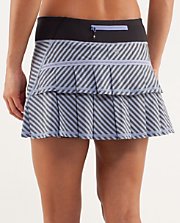 You’ve seen them, I assume. Maybe you even wear them. They’ve entered the mainstream, now available at Mountain Equipment Coop and Lululemon (complete with butt frills for added cuteness). You can browse them